

How Can Custom Store Fixtures Reduce Retail Operating Costs?
1. Why Are Store Fixtures an Operating Decision?
Retailers rarely lose money because a shelf looks plain. They lose it when a fixture blocks traffic, slows replenishment, fails under load, arrives damaged or cannot adapt to a new assortment. A custom store fixture should be specified against the work it must perform: product weight, shopper access, cleaning, store format, planogram and expected service life.
A useful current U.S. news angle for September 2026 is the USDA’s expanded stocking rule for SNAP-authorized retailers. Reuters reported on September 3, 2026 that nearly 250 convenience-store operators and trade groups sought a delay. The rule requires at least seven varieties in each of four staple categories—dairy, fruits or vegetables, grains and protein—by November 4. This creates a concrete assortment-planning issue for smaller food retailers, but it does not prove a market-wide increase in fixture orders. Source: Reuters, September 3, 2026, https://www.investing.com/news/economy-news/us-convenience-stores-say-looming-healthy-food-ruleputs-food-stamps-use-at-risk-4888389
For fixture buyers, the story is operational: more required product variety can mean tighter shelf allocation, more labels, different facings and more frequent planogram revisions. The right response is not to buy more metal blindly. It is to map product dimensions, replenishment cadence and aisle constraints before selecting a fixture system.
European heatwave coverage also deserves careful treatment. Extreme heat can affect crop supply, transport and shopper demand, yet a weather headline alone cannot substantiate a claim that store-fixture sales rose. Retailers should translate verified climate reporting into practical questions about seasonal resets, easy-clean surfaces, signage changes and robust outdoor or entrance-area units.
2. What Should a Buyer Specify Before Requesting a Quote?
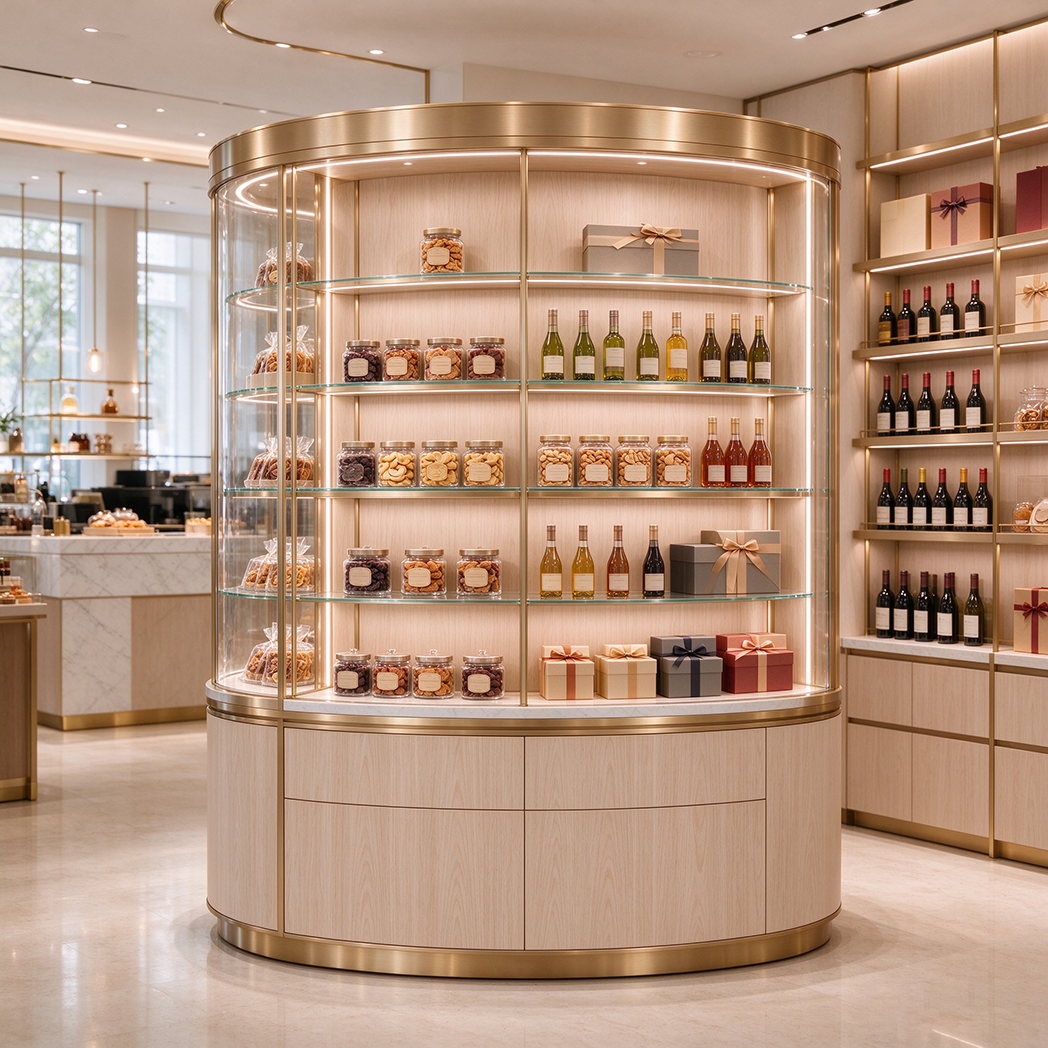
Searchers looking for store fixture custom solutions often need more than a bespoke shape. They may be solving a footprint problem, matching brand colors, fitting unusual packaging, improving accessibility or reducing assembly time across dozens of locations. A supplier brief should describe the business problem first and the preferred design second.
Provide product dimensions and weights, SKU count, target capacity, store type, aisle width, merchandising plan, finish, destination, order quantity and launch date. Add photographs or sketches, plus any standards or brand manuals. Ask the supplier to identify assumptions and unresolved engineering questions in the quotation.
A serious supplier should return drawings with dimensions, material and finish specifications, load guidance, assembly method, packaging plan, sample approval steps and a change-control process. These records make offers comparable. A low unit price without defined scope is not a reliable benchmark.
For multi-store programs, confirm whether the design can be reproduced consistently and whether replacement parts will remain available. Ask how the supplier controls revisions between approved sample and mass production. A small undocumented change in wire spacing, weld location or coating can become a store-level headache.
3. Which Fixture Structure Fits the Merchandising Job?
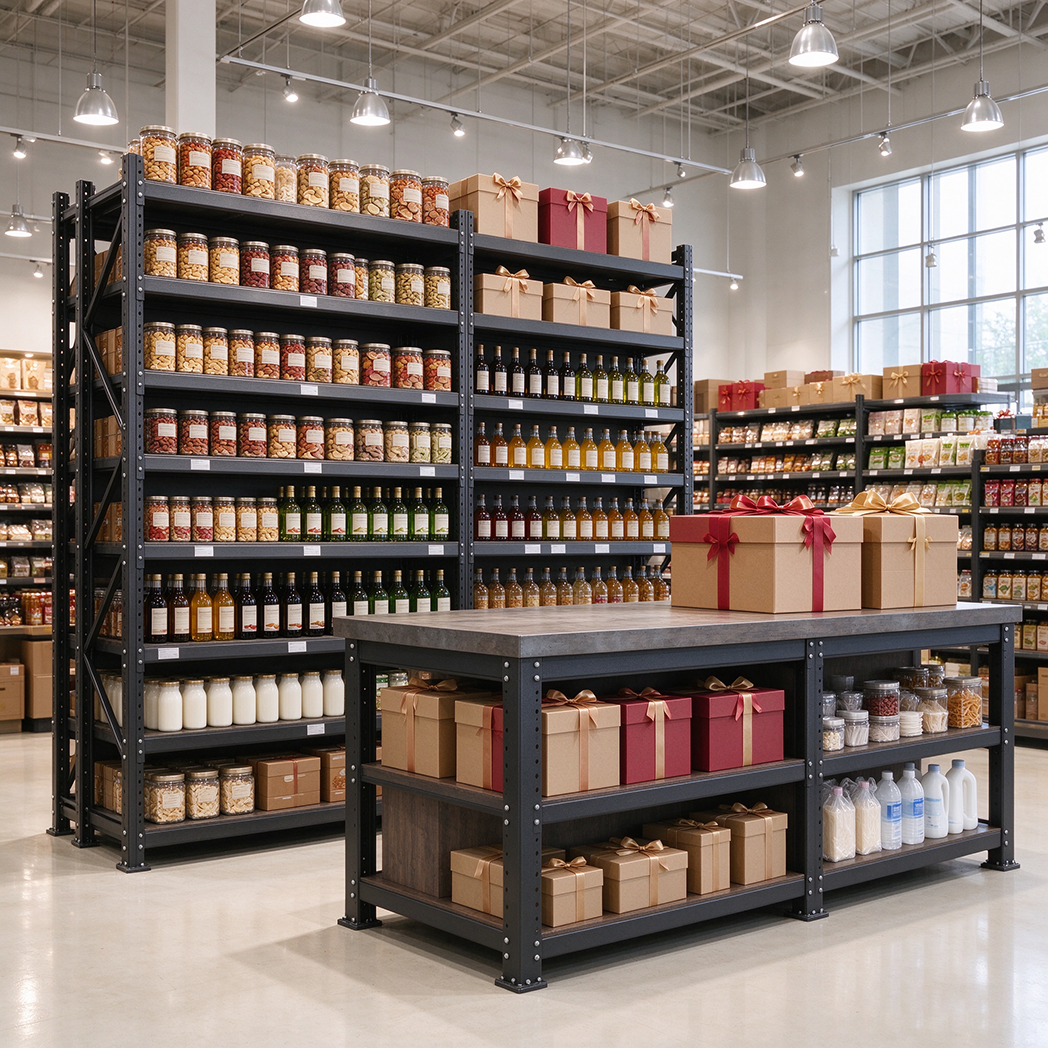
Different categories demand different engineering. A display for light packaged goods is not a safe proxy for bulk beverages, tools or dense household products. A heavy duty store fixture should be evaluated by its rated load, load distribution, base stability, connection points and the conditions under which the rating applies—not by the thickness of one visible component.
| Use case | Common structure | Priority | Trade-off |
|---|---|---|---|
| Light packaged goods | Wire / adjustable shelves | Fast reset, visibility | Open wire may not suit small items |
| Bulk or heavy products | Reinforced steel shelving | Verified load and stability | Higher material and freight cost |
| Promotional end cap | Modular end unit | Fast campaign changes | Needs reset discipline |
| Brand-led presentation | Metal + wood / acrylic | Finish and visual consistency | More coordination across materials |
| Backroom storage | Industrial shelving | Capacity and access | Must match site and safety rules |
Ask for the actual test or engineering basis behind load claims. Confirm whether capacity is per shelf, per bay or total unit, and whether the figure assumes evenly distributed weight. Installation, anchoring, floor condition and use instructions matter. Do not treat a marketing label as a substitute for a documented rating.
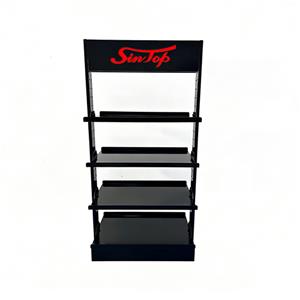
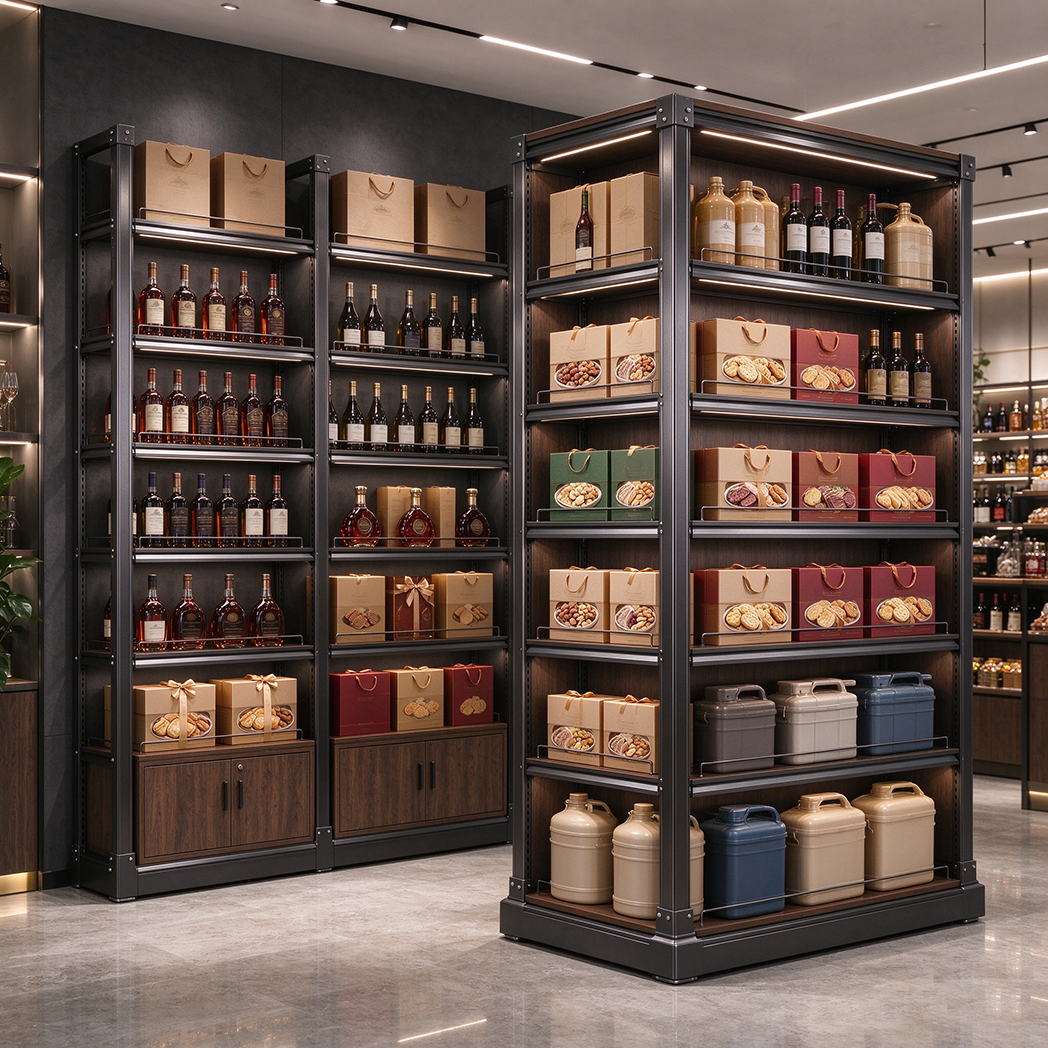
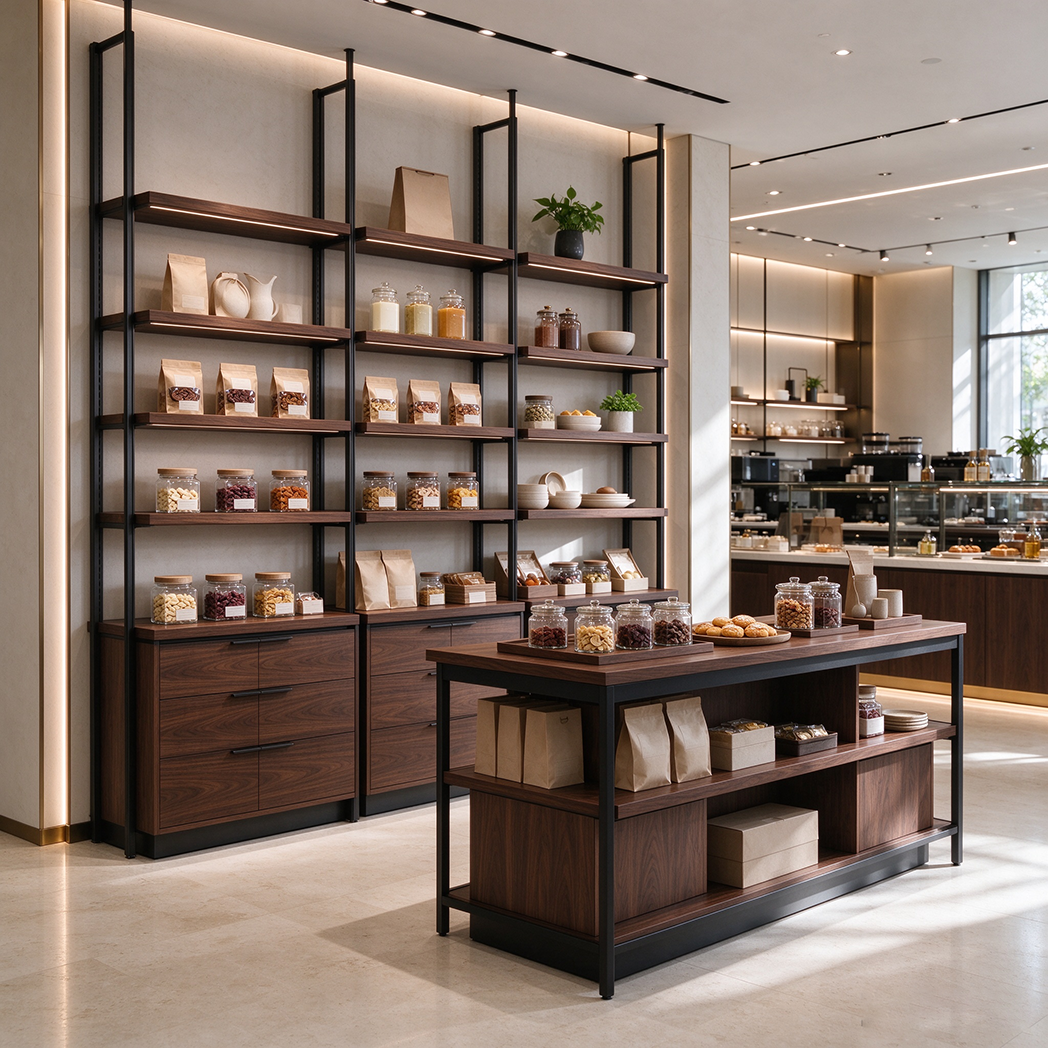
A custom store fixture may combine steel, wood, acrylic and graphics. Mixed materials can support brand requirements, but buyers should assess cleaning, wear, repairability, shipping protection and the cost of replacing a single component.
4. How Do Quality, Customization and Logistics Change Total Cost?
Total cost includes more than the factory quote: sample development, tooling, inspection, packaging, freight, installation labor, damage, spare parts and future revisions. A fixture that costs slightly more but assembles quickly or packs efficiently can be the better commercial choice.
Compare three procurement routes:
| Route | Best fit | Verify before award |
|---|---|---|
| Standard | Fast, repeatable needs | Stock, dimensions, finish consistency |
| Modified standard | Brand adaptation with controlled cost | Modification limits, sample, tooling |
| Fully engineered | Unique product or store constraints | Engineering ownership, test basis, MOQ, schedule |
Quality planning should define incoming-material checks, weld and finish inspection, dimensional checks, assembly verification, carton drop or transit testing where appropriate, and final inspection criteria. Agree on what constitutes a defect, how nonconforming goods are contained, and who approves corrective action.
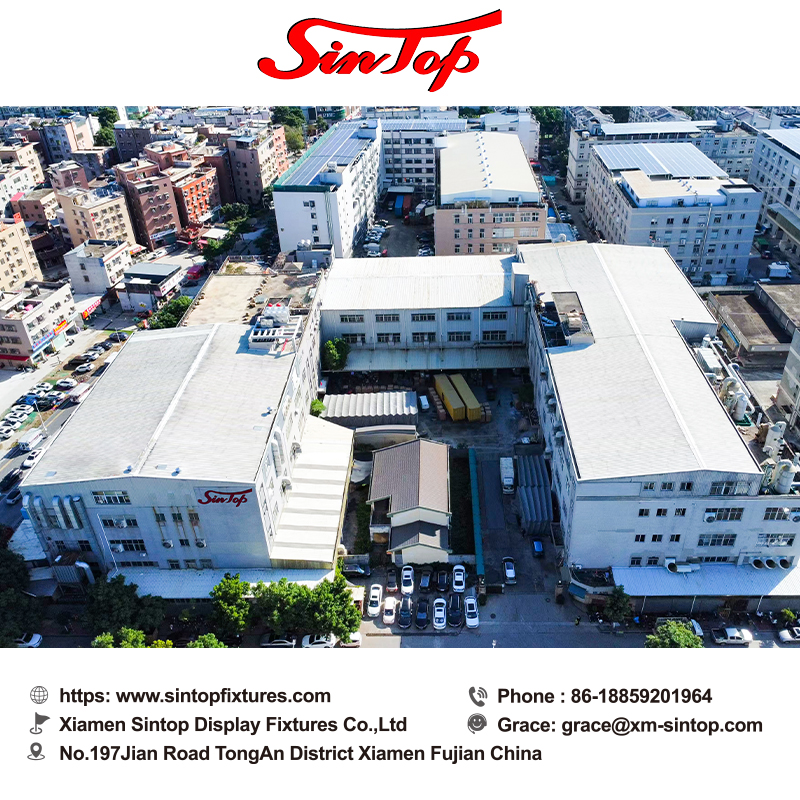
Xiamen Sintop Display Fixtures Co., Ltd. describes itself as one of China’s earliest display-rack suppliers. Its stated offer includes OEM/ODM support, custom design, rapid prototyping, structural improvement suggestions and coordination from sample to production. For each project, buyers should verify current capacity, certifications, inspection records, lead times and the precise scope in writing. Company history is useful context; project evidence is what protects the purchase.
A food or general-merchandise retailer should also consider packing density and container utilization. Ask for carton dimensions, pallet or wooden-crate options, protection for finished surfaces, assembly instructions and a realistic shipping schedule. Better packaging can reduce damage and installation friction, but it must be tested against the product and route.
5. How Should a Supplier Page Convert Search Intent Into RFQs?
A useful SEO page answers the questions a buyer asks before contacting sales: what categories are supported, what materials are available, how load is assessed, what customization means, what information is needed for a quote and how samples are approved. Product pages should use original photographs, clear specifications, real process descriptions and named contact details.
Recommended Sintop internal links: ‘custom retail display racks’ to the custom-fixture product page; ‘metal display racks’ to the metal rack category; ‘retail store fixtures’ to the solutions page; and ‘contact Sintop’ to the inquiry page. Confirm exact destination URLs before publishing. Website: https://www.sintopfixtures.com/
For geographic and topical authority, explain manufacturing location, service scope, materials, engineering workflow and quality checkpoints accurately. Avoid unsupported claims such as guaranteed savings or universal compliance. Google’s people-first guidance favors content that demonstrates first-hand expertise, clear authorship and useful information rather than pages created mainly to repeat search terms.
A productive RFQ includes product photos, dimensions, weights, quantity, store format, target date, destination country, finish, packaging, load expectations and reference designs. The better the brief, the less time both sides spend pricing different assumptions.
FAQ
What is a custom store fixture?
A retail display or storage unit designed or adapted to a specific product, brand, store footprint or operating requirement.
How do I evaluate a heavy-duty fixture safely?
Review documented load ratings, load distribution assumptions, stability, connections, anchoring guidance and installation conditions. Request engineering or test evidence.
What does store fixture custom mean for project cost?
Customization can add design, tooling and sampling costs, but may reduce product-fit problems, assembly time or brand inconsistency. Compare total project cost, not unit price alone.
What should be included in a fixture RFQ?
Dimensions, product weight, quantity, use case, materials, finish, destination, schedule, packaging and any drawings or brand standards.
Can Sintop support OEM and ODM projects?
Sintop states that it supports OEM/ODM and custom design. Confirm the project’s engineering scope, sample schedule, quality plan and commercial terms directly.
Sintop Value
Sintop provides customized retail display and storage solutions using metal, wood, acrylic, and other materials. With in-house manufacturing and OEM/ODM capabilities, we support projects from design and prototyping to production. Our team works with buyers to develop fixtures that meet specific product dimensions, load requirements, store layouts, branding, and packaging needs.

Contact information
Website: www.sintopfixtures.com
Wechat/WhatsApp: +86 15980885084
Email: elly@xm-sintop.com
FAQ
1. What types of display racks can Sintop provide?
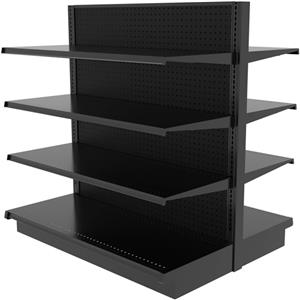
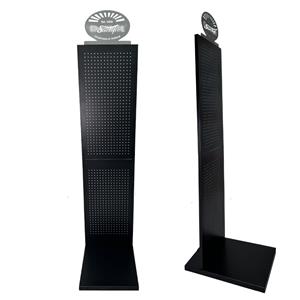
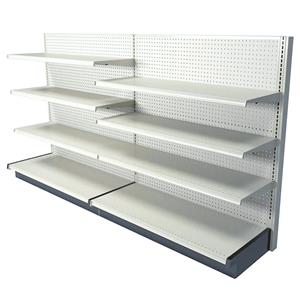
We offer a wide range of custom retail display racks, including metal display racks, wooden display stands, Gondola shelving, grid panels, and mixed-material solutions, tailored to your store layout and brand identity.
2. Can I order a single unit or prototype?
Yes, no minimum order is required. We can produce prototypes or single units as well as large-volume orders.
3. How long does it take to receive an order?
New items: 3–5 weeks for tooling and production.
Reorders: 2–4 weeks depending on product type.
We are flexible and strive to meet your required delivery dates.
4. Can Sintop handle OEM or ODM projects?
Yes, we specialize in OEM and ODM solutions, turning your ideas or drawings into custom, high-quality display racks.
5. How does Sintop ensure quality?
Every display rack undergoes material inspection, welding and structural checks, surface finish testing, and final assembly inspection to ensure durability, safety, and visual appeal.