

How Retailers Can Avoid Overpaying for Display Racks
As retail budgets continue to tighten, achieving the best value in purchasing custom beauty display equipment, retail cosmetics display, and cosmetics store fixtures has become a shared challenge for retailers and intermediaries. From an intermediary’s perspective, the real issue is not unit price, but whether the cosmetics display design is practical and whether the selected display fixtures supplier can deliver consistently.
This article, based on real project experience, explains how retailers can control costs without sacrificing performance. It covers material selection, inspection standards, logistics planning, and how to work effectively with a Chinese Display Rack Factory to achieve long-term cost efficiency.
Price Is Not the Same as Cost—Intermediaries Focus on Long-Term Spending
In custom beauty display equipment projects, retailers are often drawn to low pricing. Intermediaries understand that true cost is determined over the entire product lifecycle.
If retail cosmetics display units deform, lose coating quality, or develop structural issues, repair and replacement costs quickly exceed any initial savings. This is the core logic behind Display Rack Cost Control.
An experienced display fixtures supplier discusses lifecycle value instead of focusing only on factory pricing.
Material Selection Determines Whether Metal Display Racks Are Worth the Price
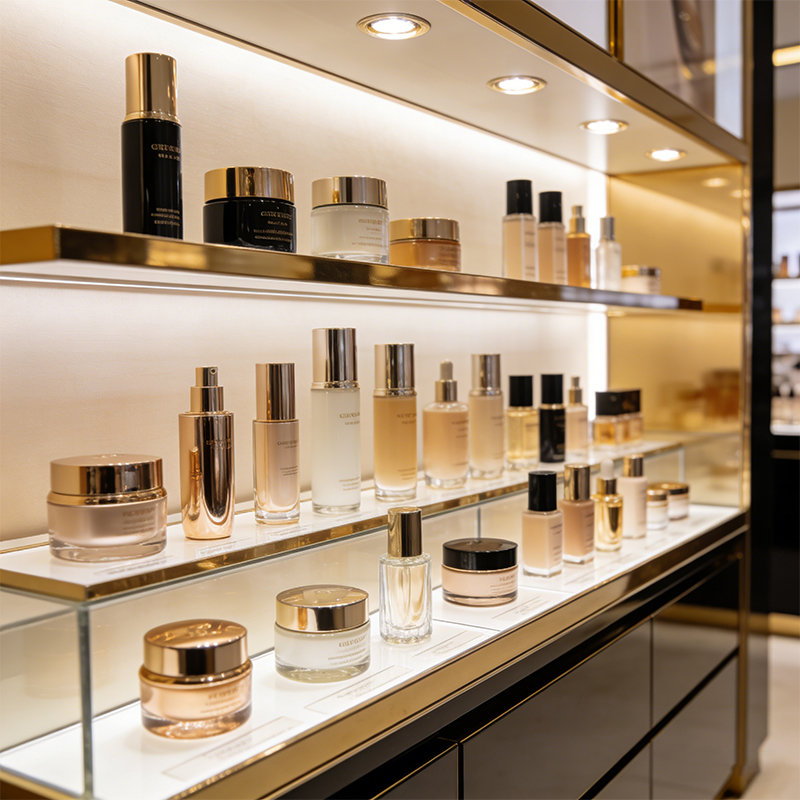
In beauty-related cosmetics store fixtures, Metal Display Racks remain the dominant choice. However, variations in material thickness, fabrication methods, and surface treatment create major differences in both cost and performance.
From an intermediary standpoint:
custom beauty display equipment requires higher welding and coating standards
retail cosmetics display must balance appearance with maintenance efficiency
cosmetics display design must align with structural material properties
A professional display fixtures supplier clearly explains material grades rather than leaving details vague, which directly affects Commercial Fixture Durability.
Weak Inspection Standards Lead to High Cost and Low Performance
Many retailers assume higher pricing guarantees quality, but this is not always true for custom beauty display equipment.
Intermediaries must define inspection criteria early in the cosmetics store fixtures sourcing process, including:
1. Structural stability and load-bearing tests
2. Dimensional tolerance control based on cosmetics display design
3. Consistency of surface finishes during mass production
Reliable display fixtures supplier partners usually support third-party inspections, which plays a key role in controlling total project cost.
Logistics and Packaging Are Often Overlooked but Directly Impact Margins
In large-scale retail cosmetics display programs, transportation costs are frequently underestimated.
From an intermediary perspective, knock-down construction significantly reduces logistics expenses for custom beauty display equipment.
An experienced display fixtures supplier considers container efficiency and protective packaging during the design stage, which is especially important for Custom Retail Fixtures projects.
Achieving Real Cost Balance with a Chinese Display Rack Factory
When working with a Chinese Display Rack Factory, intermediaries are not searching for the lowest quotation but for overall controllability.
Before cooperation begins, retailers and intermediaries should confirm:
Dedicated project management for custom beauty display equipment
Proven mass production experience with retail cosmetics display
Ability to optimize structures based on cosmetics display design
Clear production timelines and quality checkpoints for cosmetics store fixtures
A professional display fixtures supplier helps clients avoid unnecessary cost losses rather than pushing aggressive pricing.
FAQ – Common Questions from Retailers and Intermediaries
Q1: Why do low-priced display racks often cost more in the long run?
A: Rework, replacements, and maintenance frequently exceed the initial price difference.
Q2: Does custom beauty display equipment always require thicker materials?
A: Not necessarily. Structural design matters more than material thickness alone.
Q3: Which stage causes the most cost overruns in retail cosmetics display projects?
A: Unclear inspection standards that result in mass rework.
Q4: How can cosmetics display design help reduce costs?
A: By simplifying structures and improving production consistency.
Q5: How can retailers tell if a display fixtures supplier truly acts in their interest?
A: They proactively propose solutions that balance cost and performance.
Conclusion: Avoid Overpaying by Making Systematic Decisions
In custom beauty display equipment and retail cosmetics display projects, price should never be the sole decision factor.
From material selection for cosmetics store fixtures, to the practicality of cosmetics display design, and the reliability of the chosen display fixtures supplier, every step affects final cost and performance.
Sintop Value
Avoiding overpayment is not about choosing the cheapest quote—it is about choosing the most controllable solution. At Sintop, we help retailers and intermediaries reduce long-term costs by evaluating custom beauty display equipment and retail cosmetics display projects from a full lifecycle perspective.
As a display fixtures supplier with experience in cosmetics store fixtures, we focus on structural efficiency, material transparency, and inspection discipline. Instead of overspecifying materials, we optimize cosmetics display design to achieve strength, durability, and visual impact without unnecessary cost.
Our approach integrates clear material standards, defined inspection checkpoints, and logistics-aware engineering. By addressing packaging efficiency and knock-down construction early, we help clients lower freight costs and avoid rework—ensuring commercial fixture durability while keeping budgets under control.

Contact information
Website: www.sintopfixtures.com
Wechat/WhatsApp: +86 15980885084
Email: elly@xm-sintop.com
FAQ
1. What are store fixtures?
Store fixtures are essential equipment and furniture used in retail spaces to display, organize, and store merchandise. Examples include shelving units, racks, display cases, counters, and hooks.
2. Why are store fixtures important?
Store fixtures enhance the shopping experience by organizing products, improving accessibility, maximizing space, and creating appealing displays that attract customers and boost sales.
3. What types of store fixtures are commonly used?
Common types of store fixtures include:
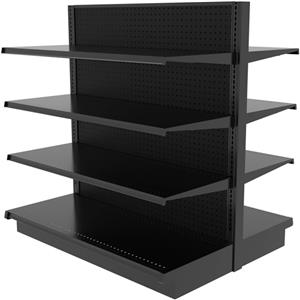
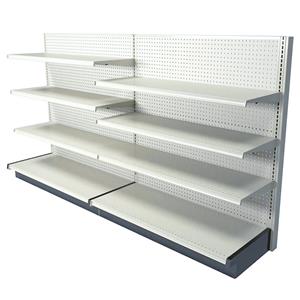
Shelving Units(wall shelves, free-standing shelves, adjustable shelving)
Display Cases (glass cases, countertop cases)
Racks (clothing racks, display racks)
Counters (checkout counters, service counters)
Hooks and Pegboards
End Caps
Signage and Graphics
Mannequins
4. How do I choose the right store fixtures for my retail space?
Consider your merchandise type, store layout, and branding needs. Fixtures should be functional, complement your store's design, and fit within your budget. Evaluate your space to determine the best fixture types and configurations for optimal product presentation and customer flow.
5. Can store fixtures be customized?
Yes, many store fixtures can be customized to align with your store's branding and specific needs. Customization options include materials, colors, sizes, and designs. Collaborating with a fixture supplier or designer can help create fixtures that match your store’s style and functional requirements.
6. How can I maximize space with store fixtures?
Utilize fixtures that optimize vertical space, such as wall-mounted shelves and tall display racks. Modular and adjustable fixtures can adapt to changing merchandise or store layouts. Plan your store layout carefully to ensure efficient use of space and smooth customer flow.
7. How do I maintain store fixtures?
Regularly clean and inspect fixtures to ensure they remain in good condition. Check for wear and tear, and repair or replace damaged parts. Follow manufacturer guidelines for maintenance and cleaning to extend the lifespan of your fixtures.
8. Can store fixtures be used for different types of retail stores?
Yes, store fixtures can be adapted for various retail environments, including clothing stores, electronics shops, grocery stores, and more. The choice of fixtures depends on the specific needs and merchandise of the store.
9. How can store fixtures improve the customer experience?
Well-designed fixtures make products easy to find and browse, enhancing the overall shopping experience. Effective use of fixtures creates an organized, aesthetically pleasing environment that encourages customers to spend more time in the store.
10. Where can I purchase store fixtures?
Store fixtures can be purchased from specialized fixture suppliers, retail equipment stores, or custom fixture manufacturers. Online retailers and local suppliers also offer a wide range of options.