

How to Choose a Wood Clothing Display Rack or Metal Clothing Rack
A practical route to choosing between a wood clothing display rack and a metal clothing rack for retail garment display, built on drawings, samples, and acceptance criteria rather than market optimism.
Public retail indicators describe the market around a store; they do not prove that any single fixture sells more. A cited retail-sales report, a cited consumer-sentiment reading, and a cited weather observation are background for planning, not a verdict on hardware. Buyers still have to specify a timber fixture, a tube-and-rail unit, and a store presentation program against measurable operating requirements. This guide separates structural scope, contact surfaces, and store workflow so that each decision can be checked with drawings, samples, and acceptance criteria. The cited material sets context, and nothing in it predicts how a particular store, a particular layout, or a particular unit will behave once it is installed. Two questions run through every fixture order. First, what is the physical scope: which parts are structural, which are visible, and how do they meet. Second, what does the store need the unit to do for reach, handling, replenishment, and reset. A clear answer to both keeps a specification honest and keeps a discussion away from claims that no drawing can support. For that reason, each recommendation below is written as a requirement a store can verify, not as a promise about a result.
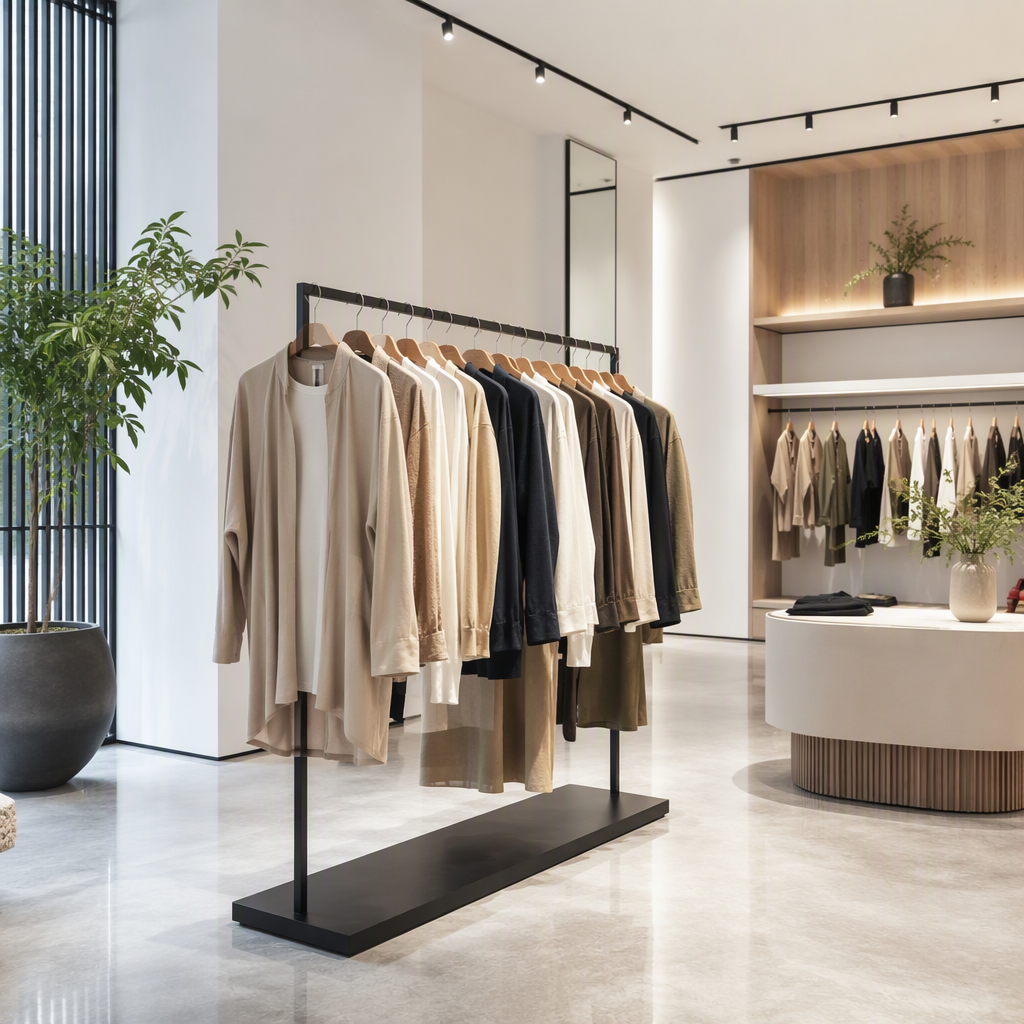
What Belongs in a Timber Display Fixture Specification?
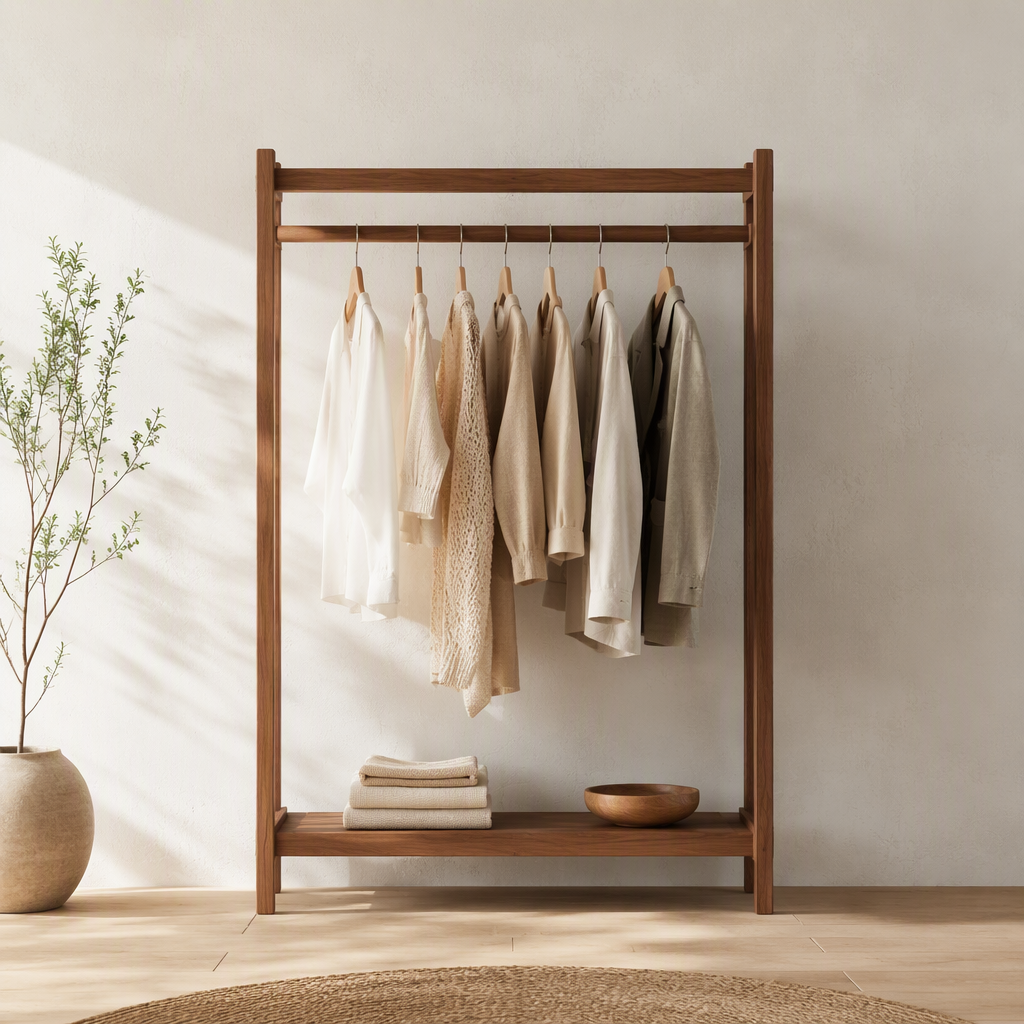
An order for a wood clothing display rack starts with a finished look, yet it still needs a split between structural parts and visible surfaces. Ask which components are solid timber and which are veneer over a substrate, then confirm the visible scope, meaning the faces a shopper sees and touches. Structural scope covers the frame, the joints, and the parts that carry weight. Visible scope covers the surfaces that appear in the aisle.
Garment and hanger contact deserves its own note. A rail or a hook that rubs a shoulder, a collar, or a strap can mark fabric over time, so ask how a hanger meets the rail and where a garment rests when the store is busy. Request a finish sample for review under the store's own lighting rather than a catalog image alone, since gloss, color, and texture shift with the light source and the viewing angle. Keep the accepted sample as the reference for later batches.
Decide the cleaning routine: which products are allowed, which to avoid, and how often a surface is wiped. Edge protection belongs at exposed corners, where carts, trolleys, and feet pass. The rail interface, meaning how the rail meets the frame, needs a defined fixing method and a replacement path. State load figures with the spread of weight over the unit, not a single number that hides how weight is carried. A replacement-finish route keeps a wood clothing display rack serviceable when a panel is scuffed or a coating is worn, instead of forcing a full replacement. Each point turns a visual choice into a checkable requirement.
A drawing set should show the visible faces, the fixing points, and the parts that are replaced most often. If the store cannot state a cleaning product or a load pattern, treat that gap as an open item rather than an assumption. A sample, not a photo, is the reference that both sides can point to when a finish is questioned. Note the parts that are handled most: a rail, a hanger stop, a shelf edge, a corner trim. Those points decide what a store will ask to replace first, and a spare list prepared at order time is easier than a search later.
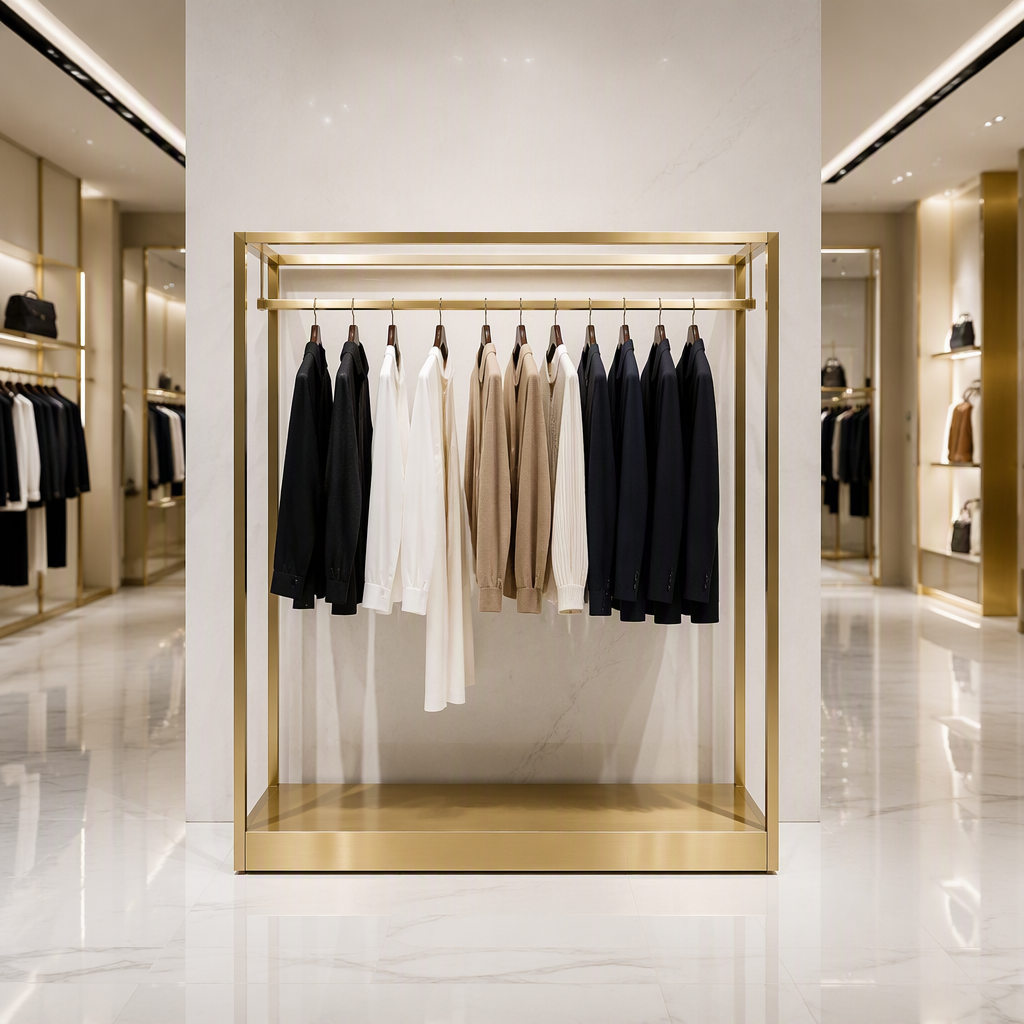
What Should a Tube-and-Rail Fixture Order Cover?
A metal clothing rack is often chosen for a slim profile, and the order should still define exactly what is being bought. Tube or rail gauge, or a specified profile, sets the stiffness and the feel of the unit. A stated dimension is easier to check than a general claim, and it gives production a number to work to.
Joints need a type: welded, bolted, or fitted, with the fasteners named and sized. Welding and fastener scope should say which connections are continuous and which are mechanical, so an inspector knows where to look. Casters or leveling feet change how a unit moves and how it sits on a floor, so that choice belongs in the drawing rather than in a conversation.
Load distribution along a rail and along a frame, not a single limit, tells a buyer where weight sits and how it is shared. The floor route shows where the unit travels, what it crosses, and where it rests. Coating and finish boundaries should separate painted, plated, and powder-coated areas, and note where a surface is expected to wear. Carton protection should describe how parts are packed, how they are unpacked, and which faces are shielded in transit.
A reconfiguration note explains which parts can be reused when a layout changes, so a metal clothing rack is not treated as disposable. A unit ordered for one range should still be described in a way that another team can read later. Keep the profile, the joint type, the coating, and the floor route in one file, with the accepted sample, so a replacement part can be matched without guesswork. None of these points promises durability by itself; each one is a requirement that a drawing or a sample can be checked against. Photograph the accepted sample set and file it with the drawings, so a later reorder starts from a known reference rather than a written description. Ask which coating the sample used, because two finishes can look alike on a screen and behave differently in a busy aisle.
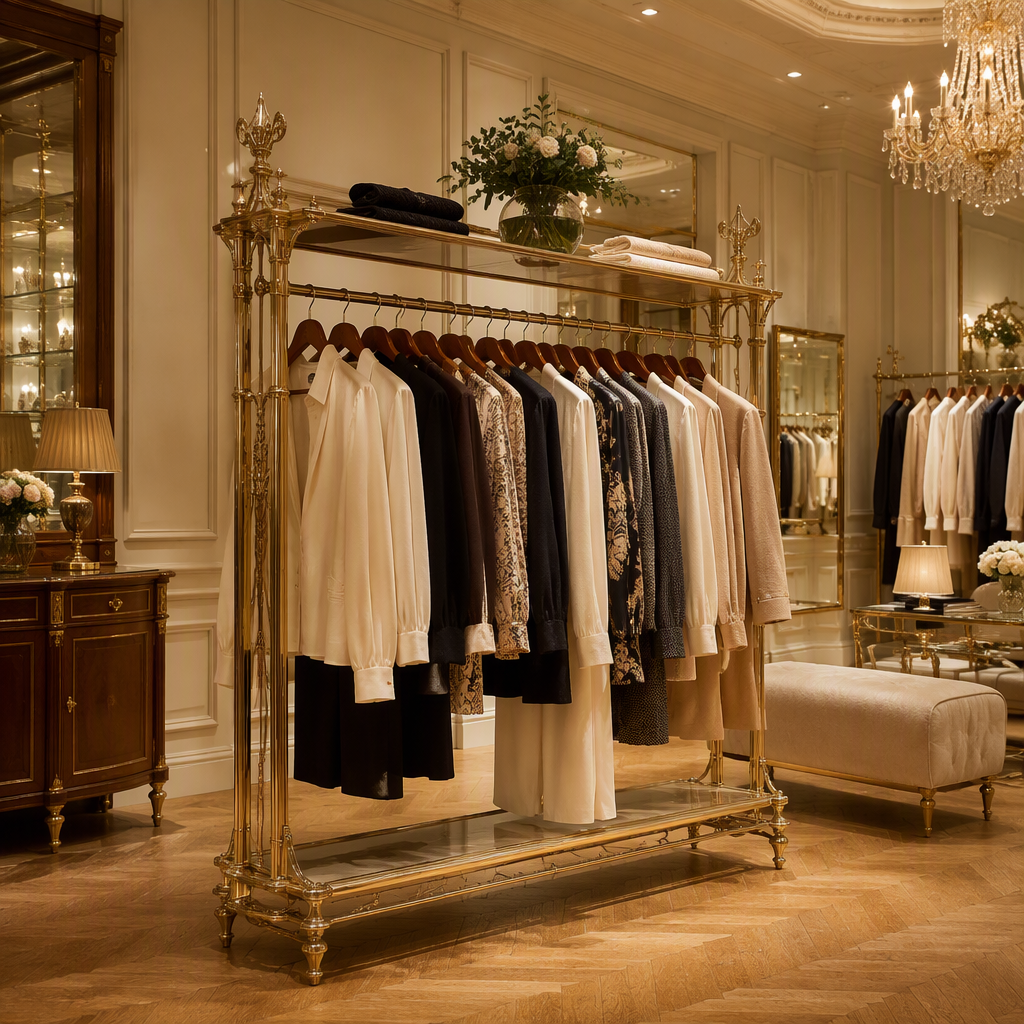
How Does In-Store Garment Presentation Planning Begin?
A retail garment display program starts with assortment and SKU count, because the number of options drives the number of positions on the floor. Sizing and color organization decide how garments are grouped and how quickly a shopper can compare two similar items. Customer reach sets rail heights and depths, so items are taken and returned without a stretch or a crouch.
Garment handling, including hanger type, spacing, and the way a shoulder sits, affects how fabric lies and how easily a size is found again. Replenishment needs a clear path from back stock to the selling floor, and a rule for what becomes empty during a busy period. Price and brand labels require a defined holder and position, so a label is read where a shopper expects it. Where a store runs more than one entrance, note how a shopper enters and turns, because that path shapes where a grouping should begin.
Aisle clearances should be checked against the store's own walkway plan, not a generic figure. Changeover and seasonal reset planning shows how a retail garment display returns to a neutral state between ranges, so the same footprint can hold different goods without a rebuild. Write the plan as a checklist a store team can run on its own. Position counts, sizing order, label placement, and clearance checks should be repeatable, so a reset does not depend on one person's memory. Put these questions to the team before a fixture is ordered, because layout drives the specification rather than the reverse.
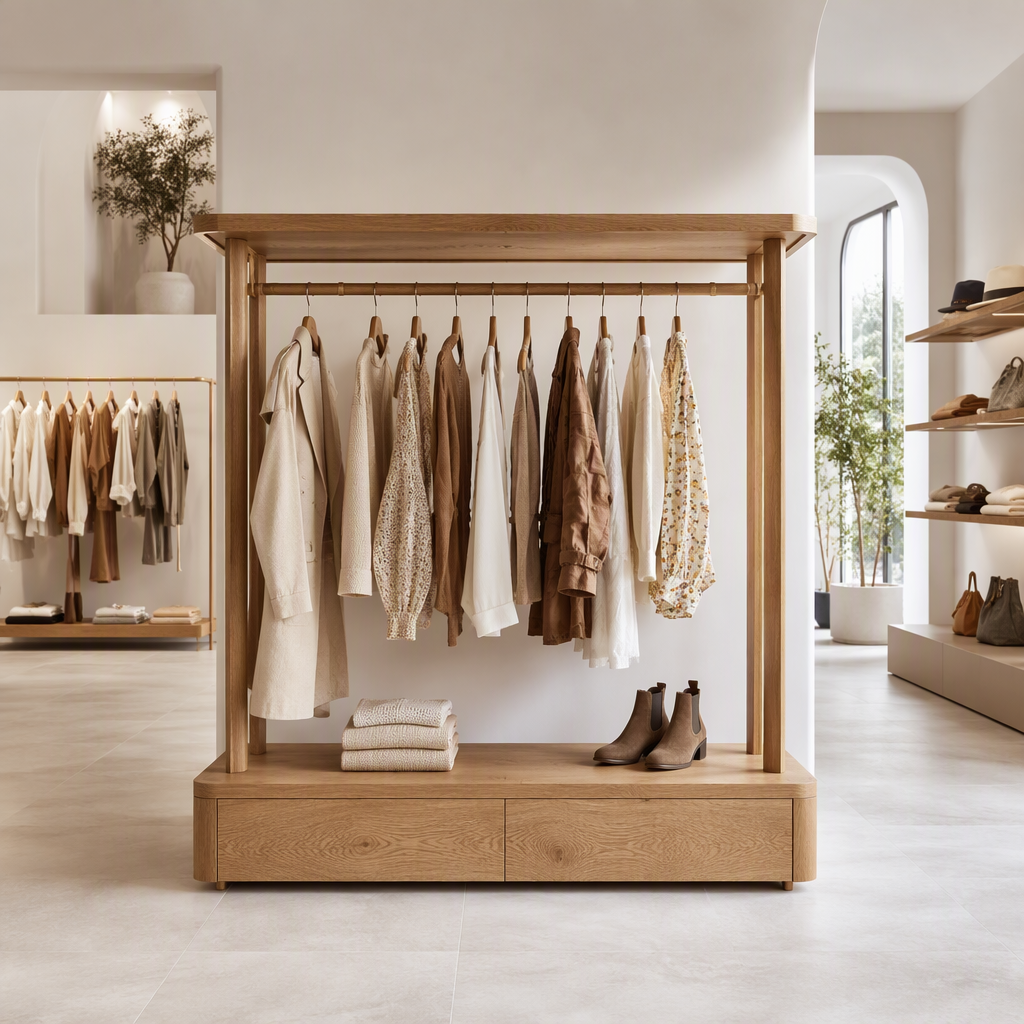
Timber and Metal Rack Comparison
| Requirement | Wood option | Metal option |
|---|---|---|
| Structure | wood clothing display rack: solid timber or veneer over substrate | metal clothing rack: tube or rail gauge, specified profile |
| Contact | garment and hanger rub; edge protection | joint and fastener scope |
| Finish | finish sample under store lighting | coating and finish boundaries |
| Load | weight spread over the unit | distribution along rail and frame |
| Movement | rail interface and fixing method | casters or leveling feet |
| Maintenance | cleaning routine and replacement finish | carton protection and reconfiguration |
| Presentation | retail garment display: assortment, sizing, reach | aisle clearances and seasonal reset |
Frequently Asked Questions
Does a wood clothing display rack need a finish sample before production?
Yes. Ask for a sample reviewed under the store's real lighting, and record the accepted finish, the cleaning products, and the edge-protection points in the order file.
What should a metal clothing rack drawing show?
It should show the profile, joint and fastener type, caster or leveling-foot choice, coating boundaries, load distribution, and the floor route the unit will follow.
How do you plan a retail garment display reset?
Start from assortment, sizing, and color groups, then set reach, handling, replenishment, and aisle clearances. Write the reset steps so a section returns to neutral between ranges.
Do the cited reports prove a fixture will perform?
No. The cited reports and the cited weather observation are context only. They do not predict how a specific store or unit will behave.
Does the company site describe an independent audit?
No. The site describes supplier-side design, prototype, production, and shipment stages, and it does not describe an independent audit.
Who confirms the acceptance criteria?
The buyer confirms them in writing. A supplier describes design, prototype, production, and shipment stages, and each stage is checked against the criteria agreed before production begins.
Sintop Value
Sintop combines in-house metal and wood manufacturing with design, prototyping, and production support. We help retailers develop customized clothing fixtures with clear specifications, finish samples, load requirements, and acceptance criteria.

Contact information
Website: www.sintopfixtures.com
Wechat/WhatsApp: +86 15980885084
Email: elly@xm-sintop.com
FAQ
1. What types of display racks can Sintop provide?
We offer a wide range of custom retail display racks, including metal display racks, wooden display stands, Gondola shelving, grid panels, and mixed-material solutions, tailored to your store layout and brand identity.
2. Can I order a single unit or prototype?
Yes, no minimum order is required. We can produce prototypes or single units as well as large-volume orders.
3. How long does it take to receive an order?
New items: 3–5 weeks for tooling and production.
Reorders: 2–4 weeks depending on product type.
We are flexible and strive to meet your required delivery dates.
4. Can Sintop handle OEM or ODM projects?
Yes, we specialize in OEM and ODM solutions, turning your ideas or drawings into custom, high-quality display racks.
5. How does Sintop ensure quality?
Every display rack undergoes material inspection, welding and structural checks, surface finish testing, and final assembly inspection to ensure durability, safety, and visual appeal.