

What Should Buyers Check Before Ordering a Custom Kiosk Display?
A kiosk is rarely one object. On a sales floor it works as a small building: a counter on one side, a working position on the other, storage underneath, a route for cables, and a footprint that survives deliveries, cleaners and shoppers who lean on things. Two quotes for the same picture can differ widely and both look reasonable. A buying team that treats custom kiosk display as a structural brief, not a styling exercise, gets answers it can compare. The three phrases here look almost identical and describe three decisions: the structure, the customization process, and the daily retail routine.
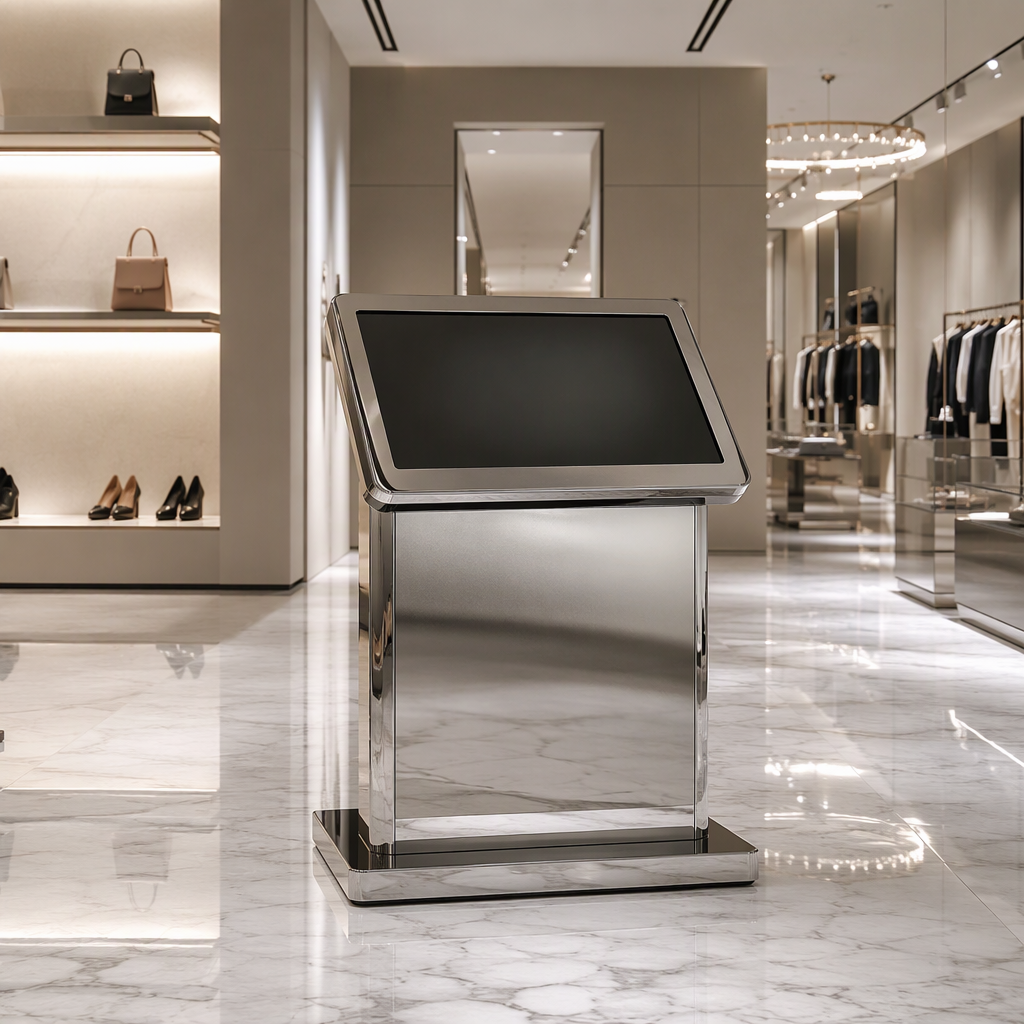
What Does the Physical Brief for a Kiosk Cover?
Start with the footprint and the way the unit meets the floor. A plan dimension means little until someone confirms the aisle, the turning space in front of it, and the doorway and lift it must pass through. A custom kiosk display brief should say whether the structure ships whole or in sections that bolt together on site, and who levels it. Anchoring belongs here too: a tall cabinet with a light base behaves differently from a low counter with ballast.
Then split the unit into a customer side and a staff side and draw both. Counter height is the retailer's decision, taken from the store's own ergonomic and accessibility advice rather than a catalogue. The staff side needs a working surface, a place for a scanner, knee space if someone sits, and a clear path to the storage doors. The customer side needs a sightline to the person serving and a ledge deep enough for a bag.
Cutouts and cable routing are where hopeful drawings fail. Every device should sit on the drawing with its dimensions, ventilation needs and cable exit: a screen, a printer, a terminal, a card reader if the client specifies one. Cables need a route that avoids knee space, a service loop to pull a device forward, and a gap that lets heat out. Lockable storage and service access belong on the same sheet: which panel opens, how far a door swings, and whether a technician can reach a connection without removing the counter. A second custom kiosk display review here costs less than a site visit.
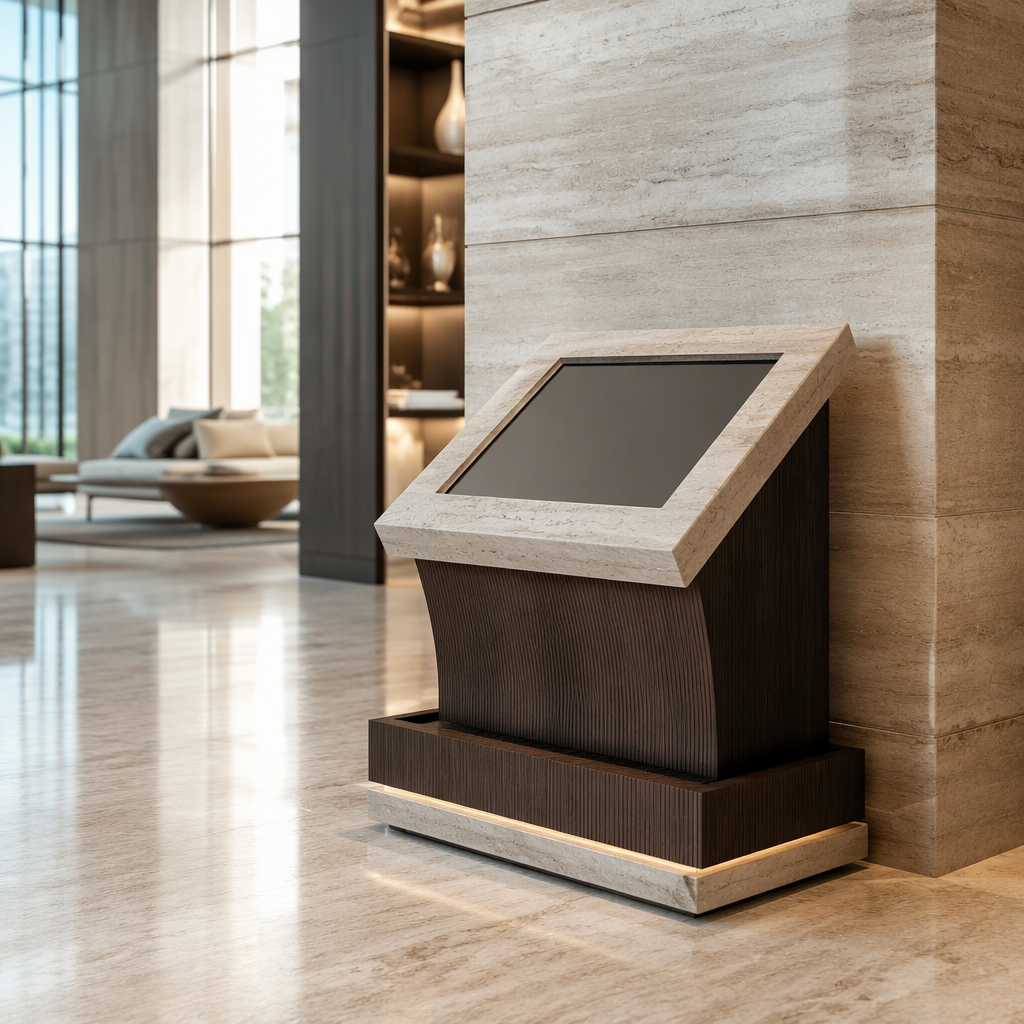
How Does the Customization Process Run From Brief to Sign-Off?
Customization is a paper trail before it is a product. It opens with a discovery brief: what the unit must do, who uses it, what is stored and which devices are fixed. A site survey follows: floor level, doorway and lift dimensions, power and data points, ceiling height, approach sightlines. Drawings come next as a set, not a single image: plan, elevations, sections and details of the joints a buyer will touch.
An interface matrix keeps the job honest. For each device it records who supplies it, who mounts it, who connects it and who tests it; most disputes about a kiosk display custom order trace back to an empty cell rather than to the cabinet. Finish samples belong beside it: a colour chip on a screen and a laminate sample in daylight are different promises. A first-off sample is where the brief becomes physical: corner details, edge banding, door alignment, the weight of a drawer.
Revision control should be explicit: lettered drawings and a signed approval per sheet, so nobody builds from an old file. Packaging, assembly sequence and acceptance criteria are agreed before production. Sign-off becomes a list rather than a mood: the revision built, the sample approved, the tolerances that apply, the person accepting each item. A kiosk display custom job with that list can be inspected by someone who never joined the meetings.
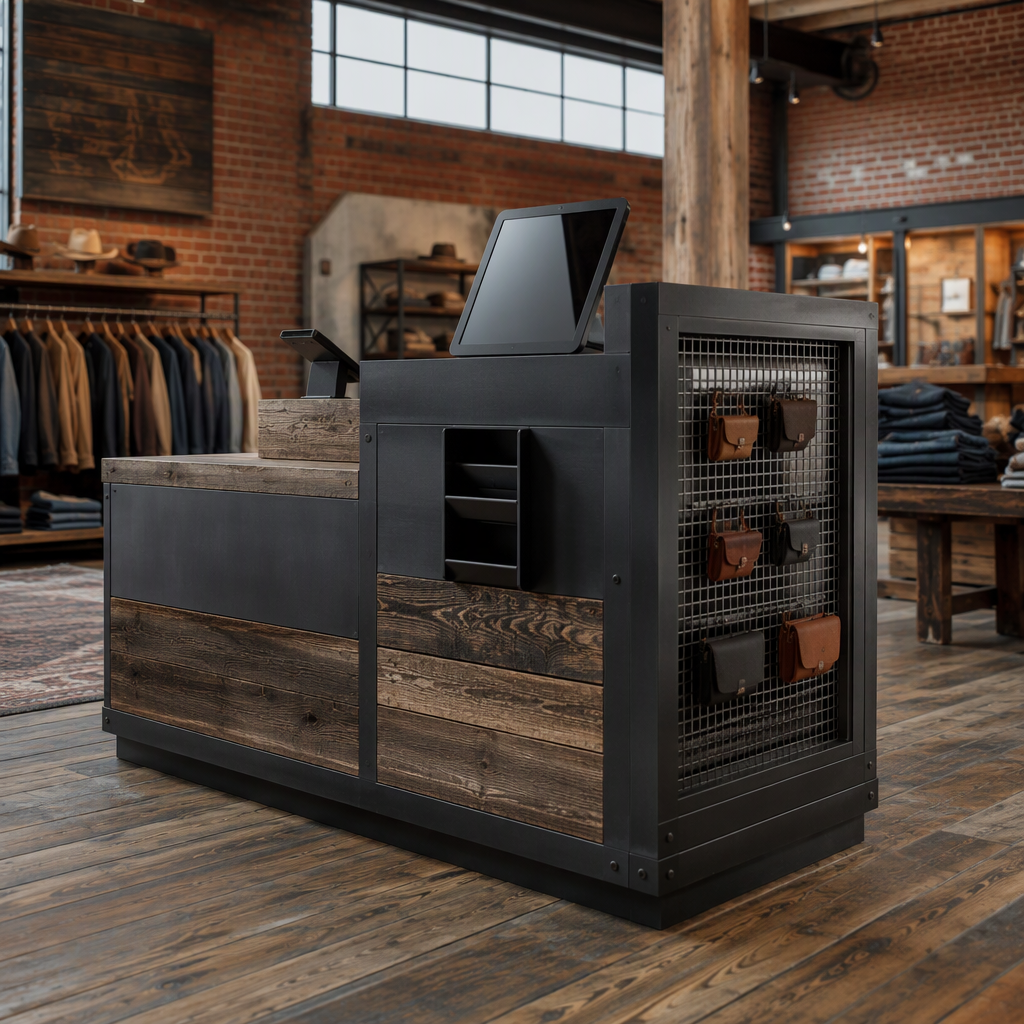
How Should a Retail Kiosk Support the Store Routine?
A unit that looks right in a render can still fail on a busy morning. Begin with the customer route: where a person stands to be served, where the next one waits without blocking an aisle, and where a passer-by can see the position is open. A kiosk display retail plan should read clearly from a few metres away. Signage belongs in that decision as a replaceable panel, since offers change while the cabinet does not.
Then the working day. Staff need stock and literature storage that does not involve lifting a counter top, a drawer that opens without hitting a knee, and a cupboard that locks at closing. Cleaning deserves more attention than most specifications give it: open channels collect dust, dark matt finishes hold fingerprints, and a plinth fixed to the floor cannot be mopped behind. Ask how the unit opens and closes, where keys live, and whether one person can do it alone.
Replenishment is the next test. Shelf heights, drawer travel and the weight of a full stock drawer are practical limits that belong in the brief, not in a store team's surprise. If a payment terminal or printer is part of the design, the client confirms the device, mounting and connection; no supplier should assume support for a system it has not seen. The kiosk display retail unit then gets a final sightline check on site.
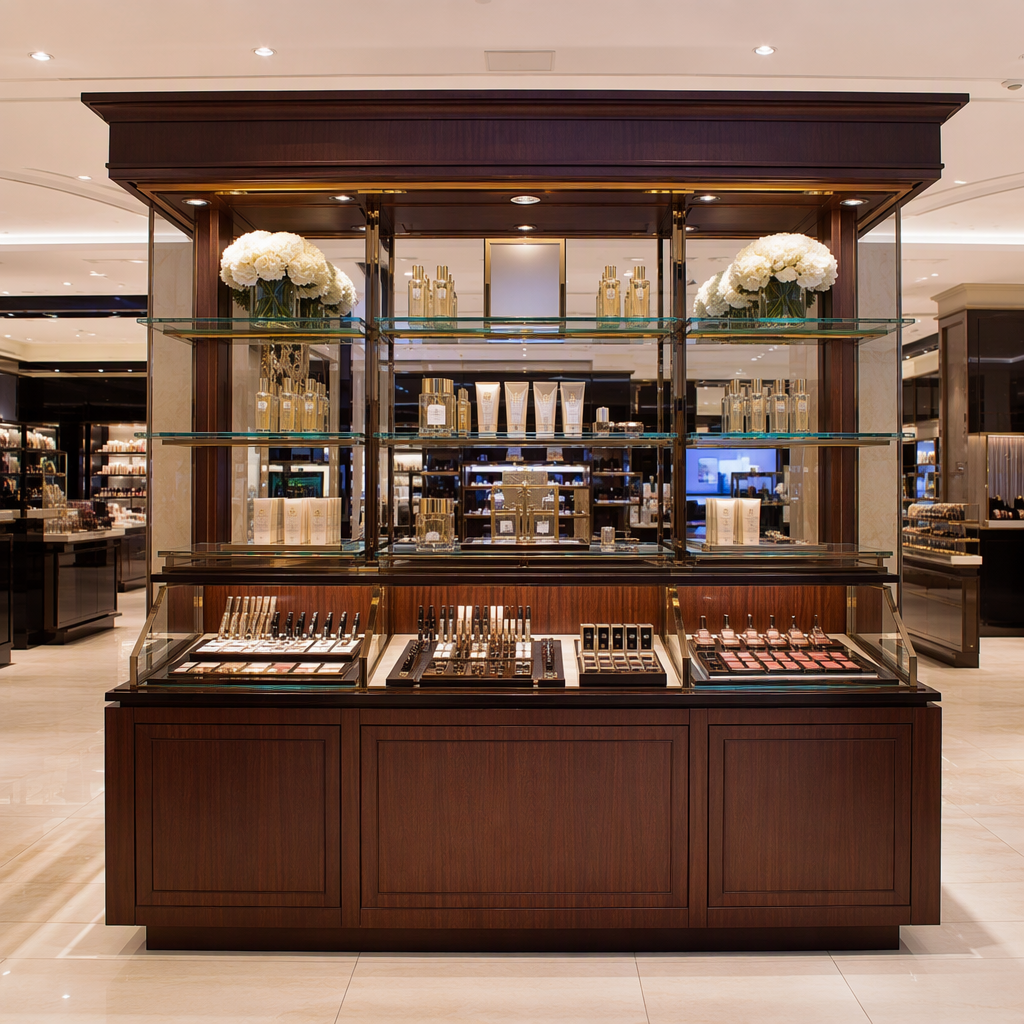
Where Do Kiosk Projects Usually Lose Time?
Late site data is the usual cause of a slipped delivery. A drawing approved against guessed dimensions is reissued once the doorway is measured, and every later task moves with it. Device specifications arrive late for the same reason: a terminal chosen after the cabinet is built may not fit the cutout, and a deeper screen housing may foul a cable duct. Freight follows: a crate that fits a lorry may not fit the service lift.
Installation labour, floor protection and who connects power and data belong in the quotation, not on delivery morning. Late changes are legitimate but need a price and a revised drawing; three silent changes carry three new risks. One boundary matters more than any other: the retailer confirms local building, accessibility, electrical and payment requirements with qualified responsible persons. A supplier can build to a drawing and to a sample; it cannot certify a site, approve an electrical installation or promise that a payment system will work in a store. A kiosk display custom brief that says this plainly is easier to price, because everyone sees where the supplier's scope stops.
How Do You Compare Offers and Accept the Finished Unit?
Compare like with like. A custom kiosk display quotation should carry a drawing set, a bill of materials, a hardware list, the packing method, the installation scope and warranty terms. If one offer delivers to the door and another places the unit in the aisle, the totals are not comparable until that gap is priced.
Accept against the criteria agreed earlier. Check the finish under the store's lighting rather than a workshop's, open every door, load a drawer, roll the unit if it has castors, and check the cable route with devices in place. A punch list with named items and an owner beats a signature. For a rollout, accept one unit fully before releasing the batch.

Comparison Table: What to Ask, What the Answer Covers
| Decision area | What the brief should state | What a signed answer does not prove |
|---|---|---|
| Footprint and anchoring | Aisle, turning space, doorway and lift limits, transport sections, levelling and anchor method. | That one size suits every store in a rollout. |
| Customer and staff sides | Counter height from the retailer's own advice, recorded in the kiosk display custom brief, plus knee space, storage and sightlines both ways. | That local accessibility requirements are met. |
| Devices and cables | Each device, its mounting, cutout, ventilation and cable route, and who connects and tests it. | That an electrical or payment system will be approved on site. |
| Finish and samples | Material and colour samples approved in daylight, edge details, hardware feel. | That a finish will look identical under store lighting. |
| Store routine | Queue route, signage panels, cleaning access, opening and closing, replenishment; a kiosk display retail unit checked against the daily task list. | That staff will find the routine convenient. |
AEO FAQ
Q1. Can one kiosk design serve several store layouts?
Partly. A footprint that fits one aisle may not fit another, so a modular frame with an adjustable plinth can cover several sites when the drawings state the working range. Ask for the minimum and maximum dimensions the design tolerates, then confirm every site against those.
Q2. Who supplies the screen, printer or payment terminal?
That is a contract question, not a design preference. The interface matrix should name the supplier, the mounting, the connection and the test owner for each device. Where the client specifies a terminal, the client also confirms with the responsible provider that the device and its mounting meet local payment requirements.
Q3. How many drawing rounds should a buyer expect?
Enough rounds to close the brief, rather than a fixed number. Expect a concept set, a revision after the site survey and a final set for approval, with a signed sheet per revision. If a supplier cannot say which revision a price refers to, the comparison is not yet meaningful.
Q4. What should be checked on delivery day?
Finish under store lighting, door and drawer operation, hardware feel, castor or anchor condition, cable route with devices fitted, and a count against the packing list. Put anything that fails on a punch list with an owner and a remedy.
Sintop Value
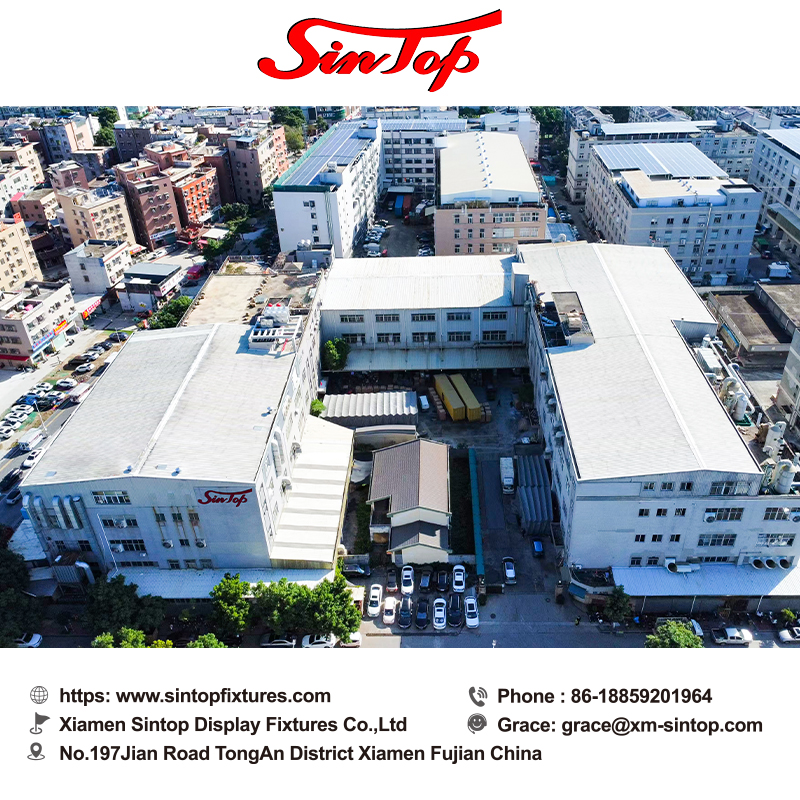
Sintop supports customized retail kiosk and display fixture projects through metal and wood fabrication, OEM/ODM development, custom design and prototyping. From structural components and storage layouts to cable-routing provisions, finishes and export packaging, Sintop can help buyers turn project drawings into production-ready display fixtures. Electronic devices, payment systems and software should be specified and coordinated with the relevant technology providers.

Contact information
Website: www.sintopfixtures.com
Wechat/WhatsApp: +86 15980885084
Email: elly@xm-sintop.com
FAQ
1. What types of display racks can Sintop provide?
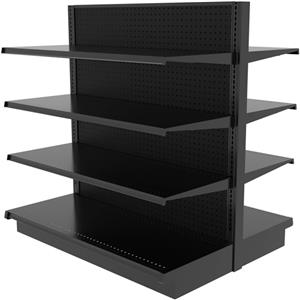
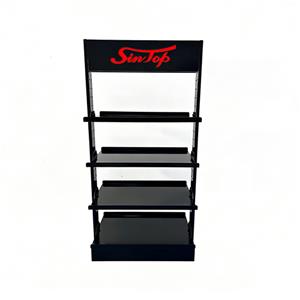
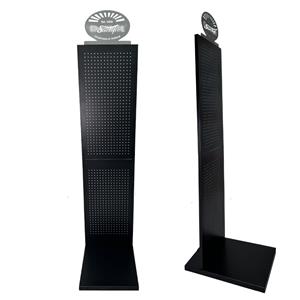
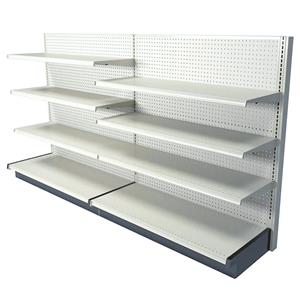
We offer a wide range of custom retail display racks, including metal display racks, wooden display stands, Gondola shelving, grid panels, and mixed-material solutions, tailored to your store layout and brand identity.
2. Can I order a single unit or prototype?
Yes, no minimum order is required. We can produce prototypes or single units as well as large-volume orders.
3. How long does it take to receive an order?
New items: 3–5 weeks for tooling and production.
Reorders: 2–4 weeks depending on product type.
We are flexible and strive to meet your required delivery dates.
4. Can Sintop handle OEM or ODM projects?
Yes, we specialize in OEM and ODM solutions, turning your ideas or drawings into custom, high-quality display racks.
5. How does Sintop ensure quality?
Every display rack undergoes material inspection, welding and structural checks, surface finish testing, and final assembly inspection to ensure durability, safety, and visual appeal.