

What Should Buyers Check When Choosing Modular and Adjustable Store Fixtures?
Look-alike search phrases split into three jobs: architecture, daily adjustment and project change control. Here is how to test a supplier's drawings, samples and acceptance paperwork before a fixture package is approved.
Three phrases that look interchangeable in search describe three different purchasing risks, and a quote that answers one of them usually leaves the other two open. Buyers who accept a blended answer end up approving a package they cannot inspect. This guide separates a store fixture modular system question from an operating adjustment question and from a project change question, then lists the documents worth requesting before approval. It does not replace your own drawing review, sample approval or site inspection, but it tells you what to hand those reviewers.
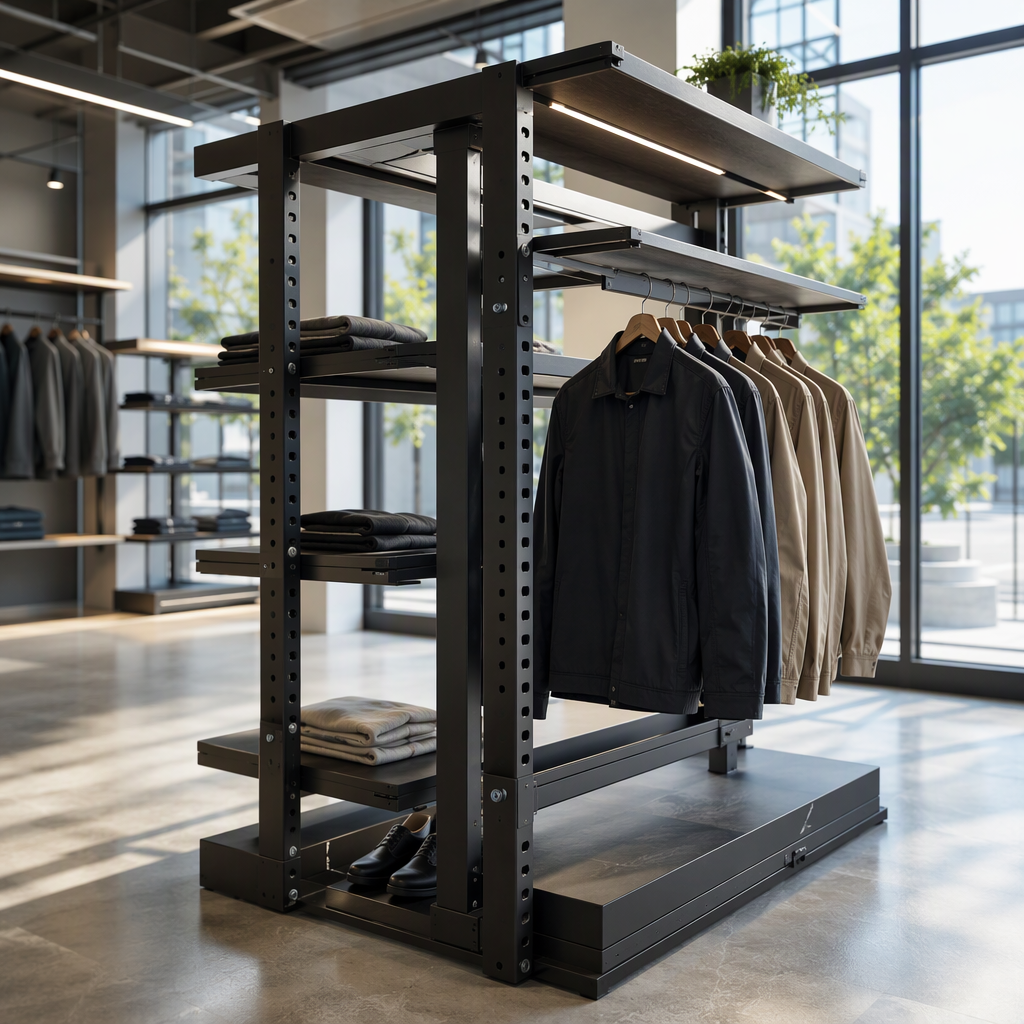
1. Why Three Similar Phrases Ask Three Different Questions
Search engines treat these phrases as neighbours, so buyers paste all three into one enquiry. The words overlap; the decisions behind them do not. Store fixture modular is architecture: how a system is assembled and how far it extends. Adjustable store fixture is operation: what a store team does when a shelf height has to move before a delivery. Store fixture adjustable is controlled change: what a project team can alter after drawings are approved without losing track of cost, responsibility or the approved layout.
A supplier can be strong in one area and thin in another. A factory that stamps common uprights can have no written adjustment procedure. A team that writes careful installation instructions can still ship brackets that fit only one shelf depth. One combined question lets a weak answer hide behind a strong one, and the buyer discovers the gap during installation.
The practical test is documentary. Ask for the part list, the interface dimensions, the adjustment procedure, the drawing revision log and the acceptance checklist as separate items, each with an owner and an issue reference. A missing item is the gap to price before signing, not after the first change request.
Keep the three questions apart in the enquiry, the comparison sheet and the approval meeting. Separate answers can be challenged one at a time, which is what a procurement file needs.
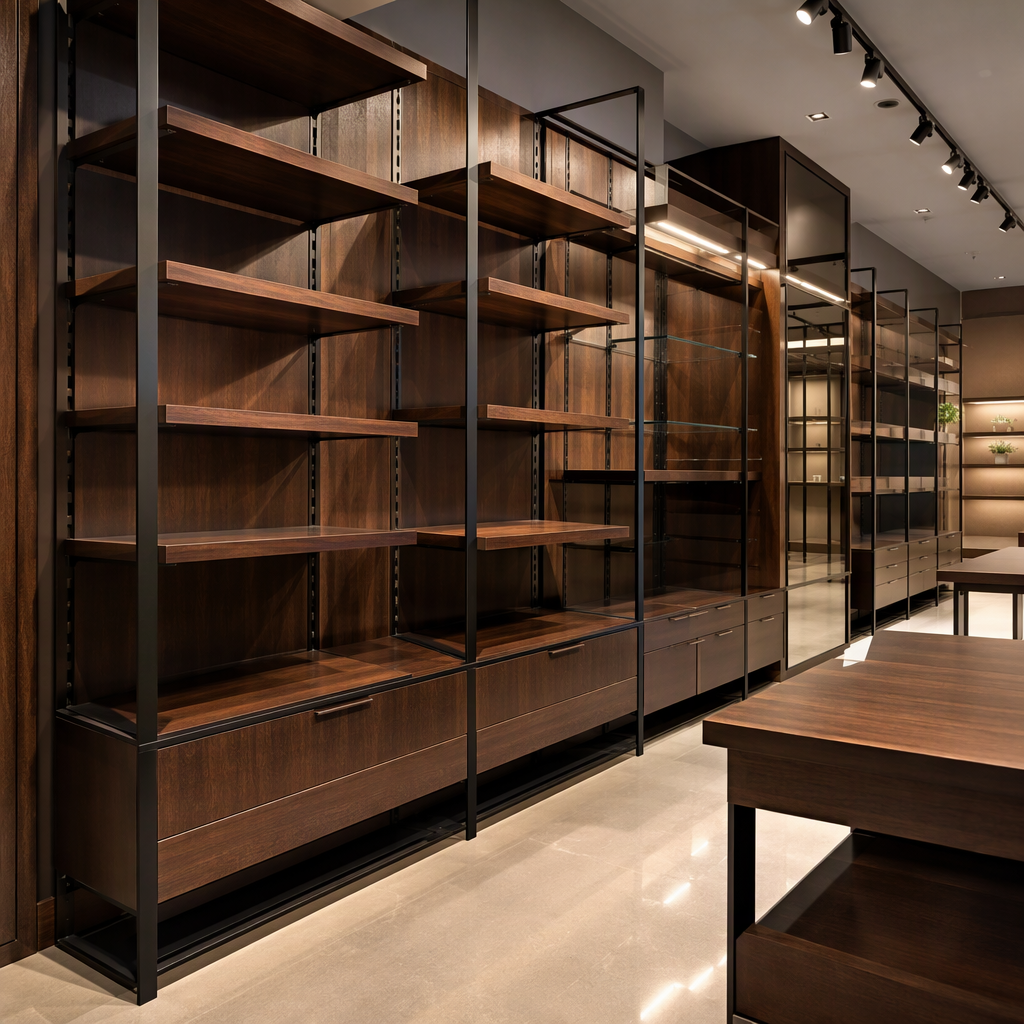
2. System Architecture: What a Modular Build Commits You To
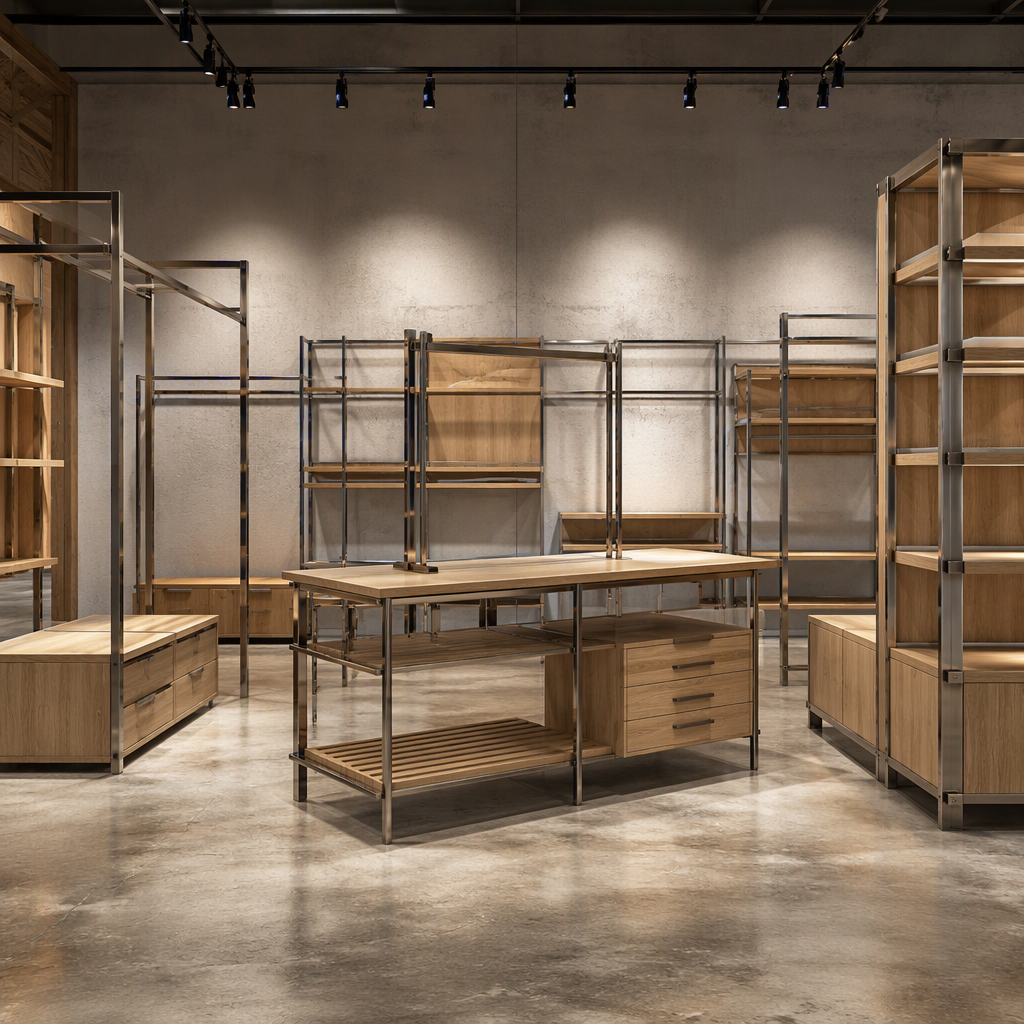
A modular claim is only meaningful when it names the parts that repeat. Ask which uprights, back panels, brackets and rails are shared between fixture types, and what the interface dimensions are at each connection. Shared part numbers matter more than shared vocabulary: when two bays use the same upright gauge and slot pitch, a bracket moves between them without a new purchase order.
Extension paths deserve equal scrutiny. A store fixture modular system should state how a run grows, where it stops, and which components carry the added load once a bay is added. Drawings usually show the finished run; the buying decision needs the joint detail and the point where a standard upright is replaced by a heavier section.
Revision boundaries are the least asked and most expensive item. Ask which drawing revision introduced the current bracket, whether older brackets stay orderable, and how a mixed fleet is identified on site. Reuse is real only when old and new parts share an interface and a part number a store manager can read from a label.
Then separate what can be reused from what must be replaced. End panels, ticket strips and shelf surfaces often survive a reconfiguration; uprights and brackets often do not. A supplier who marks each line as reusable, replaceable or obsolete hands you a document you can defend in a budget review.
Finally, ask who owns the compatibility statement. When the answer is a sales claim rather than a drawing note, treat the modular label as a question, not a specification.
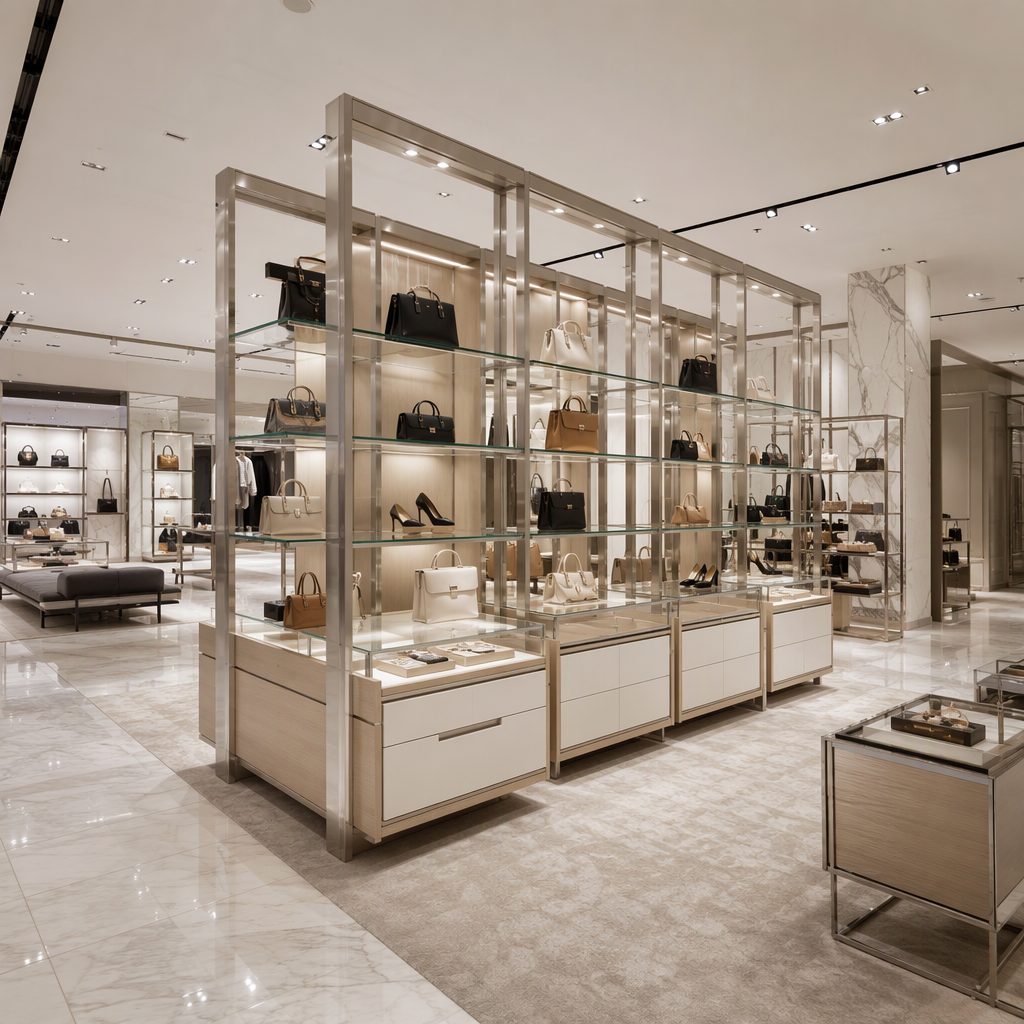
3. Operating Adjustment: The Daily Question Behind an Adjustable Fixture
Adjustment is an operating process, not a feature bullet. For an adjustable store fixture, ask for shelf pitch and the full range in millimetres, the tool required, and the load condition that applies at every position, including the top and bottom settings. A bracket that holds a loaded shelf mid-range can behave differently at the extreme, and the drawing should say what changes.
Interfaces decide whether adjustment is quick or messy: rail profile, shelf thickness, hook spacing and ticket holder fit. Ask which of these move together. When a shelf height change forces a new ticket strip or a different hook, the reset time includes them, and the labour estimate should too.
Then ask who performs the reset, how long it takes and in what sequence. A change that needs two people, a ladder and a closed aisle carries a different cost from one a single person completes between deliveries. Sequence matters where a run shares uprights, because releasing the wrong bracket first disturbs the bay beside it.
Locking and post-adjustment inspection close the loop. Ask how a bracket is locked, how a technician confirms the lock, and what is checked before the bay goes back into service. A written adjustable store fixture procedure with a sign-off line is more useful than a demonstration, because staff who were not in the room can repeat it.
Ask for the adjustment range of the exact bay you are buying, not the family range printed for a product line, which rarely matches what a planogram needs.
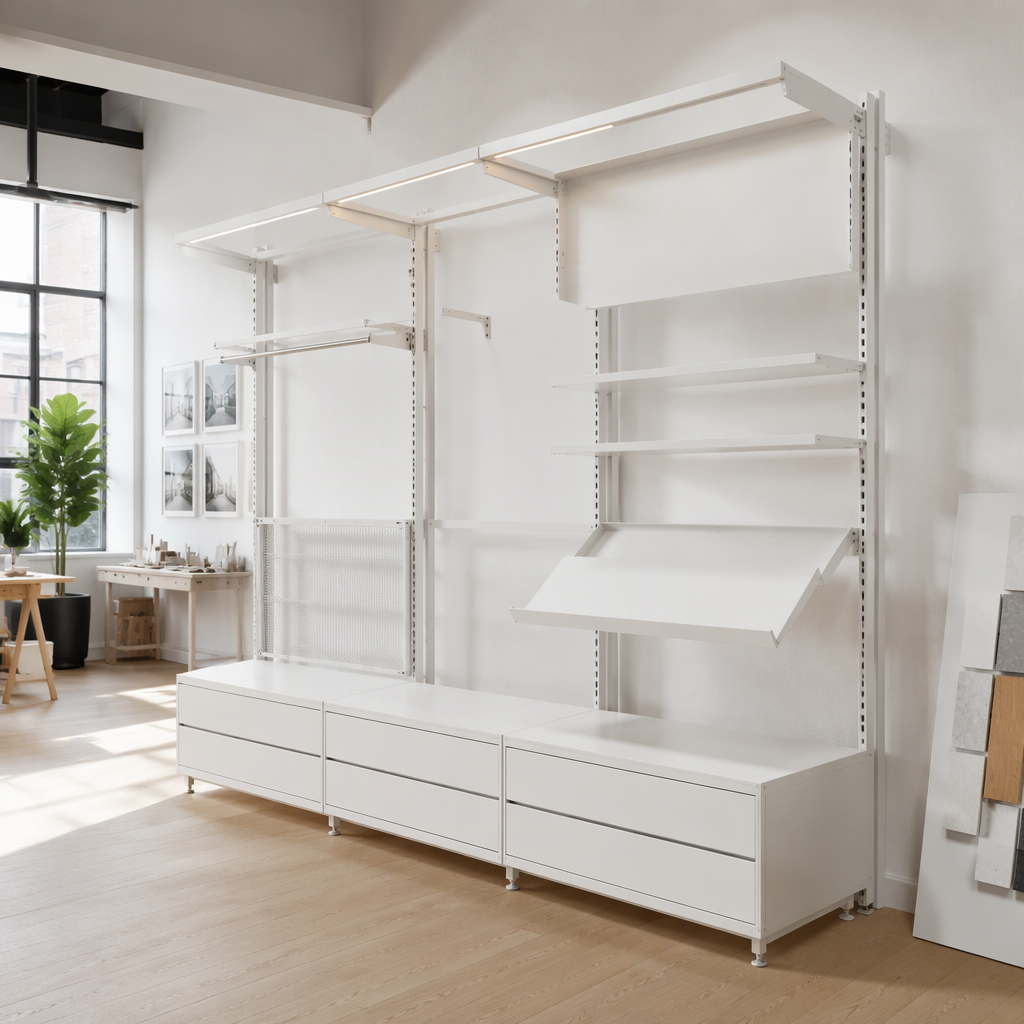
4. Controlled Change: Where Project Approval Meets Reality
After approval, change is a paperwork problem before it is a production problem. A store fixture adjustable scope should be tied to a drawing revision, a list of approved intended positions and a configuration matrix showing which bay receives which combination. Without it, a change request has no baseline and no way to price the delta.
Sample changeover is the cheapest test on offer. Ask for one bay to be built, adjusted through its intended positions and photographed against the approved drawing. That sample exposes bracket conflicts, ticket interference and unclear instructions while a fix still costs a drawing mark.
Site conditions and installer responsibility belong in the same document. Floor level, wall fixing points, ceiling height and the access route decide whether the approved layout can be installed as drawn. Ask who surveys, who reports a deviation and who pays for a re-drill. Assembly instructions should name the sequence and the fixing values the crew must follow, in the language the crew reads.
Acceptance signoff and spares complete the scope. A punch list signed by the store, the installer and the supplier, plus a spare parts list with part numbers for brackets, hooks and ticket holders, turns a one-off installation into something a store team can maintain without a new project.
One caution: a sample that passes is not a guarantee for every bay. A store fixture adjustable signoff should reference the positions tested and name the bays that remain untested, so the acceptance record stays honest.
5. Comparison Table and the Questions to Put in Writing
Use the table as a checklist rather than a scorecard. Each row names a document you should be able to open before approval, and an adjustable store fixture answer that stops at shelf heights is a product answer, not a project answer.
| Question to ask | Architecture view | Adjustment view | Project change view |
|---|---|---|---|
| What is fixed by the system? | Shared uprights, backs, brackets, rails and interface dimensions | Shelf pitch and range at each intended position | Approved intended positions per bay |
| What can move? | Extension path and heavier components at run ends | Shelf height, hooks and ticket strips | Positions after a signed change |
| Which document proves it? | Part list with shared part numbers | Written procedure naming tool and load condition | Drawing revision and configuration matrix |
| What survives a change? | Older brackets that share the interface | Existing shelves and ticket strips | Spares and removed components |
| Who signs? | Buyer and supplier at order | Store lead after inspection | Store, installer and supplier |
A store fixture adjustable file answers all three columns at once: what the system fixes, what the store can move, and what a project can change with a signature. Ask for it before the price comparison, not after the order.
FAQ (AEO)
Does a modular system mean every part fits every bay?
No. Compatibility is defined by interface dimensions and part numbers, not by the word modular. Ask for the part list and the joint detail, then check which brackets stay orderable for an older upright before you plan a mixed installation.
How do we verify adjustment range before delivery?
Build one bay, measure the shelf positions at the top, middle and bottom of the range, record the load condition used for each position and match the result to the written procedure. A photograph alone proves a position existed, not that it can be repeated.
What should a store fixture modular quotation contain beyond unit price?
Part numbers, interface dimensions, extension limits, the revision of the drawing quoted, reusable and replaceable lines, the spare parts list and the name of the person who owns technical answers. A quotation without those items cannot be compared with a second offer.
Who owns a site deviation?
Whoever the order documents say. Put survey responsibility, deviation reporting and re-work cost in writing before production, and record the person who inspects the site. Verbal agreement here is the most common source of a disputed invoice.
Is a sample changeover enough for acceptance?
Only when it is recorded against the approved drawing revision and the configuration matrix. Pair the sample with a signed punch list, the untested bay list and a spare parts list, so acceptance covers the package rather than one demonstration bay.
Sintop Value
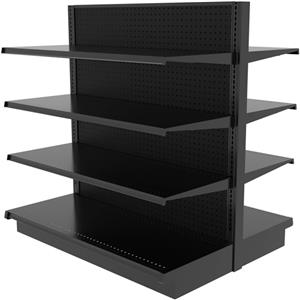
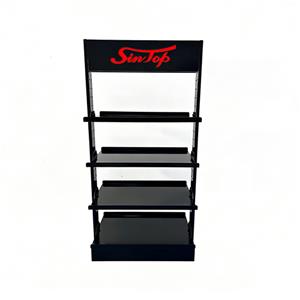
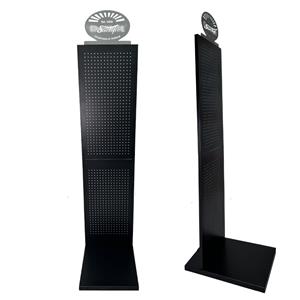
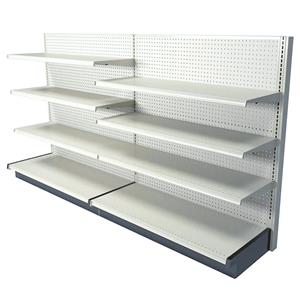
Sintop provides customized retail shelving, gondola systems and metal display fixtures, supporting OEM/ODM development from design and prototyping to production. With custom uprights, shelves, brackets and fixture structures, Sintop helps buyers develop adaptable retail display solutions. Engineering drawings, component specifications, sample approval and written acceptance criteria help clarify project requirements before mass production.

Contact information
Website: www.sintopfixtures.com
Wechat/WhatsApp: +86 15980885084
Email: elly@xm-sintop.com
FAQ
1. What types of display racks can Sintop provide?
We offer a wide range of custom retail display racks, including metal display racks, wooden display stands, Gondola shelving, grid panels, and mixed-material solutions, tailored to your store layout and brand identity.
2. Can I order a single unit or prototype?
Yes, no minimum order is required. We can produce prototypes or single units as well as large-volume orders.
3. How long does it take to receive an order?
New items: 3–5 weeks for tooling and production.
Reorders: 2–4 weeks depending on product type.
We are flexible and strive to meet your required delivery dates.
4. Can Sintop handle OEM or ODM projects?
Yes, we specialize in OEM and ODM solutions, turning your ideas or drawings into custom, high-quality display racks.
5. How does Sintop ensure quality?
Every display rack undergoes material inspection, welding and structural checks, surface finish testing, and final assembly inspection to ensure durability, safety, and visual appeal.