

Why Are Retailers Using AI for Visual Merchandising?
AI and Data Analytics Transform Visual Merchandising Strategies
Retail is becoming data-driven. In 2026, AI retail solutions, smart merchandising systems, AI visual merchandising, retail analytics technology and the future of retail displays are changing how brands design stores and manage product presentation. From our experience as a display fixture manufacturer, we believe future Display Fixtures will not only be physical furniture. They will become intelligent connections between customer behavior, product decisions and sales growth.
The change is already happening.
Retailers are using artificial intelligence to understand where customers walk, what products attract attention and which display positions create higher conversion rates. Instead of depending only on traditional merchandising experience, brands are using real-time data to adjust product placement, POP Display design and promotional areas.
Three words.
Data changes everything.
A retailer can spend thousands of dollars designing a beautiful store, but if customers ignore the key product zones, the investment loses value. With AI analysis, companies can understand customer movement patterns, measure attention areas and improve display decisions based on actual behavior.
So, should retailers still rely only on human experience when technology can reveal what customers really do?
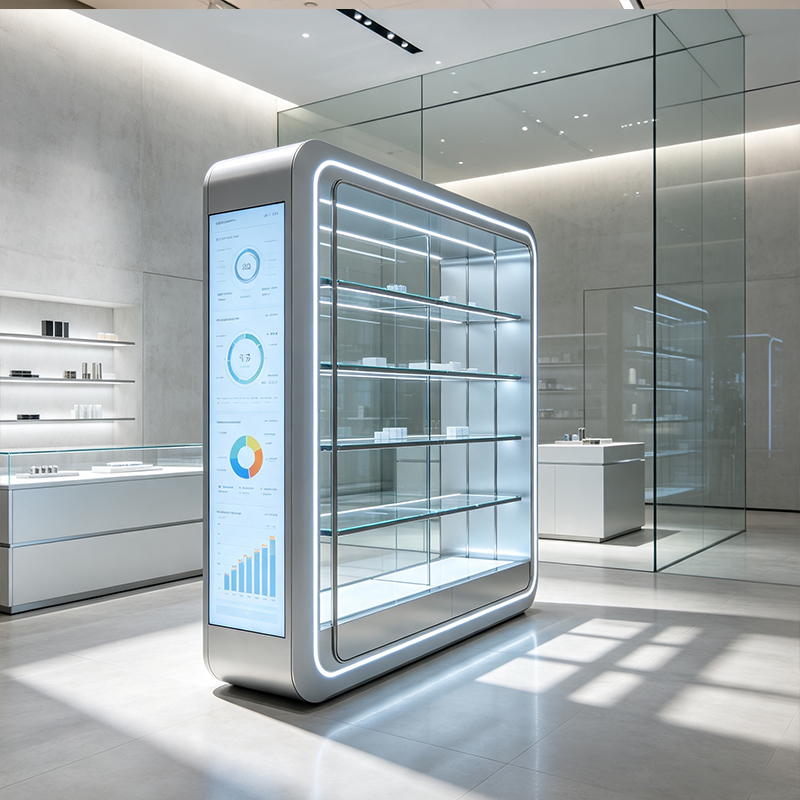
Why AI Is Entering the Visual Merchandising Industry
For decades, visual merchandising was built mainly on creativity and experience.
Store designers studied customer psychology, seasonal trends and brand identity. These skills remain valuable, but AI is adding another layer: measurable customer behavior.
Modern AI retail solutions allow retailers to analyze:
Customer walking routes
Product interaction frequency
High-traffic store areas
Seasonal purchasing patterns
Display performance
We have noticed a clear change from overseas retail projects. Customers no longer ask only:
“Can you manufacture this display rack?”
They now ask:
“Can this fixture support better sales decisions?”
That is a different conversation.
A traditional Display Rack shows products.
A smart display system explains why products sell.
According to research from McKinsey & Company, retailers are increasing investments in artificial intelligence and data analytics because these technologies help improve customer understanding and operational efficiency.
The retail fixture industry is moving into a new stage where manufacturing capability must connect with business intelligence.
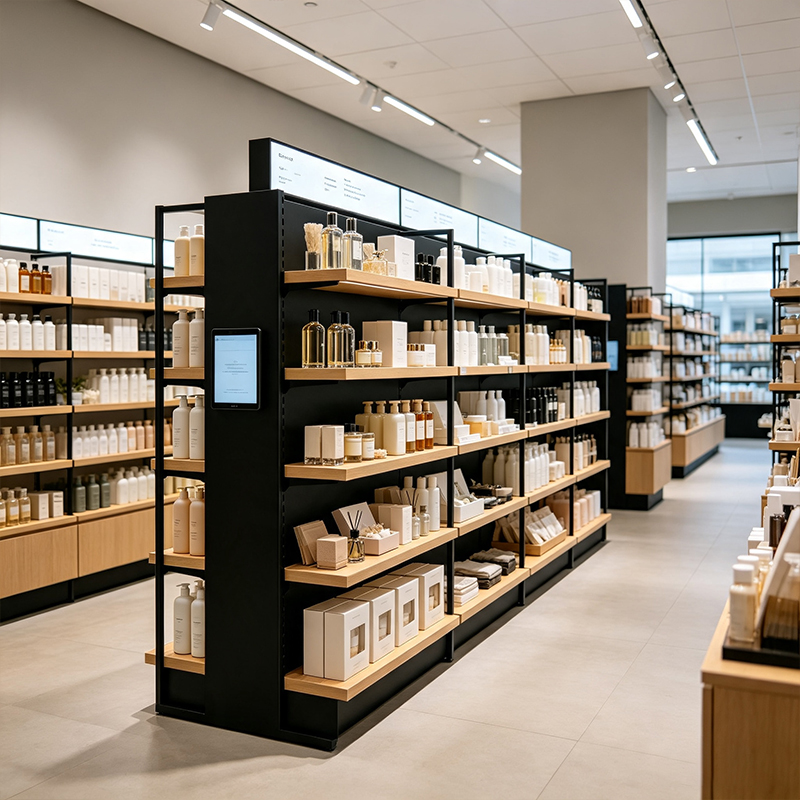
How Smart Merchandising Systems Improve Store Decisions
Smart merchandising systems are changing the way retailers plan physical spaces.
In the past, store layouts were often based on historical sales data and designer experience. Today, AI tools can process large amounts of information, including customer movement, product interaction and purchase behavior.
For example:
A supermarket may discover that customers spend more time in a specific aisle area.
A fashion retailer may identify which clothing display attracts the most attention.
An electronics store may understand which product demonstration zone creates higher engagement.
This information directly affects:
| AI Data Analysis | Display Application | Retail Result |
|---|---|---|
| Customer traffic analysis | Display Rack location planning | Better customer flow |
| Product interaction data | POP Display adjustment | Higher product visibility |
| Sales prediction | Promotional area design | Better campaign planning |
| Heat map tracking | Store layout optimization | Improved space usage |
We have worked with many international customers, and one fact is becoming clear:
The future display fixture is not designed only by engineers and designers.
It is designed by data.
A fixture supplier that ignores analytics will eventually fall behind.
Because retail is no longer guessing.
Retail is measuring.
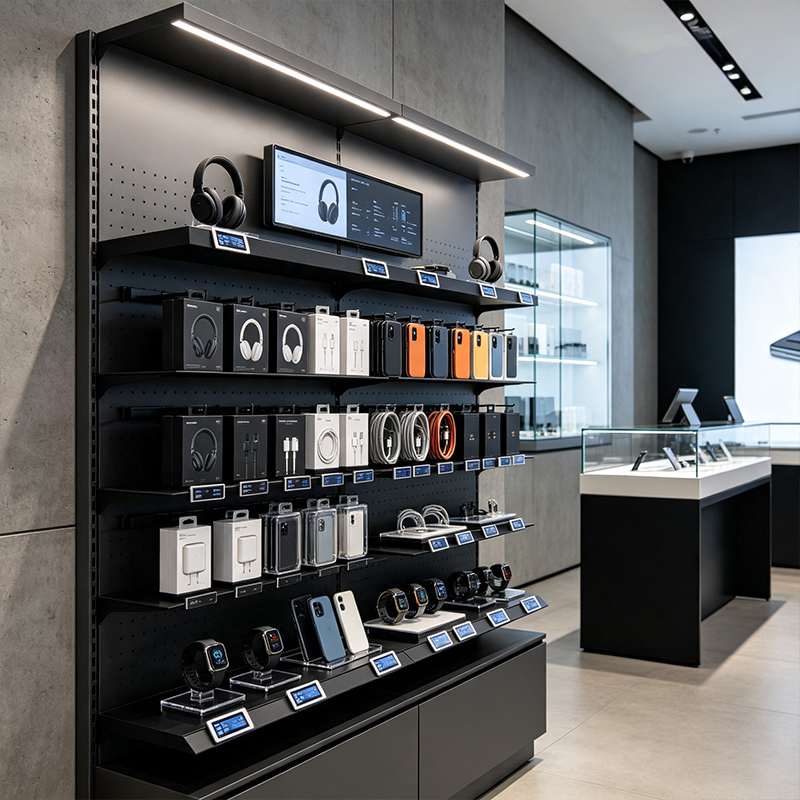
How AI Visual Merchandising Is Redefining Retail Display Design
AI visual merchandising is creating a new method for planning store environments. Instead of making decisions only from past experience, retailers can now combine human creativity with machine-generated analysis.
This does not mean AI replaces designers.
It means designers have better information.
From our factory experience, we have seen many projects where small changes create major differences. Moving a display rack 50 centimeters, changing product height from 1200mm to 1400mm, or adjusting the angle of a product presentation can influence customer attention.
Before AI, many of these decisions depended on personal judgment.
Now, data provides additional support.
Retailers are using AI systems to analyze:
Customer stopping time near displays
Product interaction frequency
Customer movement paths
Seasonal purchasing behavior
Response to promotional displays
For example, large retail groups such as Walmart have increased investment in artificial intelligence, automation and data systems to improve store operations and customer experience. According to Walmart Global Tech, AI applications are being used in areas such as inventory management, customer services and retail operation optimization.
The same principle applies to display fixtures.
A product placed in the wrong location may remain unnoticed.
A product placed in the right location with the right display structure can become a sales driver.
That is why AI visual merchandising is becoming an important tool for future store planning.
Retail Analytics Technology Connects Data With Display Performance
Retail analytics technology is changing the relationship between stores and customers.
Traditional retail reports usually tell brands what happened.
AI-based analytics can help explain why it happened.
This difference matters.
A retailer may know that a product sold better during a weekend promotion. But AI analysis can identify whether the improvement came from product location, customer traffic, lighting design, display height or promotional content.
This information helps brands create smarter decisions.
For display manufacturers, this creates new requirements.
We are no longer only producing metal racks, wood fixtures or POP displays.
We need to understand:
Customer behavior
Product visibility
Store traffic patterns
Digital integration
Data-supported design
The next generation of retail fixtures will combine physical manufacturing with intelligent analysis.
| Retail Data Source | Fixture Decision | Expected Improvement |
|---|---|---|
| Customer heat map | Display placement | Better traffic conversion |
| Purchase data | Product position | Higher sales opportunity |
| Customer interaction | Display design change | Improved experience |
| Seasonal trends | Fixture adjustment | Faster campaign response |
A smart fixture should answer a simple question:
Why is this product placed here?
If the answer comes from customer data, the display becomes much more valuable.
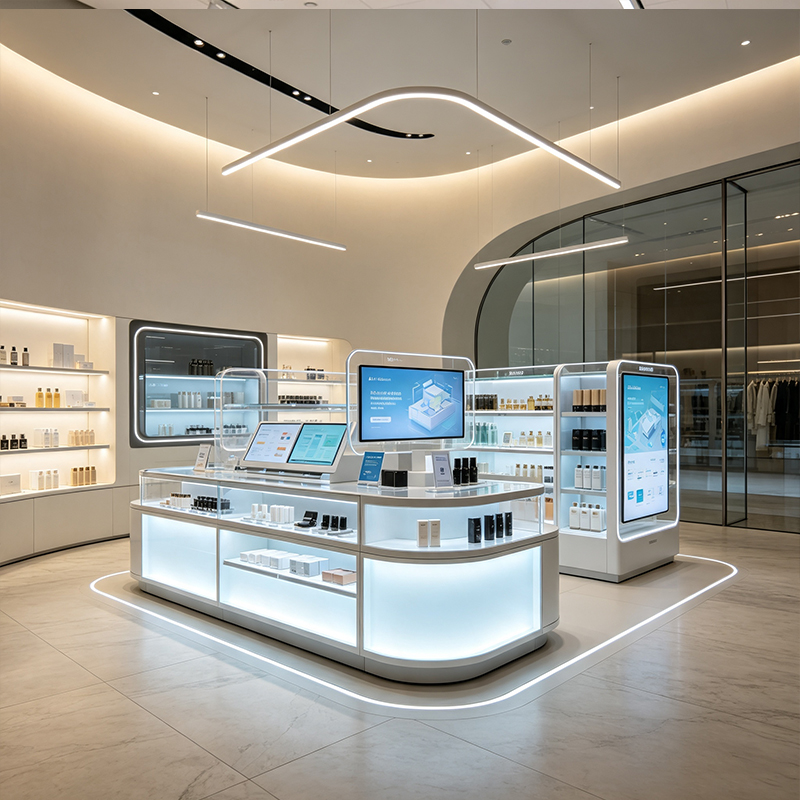
The Future of Retail Displays: From Static Fixtures to Intelligent Sales Tools
The future of retail displays will not be defined only by appearance.
Design is still important.
Materials are still important.
Manufacturing quality is still important.
But intelligence will become another key factor.
We believe future Display Fixtures will combine:
Physical structure
AI analysis
Digital connection
Customer interaction
Real-time adjustment
Imagine a retail display that can identify high customer interest areas, recommend product changes and automatically update promotional content.
This is not science fiction.
The technology already exists.
The challenge is applying it correctly in real stores.
From a manufacturer’s perspective, the biggest opportunity is not simply producing more fixtures.
It is creating smarter retail environments.
The winners in the next decade will not be companies that only build shelves.
They will be companies that understand how displays influence customer decisions.
FAQ About AI Retail Solutions and Smart Merchandising Systems
What are AI retail solutions?
AI retail solutions are technology systems that use artificial intelligence, machine learning and customer data analysis to help retailers improve product placement, store operations and customer experiences.
AI retail solutions allow brands to make better decisions by analyzing customer behavior, sales patterns and store performance instead of relying only on traditional merchandising methods.
What are smart merchandising systems?
Smart merchandising systems are digital tools that combine customer data, artificial intelligence and retail planning methods to optimize product displays, store layouts and promotional strategies.
Smart merchandising systems help retailers identify better product positions, improve inventory decisions and create more effective shopping environments.
How does AI visual merchandising work in retail stores?
AI visual merchandising is a retail planning method that uses artificial intelligence technology to analyze customer behavior, product performance and store traffic patterns to improve display design.
AI visual merchandising helps brands decide where products should be placed, how displays should be arranged and which areas require promotional attention.
Why is retail analytics technology important for display fixture companies?
Retail analytics technology is important for display fixture companies because it provides data-driven information that helps manufacturers create display solutions based on customer behavior and sales performance.
Retail analytics technology allows fixture suppliers to move from producing standard furniture toward creating intelligent retail systems.
What is the future of retail displays?
The future of retail displays is a combination of physical fixtures, digital technology and artificial intelligence systems that create smarter product presentation and personalized customer experiences.
The future of retail displays will focus on intelligent interaction, flexible design and real-time adjustment based on customer data.
Build Smarter Retail Spaces With Sintop
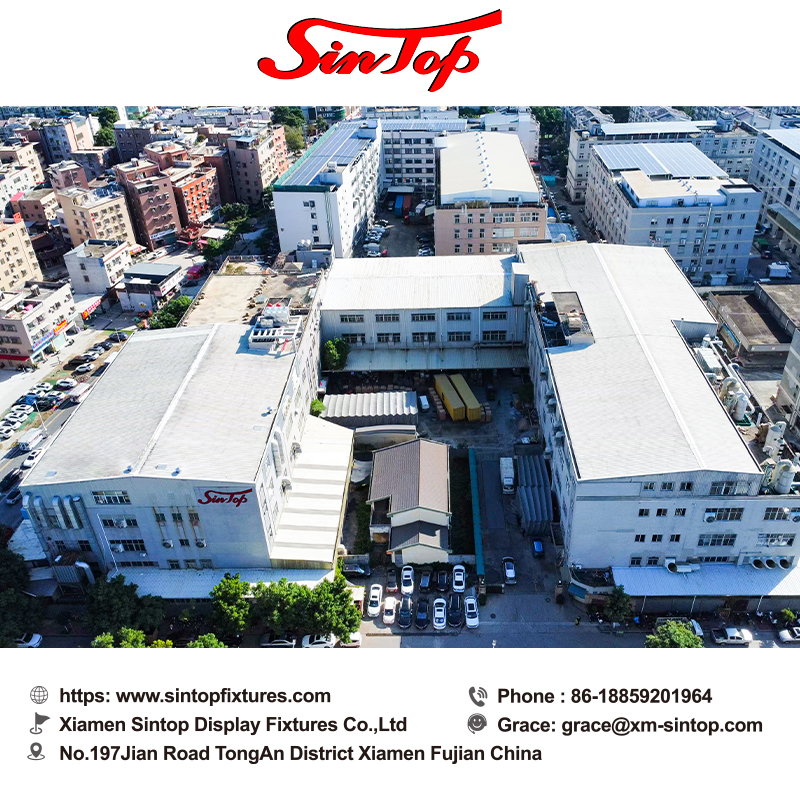
Xiamen Sintop Display Fixtures Co., Ltd. has more than 20 years of experience providing customized retail display solutions for global brands.
As an experienced display fixture manufacturer, we provide metal display racks, wood retail fixtures, POP displays and customized store solutions that support modern retail development.
The retail industry is moving from experience-based decisions to data-supported decisions.
The display fixture of tomorrow will not only hold products.
It will understand customers.
If your company is searching for professional AI retail solutions, smart merchandising systems, AI visual merchandising, retail analytics technology or future of retail displays solutions, Sintop is ready to support your next retail project.
Sintop Value
As retail evolves toward data-driven experiences, Sintop combines over 20 years of display fixture manufacturing expertise with flexible customization capabilities. By integrating smart retail concepts, modular structures, and advanced production technologies, Sintop helps global brands create display solutions that improve product presentation, customer engagement, and future store adaptability.

Contact information
Website: www.sintopfixtures.com
Wechat/WhatsApp: +86 15980885084
Email: elly@xm-sintop.com
FAQ
1. What types of display racks can Sintop provide?
We offer a wide range of custom retail display racks, including metal display racks, wooden display stands, Gondola shelving, grid panels, and mixed-material solutions, tailored to your store layout and brand identity.
2. Can I order a single unit or prototype?
Yes, no minimum order is required. We can produce prototypes or single units as well as large-volume orders.
3. How long does it take to receive an order?
New items: 3–5 weeks for tooling and production.
Reorders: 2–4 weeks depending on product type.
We are flexible and strive to meet your required delivery dates.
4. Can Sintop handle OEM or ODM projects?
Yes, we specialize in OEM and ODM solutions, turning your ideas or drawings into custom, high-quality display racks.
5. How does Sintop ensure quality?
Every display rack undergoes material inspection, welding and structural checks, surface finish testing, and final assembly inspection to ensure durability, safety, and visual appeal.