

Can Digital Shelf Labels Earn Shopper Trust in 2026?
1. Why did electronic shelf labels become a public issue in 2026?
Digital shelf labels were once discussed mainly as a labor-saving store technology. In 2026, they have become a consumer-trust and regulatory topic. The change is easy to understand: a small screen attached to a shelf can receive a price update in minutes, while a paper label requires a person to print, sort and replace it. That operational difference is real.
September brought the debate into sharper focus in the United States. New Jersey’s Fair Price Protection Act, signed in July and widely discussed in September, prohibits grocery pricing based on personal data and places a one-year pause on new deployments of electronic shelf labels while the state studies their effects.
Retail Brew reported on September 14 that a Walmart Supercenter in North Bergen had already replaced about 90% of its shelf tags with digital labels. The store demonstration showed that a staff member could not simply type in an arbitrary higher price through the employee interface.
The wider U.S. retail picture also argues for disciplined investment. The Census Bureau’s September 2026 advance estimate put retail and food-service sales at $745.0 billion, up 0.8% from August and 6.3% from September 2025. The agency cautioned that the monthly change’s 90% confidence interval included zero, and the figures were not adjusted for price changes.
Reuters’ June 2024 report on Walmart’s earlier rollout provides useful historical scale, rather than a new 2026 update. Walmart said digital tags could update prices on more than 120,000 items in minutes, compared with roughly two days of staff work for a weekly paper-tag change. The report also recorded the company’s statement that its plan was not to use hourly surge pricing.

2. What should buyers specify before sourcing digital shelf labels?
The first mistake in an ESL project is to treat the screen as the whole product. A working installation is a system: label, mounting rail or clip, wireless network, gateway, management software, product database, power strategy, store workflow and the shelf itself. A low unit price can be erased by incompatible rails, weak radio coverage, slow commissioning or repeated site visits.
Start with the shelf environment. Measure the usable rail length, shelf-lip profile, product-facing angle, cleaning method and exposure to impact. A grocery gondola, pharmacy shelf, hardware aisle and warehouse pick face do not impose the same mechanical demands. Confirm whether the label needs a standard rail, a custom clip, a magnetic mount or an adapter.
Next, define the technical requirements. Confirm screen size, display technology, color capability, viewing angle, refresh behavior, battery service expectations, wireless protocol, gateway capacity and the supplier’s support lifecycle. Ask for test evidence under the store’s actual lighting and temperature conditions.
A credible Electronic Shelf Label Wholesale RFQ should ask vendors to quote the tag, rail, mounting accessories, gateway allocation, software or integration fees, commissioning, training, spare units and warranty as separate line items. It should also ask which functions are included in the quoted price and which require a subscription.
Finally, write down the data and price-control process. Who can authorize a price change? Is there a second-person approval for sensitive categories? How are failed updates flagged? Can the store produce a timestamped record linking the shelf price, point-of-sale price and product identifier? These controls are not decorative IT features.
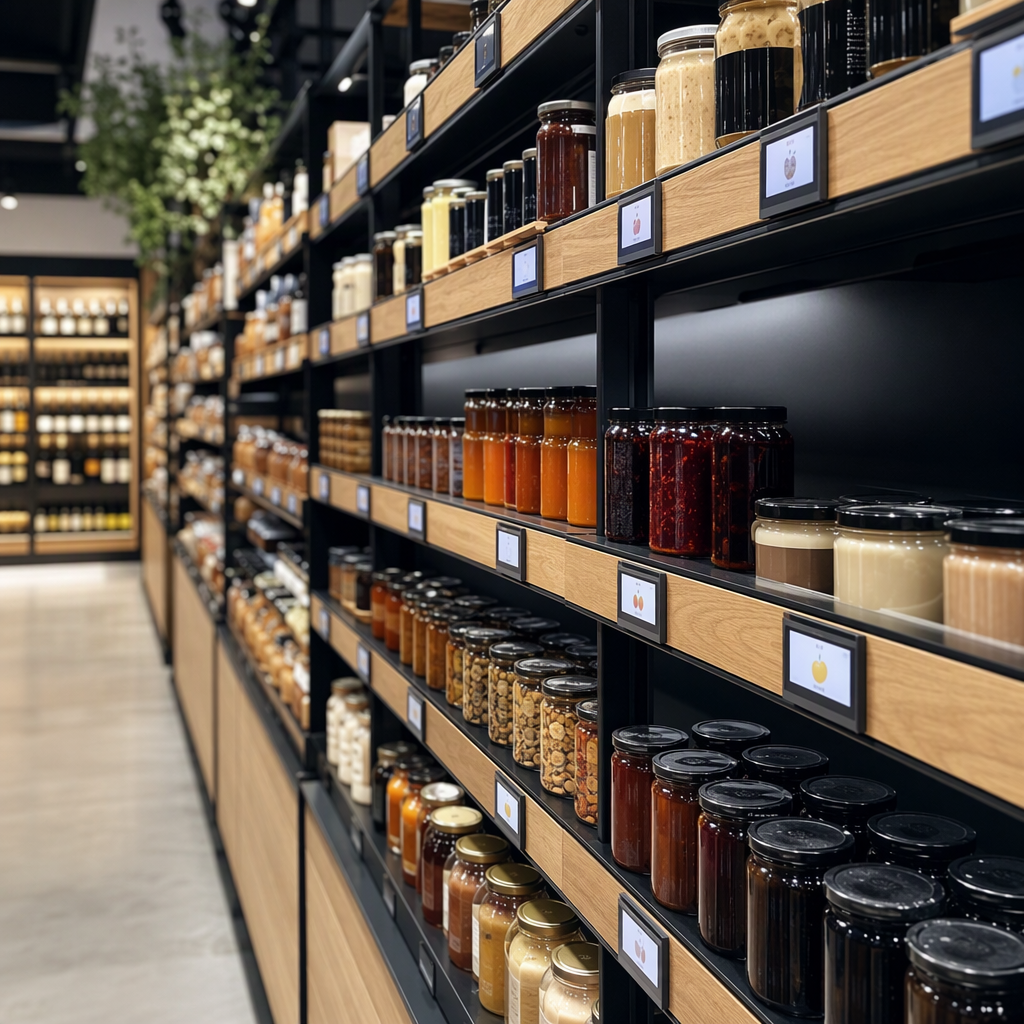
3. When does custom hardware make commercial sense?
A Custom Electronic Shelf Label is not always necessary; off-the-shelf labels are sensible when a retailer has standard shelves, a proven software platform and a large repeatable rollout. Custom work becomes relevant when the physical store is not standard: unusual shelf lips, narrow channels, curved fixtures, promotional end caps, mixed materials or a need to keep the screen visible without hiding the product.
Customization can mean more than changing the housing. It may include a rail profile, clip geometry, protective cover, color-coded department accessory, label orientation, anti-theft detail or a fixture interface that allows staff to remove and replace tags quickly. The objective is not novelty. It is a secure fit, consistent sightline and low-maintenance installation.
The phrase Electronic Shelf Label Custom is often used loosely in supplier conversations. Buyers should define exactly what is being customized: the electronic module, the plastic enclosure, the mounting component, the shelf rail or the complete fixture.
Request a prototype that uses the actual shelf material and product load. A clip that works on a sample extrusion may loosen on a production shelf with a different coating thickness. A tag that looks readable in a bright office may become difficult to read under aisle glare.
Cost control should include the cost of change. A bespoke component can reduce installation labor and returns, but a unique part may create spare-parts complexity. Ask whether the design can share components with existing rails, whether replacement clips will remain available and whether the drawing can be revised without changing the electronic module.
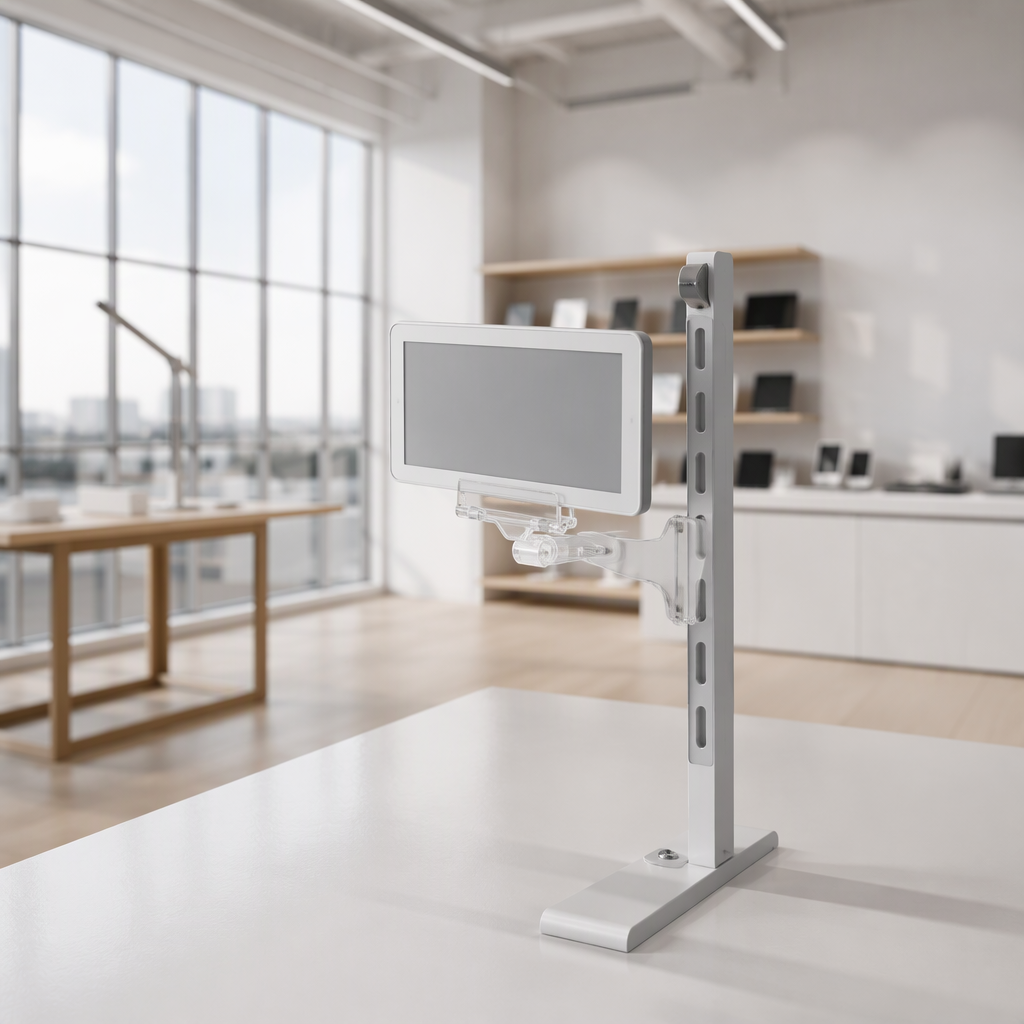
4. How do heat, footfall and store fixtures affect the business case?
Retail technology has to work in the physical world, where heat, humidity, cleaning chemicals, dust and customer contact can shorten service life. BBC Weather reported on September 5 that parts of France and Spain had exceeded 40°C, and that El Granado in southwestern Spain reached 45.7°C on September 3, the country’s highest temperature recorded that year.
The BRC-Sensormatic September monitor reported that total UK footfall fell 2.9% year on year. High Street visits declined 3.0%, retail parks 1.7% and shopping centres 3.5%. BRC commentary attributed the weak result more to economic pressures and shopper caution than to weather, despite above-seasonal temperatures.
The fixture is part of that equation. A digital tag mounted too low, hidden behind a shelf edge or angled away from the shopper creates a new problem rather than solving one. Retailers should review label position together with shelf depth, product facings, aisle sightlines, price strips and promotional signage. In a high-turnover grocery bay, the attachment must tolerate frequent replenishment.
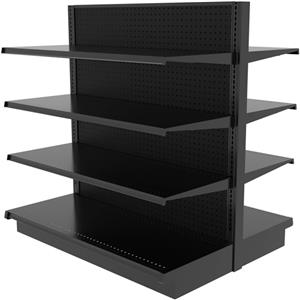
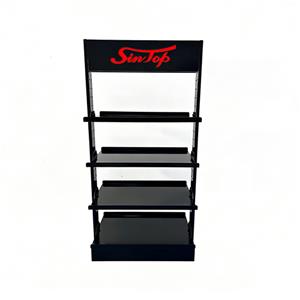
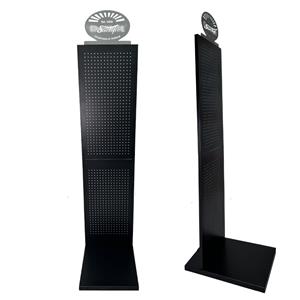
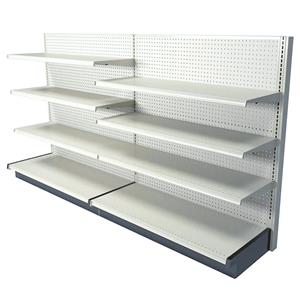
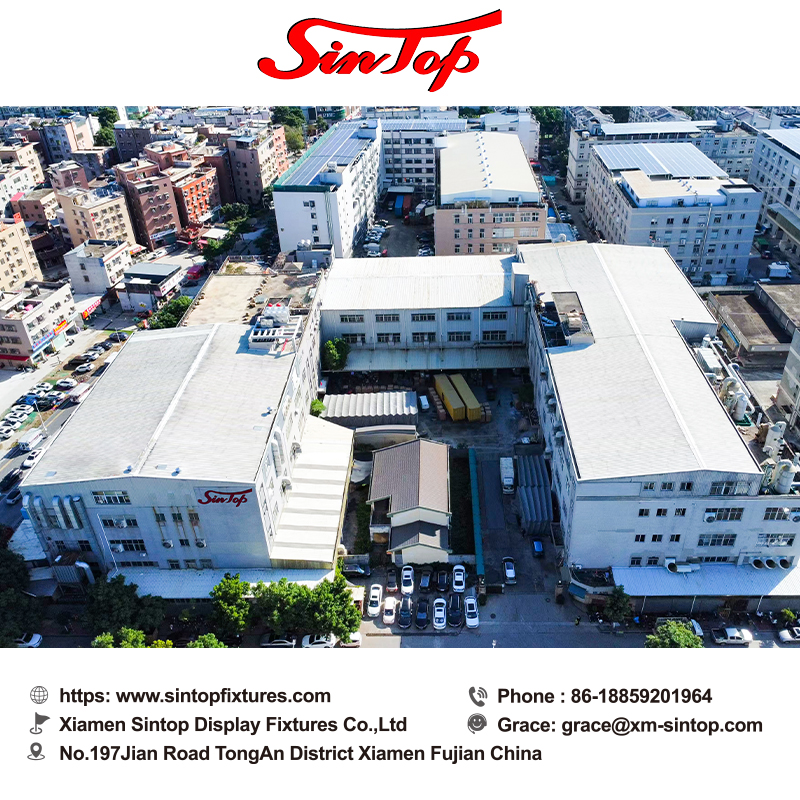
Xiamen Sintop Display Fixtures Co., Ltd. brings a fixture-manufacturing perspective to this problem. The company describes itself as one of China’s earliest display-rack suppliers, with experience in metal display racks, warehouse shelving, retail end caps, tool racks and custom display stands.
For buyers considering Electronic Shelf Label Custom work, a fixture partner can help translate store measurements into manufacturable components and coordinate samples before mass production. Sintop’s stated operating model includes design support, rapid prototyping and custom packaging. Buyers should still verify current capacity, material specifications, quality records, engineering drawings and sample approval criteria directly for each project.
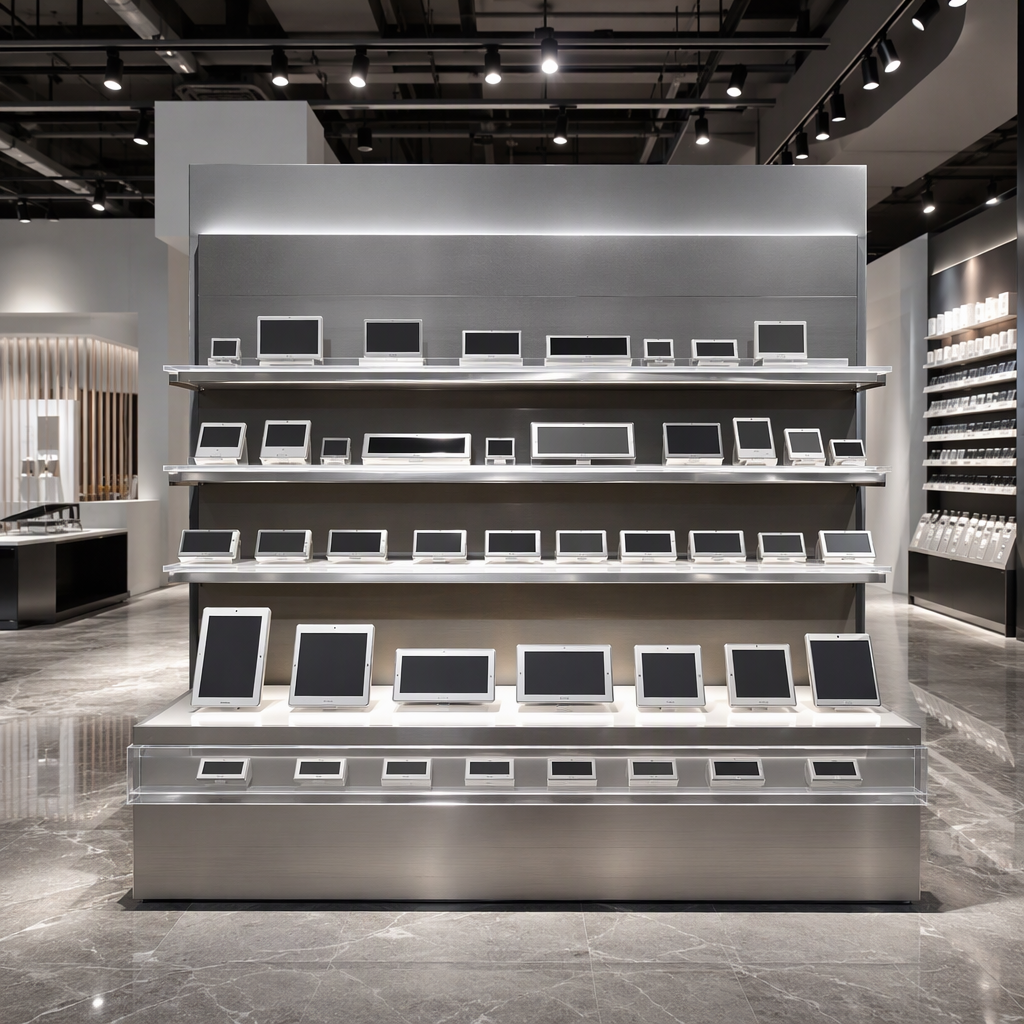
5. Which sourcing model offers the lowest project risk?
There is no universal winner between standard procurement, custom procurement and a hybrid model. A chain with uniform shelving may gain the most from standard labels and standard rails. A retailer with legacy fixtures may need adapters or custom clips.
Before signing, ask for a pilot plan with acceptance criteria. Include a representative mix of shelves, departments and lighting conditions. Track label-to-POS price accuracy, update completion rate, battery and communication alerts, installation minutes per bay, damage rate, staff training time and the number of service calls. Agree who owns each failure: tag supplier, software provider, network contractor, fixture maker or retailer.
Also require a change-control process. A pricing system can be technically sound and still fail if product data are inaccurate or approvals are poorly designed. Define the source of truth for product identifiers and prices, the update schedule, exception handling and rollback procedure. For grocery and other regulated categories, obtain legal review of local pricing rules before launch.
For distributors and importers, a dependable Electronic Shelf Label Wholesale program should include stable part numbers, revision control, spare-part availability, protective export packaging and a realistic lead-time commitment. A supplier should state what happens when a component is discontinued or a shelf profile changes. For customized orders, preserve approved drawings and sample records so that the next production batch matches the pilot.
The commercial conclusion is simple: buy an operating system, not a cheap screen. Digital labels can reduce repetitive work and make price updates more consistent, but they cannot repair poor shelf design, unreliable product data or weak governance.
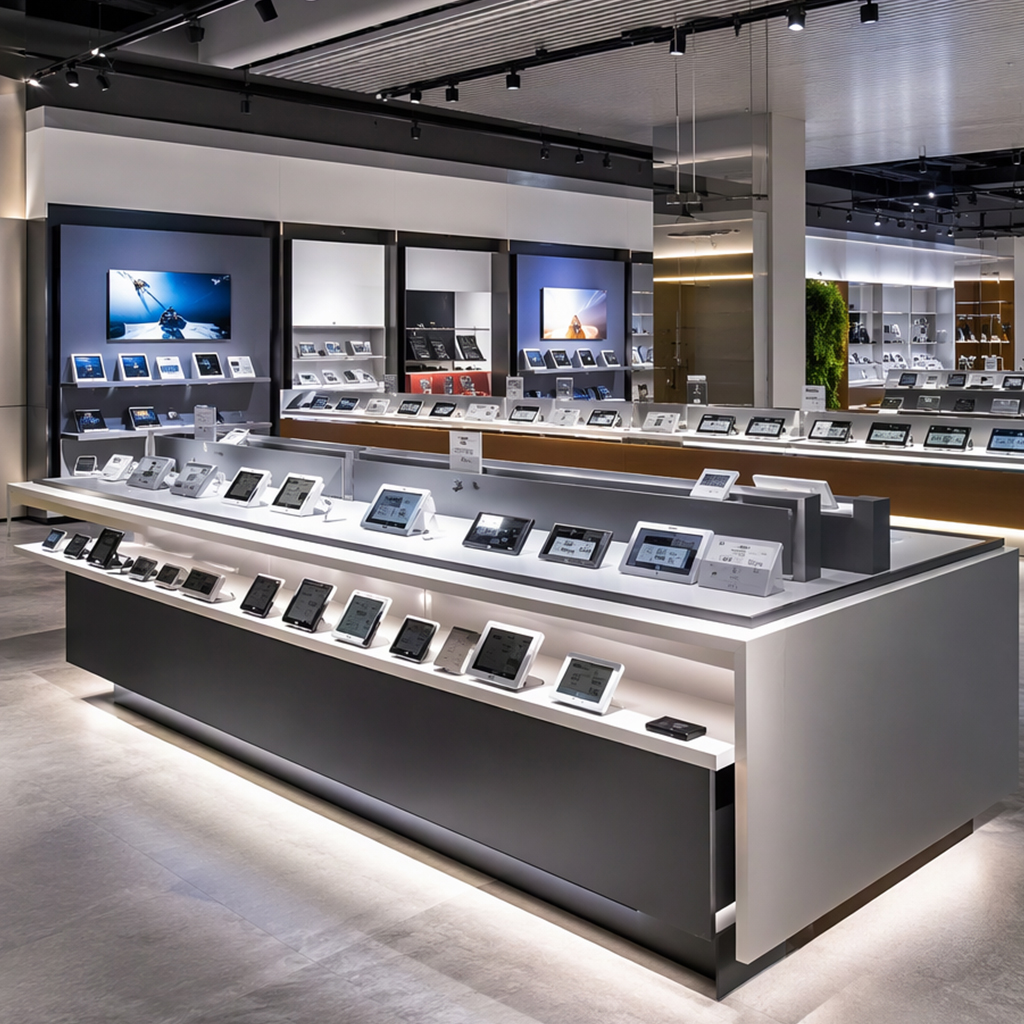
Sourcing Model Comparison
| Model | Best fit | Main advantage | Main risk to manage |
|---|---|---|---|
| Standard ESL package | Uniform shelves and repeatable store formats | Simpler buying and rollout | Rail or shelf incompatibility |
| Custom mounting / fixture parts | Legacy shelves, unusual profiles or special displays | Better fit and service access | Prototype time and spare-part control |
| Hybrid technology + fixture supply | Large projects with mixed store conditions | Clear specialist responsibilities | Coordination and interface ownership |
FAQ
What is an electronic shelf label?
It is a small digital display attached to a retail shelf. A store system sends product and price information to the display, reducing the need to print and replace paper tags.
Do electronic shelf labels automatically change prices?
No. The label displays information sent by the retailer’s pricing or store system. The retailer’s permissions, approval rules and update schedule determine when a price changes.
Can a retailer use a custom electronic shelf label on existing shelves?
Often, but compatibility must be checked. Measure the shelf-lip profile and test the rail, clip or adapter with the actual fixture before ordering at scale.
What should an ESL wholesale quote include?
It should identify the display, mounting rail, clips, gateways, software fees, integration, installation, training, spares, warranty and lead time. Ask vendors to separate one-time and recurring costs.
What does electronic shelf label custom mean?
It should specify which part is customized: the label housing, mounting clip, rail, protective cover or full fixture interface. The electronic module and software may remain the responsibility of a specialist technology provider.
How can retailers reduce pricing controversy?
Use clear price-governance rules, role-based access, approval records, update logs and a process for checking shelf prices against checkout prices. Explain the policy to staff and shoppers.
Does Sintop manufacture the electronic display module?
Sintop’s stated focus is display fixtures and related fabrication. Buyers should confirm whether a project requires a separate ESL technology partner for screens, wireless hardware and software.
Sintop Value
Sintop supports the mechanical and fixture-manufacturing side of electronic shelf label projects, including custom mounting rails, brackets, clips, and display structures. With metal fabrication, prototyping, and OEM/ODM capabilities, we help retailers and technology partners develop mounting solutions compatible with different shelf profiles and store environments. Electronic screens, wireless systems, and software can be coordinated with specialized ESL technology providers.

Contact information
Website: www.sintopfixtures.com
Wechat/WhatsApp: +86 15980885084
Email: elly@xm-sintop.com
FAQ
1. What types of display racks can Sintop provide?
We offer a wide range of custom retail display racks, including metal display racks, wooden display stands, Gondola shelving, grid panels, and mixed-material solutions, tailored to your store layout and brand identity.
2. Can I order a single unit or prototype?
Yes, no minimum order is required. We can produce prototypes or single units as well as large-volume orders.
3. How long does it take to receive an order?
New items: 3–5 weeks for tooling and production.
Reorders: 2–4 weeks depending on product type.
We are flexible and strive to meet your required delivery dates.
4. Can Sintop handle OEM or ODM projects?
Yes, we specialize in OEM and ODM solutions, turning your ideas or drawings into custom, high-quality display racks.
5. How does Sintop ensure quality?
Every display rack undergoes material inspection, welding and structural checks, surface finish testing, and final assembly inspection to ensure durability, safety, and visual appeal.