

Can Modular Store Display Systems Defend Retail Margins?
What Do September's U.S. Retail Numbers Really Say?
Reuters reported on September 16 that U.S. retail sales rose 1.2% in August, following a revised 0.5% decline in July. The Census Bureau's advance estimate put August retail and food-services sales at $773.9 billion, up 6.0% from a year earlier. These are dollar sales, not a count of products sold; the figures are not adjusted for price changes. [1][2]
Furniture-store receipts rose 0.9% from July, according to Reuters. That is a relevant signal for this sector, but it does not establish a boom in wardrobes or kitchen storage. The category is broader than either product, and a monthly movement cannot tell a purchasing manager which finish, configuration or price band will sell. Treat the rebound as context, not a sales forecast. [2]
The cost side deserves equal attention. A separate Reuters report on September 16 said U.S. import prices increased 0.7% in August and 7.0% over the year. Imported consumer goods excluding automobiles rose 0.5% during the month. The report states that import-price measures exclude tariffs. It would therefore be wrong to describe these percentages as the tariff bill on a furniture shipment. [3]
Britain supplies a useful contrast, not a substitute for American evidence. The British Retail Consortium's September 8 release, covering August 2–29, recorded total U.K. retail sales growth of 0.7% year on year, while non-food sales fell 0.8% and in-store non-food sales fell 1.2%. Its economist described weaker spending on furniture and household appliances. Different countries, categories and comparison periods mean these figures should not be pooled. [4]
The purchasing implication is our judgment: make each investment justify its own economics. A healthy national total can coexist with a weak local store, an awkward delivery route or a cabinet that wastes space. Ask for the evidence attached to the product, rather than letting a macroeconomic headline approve the order.
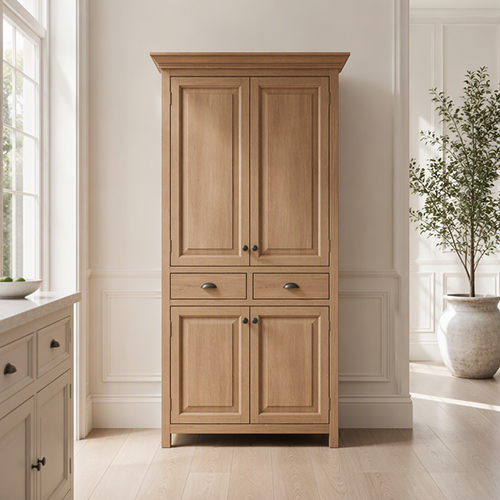
When Does a Wooden Wardrobe Earn Its Premium?
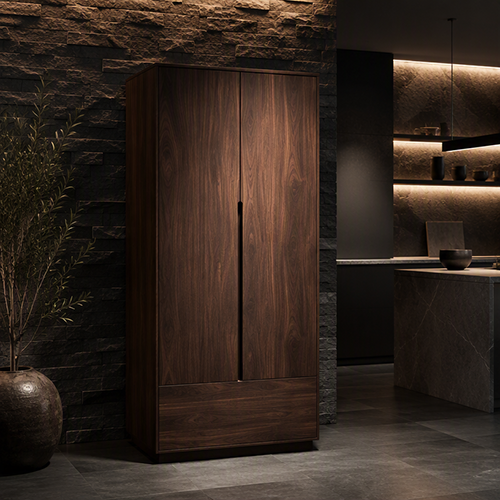
A buyer researching luxury wooden wardrobe design usually wants more than inspiration. The next questions concern construction, storage layout, finish consistency, installation and aftercare. A useful specification should answer those questions before the buyer has to request another brochure. The premium should be visible in the purchase documents as well as the photograph.
Start by requesting a component-level material schedule. Ask the supplier to identify the doors, cabinet body, shelves, drawer boxes and exposed edges separately, rather than describing the entire unit with a single wood label. Obtain finish samples and record the approved appearance. If sustainability or emissions claims influence the order, request the relevant documents and verify that their scope matches the actual product.
Then design around what will be stored. List hanging garments, folded clothing, footwear and bulky seasonal items. Ask for usable internal measurements, not just exterior dimensions. Check the opening space required by doors and drawers, the delivery path through the building and access for installation. A generous-looking elevation is not proof that the room will work after the doors are opened.
The 2026 European heatwave adds a reason to ask better questions, not permission to invent a durability claim. WMO reported on July 9 that western Europe's June average reached 20.74°C, 3.05°C above the 1991–2020 June average. BBC reporting dated June 28 described record temperatures and warnings about buildings ill-suited to extreme heat. These are climate and building-context reports, not tests of furniture performance. [5][6]
For a project exposed to variable indoor conditions, ask the manufacturer to define the intended service environment, care instructions and relevant test evidence. Request advice on direct sunlight, nearby heating equipment and installation clearances for the selected construction. Do not accept 'heatproof' as a substitute for a specification, and do not assume a European weather report predicts damage in an American home.
The strongest luxury wooden wardrobe design is the one whose finish, internal arrangement and repair plan remain convincing after the initial presentation. A replaceable component or a clear maintenance instruction can matter more to ownership than another decorative feature.
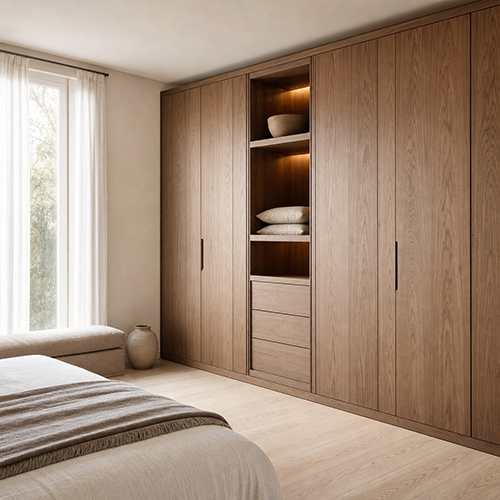
Can Store Fixtures Change Without a Refit?
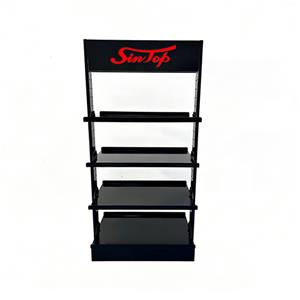
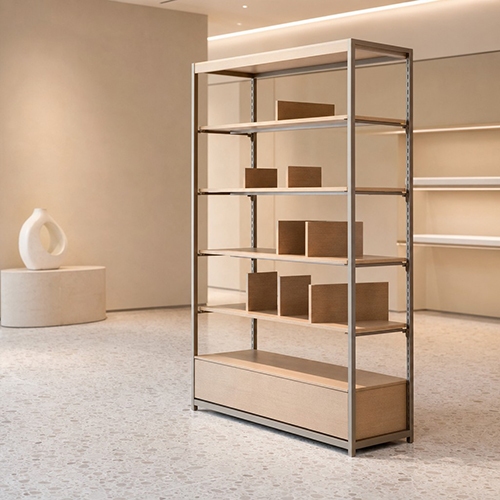
For a store operator, the word 'modular' should describe a working system, not a collection of matching shelves. A modular store display system earns consideration when its components can support a defined change in merchandise or layout. The supplier should demonstrate that change and identify what must be purchased, stored, moved or discarded to make it happen.
Begin with the merchandise plan. Provide package dimensions, product weights, replenishment routines and the planned locations of promotional stock. Ask which shelves, brackets, hanging rails and signage elements share an interface. Request documented load limits for the exact arrangement being quoted. A capacity figure for a different assembly should not quietly migrate into the order specification.
Before a rollout, trial the proposed fixture using representative stock. Time the initial assembly and a later changeover, record the tools and staffing required, and inspect how parts behave after handling. Keep a record of missing hardware, alignment issues and packaging damage. Those observations are more useful than a supplier's unsupported promise of effortless installation.
The budget should separate factory price, packaging, freight, applicable import charges, installation, spare parts and the cost of taking selling space out of service. Treat this as a comparison framework, not a forecast of guaranteed savings. A low purchase price can lose its advantage if every seasonal change requires new hardware or specialist labor.
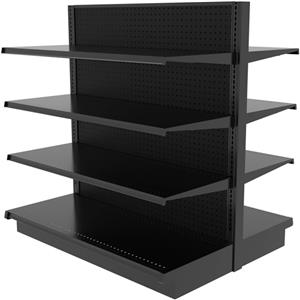
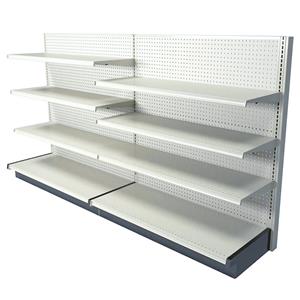
Sintop's customizable gondola shelving page describes adjustable shelving, a double-sided layout and custom sizing. Its design service lists technical drawings, packaging design and assembly instructions. These are supplier-stated capabilities worth turning into contractual deliverables; they are not independent proof of a particular installation's results. [7][8]
For purchasing teams comparing bids, require every supplier to price the same approved arrangement. If one quotation excludes end components, packaging protection or installation hardware, bring those omissions into the comparison before negotiating. Record who owns the drawings and whether replacement parts will remain available. The real comparison is between complete working arrangements, not unrelated headline prices.
This distinction is commercially important. A fixture can be well made and still be wrong for the merchandise, the shop floor or the team's workflow. Approve the operating arrangement, not simply the finish sample.
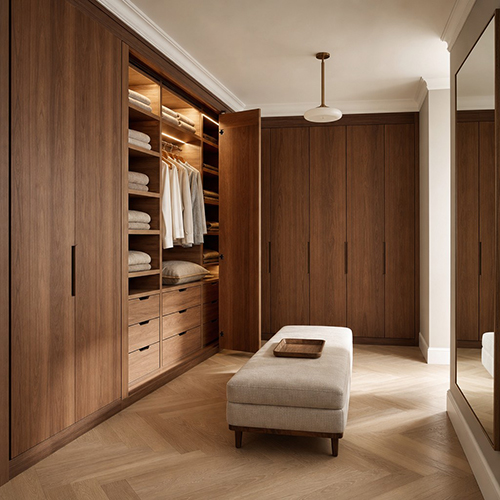
Does an Independent Pantry Solve the Right Problem?
The appeal of a freestanding kitchen pantry cabinet is specific: it may address a storage gap without redesigning the whole kitchen. That does not mean every tall cabinet fits every gap. Buyers need to establish what will be stored, where the cabinet will stand and how the room functions during normal use.
Measure the proposed position and the route into it. Include baseboards, adjacent doors and the working space needed to open the cabinet. Prepare an inventory of the actual food containers, small appliances or tableware intended for storage. Ask for shelf dimensions, adjustment positions and load information appropriate to those items, rather than assuming that every shelf is interchangeable.
A freestanding kitchen pantry cabinet also needs a clear installation and stability plan. 'Freestanding' should never be interpreted as a promise that anchoring is unnecessary. Follow the product's instructions and confirm the appropriate fixing method for the wall and installation conditions. Put heavy-item placement, cleaning and any restrictions on appliance use into the handover instructions.
Keep the shopping question tied to the household problem. Is the aim to make everyday items easier to reach, separate food from other storage, or add capacity beside an existing kitchen? The answer should determine the internal arrangement. Buying a larger box without checking access can merely relocate the clutter.
The comparison below is an editorial purchasing framework, not a product ranking or a laboratory result. It keeps the decision focused on evidence the buyer can request, while respecting the different jobs these three categories perform.
Comparison Table
| Decision | Premium wardrobe | Modular retail fixtures | Independent pantry |
|---|---|---|---|
| Primary job | Organize clothing and support the room design | Present stock and accommodate planned changes | Add useful kitchen storage |
| Specify first | Component materials, internal layout, finish | Interfaces, merchandise plan, assembly | Usable shelf space, access, placement |
| Evidence to request | Samples, drawings, care and repair plan | Configuration load data and changeover trial | Load information and installation instructions |
| Common buying error | Paying for appearance without usable capacity | Assuming matching parts are compatible | Ignoring door swing or stability requirements |
What Should Buyers Verify Before Ordering?
Ask for a quote that names the drawing revision, approved material and finish, quantities, packing method, installation scope and exclusions. Agree how changes will be priced and how nonconforming goods will be handled. Do not leave the meaning of 'custom' to a conversation that nobody can reconstruct when the shipment arrives.
The same discipline belongs on the product page. Publish the measurements, configuration choices, limitations and contact route that genuinely help a buyer decide. Where details depend on a custom order, say so directly. An honest answer about what remains to be engineered is more useful than a polished promise that conceals the work still required.
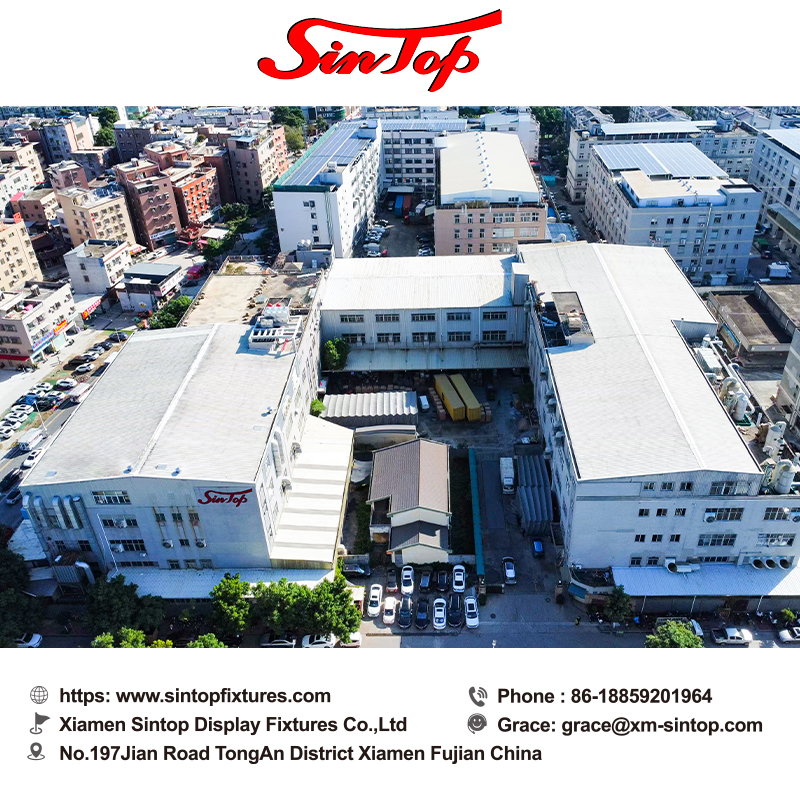
Xiamen Sintop Display Fixtures Co.,Ltd states that it was founded in 2002. Its published services span design, prototypes, production and shipment, while its prototype page lists metal, wood and other materials. That gives buyers a documented starting point for discussing coordinated fabrication rather than managing unrelated product descriptions. These statements come from Sintop's own website; this article does not represent a factory audit. [9][10]
For a modular store display system, turn that process into a sample assembly and an agreed parts schedule. For residential storage, request the same clarity on finishes, fittings and installation. A supplier relationship becomes useful when engineering decisions, approvals and responsibilities are traceable. Brand familiarity alone cannot replace those records.
Buyer FAQ
What should a premium wardrobe quote include?
A quote for luxury wooden wardrobe design should identify component materials, dimensions, internal layout, finish approval, fittings, delivery and installation scope. Request care instructions and a repair route. Do not infer solid-wood construction or a specific certification from appearance alone.
How can buyers test whether retail fixtures are truly modular?
Ask the supplier to demonstrate the planned configuration change using the quoted parts. Record compatibility, load limits, tools, labor and replacement requirements. A repeatable changeover is stronger evidence than the word 'modular' on a product page.
Does a freestanding pantry eliminate installation work?
No. A freestanding kitchen pantry cabinet still requires measurement, assembly checks and compliance with its installation instructions. Confirm stability measures and suitable fixing methods before use. Independence from fitted cabinetry does not establish that a tall unit is safe without anchoring.
Do the September figures prove a furniture boom?
No. The U.S. report records August sales at a broad category level, while BRC measures the U.K. market. Neither dataset establishes demand for a particular cabinet. Use the reports to frame purchasing discipline, then test the product and local business case.
Sintop Value
Sintop combines in-house metal and wood manufacturing with engineering, prototyping, production and assembly support. We help buyers develop customized fixtures with clear drawings, material specifications, samples and project-specific requirements.

Contact information
Website: www.sintopfixtures.com
Wechat/WhatsApp: +86 15980885084
Email: elly@xm-sintop.com
FAQ
1. What types of display racks can Sintop provide?
We offer a wide range of custom retail display racks, including metal display racks, wooden display stands, Gondola shelving, grid panels, and mixed-material solutions, tailored to your store layout and brand identity.
2. Can I order a single unit or prototype?
Yes, no minimum order is required. We can produce prototypes or single units as well as large-volume orders.
3. How long does it take to receive an order?
New items: 3–5 weeks for tooling and production.
Reorders: 2–4 weeks depending on product type.
We are flexible and strive to meet your required delivery dates.
4. Can Sintop handle OEM or ODM projects?
Yes, we specialize in OEM and ODM solutions, turning your ideas or drawings into custom, high-quality display racks.
5. How does Sintop ensure quality?
Every display rack undergoes material inspection, welding and structural checks, surface finish testing, and final assembly inspection to ensure durability, safety, and visual appeal.