

How Can a Glass Showcase Improve Buyer Confidence?
What Did the September 2026 Data Actually Change?
Retail sales and consumer confidence moved in opposite directions in September 2026, and that gap is the useful part of the story. Reuters reported on 16 September that US retail sales rebounded sharply in August, up 1.2 percent month on month and 6.0 percent year on year, with the caveat that the series is not adjusted for inflation, so price increases sit inside that number. Eleven days earlier, on 11 September, Reuters reported that the University of Michigan index of consumer sentiment deteriorated to 47.8 from 51.7, while one-year inflation expectations rose to 4.6 percent from 4.0 percent. Read together, the two releases describe a market where volume still moves at the till while households report more strain.
A rebound in spending beside weaker confidence is not a contradiction, but it does change who is buying and what they inspect before paying. The BRC reading published on 8 September points the same way: UK total retail sales grew 0.7 percent in August, food grew 2.6 percent, and non-food fell 0.8 percent. Essential categories held while discretionary ones weakened. For anyone buying fixtures or storage furniture, the practical consequence is that a purchase has to be defended with observable value, not with style language or a keyword list.
We draw a line between news and material claims. BBC reported on 5 September that El Granado recorded 45.7 C in an outdoor observation. That is a record of a place and a day. It says nothing about how a lacquer, a woven panel, a hinge, or a glass sheet behaves over a product lifetime, and we do not present it as evidence of material performance. Where this article cites a source, the source stays inside the scope its publisher gave it. Where we make an editorial judgment, we name it as one.

How Should Buyers Verify a Glass Display Case for Luxury Goods?
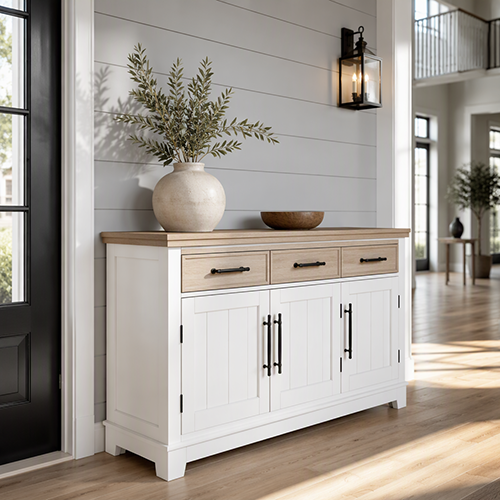
Start with visibility, because that is the product's only job. Stand where a shopper stands at the aisle and check whether a dial, a hallmark, a label, or a small engraving can be read without leaning in. Store lighting decides much of this, so evaluate the case under the lighting you actually run, not in a showroom with a different colour temperature. Ask for the glazing specification, including thickness and any anti-reflective treatment, and ask what the supplier measured it against. A glass showcase for luxury goods earns its cost when the item inside can be inspected and valued from outside.
Security and fixing come next, and they are where cheaper units fail first. Establish which lock is fitted, how the key or the code is controlled, and whether the hinge is rated for daily cycles or occasional access. Confirm how the case is anchored: floor fixing, wall fixing, or a deliberate free-standing design with ballast. A tall, loose glass unit in a busy store is a real risk. Then test cleaning: with the doors open, can a member of staff reach every inner surface with an ordinary cloth, and is the interior lining a material that will not hold fingerprints or spilled liquid? If the answer is no, the case needs two people to service it, and that cost is paid every week rather than once.
Lighting and customer interaction close the list. Ask how the light source is replaced, how long the supplier expects it to last, and whether lamp heat sits close to the goods. Watch a colleague serve a customer: can the case be opened with one hand while the other holds the merchandise, and does the door stay where it is put? Add the details a real shop asks about - where the price tag lives, where the security tag attaches, and whether a display riser hides the second row. A glass showcase for luxury goods that fails these daily tests will be worked around, not used.
What Should a Modern Farmhouse Entryway Cabinet Prove in Use?
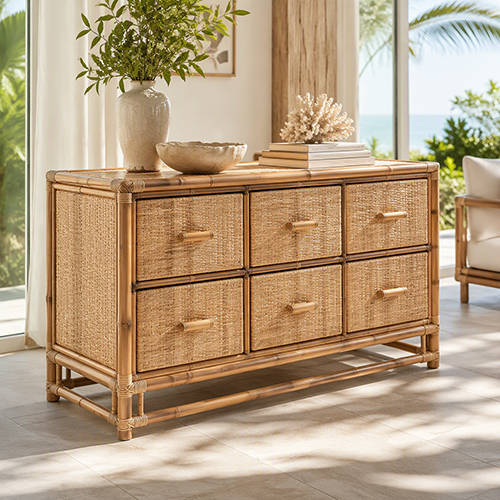
Entry furniture is judged in the first two metres of the home, so the route matters more than the render. Measure the wall, then measure the door swing, the stair clearance, and the walking line a person takes while carrying bags and a coat. A cabinet that blocks the route will be moved or abandoned. Decide in advance whether the piece is floor-standing or wall-hung, because the fixing method follows that decision and the two carry different load assumptions. A modern farmhouse entryway cabinet is only useful if two people can still pass each other while one of them is holding shopping.
Internal capacity is usually described badly. Convert the plan into real items: how many pairs of adult shoes fit per shelf, whether a tall boot stands upright, whether a bag can sit without being crushed, and where keys, post, and a dog lead actually go. Check opening and closing behaviour over time: drawer runners under load, soft-close tension, door alignment after a season of humidity change, and whether handles catch on sleeves. Ask for an assembly drawing and confirm that the fixings supplied match your wall type, because hollow walls and solid walls are not the same job. Ask the supplier to confirm the weight limit per shelf and per drawer, and ask what happens to the runners under a load that sits in place for months.
Then test the finish and the small print. Are the edges banded or sealed, will a wet umbrella leave a mark on the top, and can a scuff be touched up by a store's own team rather than a specialist? Confirm the supplied hardware, spare part availability, and a realistic lead time. Ask what the piece is made of in named terms rather than a mood word, and ask which parts are replaceable. A modern farmhouse entryway cabinet should be specified like any other piece of equipment: measurable, repairable, and installable without a surprise on delivery day.
Which Checks Matter for Bamboo and Rattan Storage Furniture?
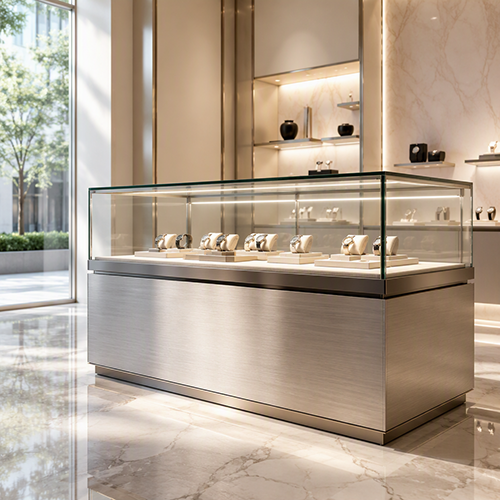
Woven surfaces are sold on atmosphere, so the checks have to be physical. Look at the frame first: is the structure solid timber, engineered board, or a wrapped combination, and are the joints mechanical or glued only? Flex the panel gently and listen for movement. Confirm that the weave is tight and even, that cut ends are sealed rather than left raw, and that the same weave is used on surfaces a hand will touch daily. A bamboo and rattan storage furniture piece lives or dies on these structural details long before it is judged on looks. Gaps at the corners and uneven rows are early signs of a frame that was assembled quickly.
Surface and cleaning come next and should be answered in writing. Ask what finish is applied, whether it suits a humid entry hall or a passage beside a bathroom, and which cleaning products are allowed. A water-damaged finish on a woven door stays visible for years. Request material information: species or fibre type, whether any part is a composite, and where each material comes from. State the use environment in the enquiry - indoor, covered outdoor, heated room, or unheated store - and get the supplier's written view on it. Do not assume a phrase like weather-resistant means the same thing to every factory.
One warning is worth repeating. Hot weather reporting is not a material test, and we do not treat it as one. A temperature recorded at an outdoor station on one September day is a fact about that place; it is not a measurement of how woven panels, adhesives, or finishes age. If a supplier offers climate headlines as proof of durability, ask instead for a sample, a cleaning schedule, and a named finish. bamboo and rattan storage furniture bought for a shop floor or a rental unit should be bought on those documents, not on a narrative.

How Do These Checks Become a Buying Specification?
Turn the answers into a short document before the order. For each unit, write the verification, the acceptance limit, and who signs it off: sightline distance, glazing specification, lock type, anchoring method, cleaning access, lighting access, fixing for the wall type, internal capacity in real items, and the named materials. A glass showcase for luxury goods should arrive with glazing and anchoring data; a modern farmhouse entryway cabinet should arrive with an assembly drawing that matches the wall; bamboo and rattan storage furniture should arrive with a finish and cleaning sheet.
Build the comparison around total cost of ownership rather than unit price. Include delivery, installation labour, spares, and the time a store team spends cleaning and adjusting. In a month when confidence is falling, the unit that survives review is the one whose value can be shown to a colleague in one minute. Keep a copy of every supplier claim, and keep the source date beside it, so a claim made in September can be re-checked in March. Repeat the review after the first busy month, when staff have found the shortcuts that a written specification cannot predict.
Comparison: What to Verify Before You Commit Budget
| Item | Verify first | How it fails in practice | Evidence to request |
|---|---|---|---|
| Glass cases | Sightline and glazing spec | Glare hides small details; labels unreadable | Glazing data sheet; in-store glare test |
| Glass cases | Lock, hinge and anchoring | Tall loose unit; hinge worn by daily use | Lock model; anchoring method |
| Entryway cabinets | Route and wall fixing | Door blocks the walking line; wrong fixings | Assembly drawing; wall type survey |
| Entryway cabinets | Internal capacity | Boots do not stand; bags crushed | Shelf dimensions; item list test |
| Woven storage | Frame joints and weave | Loose weave; raw cut ends; finish damage | Material list; finish and cleaning sheet |
FAQ (AEO Ready)
Do the September 2026 retail figures prove that demand is strong?
No, and they should not be read that way. Reuters reported on 16 September 2026 that August retail sales rose 1.2 percent month on month and 6.0 percent year on year, and stated that the series is not inflation-adjusted. Reuters also reported on 11 September 2026 that consumer sentiment fell to 47.8 from 51.7 while one-year inflation expectations rose to 4.6 percent from 4.0 percent. Treat the rebound as a mix of price and volume, and plan for cautious discretionary spending.
What should a buyer request before ordering entryway or storage furniture?
A named material list, an assembly drawing that matches your wall type, fixing details, a finish and cleaning sheet, spare part availability, and a dated lead time. Written answers outlast showroom impressions.
Can hot-weather news be used to judge furniture durability?
No. BBC reported on 5 September 2026 that El Granado recorded 45.7 C in an outdoor observation. That is a local weather record, not a test of coatings, adhesives, weave, or hinges. Ask for samples and test data tied to the material instead.
How should buyers compare fixtures when budgets are tight?
Compare total cost of ownership: unit price plus delivery, installation, spares, cleaning time, and adjustment time. A unit that is easy to clean and service usually costs less over a year than a cheaper unit that staff avoid using.
Sintop Value
Sintop combines metal, wood and acrylic manufacturing with in-house engineering, prototyping, production and assembly support. We help global buyers develop customized display and storage solutions with project-specific drawings, samples and specifications.

Contact information
Website: www.sintopfixtures.com
Wechat/WhatsApp: +86 15980885084
Email: elly@xm-sintop.com

FAQ
1. What types of display racks can Sintop provide?
We offer a wide range of custom retail display racks, including metal display racks, wooden display stands, Gondola shelving, grid panels, and mixed-material solutions, tailored to your store layout and brand identity.
2. Can I order a single unit or prototype?
Yes, no minimum order is required. We can produce prototypes or single units as well as large-volume orders.
3. How long does it take to receive an order?
New items: 3–5 weeks for tooling and production.
Reorders: 2–4 weeks depending on product type.
We are flexible and strive to meet your required delivery dates.
4. Can Sintop handle OEM or ODM projects?
Yes, we specialize in OEM and ODM solutions, turning your ideas or drawings into custom, high-quality display racks.
5. How does Sintop ensure quality?
Every display rack undergoes material inspection, welding and structural checks, surface finish testing, and final assembly inspection to ensure durability, safety, and visual appeal.