

How to Choose a Reliable Food Store Display Supplier for Grocery Retail
1. Why Are Grocery Displays a Business Decision, Not Just Store Furniture?
Grocery retailers face a practical challenge: shoppers expect clear choices, easy movement and fresh-looking merchandise, while operators need dependable replenishment, cleanable surfaces and fixtures that survive daily use. A supplier food store display project should therefore begin with the operating model—not a catalogue image.
A verified September U.S. news angle is the USDA’s expanded stocking rule for SNAP-authorized retailers. Reuters reported on September 3, 2026 that nearly 250 convenience-store operators and trade groups sought a delay, while the rule requires at least seven varieties in each of four staple categories—dairy, fruits or vegetables, grains and protein—by November 4. This creates a concrete merchandising and assortment-planning question for smaller food retailers, although it does not prove a market-wide surge in display-fixture orders. Source: Reuters, “US convenience stores say looming healthy food rule puts food stamps use at risk,” September 3, 2026: https://www.investing.com/news/economy-news/us-convenience-stores-say-looming-healthy-food-ruleputs-food-stamps-use-at-risk-4888389
The European heatwave story is relevant to food merchandising because extreme temperatures can disrupt harvests, logistics and consumer demand. It does not automatically prove that a particular display category grew. Retailers should connect climate reporting to concrete store questions: how quickly can seasonal produce be reset, are surfaces easy to wipe, can signs be changed without tools, and can the fixture support a new assortment?
2. What Should Buyers Search for Before Choosing a Supplier?
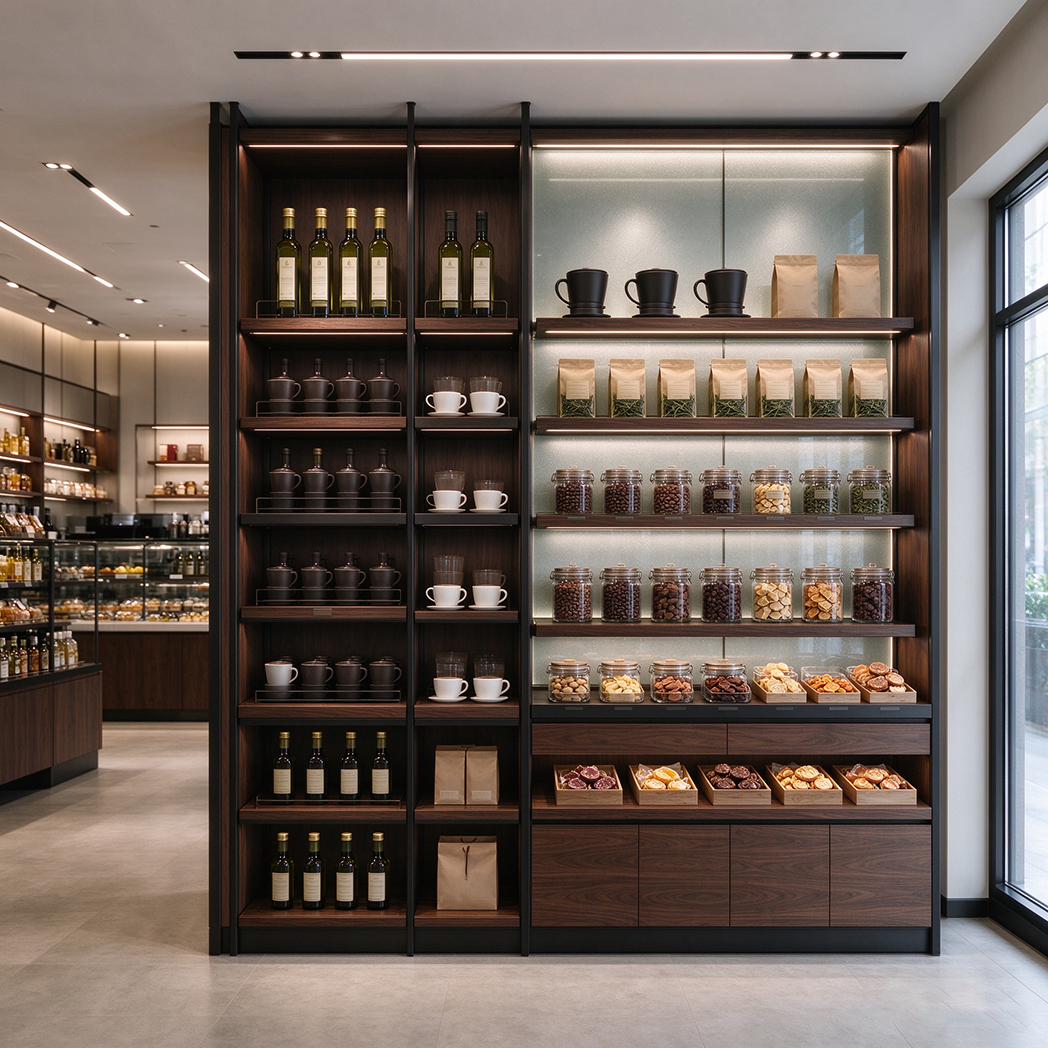
Search intent is broader than the phrase itself. A buyer searching food store display supplier may need produce bins, snack racks, beverage shelves, checkout impulse units, bakery-adjacent dry-goods fixtures or a complete store refresh. A useful landing page answers these needs by product, material, footprint, load, finish, packing method and project scale.
A capable supplier should ask about SKU dimensions, replenishment frequency, store format, aisle width, merchandising plan, cleaning routine, target landed cost and installation constraints. It should also clarify whether the buyer needs a repeatable standard design or a custom food store display engineered around a brand’s packaging and campaign.
For distributors and shopfitters, documentation matters as much as the drawing: dimensional tolerances, finish specifications, packaging tests, assembly instructions, sample approval and change control reduce unpleasant surprises between prototype and rollout.
3. Which Fixture Type Fits Each Food Category?
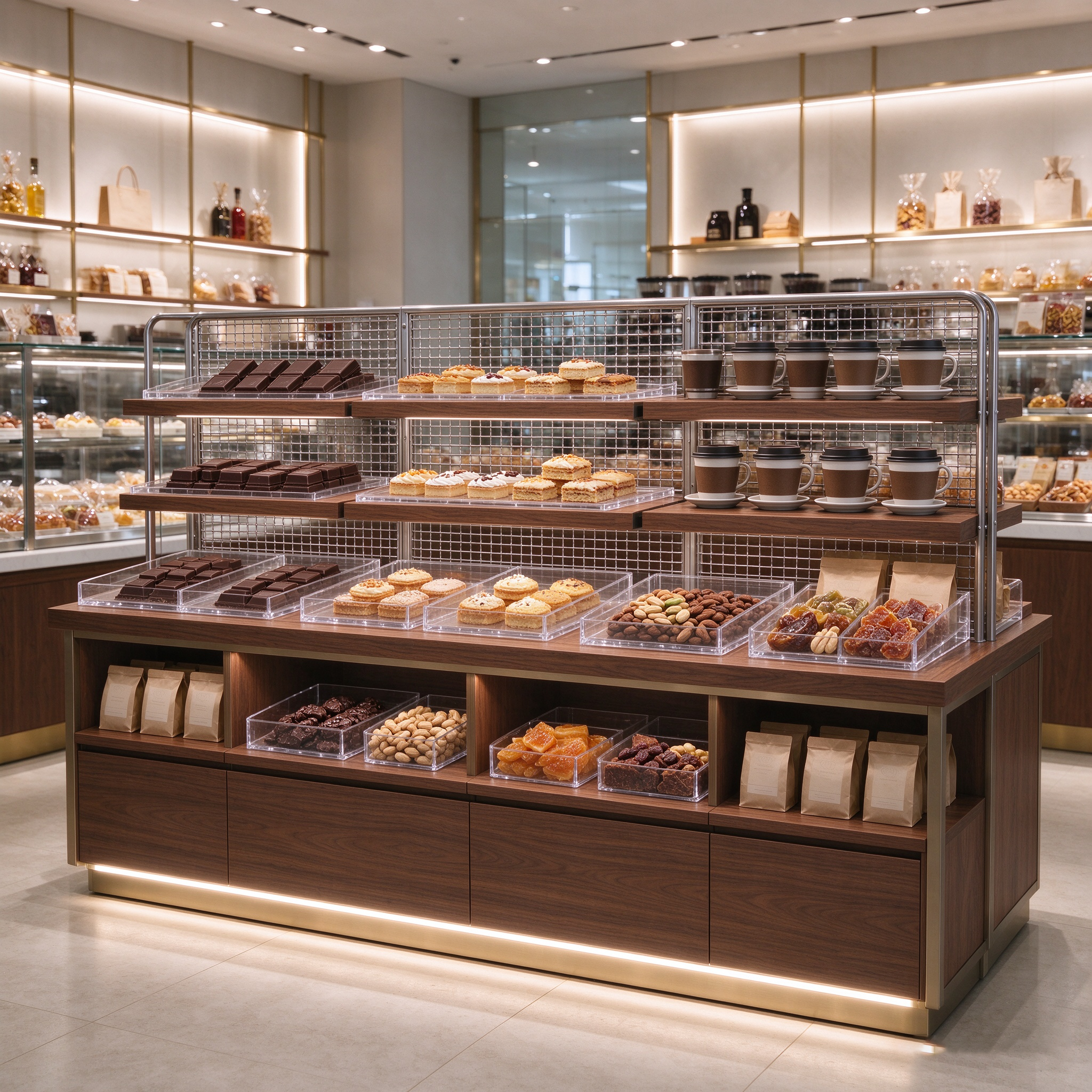
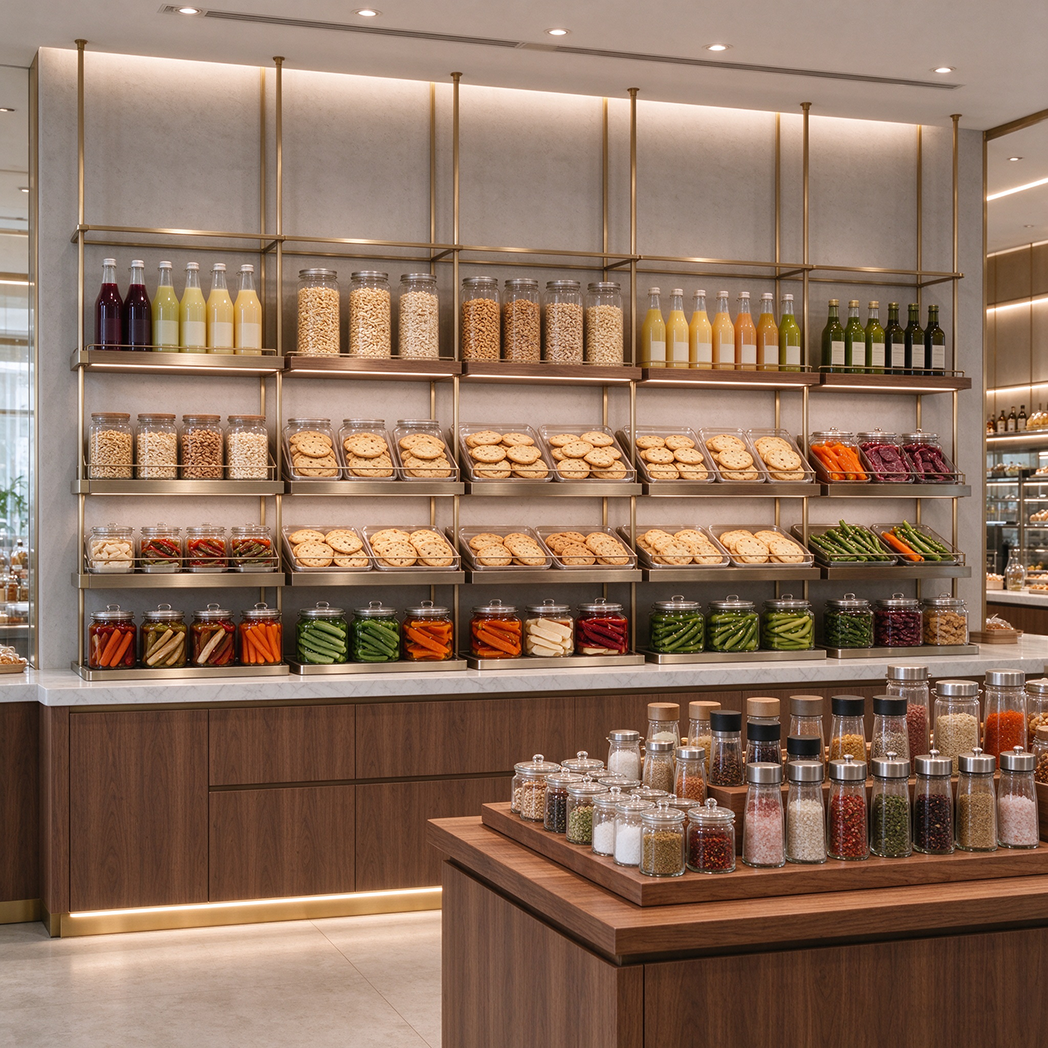
There is no universal ‘best’ fixture. Produce often benefits from angled presentation and visible product faces; packaged snacks need efficient facings and quick replenishment; beverages require load-rated shelves and stable bases; checkout units need compact footprints and simple restocking. Dry grocery displays should not be confused with refrigerated or frozen equipment, which requires separate technical and food-safety considerations.
| Category | Typical fixture | Buyer priority | Trade-off |
|---|---|---|---|
| Fresh produce | Tiered bins / angled tables | Visibility, cleanability, easy reset | Open design can reduce containment |
| Packaged snacks | Peg, wire or shelf rack | High SKU density, fast refill | Too many facings can clutter |
| Beverages | Load-rated shelving | Stability, capacity, access | Heavier structure may raise freight |
| Checkout impulse | Compact counter / floor unit | Small footprint, quick replenishment | Limited capacity |
| Seasonal promotions | Modular end cap / island | Fast graphics and layout changes | Needs disciplined reset planning |
A food store display supplier should explain why the proposed structure fits the category, rather than simply quoting the lowest unit price. Buyers should compare usable capacity, replenishment time, durability, pack-out efficiency and the cost of future revisions.
4. How Do Customization, Quality and Logistics Affect Total Cost?
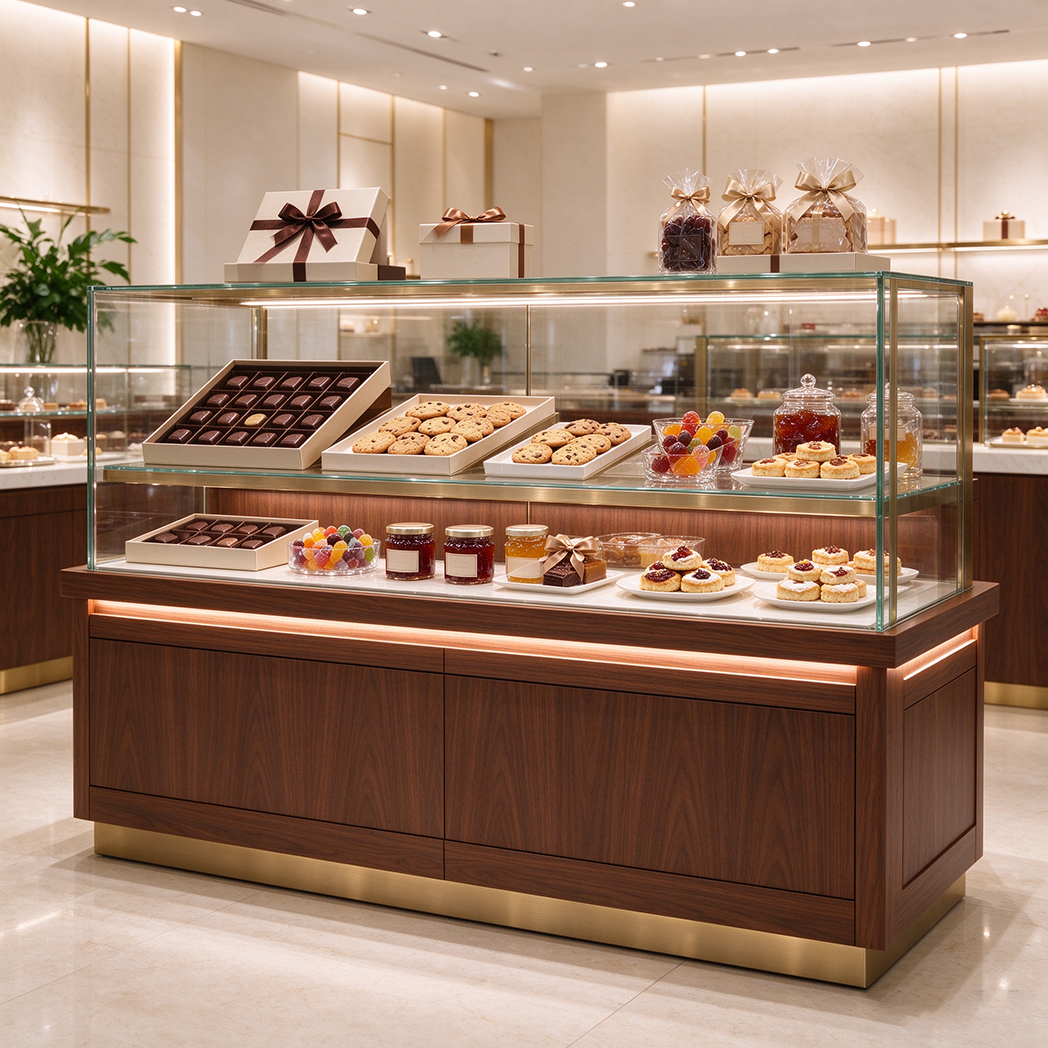
Customization is valuable when it solves a measurable problem: brand consistency, awkward packaging, a constrained footprint, a distinctive promotional plan or faster store-level assembly. A custom food store display can combine metal frames with wood, acrylic or printed graphics, but each material adds decisions about finish, weight, cleaning and transport protection.
The lowest ex-factory quote can become the most expensive project if a fixture arrives damaged, takes too long to assemble or cannot be replenished consistently. Ask suppliers to state sample lead time, production lead time, inspection checkpoints, carton dimensions, pallet or crate options, and how design changes are approved.
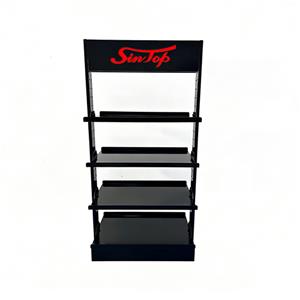
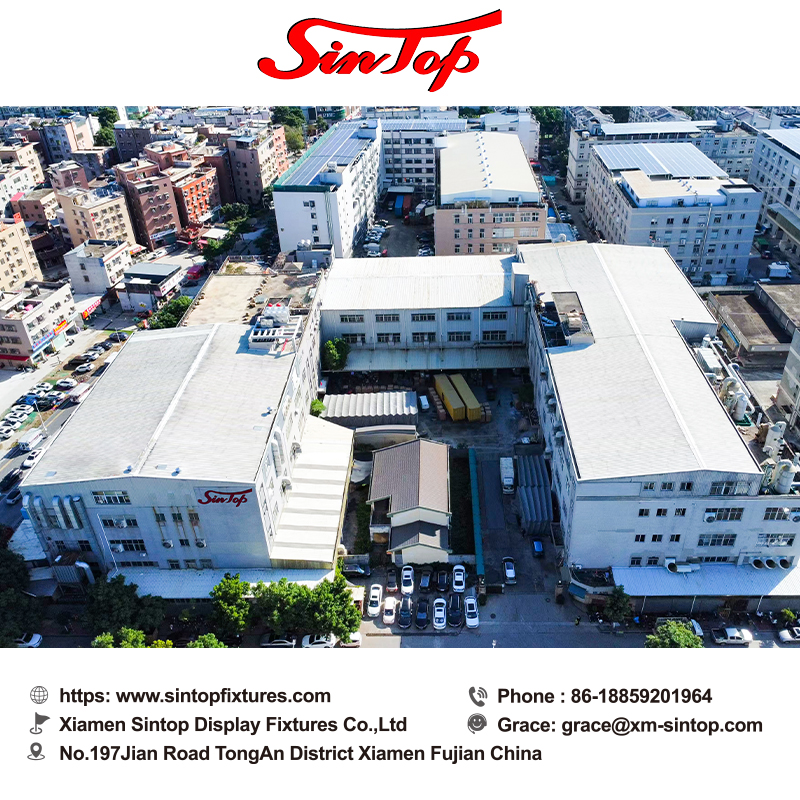
Xiamen Sintop Display Fixtures Co., Ltd. presents itself as one of China’s earliest display-rack suppliers, serving retail fixture and custom display needs. Its stated capabilities include OEM/ODM support, custom design, rapid prototyping, structural improvement suggestions and production coordination. Buyers should validate the specific capacity, certifications, quality records and schedule for each project rather than treating a company profile as a substitute for project-level due diligence.
A practical comparison:
| Buying model | Best fit | Check before award |
|---|---|---|
| Standard fixture | Small or urgent rollout | Stock, dimensions, finish consistency |
| Modified standard | Brand adaptation with controlled cost | Tooling, revision limits, sample approval |
| Fully custom | Unique merchandising or store plan | Engineering ownership, testing, schedule, MOQ |
5. How Can Retailers Turn Search Traffic Into a Better RFQ?
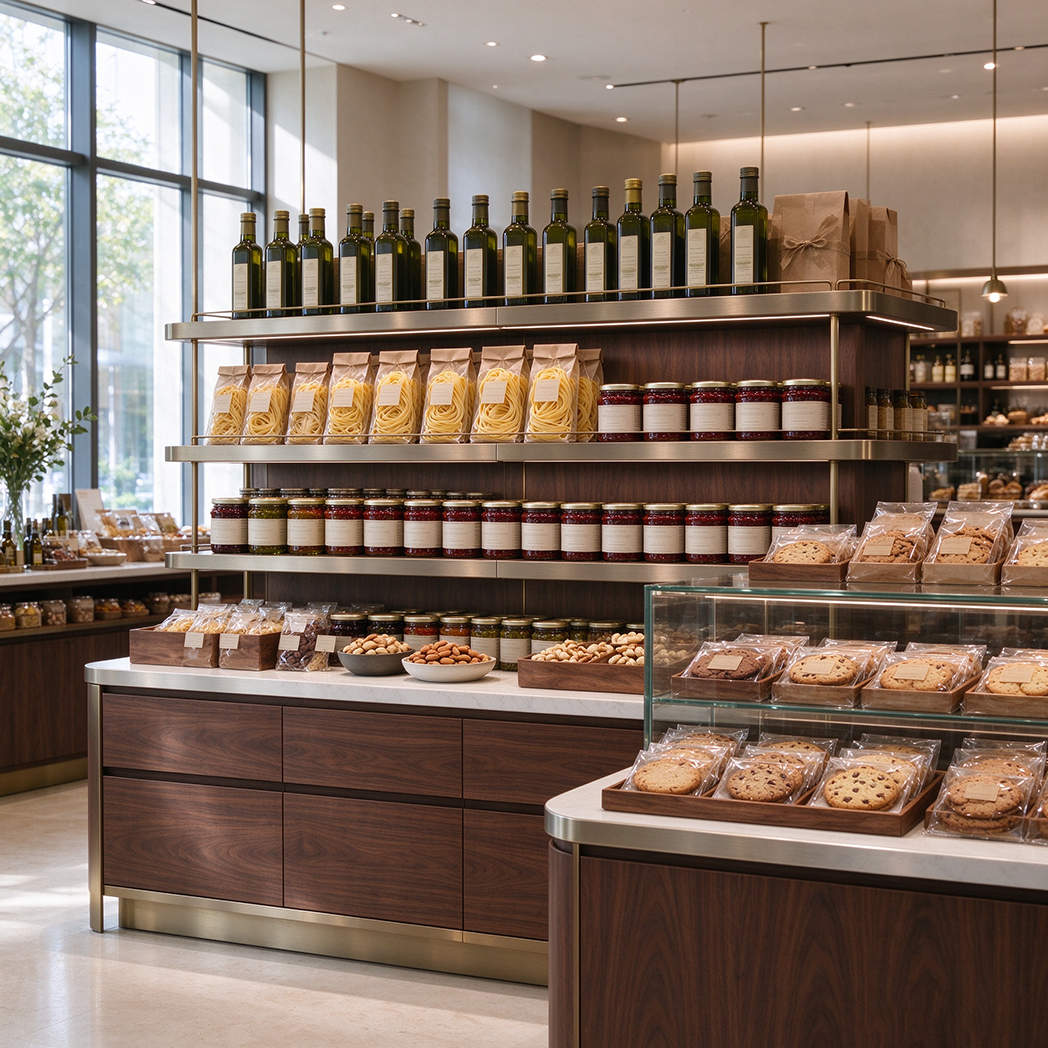
A strong SEO page should help a real buyer make progress. Organize content around product families, use cases, materials, project stages, FAQs and clear next steps. Add original photographs, dimensioned drawings where permitted, material details, real manufacturing explanations and named company contact information. Avoid unsupported superlatives and recycled claims.
Recommended Sintop internal links: link the phrase ‘custom retail display racks’ to the relevant custom-fixture page; link ‘metal display racks’ to the metal product category; link ‘retail store fixtures’ to the broader solutions page; and link ‘contact Sintop’ to the inquiry page. Confirm each destination URL before publishing. Main website: https://www.sintopfixtures.com/
A useful RFQ should include store type, product category, approximate quantity, target dimensions, reference images, material preference, destination country, target launch date and packaging requirements. With this information, a supplier can respond with fewer assumptions and a more meaningful comparison.
FAQ
What does a food store display supplier provide?
Depending on its specialization, it may provide produce fixtures, shelving, snack racks, end caps, checkout displays and custom merchandising units, along with design, sampling and production support.
How do I choose a food store display supplier for a multi-store rollout?
Check repeatability, documented quality controls, sample approval, production capacity, packaging, delivery planning and the process for handling revisions or defects.
When is a custom food store display worth the cost?
When standard fixtures cannot meet brand, footprint, product-fit, shopper-flow or campaign requirements—and the expected benefit justifies engineering and setup costs.
Can custom fixtures be made from metal and wood?
Yes. Mixed-material designs are common, but buyers should review load, finish durability, cleaning, assembly and shipping protection for the intended use.
What should I send for a quotation?
Send quantities, dimensions, product photos, preferred materials, finish, destination, schedule and any store or brand guidelines.
Sintop Value
Sintop develops customized food and grocery retail display fixtures using metal, wood, acrylic, and other materials. With in-house manufacturing and OEM/ODM capabilities, we support projects from design and prototyping to production coordination. Whether you need produce displays, snack racks, beverage shelving, checkout units, or seasonal promotional fixtures, we work with buyers to develop solutions that match product dimensions, store layouts, branding, and project requirements.

Contact information
Website: www.sintopfixtures.com
Wechat/WhatsApp: +86 15980885084
Email: elly@xm-sintop.com
FAQ
1. What types of display racks can Sintop provide?
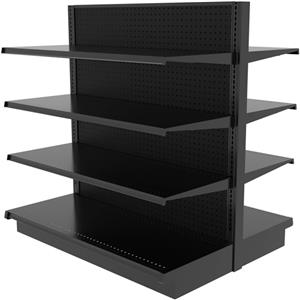
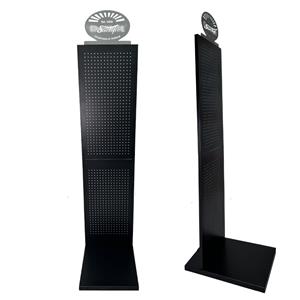
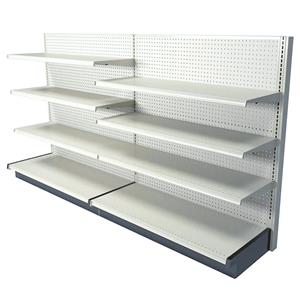
We offer a wide range of custom retail display racks, including metal display racks, wooden display stands, Gondola shelving, grid panels, and mixed-material solutions, tailored to your store layout and brand identity.
2. Can I order a single unit or prototype?
Yes, no minimum order is required. We can produce prototypes or single units as well as large-volume orders.
3. How long does it take to receive an order?
New items: 3–5 weeks for tooling and production.
Reorders: 2–4 weeks depending on product type.
We are flexible and strive to meet your required delivery dates.
4. Can Sintop handle OEM or ODM projects?
Yes, we specialize in OEM and ODM solutions, turning your ideas or drawings into custom, high-quality display racks.
5. How does Sintop ensure quality?
Every display rack undergoes material inspection, welding and structural checks, surface finish testing, and final assembly inspection to ensure durability, safety, and visual appeal.