

How to Choose a Wine Bottle Display Rack: A Buyer's Guide
Public reports can describe the commercial climate a store trades in, but they cannot prove that any display fixture raises sales. This guide sets out the questions to answer first.
Buying a bottle fixture is a procurement decision rather than a design slogan. Public retail, sentiment and weather reports can frame the conditions a store trades in, yet no report about shopping habits or temperatures can prove that a single display will move product. A store that treats a catalogue photo as evidence usually pays twice: once at purchase, and again when bottles do not fit, staff cannot restock, or a finish marks in the first season. This guide does not sell a look. It separates five questions buyers ask, then shows how to answer each with measurements, samples, drawings and written acceptance criteria. A wine retail display is worth planning this way whether the store is comparing imported options or a nearby supplier. Every project still needs a drawing, a sample and agreed acceptance criteria before anyone cuts material. Cost, lead time and the price of any later change are largely set by choices made before a supplier is asked to quote.
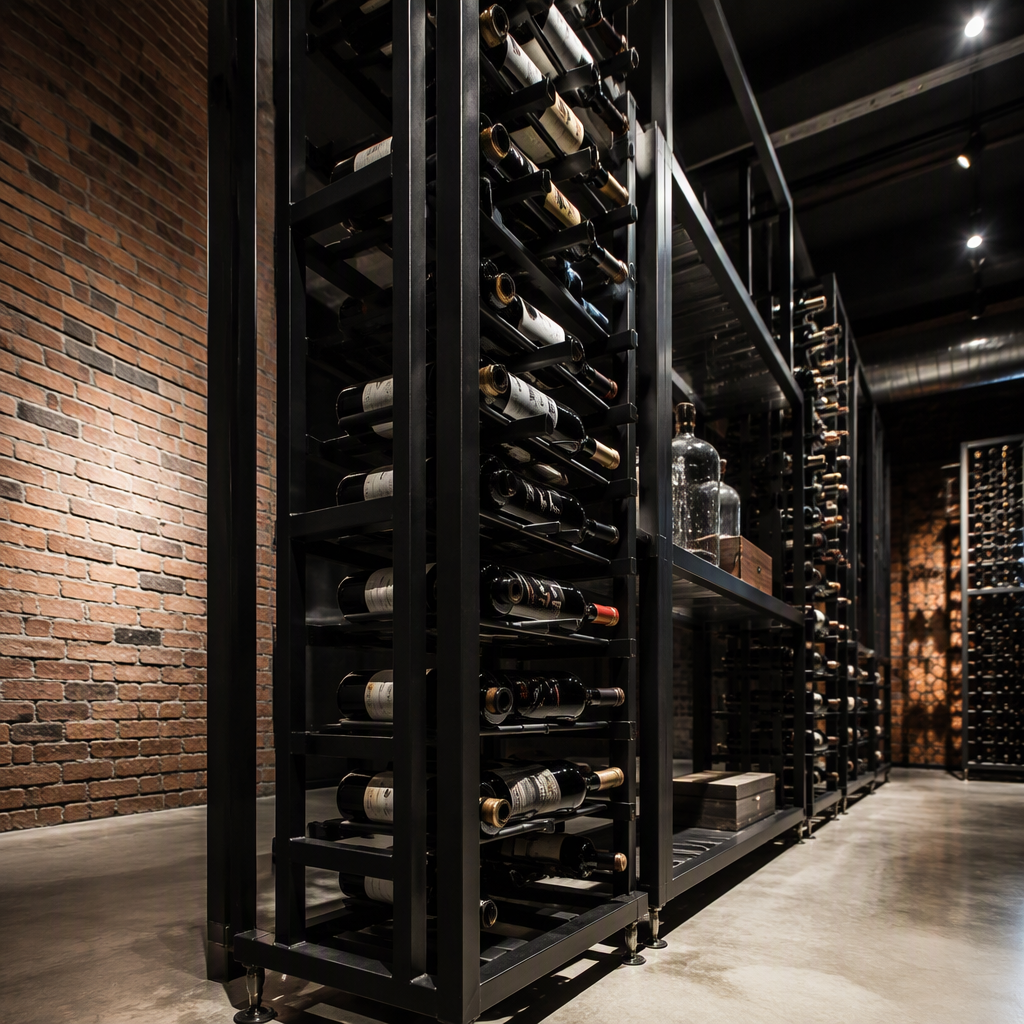
How Do You Match a Bottle to Its Holder?
Start with the bottle, not the frame. A wine bottle display rack has to hold real bottles, so measure the largest and heaviest stock planned for the section, then add a tolerance the team can live with. Record bottle diameter, overall length and the shoulder curve where glass widens, because a cradle cut for one shape will not hold another. Fix the resting angle and write it down; a bottle leaning back further than the label allows will hide the brand a shopper needs to read. Check neck support as well as base support, so a tall bottle cannot tip forward when someone pulls its neighbour. If the section mixes shapes, list every shape rather than an average, because one awkward bottle can decide the whole slot.
Think about how staff and customers remove a bottle. A slot that grips firmly can fight the hand that needs speed during a busy restock. Judge access both ways: can a person reach the back row without lifting the front row, and can a dropped bottle fall away without taking others with it? Plan a clear breakage path so glass drops away from the walking route rather than underfoot. Where two people restock at once, check the layout still lets them pass.
Confirm the shelf and load interface last. A wine bottle display rack sits on a shelf, a plinth or a floor frame, and each interface carries load differently. Ask which surface the unit was designed for, what fixing it expects, and where the weight lands. This is not a performance promise; it is a checklist a buyer can verify with a sample and a tape measure before committing. Ask whether the fixing can be adjusted on site if the surface is not level.
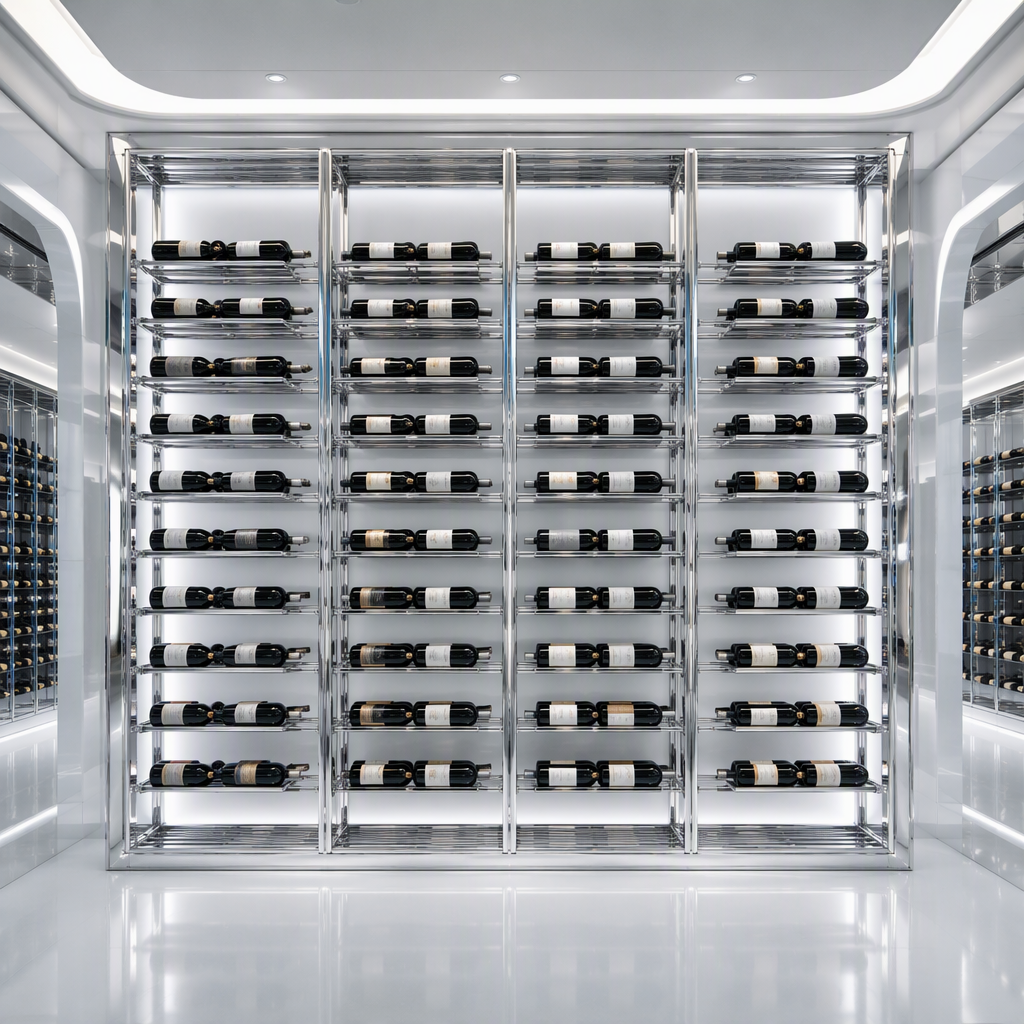
Why Does a Timber Finish Need a Sample?
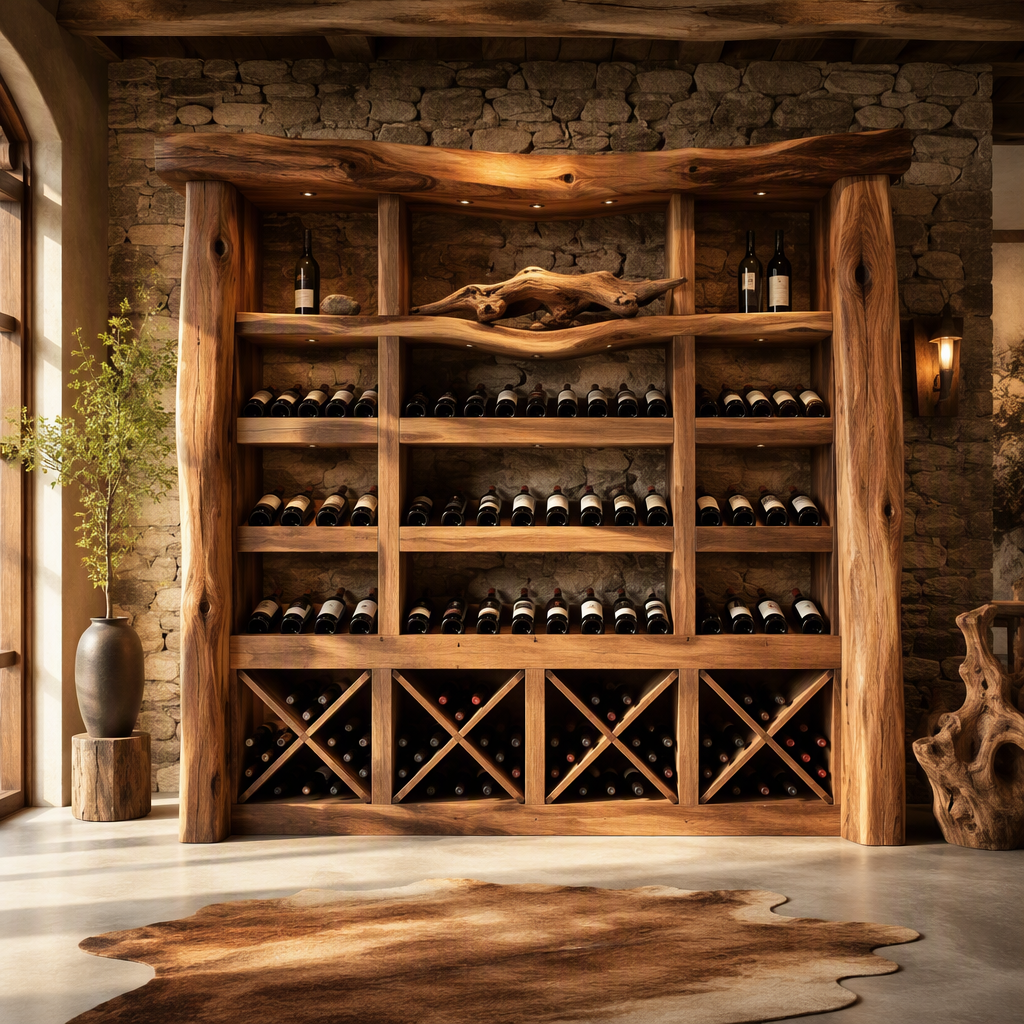
Timber changes the conversation, because a wood wine display is judged on surface as much as structure. Ask what is structural and what is cosmetic. A visible face can be a thin veneer over a substrate, or a solid section carrying load; the two behave differently at edges, joins and fixing points. A supplier should state which parts act as structural backing and which are decorative facing. Ask for the substrate name and thickness, not only the surface look.
Request a finish sample and view it under the lighting the store actually uses. A swatch seen in a warehouse reads differently under warm shop spots or daylight, and colour approval taken from a screen photo invites dispute later. Check bottle contact points and edge protection, since repeated sliding wears the most exposed surfaces first. Ask how the surface is cleaned, which agents are acceptable, and whether a damaged panel can be replaced without rebuilding the unit. Ask how a replacement panel is colour matched to the original run.
Keep the brief honest. A wood wine display is not offered here as heatproof or weatherproof, and no finish should be ordered on that basis. Treat moisture, spillage and sunlight as questions for the supplier and the site, answered by specification and sample rather than assumption. Ask whether routine cleaning will dull a matte surface over time.
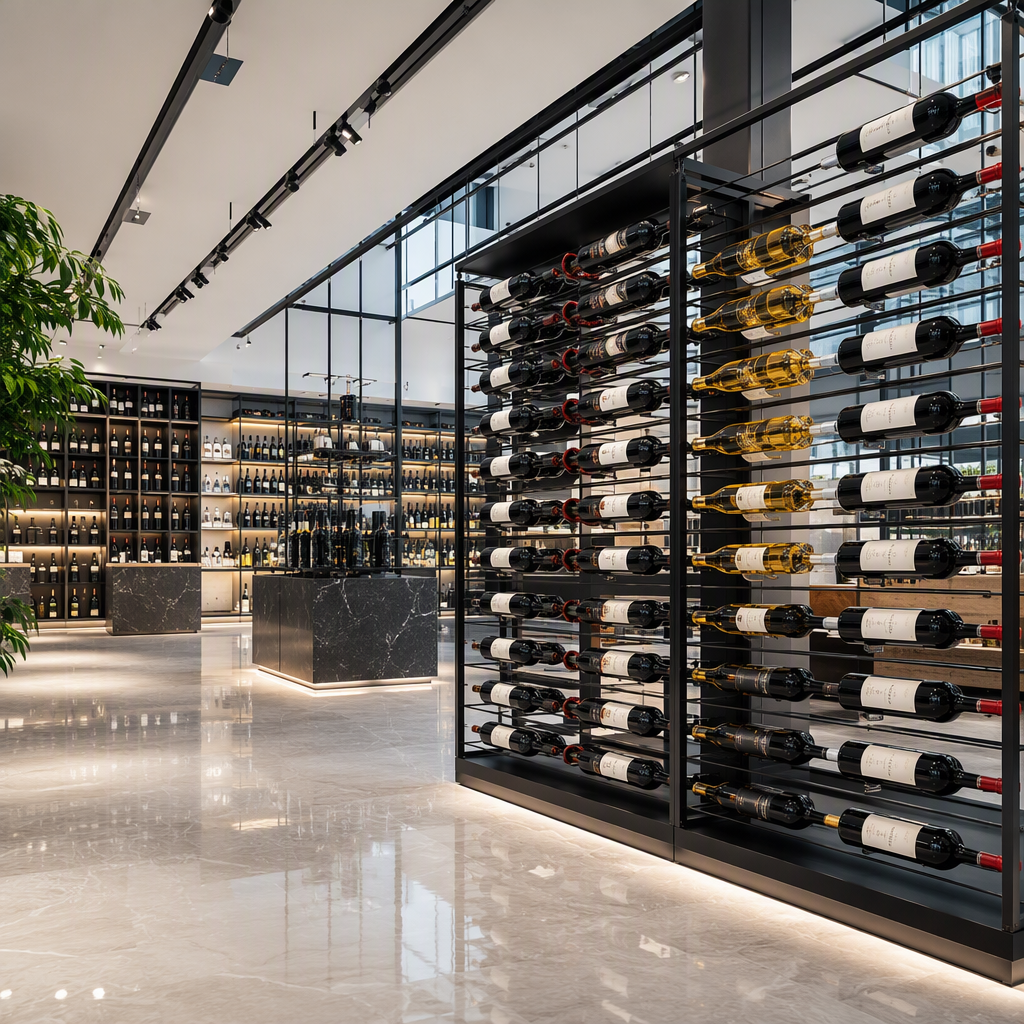
How Do You Read a Metal Frame Before Ordering?
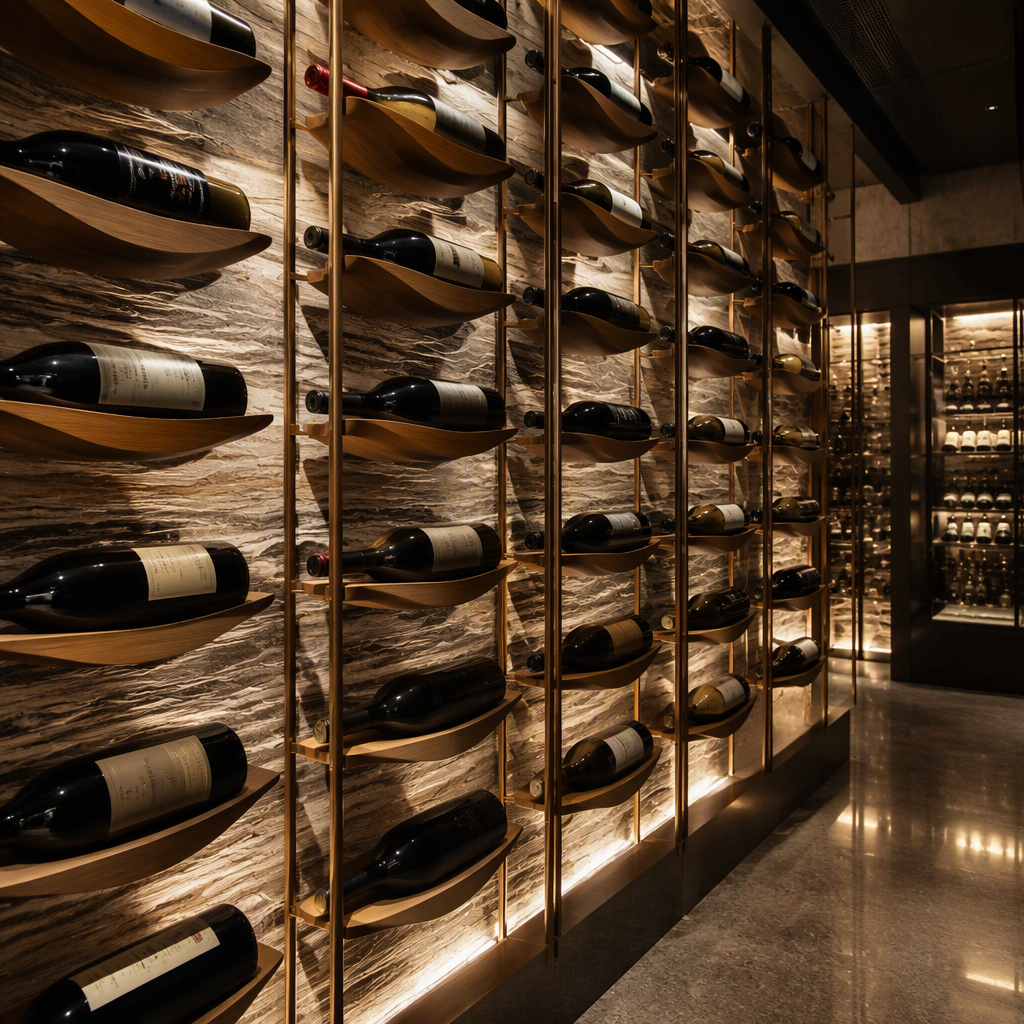
A metal wine rack is often sold on shape, but it should be bought on joints. Ask whether the frame uses rod, tube or formed profile, and how those parts meet: welded junctions, mechanical fasteners, or a mix. Request detail on weld finish, grinding and fastener type, because a tidy render rarely shows the connection a fitter actually receives. Confirm how bottles are supported, whether by rod spacing, a formed cradle or a strap, and match that against measured bottle shapes. Ask for a joint sample, not only a perspective view.
Levelling decides how a metal wine rack looks in place. A floor frame needs feet that compensate for an uneven slab; a wall frame needs the wall type and fixing method agreed in writing. Define the coating boundaries: which faces are finished, which stay raw, and how cut or drilled edges are treated on site. Think about packaging for transport, because unprotected edges and corner impacts are a common source of delivery damage.
Nothing here should be read as a metal durability guarantee. Coatings, alloys and environments vary, so buyer and supplier should agree the specification that matters for the site and check a sample against it. Where a frame is fixed to a wall, confirm the wall build-up before drilling and keep a record of the agreed fixing. Agree who repairs coating damage found after installation, and keep a note of the touch-up colour used.
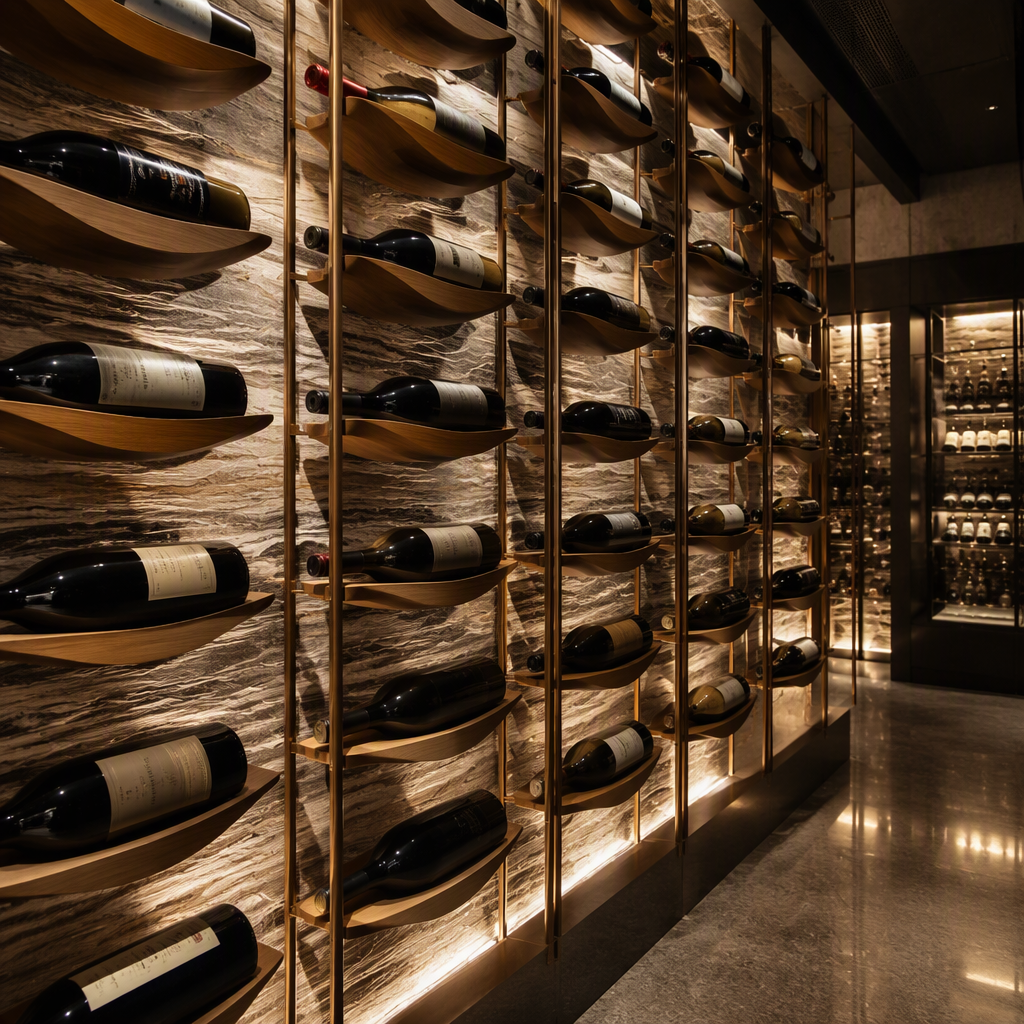
What Makes a Display Work on the Shop Floor?
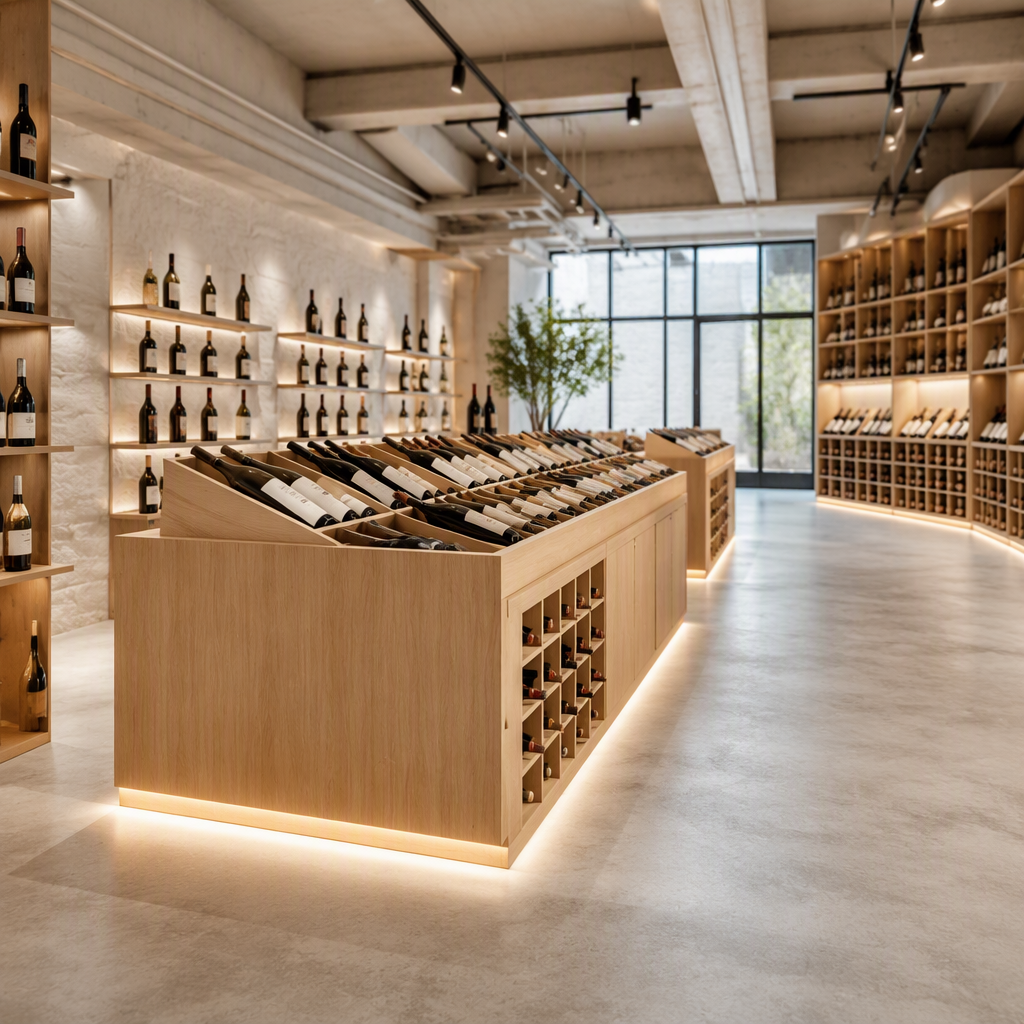
A wine retail display earns its place only if it answers a shopper's next question. Plan the signage logic first: category, price band or region, arranged so the eye moves from a broad heading to a specific shelf. Decide the SKU strategy before the fixture, because the number of facings, repeat placements and slow movers all change how much room a section needs. A frame built for one arrangement often resists the next promotion, so sketch the reset in advance. Write the target number of facings per price band before choosing the frame.
Walk the customer route on paper. Where does traffic enter, pause and turn, and does the fixture invite browsing or block a through-path? Bring staff into the plan: a wine retail display that cannot be restocked quickly from a trolley or a case will be neglected on a busy day. Agree how promotional changes are handled, how often the layout resets, and how product information is shown without crowding the shelf. Decide who owns the reset routine and how it is recorded, because a short written routine is easier to keep than a verbal one.
Product information, price and provenance carry their own local rules. This guide does not interpret alcohol regulation for any market. A store owner should confirm labelling, signage and promotion requirements with the relevant local authority before the fixture is installed, and keep a note of who signs off each change.
What Turns a Brief Into an Accepted Fixture?
A custom wine display fixture begins as a written brief, not a picture. State the quantity of bottles, the bottle range, the space it must occupy, the finish direction and the budget band, then ask the supplier to return a drawing with dimensions. Compare that drawing against site measurements taken by your own team, because a figure copied from an old plan is a common cause of rework. Agree acceptance criteria in advance: what the sample must show, which tolerances matter, and how a delivered unit will be checked against the brief. Keep a numbered revision of the brief so later changes stay traceable.
Confirm the services interface only where it applies. If lighting or power is specified, fix the position, voltage and responsibility in writing; if it is not specified, do not assume it is included. Settle cartoning and protection for transport, who installs the unit, when ownership passes, and which spare parts or replacement components can be reordered. A custom wine display fixture is finished when it meets the agreed criteria, not when it looks close enough in a photograph. Confirm what the buyer signs off and when the drawing is frozen, since a frozen drawing protects both sides from drift.
Comparison Table
| Procurement question | What to confirm | Evidence to request |
|---|---|---|
| Bottle fit | Diameter, length, angle, neck support, access, breakage path, load interface | Measured sample |
| Timber surface | A wood wine display should state structural backing versus facing, finish under store light, edge protection, cleaning | Finish sample |
| Frame joints | A metal wine rack should show rod or tube type, welds, fasteners, levelling, coating boundaries, packaging | Joint sample |
| Shop-floor plan | Signage, SKU count, restock route, reset plan, product information | Layout sketch |
| Project control | Brief, drawing, acceptance criteria, site size, services, installation, spares | Drawing and sample |
FAQ
Can a report prove a display sells more?
No. Retail, sentiment and weather reports describe conditions, not cause. They cannot show that any single wine bottle display rack, finish or layout produced a sale, so treat them as background rather than as evidence.
What should I measure before ordering?
The bottles: diameter, length, shoulder shape and the heaviest realistic load, plus the surface the unit will rest on. Then check reaching the back row and removing a bottle without disturbing its neighbours.
Is a physical sample necessary?
For timber, metal and colour it is the only reliable check. Insist on a sample seen under the store's own lighting, and confirm how edges, contact points and coatings will be inspected on delivery.
Which details belong in a custom brief?
Quantity of bottles, bottle range, footprint, finish direction and budget band. Add drawings, acceptance criteria and site dimensions, then confirm who installs the unit and which spare parts can be reordered.
Who confirms regulatory requirements?
Not the supplier. Labelling, promotion and alcohol rules vary by market, so the store owner should confirm the relevant local requirements directly before installing anything.
Sintop Value
Sintop supports customized wine retail display projects with metal and wood manufacturing, design, prototyping, and production capabilities. We help buyers translate bottle dimensions, material preferences, store layouts, and installation needs into clear specifications for a custom wine display fixture.

Contact information
Website: www.sintopfixtures.com
Wechat/WhatsApp: +86 15980885084
Email: elly@xm-sintop.com
FAQ
1. What types of display racks can Sintop provide?
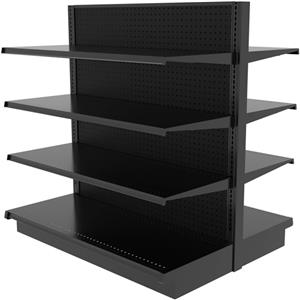
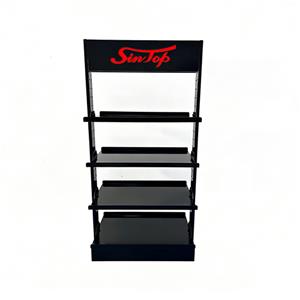
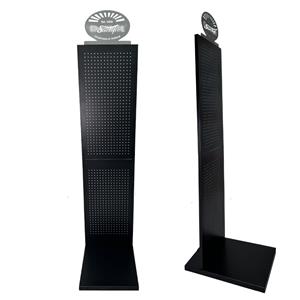
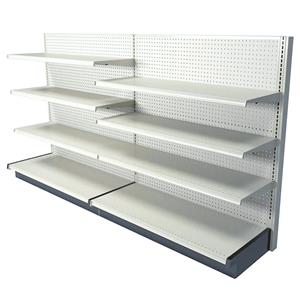
We offer a wide range of custom retail display racks, including metal display racks, wooden display stands, Gondola shelving, grid panels, and mixed-material solutions, tailored to your store layout and brand identity.
2. Can I order a single unit or prototype?
Yes, no minimum order is required. We can produce prototypes or single units as well as large-volume orders.
3. How long does it take to receive an order?
New items: 3–5 weeks for tooling and production.
Reorders: 2–4 weeks depending on product type.
We are flexible and strive to meet your required delivery dates.
4. Can Sintop handle OEM or ODM projects?
Yes, we specialize in OEM and ODM solutions, turning your ideas or drawings into custom, high-quality display racks.
5. How does Sintop ensure quality?
Every display rack undergoes material inspection, welding and structural checks, surface finish testing, and final assembly inspection to ensure durability, safety, and visual appeal.
Contact information
Website: www.sintopfixtures.com
Wechat/WhatsApp: +86 15980885084
Email: elly@xm-sintop.com
FAQ
1. What types of display racks can Sintop provide?
We offer a wide range of custom retail display racks, including metal display racks, wooden display stands, Gondola shelving, grid panels, and mixed-material solutions, tailored to your store layout and brand identity.
2. Can I order a single unit or prototype?
Yes, no minimum order is required. We can produce prototypes or single units as well as large-volume orders.
3. How long does it take to receive an order?
New items: 3–5 weeks for tooling and production.
Reorders: 2–4 weeks depending on product type.
We are flexible and strive to meet your required delivery dates.
4. Can Sintop handle OEM or ODM projects?
Yes, we specialize in OEM and ODM solutions, turning your ideas or drawings into custom, high-quality display racks.
5. How does Sintop ensure quality?
Every display rack undergoes material inspection, welding and structural checks, surface finish testing, and final assembly inspection to ensure durability, safety, and visual appeal.