

Which Clothing Store Display Brief Do You Need
Phrases that sound interchangeable send buyers to three different documents. One asks for tube sizes and rail geometry, one for zone layout and capacity, one for a sample panel under store lighting. This page keeps the three briefs separate and says what none of them proves.
Three phrases sit close together in search results and very far apart in procurement practice. A buyer who types one of them might be after a tube diameter, a floor plan, or a stain sample, and a supplier who answers the wrong one will still sound confident. Treating the phrases as interchangeable produces a request for quotation that nobody can price honestly.
This page separates three briefs. The first is a hardware document: profile sizes, rail geometry, hanger contact, weld condition, load path, feet or casters, coating limits, carton protection and replacement parts. The second is a project document: zone layout, wall and freestanding configurations, category and size arrangement, aisle reach, signage interfaces, replenishment sequence, changeover, drawing revision, and assembly scope. The third is a material and finish document: backing structure, veneer against solid timber, samples under the lighting the shop actually uses, edge protection, cleaning, garment contact and colour matching.
Nothing below promises sales, conversion, safety, compliance, fire performance or durability. A specification proves only what was written, inspected and accepted.
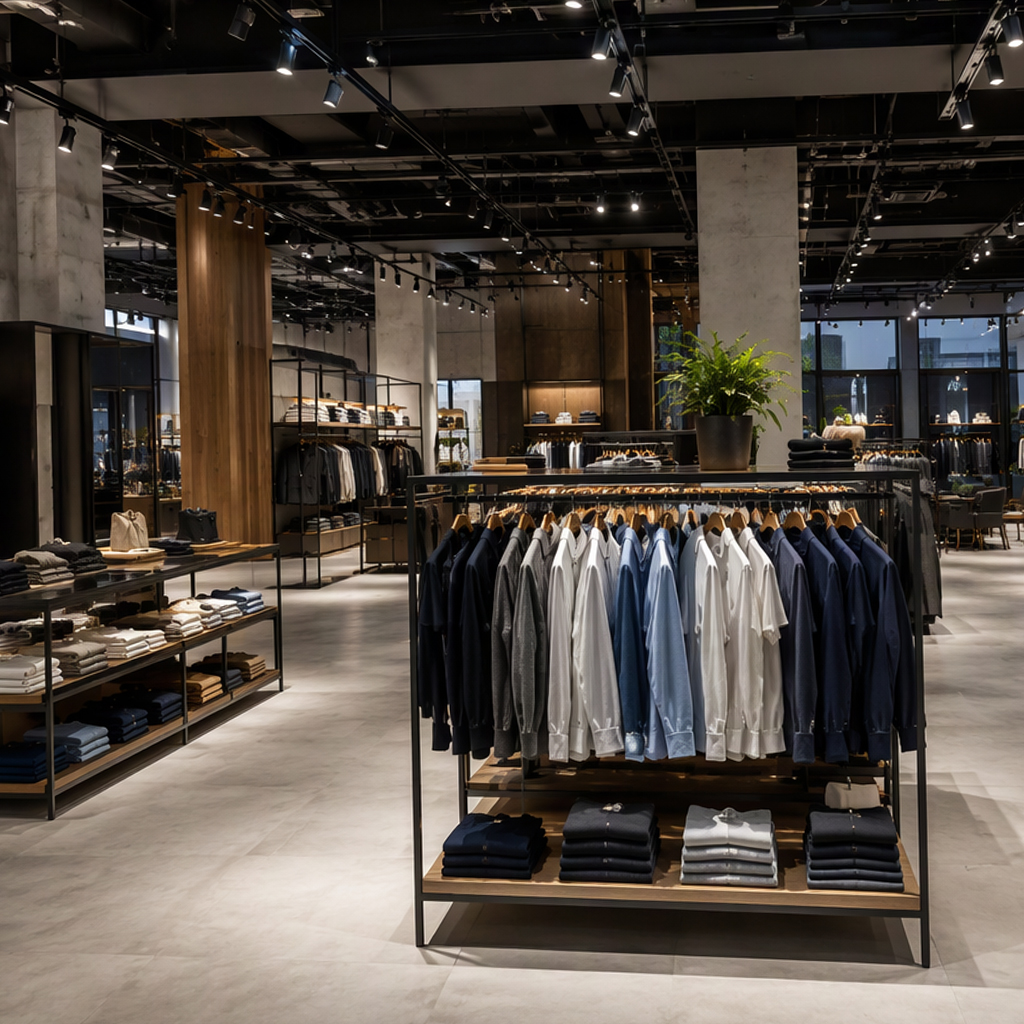
What a metal clothing store display brief actually commits to
Start with the object. A metal clothing store display document has to name the tube or profile: round tube at a stated diameter, oval tube with stated axes, or rectangular section with a stated wall thickness. “Strong steel” is not a dimension, and a drawing that shows a profile without a size cannot be inspected when the container arrives.
Rail geometry follows: rail diameter, rail length, single or double hang, straight or curved run, and spacing between rails on a waterfall unit. Hanger contact earns its own line: a rail too thick for the shop’s hangers, or too smooth for them, changes how garments sit and how often staff re-hang them. Ask for the contact surface treatment and the diameter tolerance, not the finish trade name.
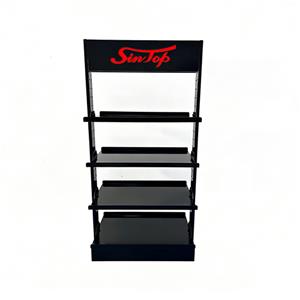
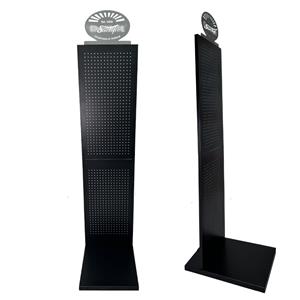
Welds and fasteners decide whether the fixture still sits square after a season. State whether welds are dressed, left visible or ground flush, which joints are welded rather than riveted, and the grade and head type of each visible fastener. Load path matters more than any single part: rail to bracket, bracket to upright, upright to base, base to floor. Level feet or casters belong in that same paragraph, with thread length, adjustment range, wheel material and whether the castors lock. Every one of those items can be written into a metal clothing store display schedule on a single page.
Then the missing details. The floor route from goods-in to the sales floor, including door widths, lift dimensions and turns. The coating boundary: where powder coat stops, where brushed or chrome finish begins, which threads stay masked and which surfaces must remain bare for assembly. Carton protection on rail ends and corners. Service and replacement parts: spare feet, spare castor wheels, spare hooks, and the lead time attached to each. A material label proves none of those. The material family is the least informative part of the specification.
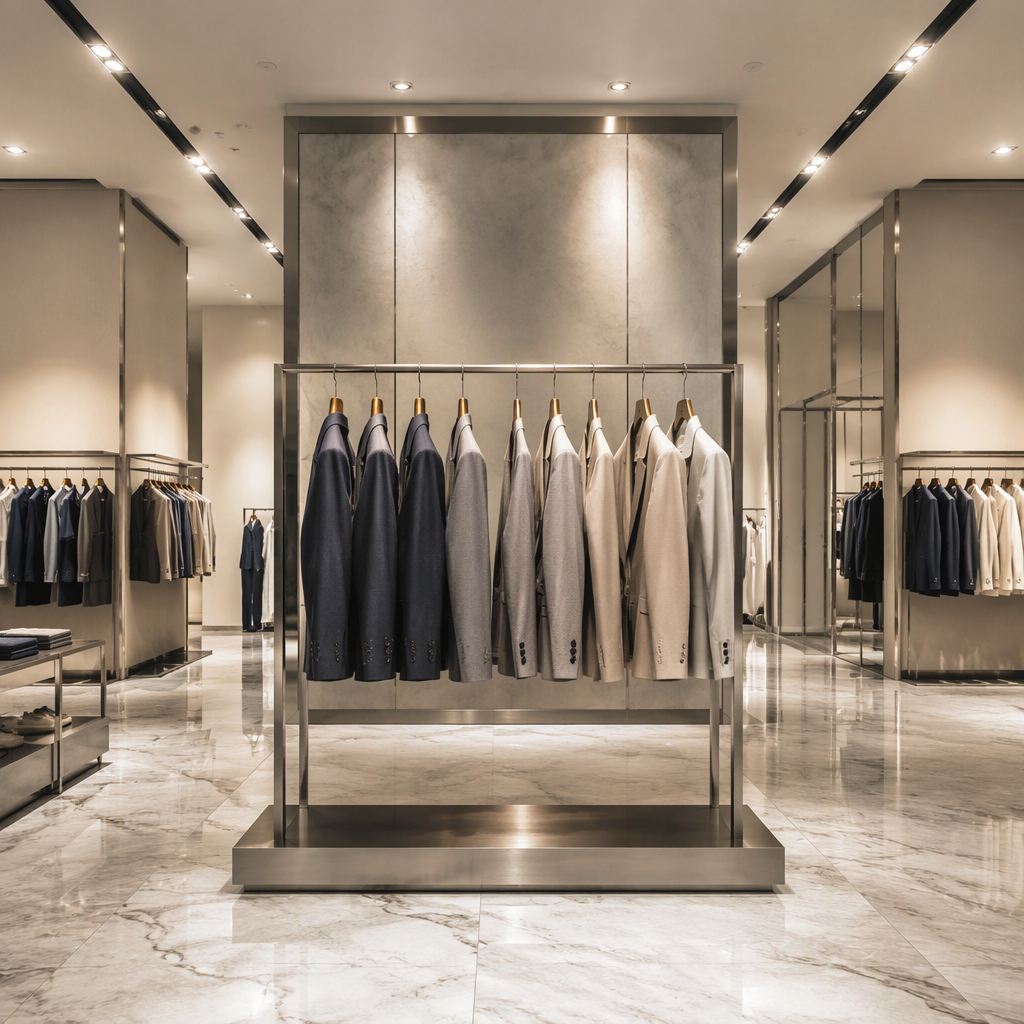
Why clothing store display metal is a system question, not a product phrase
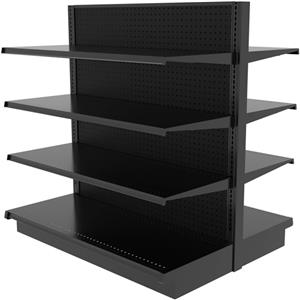
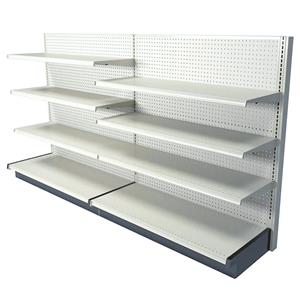
Change the question and the document changes. A system brief starts with shop zones: window, entrance transition, wall runs, mid-floor islands and cash wrap. It then fixes the configuration type for each zone, wall-mounted standards and brackets, freestanding gondola, four-way, or a low table for folded stock, because a wall run and a freestanding unit answer different merchandising needs.
Category, SKU, colour and size arrangement drive capacity. Hanging against folded, size runs per bay, colour sequence along a run, and the number of units a full size set needs all translate into hook counts, shelf spacing and rail length. A clothing store display metal brief that skips capacity produces a tidy elevation drawing and a floor that cannot hold the buy.
Aisle and customer reach come next: aisle width, reach height for the average shopper, sightline from the entrance to the back wall, and clearance where customers stop with a bag. Then the interfaces: signage, price rails and ticket strips have heights and depths that must line up with shelf pitch. Replenishment sequence belongs here too: a unit that cannot be restocked from the stockroom cart without moving a neighbour will be restocked badly, and a clothing store display metal layout is judged by how it is restocked, not only by how it photographs. Changeover, meaning season swaps, adjustable shelves and re-merchandising without tools, is a system property rather than a fitting detail.
Drawing revision and delivery scope close the brief: revision number, approval route, dimension tolerances, who assembles, whether units ship flat or built, and what site conditions installers can assume. The word order here changes the buyer’s question, not the quality claim. A buyer who writes it this way is usually adding to, or replacing part of, a set that already exists; the material adjective sits beside the system word because the system came first.
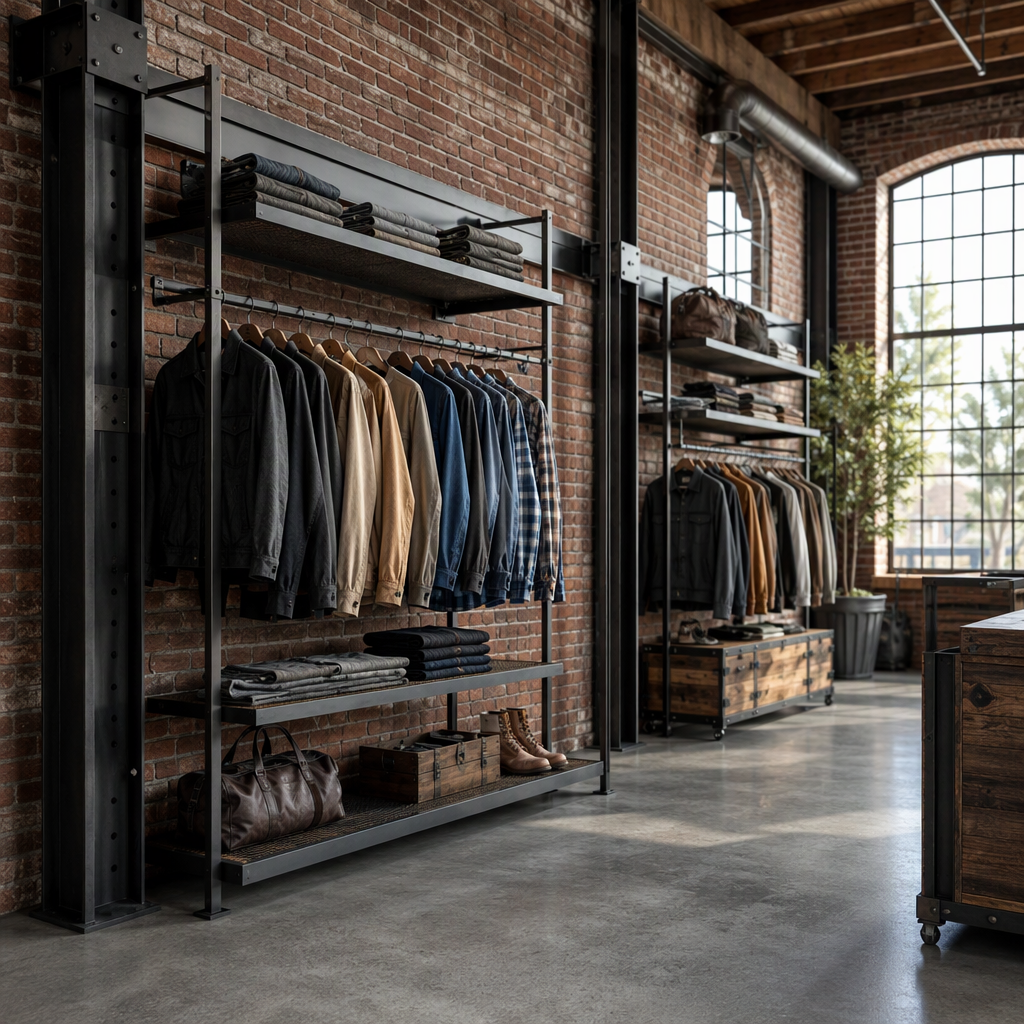
Where a wood clothing store display decision is actually made
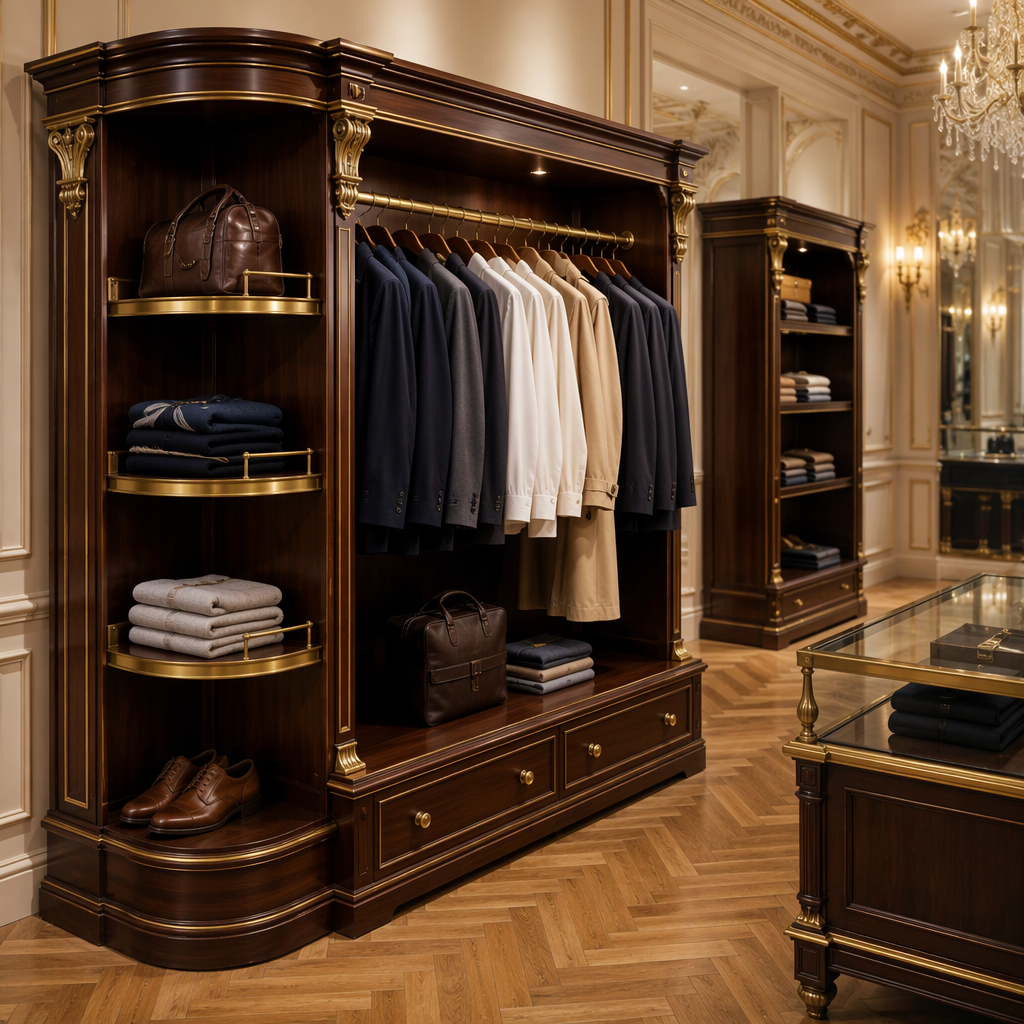
Timber in a shop is usually two things at once, and the brief should separate them. Structural backing is the substrate that carries load: plywood, blockboard or a framed carcass. The visible surface is decorative: timber veneer, laminate, painted MDF, or solid timber sections. A wood clothing store display specification that names only “oak” leaves the substrate, the edge detail and the fixing method undefined.
Finish approval should happen under the lighting the shop actually uses. A panel approved in a warehouse with cool daylight tubes can look yellow at the till and grey in the window, so ask for a sample viewed in the store, at the height where the fixture will stand. Matt, satin and open-pore finishes read differently on a vertical panel than on a horizontal shelf, and the panel is what should be signed.
Edge protection and cleaning are part of the finish decision. Edge banding thickness, radius, and whether a bumper strip is needed where trolleys and baskets pass. Cleaning instructions that match the finish: gentle detergent and a damp cloth rather than a soaking, because water standing on an unsealed edge is the usual cause of a swollen panel. Garment contact matters as well, meaning sanded surfaces, no proud fasteners inside a cubby, and no sharp banding line where knitwear is folded. For a wood clothing store display, the finish schedule and the cleaning schedule are the same document.
Colour matching and later replacement finish should be agreed before the first unit ships. Keep a retained sample, record the batch or dye lot reference, and state the tolerance for a later re-order; finish names travel poorly between suppliers. Requests for heat, moisture or fire behaviour belong in a supplier’s test documentation, never in a finish name. An approval based on a photograph is an approval of the photograph.
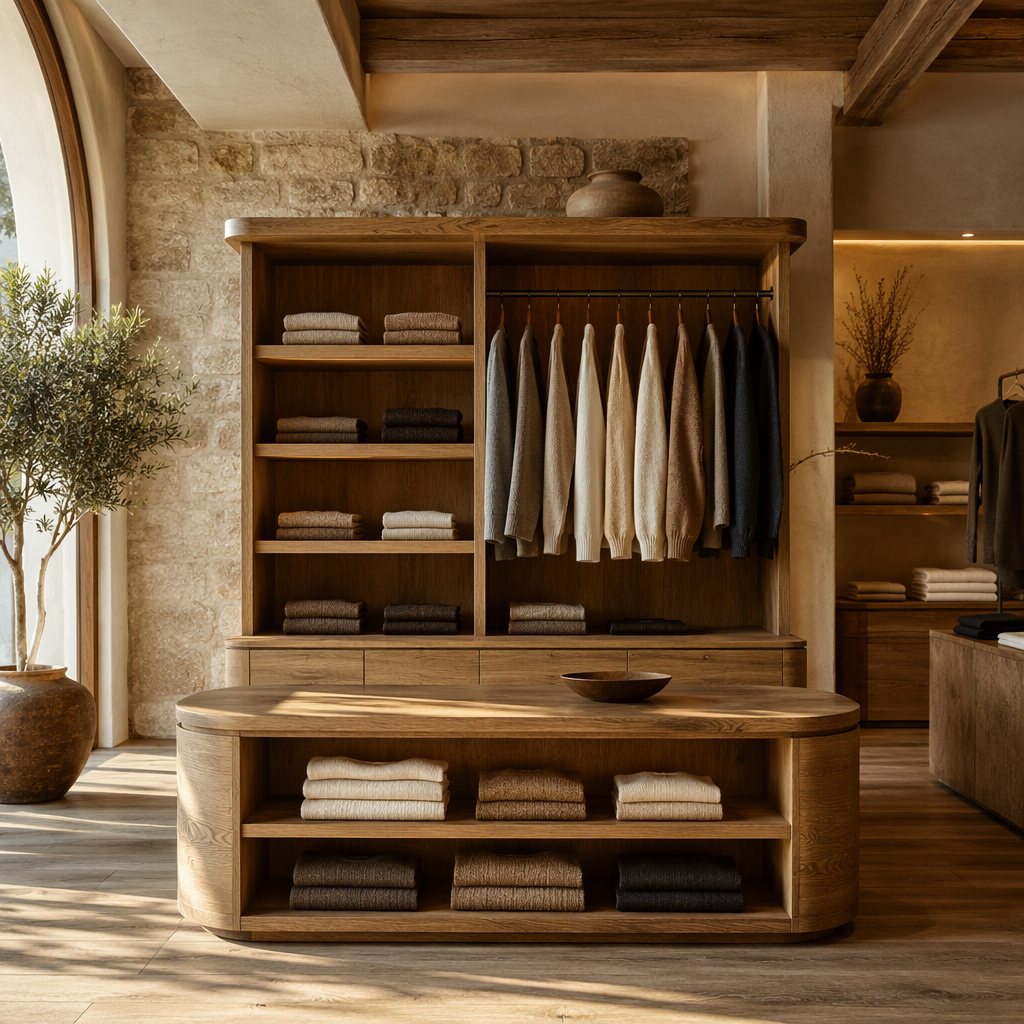
A comparison table for three different buying questions
The table compares what each brief is for, what belongs in the request, and what the brief cannot prove. Read down a column; the rows only line up the three documents.
| Brief | What the buyer is deciding | What must be in the request | What it cannot prove |
|---|---|---|---|
| metal clothing store display | Hardware detail of one specific fixture | Profile and wall thickness, rail diameter and spacing, hanger contact, weld and fastener schedule, load path, level feet or castors, coating boundary, carton protection, spare parts | That the fixture suits the shop layout or the merchandise plan |
| clothing store display metal | System configuration for a zone or a whole floor | Zone list, wall and freestanding mix, category and size capacity, aisle reach, signage and price rail interfaces, replenishment, changeover, drawing revision, assembly scope | That any single unit in the set is well built |
| wood clothing store display | Surface and finish the shopper stands next to | Substrate against visible material, sample viewed under store lighting, edge protection, cleaning method, garment contact, colour match, replacement tolerance | Structural capacity, heat or moisture behaviour, fire performance |
Skeptical questions and a project start
Can one quotation cover all three briefs?
It can, but it should not be one line item. Ask for the hardware schedule and the system layout priced apart from the finish package, so a change of veneer does not re-open the steel price.
Is a photograph or a rendered image enough to approve a fixture?
A photograph shows a shape. Approval needs a dimensioned drawing, a finish or material sample, and acceptance criteria written as checks a person can perform on arrival: measured tube size, rail height, weld condition, coating coverage, and panel colour against the retained sample.
Why insist on finish samples under store lighting?
Because colour decisions are made by eye in the room where customers stand. A sample viewed anywhere else is a sample of a different colour, and the difference usually appears after installation.
What happens if the shop layout changes after the drawing is approved?
Say so early and in writing. A revision number, a revision log and a written note of what changed keep the delivery scope honest; a verbal change on site usually surfaces as a missing bracket.
Will a specified fixture improve sales?
No document on this page claims that. A fixture can hold a plan and present stock; whether the plan sells is a merchandising and pricing question, not a fixture question.
Send the drawings you already have, even rough ones, plus the zone list and the finish direction. The supplier-described process is design, prototype, production and shipment, and each stage needs an approved drawing, a sample and acceptance criteria before it moves on.
Sintop Value
Sintop manufactures customized metal and wood retail display fixtures for clothing stores. From metal hanging racks, rails and brackets to complete store display systems and wood-finished fixtures, Sintop supports OEM/ODM development, custom design, prototyping and production. Clear drawings, material specifications, finish samples and acceptance criteria help buyers align expectations before manufacturing.

Contact information
Website: www.sintopfixtures.com
Wechat/WhatsApp: +86 15980885084
Email: elly@xm-sintop.com
FAQ
1. What types of display racks can Sintop provide?
We offer a wide range of custom retail display racks, including metal display racks, wooden display stands, Gondola shelving, grid panels, and mixed-material solutions, tailored to your store layout and brand identity.
2. Can I order a single unit or prototype?
Yes, no minimum order is required. We can produce prototypes or single units as well as large-volume orders.
3. How long does it take to receive an order?
New items: 3–5 weeks for tooling and production.
Reorders: 2–4 weeks depending on product type.
We are flexible and strive to meet your required delivery dates.
4. Can Sintop handle OEM or ODM projects?
Yes, we specialize in OEM and ODM solutions, turning your ideas or drawings into custom, high-quality display racks.
5. How does Sintop ensure quality?
Every display rack undergoes material inspection, welding and structural checks, surface finish testing, and final assembly inspection to ensure durability, safety, and visual appeal.