

Can Modern Hallway Storage Reduce Hidden Costs?
America's retail rebound is colliding with expensive borrowing and rising import prices. The practical response is not another style refresh: it is storage that fits, metal fixtures with documented performance, and supply agreements that make delivery responsibilities explicit.
Cheap-looking furniture can be expensive to own. So can a beautifully finished rack that arrives without the right hardware. In September 2026, American buyers have a sharper reason to question both: spending remains resilient, but financing and imported goods are becoming harder to budget. The price printed beside a product is only the beginning of the purchasing decision.
An Associated Press report published September 20, and carried by WSLS, described persistent inflation and higher borrowing costs. It reported that the average thirty-year mortgage rate had reached 6.95% the previous week. For retailers selling furniture and operators funding store projects, this is relevant economic context, not proof that any particular storage category is booming. [1]
The useful response is to examine how a product works after delivery. A modern hallway storage unit must preserve movement through a home; an industrial style metal rack must do more than look strong. Buyers searching wholesale store fixtures usa need clarity about stock location, manufacturing origin and the full delivered cost. These are different searches, joined by one decision: what evidence makes the purchase defensible?
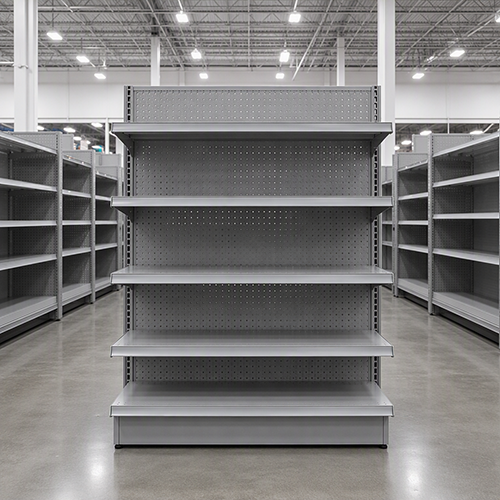
What Is September's Cost Squeeze Telling Buyers?
Reuters reported on September 16 that U.S. retail sales increased 1.2% in August after a revised 0.5% fall in July. Furniture-store receipts rose 0.9% during the month, while sales at clothing stores gained 0.7%. The figures describe sales dollars, not unit volumes, and are not adjusted for inflation. A stronger total cannot tell a buyer whether an individual fixture will earn its floor space. [2]
The same day's import-price report adds another constraint. Reuters, citing the Bureau of Labor Statistics, said import prices rose 0.7% in August and 7.0% over twelve months. Imported consumer goods excluding automobiles increased 0.5% during the month. These indices exclude tariffs; they are not a duty schedule and must not be applied as a blanket surcharge to a furniture quotation. [3]
Britain provides a cautionary comparison. BRC's September 8 release, covering August 2–29, recorded total retail sales growth of 0.7% year on year, but non-food sales fell 0.8% and in-store non-food sales fell 1.2%. Its commentary described weaker purchases of furniture and household appliances. This is U.K. evidence, not American demand data, and its annual comparisons differ from the U.S. monthly figures above. [4]
Our purchasing judgment is straightforward: do not confuse consumer spending resilience with permission to overbuy. Specify the operational problem, then compare complete solutions. A cabinet that obstructs an entrance or a rack that requires repeated repairs can turn a seemingly modest investment into an avoidable expense. Neither the national sales report nor an attractive room photograph resolves those risks.
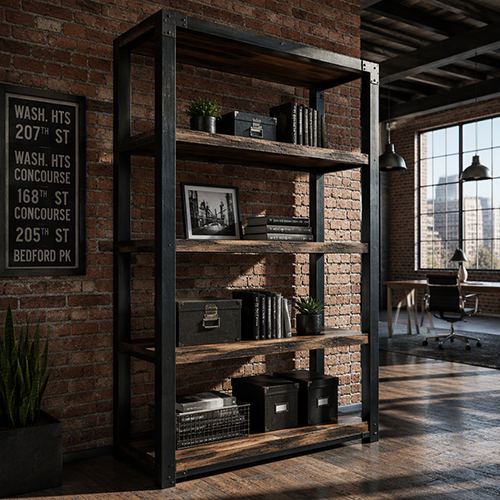
Will Hallway Storage Fit the Way People Live?
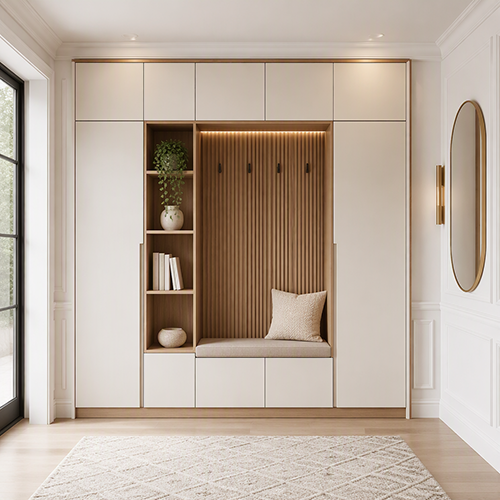
A modern hallway storage unit should be judged by the routine it supports: arriving with bags, removing shoes, finding keys and leaving without rearranging the room. Start with those actions rather than a finish palette. The most convincing design is not necessarily the largest cabinet; it is the one that gives frequently used items a clear home without competing with circulation.
Measure the entrance as an operating space. Record cabinet depth, door swing, drawer travel, handles and neighboring doors. Check skirting boards and the route used to carry the product inside. Ask for usable internal dimensions rather than inferring capacity from external measurements. A slim profile can be useful, but only if the actual shoes, bags or baskets fit the proposed compartments.
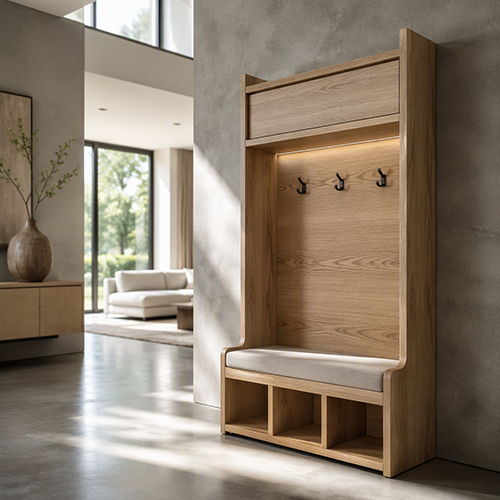
Open shelves and closed doors solve different problems. Consider open storage for items that need immediate access and enclosed compartments where visual order matters more. Ask how the proposed construction should be cleaned and how damp items should be handled. If a design includes a bench, request its intended-use statement and relevant seating-load evidence; a low shelf should not silently become a seat.
For a modern hallway storage unit in a rental or a shared building, settle the installation question before ordering. Confirm any fixing requirements with the manufacturer and the property owner. Check the relevant access and escape-route requirements for the site rather than borrowing a clearance figure from another project. Decorative appeal does not remove installation responsibilities.
The product page should answer the questions that otherwise become returns: what fits, what opens, what needs assembly and which components can be replaced. Sintop's entryway cabinet category is a useful route into the range, but category membership is not a specification. Ask for the drawing and bill of materials for the exact unit being quoted. [7]
Before approving a sample, rehearse the morning routine with the intended contents. Check whether one open compartment prevents another from being reached. Note any awkward bending, inaccessible corners or contact between moving parts and nearby walls. This simple user trial does not replace safety assessment; it tests whether the proposed layout solves the household problem described in the brief.
Is Industrial Style Backed by Measurable Performance?
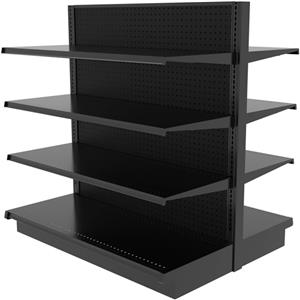
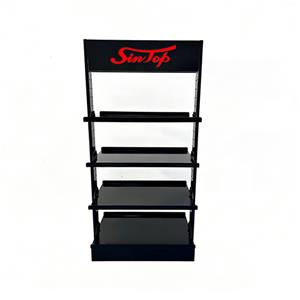
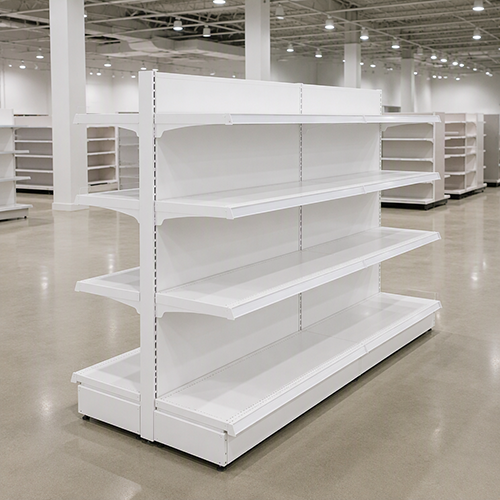
An industrial style metal rack is an aesthetic category, not a performance certificate. Dark frames, exposed joints and thick-looking profiles do not establish a load rating. The buyer needs the metal specification, component dimensions, joining method, shelf construction and documented limits for the assembled arrangement. Appearance belongs in the design brief; verified capacity belongs in the acceptance criteria.
Ask whether the quoted load is per shelf or per complete unit, how it is distributed and which configuration was assessed. Establish whether anchoring, leveling feet or other support is required. If the arrangement changes, ask whether the same rating still applies. A supplier's strongest product photograph is not evidence for every possible span, height or accessory combination.
Finish quality deserves the same discipline. Request an approved sample, a description of surface preparation and care instructions for the intended environment. Inspect joints, edges, fasteners and areas that are difficult to reach during cleaning. If a durability or corrosion test is cited, ask for the report and its scope. Do not convert a coating name into an unsupported service-life promise.
Europe's 2026 heatwaves make environmental questions timely, but they do not prove that metal furniture cools a room. BBC reported on September 5 that El Granado in southwestern Spain had reached 45.7°C that Thursday. Its September 1 review, citing provisional Met Office data, put the U.K.'s summer mean temperature at 16.5°C, the highest in a record beginning in 1884. These are outdoor climate observations, not fixture test results. [5][6]
The sensible procurement response is to document expected operating conditions. Ask how the selected finish and any nonmetal components should be stored, installed and maintained. Keep fixtures clear of building equipment according to the site design. Reject claims that an open rack guarantees lower cooling bills unless a relevant building assessment supports them. An industrial style metal rack can serve a well-planned layout without being marketed as an air-conditioning solution.
What Does Buying Wholesale for the USA Really Mean?
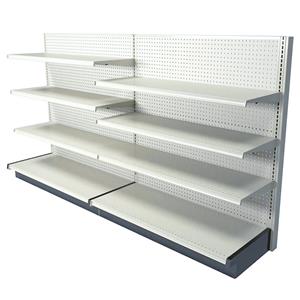
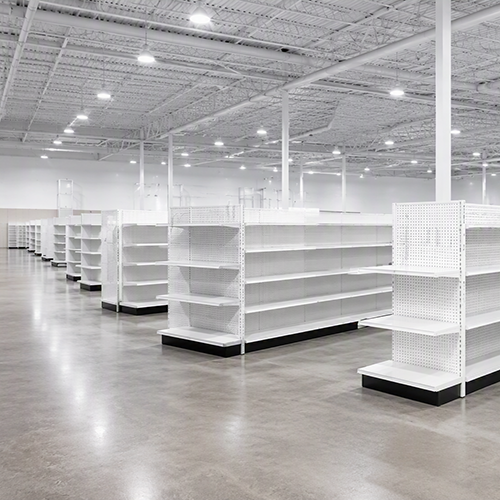
The search wholesale store fixtures usa can mean several things: goods already stocked domestically, an American distributor, or a manufacturer supplying a U.S. project. Those are not interchangeable offers. Ask where the goods are made, where they will ship from, who holds the inventory and who handles problems after arrival. The word 'USA' in a search query proves none of those facts.
A domestic-stock quotation and a factory-direct quotation should be compared on the same destination and installation scope. Ask each bidder to separate product price, packaging, transport, import-related charges, domestic delivery and assembly. Confirm which items remain estimates. A freight allowance without a named destination, delivery method and responsibility split is not a reliable basis for comparing orders.
For imports, have the relevant shipment classification and charges checked by the responsible customs professional. This article does not provide a tariff rate. Establish who will complete import formalities, arrange insurance and respond to damage or shortages. Price the required spare hardware and replacement components too. A low unit price is unhelpful if a minor missing part leaves the whole installation unfinished.
When comparing wholesale store fixtures usa offers, separate production completion from arrival and installation readiness. Request the order milestones, sample-approval deadline and handling plan for revisions. Ask whether each location receives a complete labeled kit or whether parts must be sorted centrally. These details matter when a shop has a fixed opening date and limited space for unpacking.
Use a sample order or agreed prototype to expose problems before volume purchasing. Record assembly time, packaging condition, missing components and conformity to the approved drawing. Keep the change log attached to the production order. The goal is not to eliminate every uncertainty; it is to stop uncertain responsibilities from being disguised as a finished supply agreement.
Which Evidence Should Decide the Order?
Compare the proof required by each use case, not three unrelated headline prices. The framework below is an editorial purchasing aid, not a ranking, certification or measured return-on-investment claim. It separates daily usability, structural suitability and supply execution so that an attractive quotation cannot conceal a weak answer in another area.
| Decision | Hallway storage | Metal rack | Wholesale rollout |
|---|---|---|---|
| Main job | Organize arrivals   without obstructing movement | Support the specified   merchandise and layout | Deliver a usable   fixture package to each site |
| Request first | Internal dimensions,   opening envelope, assembly plan | Configuration-specific   loads and material schedule | Stock location,   shipment scope, delivery responsibilities |
| Approval evidence | Contents trial and   installation instructions | Approved sample and   relevant test documents | Prototype, packing   list and revision-controlled order |
| Common trap | External size   mistaken for usable capacity | Industrial appearance   mistaken for rated strength | Factory price   mistaken for installed cost |
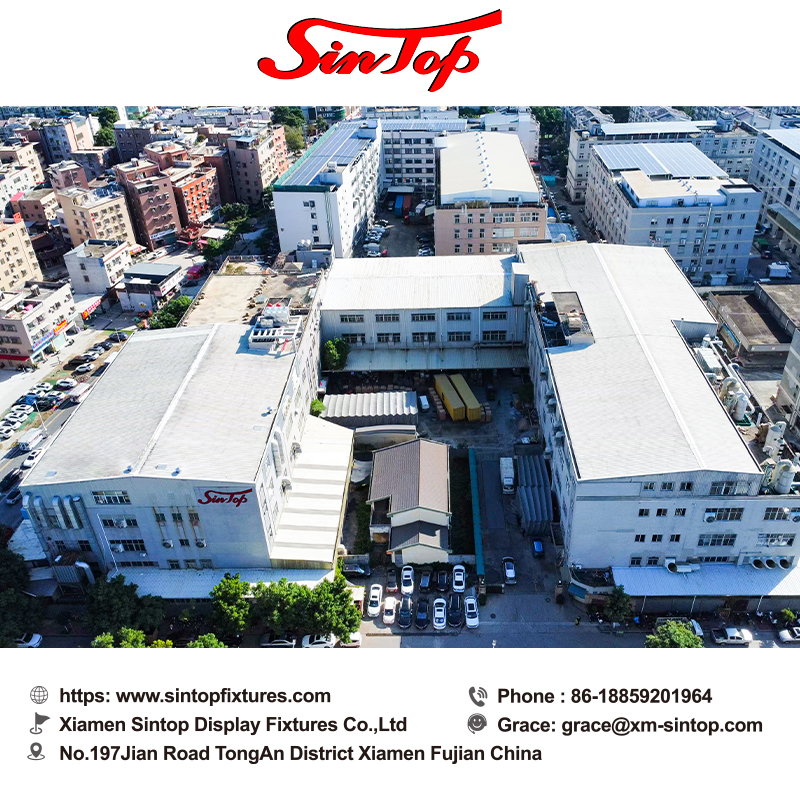
Xiamen Sintop Display Fixtures Co.,Ltd states on its official website that it was founded in 2002. Its design service lists concept development, technical drawings, packaging design and assembly instructions. Its prototype service describes work with metal and wood, including checks on assembly, function, welding and finish. Those services give buyers a practical route from a visual brief to an approval sample. [8][9][10]
The commercial advantage is coordination: discuss the storage layout, metal components, packaging and installation instructions as one project. Require the resulting drawings, approved samples and responsibility schedule to become deliverables. These are supplier-stated capabilities, not conclusions from a factory visit, and the contract must define what Sintop will provide for the specific order.
Buyer FAQ
How do I choose storage for a narrow hallway?
Choose a modern hallway storage unit by checking usable capacity and the space occupied when every door or drawer is open. Match the layout to daily contents, confirm fixing instructions and protect the site's required circulation. Do not select by cabinet width alone.
Does industrial styling mean a rack is heavy duty?
No. An industrial style metal rack needs load information for its exact assembly, together with material and installation details. Ask what was tested and whether shelf changes affect the rating. Styling, frame color and visual thickness cannot replace that evidence.
Does a U.S. wholesale search guarantee domestic stock?
No. Results for wholesale store fixtures usa may describe domestic inventory, distributors or overseas manufacturers serving American projects. Verify stock location, origin, shipment responsibilities and after-sales arrangements. Sintop's published address is in Xiamen, China; this article does not claim U.S. warehousing.
Should buyers wait because borrowing costs are high?
That decision depends on the project's budget and operating need. Compare the complete delivered and installed cost with the problem being solved. The cited news provides context, not a personalized financing recommendation or a forecast of fixture prices.
Request a Drawing-Led Proposal
Send Sintop your floor plan, stored-item or merchandise dimensions, quantities, finish references and U.S. delivery destination. Request an itemized quotation, prototype plan and clear installation responsibilities. Begin with the design team, then agree what must be demonstrated before production. Buying better means making the next question easier to answer, not filling the page with another sales claim.
Sintop Value
Sintop combines metal, wood and acrylic manufacturing with engineering, prototyping and mass production. We help buyers develop customized fixtures with clear specifications, consistent production and practical packaging solutions.

Contact information
Website: www.sintopfixtures.com
Wechat/WhatsApp: +86 15980885084
Email: elly@xm-sintop.com
FAQ
1. What types of display racks can Sintop provide?
We offer a wide range of custom retail display racks, including metal display racks, wooden display stands, Gondola shelving, grid panels, and mixed-material solutions, tailored to your store layout and brand identity.
2. Can I order a single unit or prototype?
Yes, no minimum order is required. We can produce prototypes or single units as well as large-volume orders.
3. How long does it take to receive an order?
New items: 3–5 weeks for tooling and production.
Reorders: 2–4 weeks depending on product type.
We are flexible and strive to meet your required delivery dates.
4. Can Sintop handle OEM or ODM projects?
Yes, we specialize in OEM and ODM solutions, turning your ideas or drawings into custom, high-quality display racks.
5. How does Sintop ensure quality?
Every display rack undergoes material inspection, welding and structural checks, surface finish testing, and final assembly inspection to ensure durability, safety, and visual appeal.