

Why Is Storage Furniture Trending in 2026?
1. What Is the 2026 Heatwave Telling Us About Furniture Demand?
The European heatwave of 2026 has become a retail issue, not simply a weather story.
In late June, Reuters reported temperatures above 40°C in several European countries, with Germany, Denmark and the Czech Republic among the areas experiencing exceptional heat. Germany later recorded a provisional June high of 41.3°C in Saarbrücken. (Reuters)
BBC reporting also recorded the severity of the British summer. England experienced its warmest June on record, with a mean temperature of 17.1°C, while Lingwood in Norfolk reached 37.7°C on 26 June, setting a new UK June temperature record. (BBC Mirror)
For retailers, the interesting part is what happened next.
BRC-Sensormatic data showed UK retail footfall fell 2.1% year on year in July. High-street footfall fell 3.8%, while retail-park footfall rose 1.2%. BRC directly linked the weak high-street result to the continuing heatwave. (BRC)
The sales picture was equally mixed. BRC reported total UK retail sales growth of only 1.3% in July, below the 12-month average of 1.8%. Food sales increased 3.8%, but non-food sales declined 0.7%. Online non-food sales, meanwhile, increased 1.3%, and online penetration reached 35.9%. (BRC)
That matters for furniture suppliers.
When consumers spend less time browsing physical stores and become more selective about major purchases, products need to communicate value quickly. A bulky cabinet that performs one job is harder to justify. A flexible storage unit that solves several household problems is easier to sell.
This is where storage furniture becomes more relevant.
The trend is not simply “people want more cabinets.” Consumers want furniture that helps them organize clothing, shoes, bags, household items and seasonal products without making a room feel crowded.
Reuters reported a similar split in the UK furniture market. Dunelm recorded a 2.9% increase in quarterly sales to £428 million, helped by summer products and online demand, while DFS reported a 4.4% decline in order intake. Reuters quoted an analyst describing a “lipstick effect”: consumers may postpone an extension or major renovation but still buy smaller home products. (Reuters)
That is an important signal for manufacturers.
2. Why Are Modern Storage Solutions Moving Toward Smaller, Flexible Spaces?
The old furniture model was simple: wardrobe for clothes, cabinet for household goods, shoe rack for shoes.
The new model is less rigid.
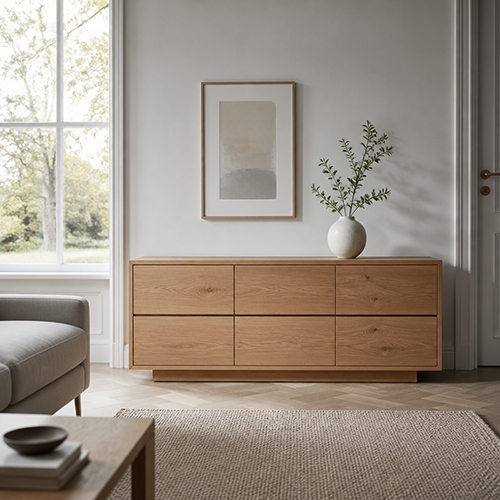
A single piece of modern storage furniture may combine drawers, shelving, hanging space, closed compartments and decorative surfaces. This approach suits apartments, compact houses, rental properties and hospitality projects where every square metre has a cost.
The entryway is one of the clearest examples.
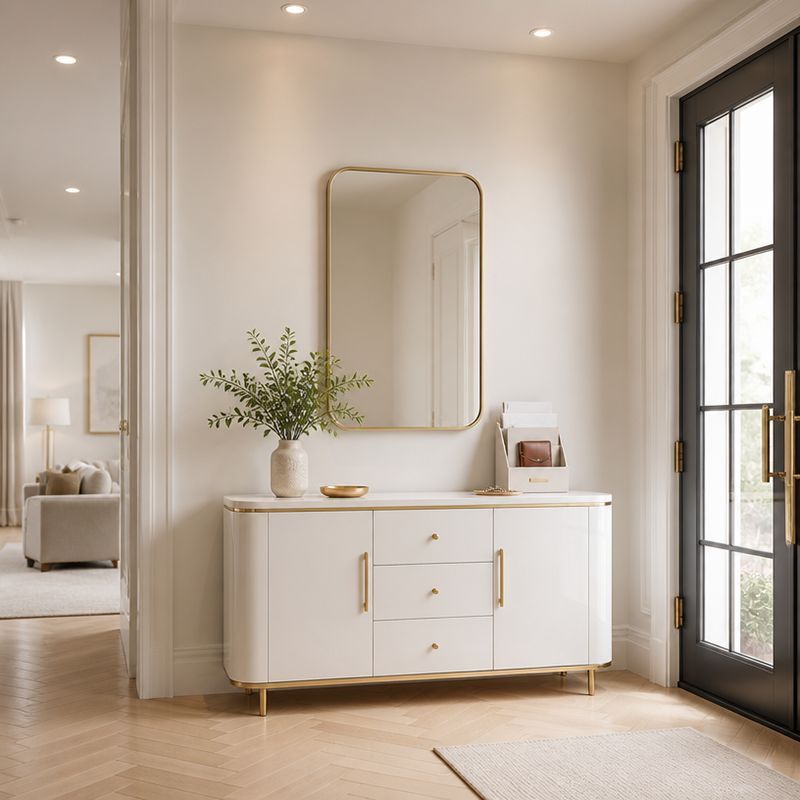
An entryway storage cabinet can combine shoe storage, drawers, open shelves, hooks and a seating area. Instead of treating the hallway as a passage between rooms, designers are turning it into a functional storage zone.
That shift is commercially significant.
A hallway cabinet can solve several daily problems at once:
shoes
stay away from walking areas;
bags have a dedicated location;
coats
can be stored near the entrance;
keys
and small objects have a fixed place;
seasonal
accessories can disappear behind closed doors.
The same logic applies to bedrooms.
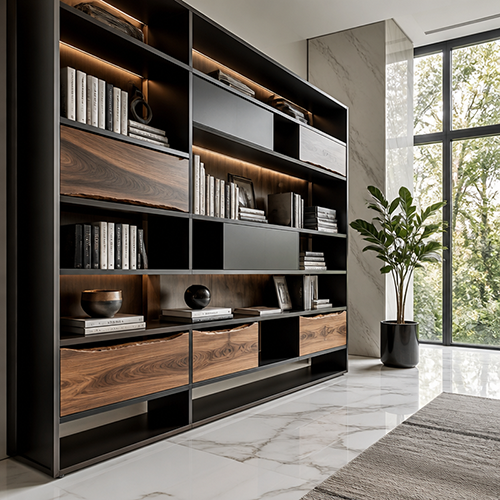
A modern wooden wardrobe can use vertical space more effectively than a low cabinet. Floor-to-ceiling construction allows designers to separate long garments, folded clothes, accessories and seasonal items.
The material choice also matters.
Wood-look finishes remain popular because they bring warmth to minimalist interiors. Matte surfaces, natural grain effects, neutral colors and handleless doors can make large cabinets visually quieter.
This does not mean every consumer wants luxury furniture.
In 2026, value is increasingly tied to useful design rather than decoration alone. A cabinet that offers more usable capacity without requiring more floor space has a practical advantage.
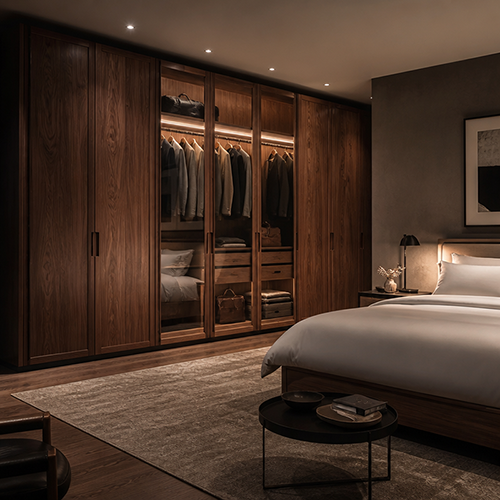
Sintop’s current product development reflects this direction. Its modular open wardrobe systems combine hanging areas, shelving, upper cabinets and lower enclosed storage, with layouts designed for different garment categories. (Sintop Fixtures)
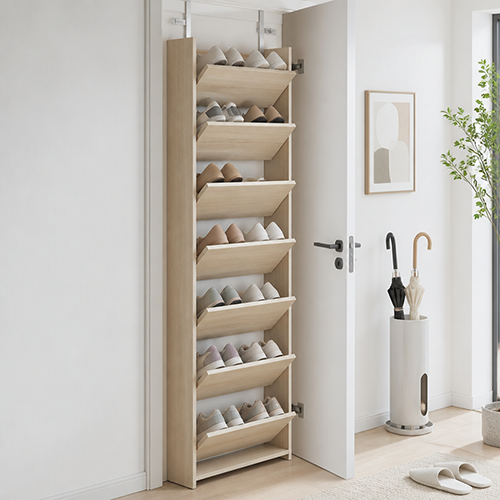
For a shoe storage cabinet for entryway, the same principle applies: vertical organization, concealed storage and easy access can be more useful than a large footprint.
The commercial lesson is straightforward: furniture manufacturers should design around household behavior, not simply around traditional furniture categories.
3. Which Storage Furniture Works Best for Different Spaces?
The best solution depends on room size, storage volume, user behavior and the visual language of the interior.
| Furniture Type | Best Application | Main Advantage | Typical Design Direction |
|---|---|---|---|
| storage furniture | Bedroom, living room, hallway | Multi-purpose organization | Modular and space-efficient |
| modern storage furniture | Apartments, hotels, modern homes | Flexible functions | Minimalist, modular, clean lines |
| entryway storage cabinet | Hallway and foyer | Shoes, bags, coats and accessories | Closed storage + open shelf |
| modern wooden wardrobe | Bedroom and dressing room | High-capacity vertical storage | Floor-to-ceiling, wood texture |
| shoe storage cabinet for entryway | Entryway and mudroom | Organized footwear storage | Slim depth, ventilated or closed compartments |
There is also a clear difference between residential and commercial requirements.
For a home, appearance and daily convenience may dominate.
For a retail or hospitality project, durability, repeatability, installation speed and customization become more important.
That is why modular construction is gaining attention.
A modular system allows a project designer to change the number of shelves, drawers, hanging sections or cabinet doors without redesigning the entire product. It can also simplify shipping and installation.
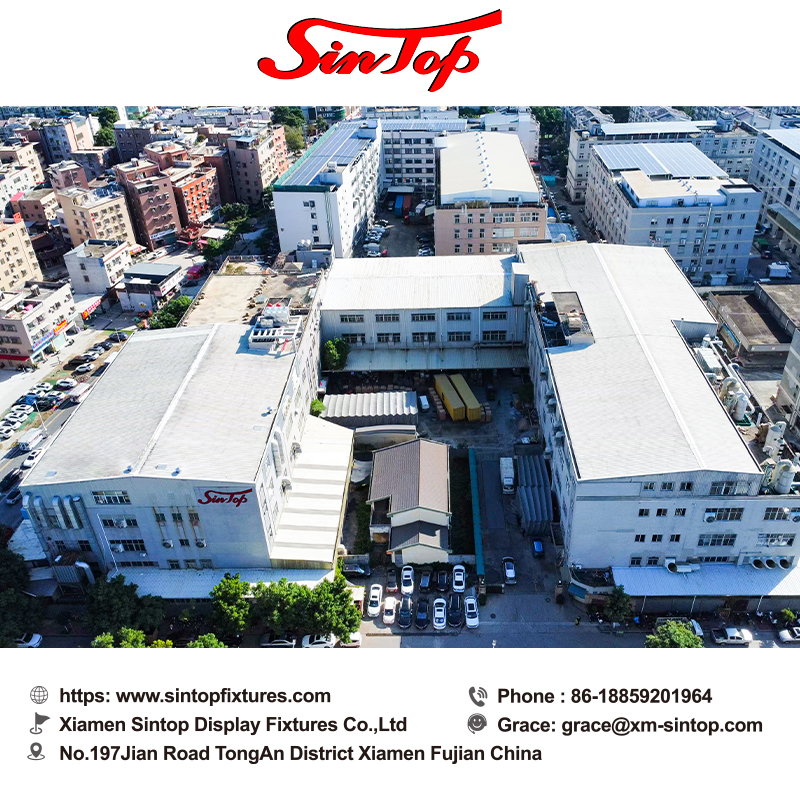
Sintop already manufactures customized storage and display products using metal, wood and acrylic manufacturing capabilities. Its factory was established in 2002 and covers about 30,000 square metres, with more than 350 workers. The company describes its production model as covering design, prototyping, production and shipment. (Sintop Fixtures)
Its current portfolio also includes custom sideboards with entryway storage and modular wardrobe systems. (Sintop Fixtures)
For international buyers, this matters because storage projects often require changes to dimensions, materials, surface finishes and internal layouts.
A supplier capable of handling those changes from engineering through production can reduce coordination between separate vendors.
4. What Does This Mean for Furniture Manufacturers and Retail Buyers?
The 2026 market is sending a fairly clear message: consumers still spend on the home, but they are becoming more selective about what deserves their money.
Reuters reported in July that British consumers were pulling back from big-ticket furniture while spending more readily on smaller home-related products. (Reuters)
BRC data points in the same direction. July non-food sales declined 0.7%, while food sales remained much stronger at 3.8%. (BRC)
This is not a reason to abandon furniture.
It is a reason to rethink the product architecture.
For manufacturers, five areas deserve attention:
1. Smaller footprints
Deep cabinets can be difficult to place in apartments and narrow hallways. Slim-profile designs can reach a broader customer base.
2. More functions per unit
A cabinet that stores shoes, bags and accessories can have a stronger value proposition than a single-purpose rack.
3. Modular construction
Adjustable shelves, interchangeable sections and flexible configurations allow retailers and designers to adapt products to different spaces.
4. Material flexibility
Metal, engineered wood, veneer, laminate and acrylic can serve different price points and design directions.
5. Better online presentation
The shift toward e-commerce means product specifications must be clear. Buyers need dimensions, materials, finishes, assembly information and customization options before they make a decision.
Reuters reported that online sales reached 29.4% of UK retail sales in the three months to June, the highest level since April 2021, as the heatwave discouraged high-street shopping. (Reuters)
That makes digital product information part of the furniture sales process.
For manufacturers such as Xiamen Sintop Display Fixtures Co., Ltd., the opportunity sits at the intersection of furniture manufacturing and retail fixture engineering.
Sintop can provide OEM/ODM design, customized dimensions and different combinations of metal, wood and acrylic. Its website also lists custom built-in wardrobes, sliding-door wardrobes, sideboards and storage display cabinets. (Sintop Fixtures)
5. FAQ: What Should Buyers Know Before Ordering Storage Furniture?
What type of storage furniture is best for a small apartment?
A modular unit with vertical storage, adjustable shelves and concealed compartments is usually more efficient than several separate cabinets. Depth should be controlled carefully, especially in hallways and compact bedrooms.
Is modern storage furniture suitable for commercial projects?
Yes. Modular storage can be adapted for hotels, showrooms, retail stores, apartments and other projects. For commercial use, buyers should assess material durability, installation method, repeatability and customization capability.
What should I look for in an entryway storage cabinet?
Focus on depth, ventilation, door construction, shoe capacity, cleaning convenience and whether the cabinet can accommodate bags, coats and small accessories.
Why is a modern wooden wardrobe becoming popular?
Vertical construction uses wall height efficiently, while wood textures create a warmer appearance than an entirely industrial cabinet. Modern versions can combine closed doors, open shelving, drawers and hanging sections.
How should I choose a shoe storage cabinet for entryway?
Measure the available wall width and depth first. Then consider the number of shoes, ventilation, access frequency and whether additional storage for bags or accessories is required.
Can Sintop manufacture customized storage products?
Yes. Xiamen Sintop Display Fixtures Co., Ltd. provides custom manufacturing using metal, wood and acrylic, with engineering, prototyping and production support. The company was established in 2002 in Xiamen, Fujian, China. (Sintop Fixtures)
Sintop Value
Sintop combines metal, wood and acrylic manufacturing to develop customized storage furniture for compact residential and commercial spaces. From engineering and prototyping to mass production, we support flexible designs, consistent finishes and export-ready production.

Contact information
Website: www.sintopfixtures.com
Wechat/WhatsApp: +86 15980885084
Email: elly@xm-sintop.com
FAQ
1. What types of display racks can Sintop provide?
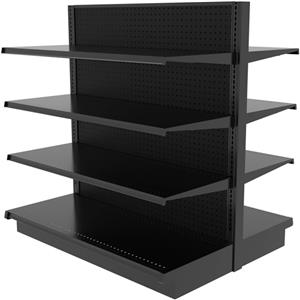
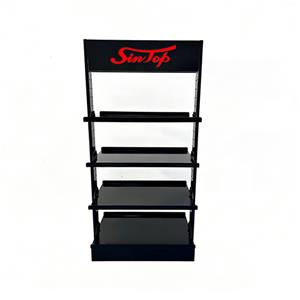
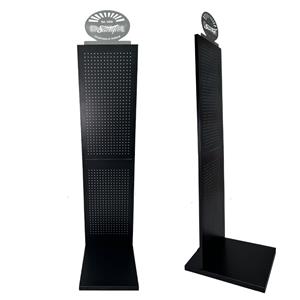
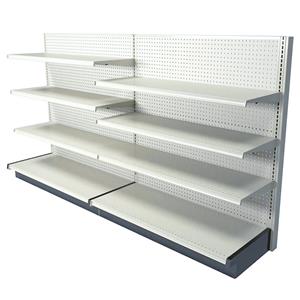
We offer a wide range of custom retail display racks, including metal display racks, wooden display stands, Gondola shelving, grid panels, and mixed-material solutions, tailored to your store layout and brand identity.
2. Can I order a single unit or prototype?
Yes, no minimum order is required. We can produce prototypes or single units as well as large-volume orders.
3. How long does it take to receive an order?
New items: 3–5 weeks for tooling and production.
Reorders: 2–4 weeks depending on product type.
We are flexible and strive to meet your required delivery dates.
4. Can Sintop handle OEM or ODM projects?
Yes, we specialize in OEM and ODM solutions, turning your ideas or drawings into custom, high-quality display racks.
5. How does Sintop ensure quality?
Every display rack undergoes material inspection, welding and structural checks, surface finish testing, and final assembly inspection to ensure durability, safety, and visual appeal.