

Can White Metal Food Store Displays Meet Retail Buyers' Quality Standards?
Three briefs share one purchase order: a light and hygiene duty, a structural duty and a configuration duty. This file keeps them apart.
A buying team rarely argues about the shelf itself. It argues about the finish sample, the load plate and the drawing revision, and all three arguments land in the same inbox on the same afternoon.
This brief keeps them apart. One part treats a food store display white finish as a maintenance duty under store lighting and store cleaning chemicals, one part treats a metal food store display as a structure with gauge, welds and coating to defend, and one part treats the delivery package as a configuration problem with drawings to control.
Every claim below should leave a trace a buyer can check alone: a sample under a named lamp, a load figure on a plate, a revision number on a drawing.
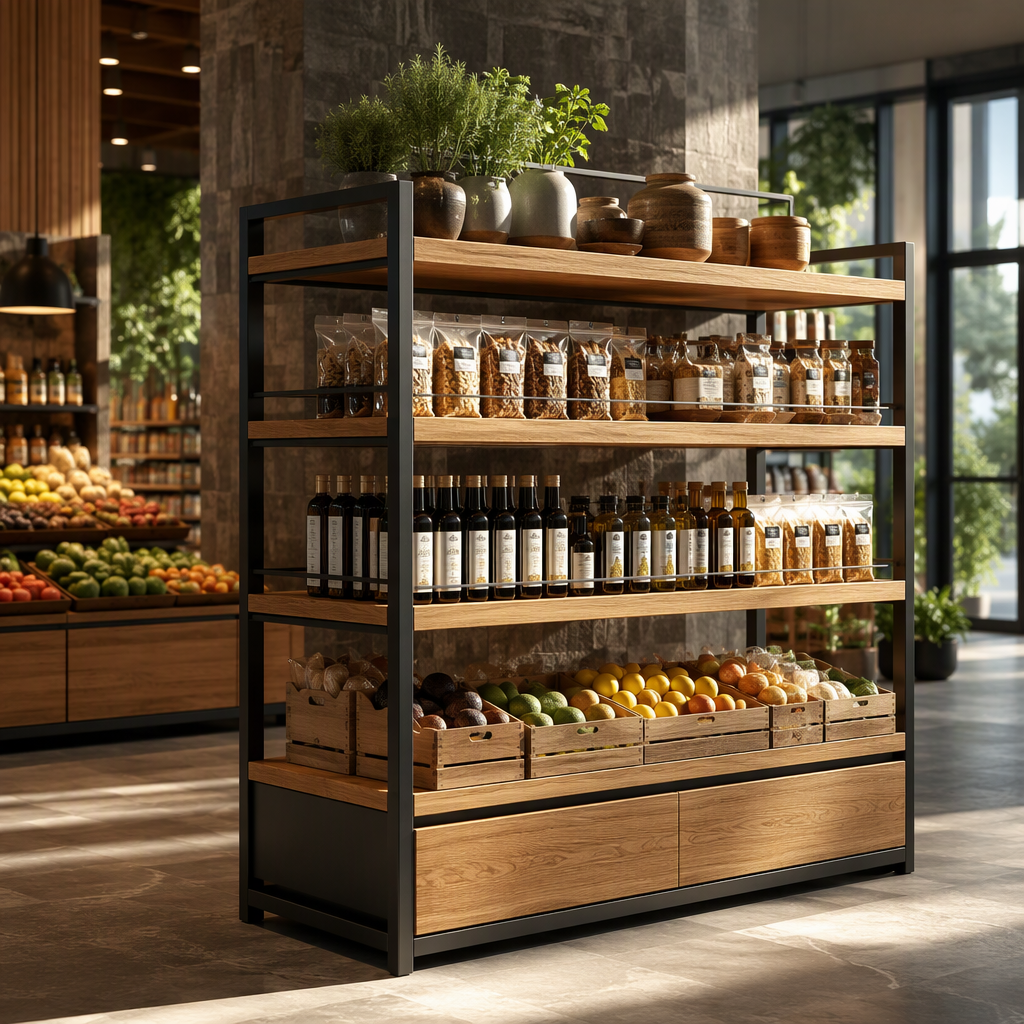
What a white finish owes the store: light, chemicals, hygiene
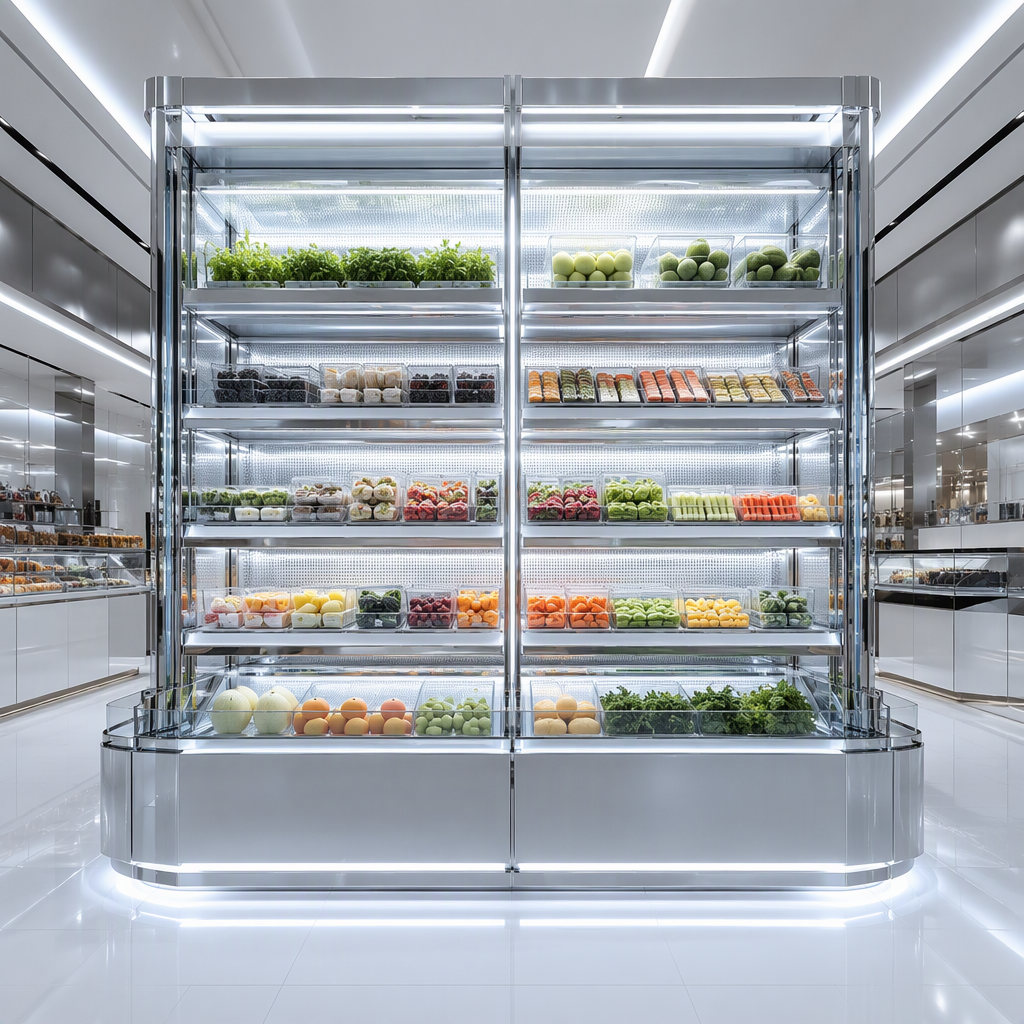
White is chosen for what it does to the merchandise, not for what it does to a render. A bright shelf surface throws light upward into packs, labels and produce, so a store reaches a comfortable brightness with fewer lamps. The same surface also exposes everything the store did not clean.
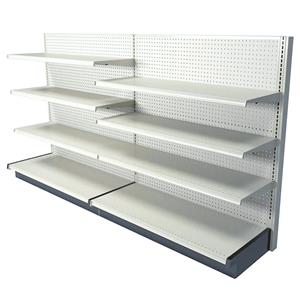
That trade sits at the centre of the brief. When the specification calls for a food store display white surface, reflectance becomes a performance figure that has to survive degreasers, sanitiser and the abrasive pads a night crew reaches for at the end of a shift. A finish that looks correct on a sample board and dulls after a season of wiping has failed the job it was bought for.
Put the cleaning regime in writing before the colour is approved. Which chemicals touch the surface, at what dilution, with what dwell time and with which cloth? A supplier who cannot answer will hand over a generic care sheet, and a generic care sheet is how one white panel turns chalky while its neighbour stays bright.
Yellowing earns its own line in the file. It shows up where a coating was under-cured, where a cheap topcoat met a solvent, or where sun reaches a panel for hours. The remedy is process control at the plant, not a stronger cleaner in the store.
Contrast matters as much as brightness. Fresh packaging is loud, and a light deck lets colour, texture and price tickets read at a glance, which is why produce, chilled and bakery zones tend to keep the palest surfaces. In a dim aisle, white is the least expensive lighting upgrade a store can specify.
Hygiene closes the argument. Food areas need edges that wipe clean, corners without traps, and a surface that shows soil before a customer does. A visible smudge is a useful alarm; a hidden one becomes a complaint.
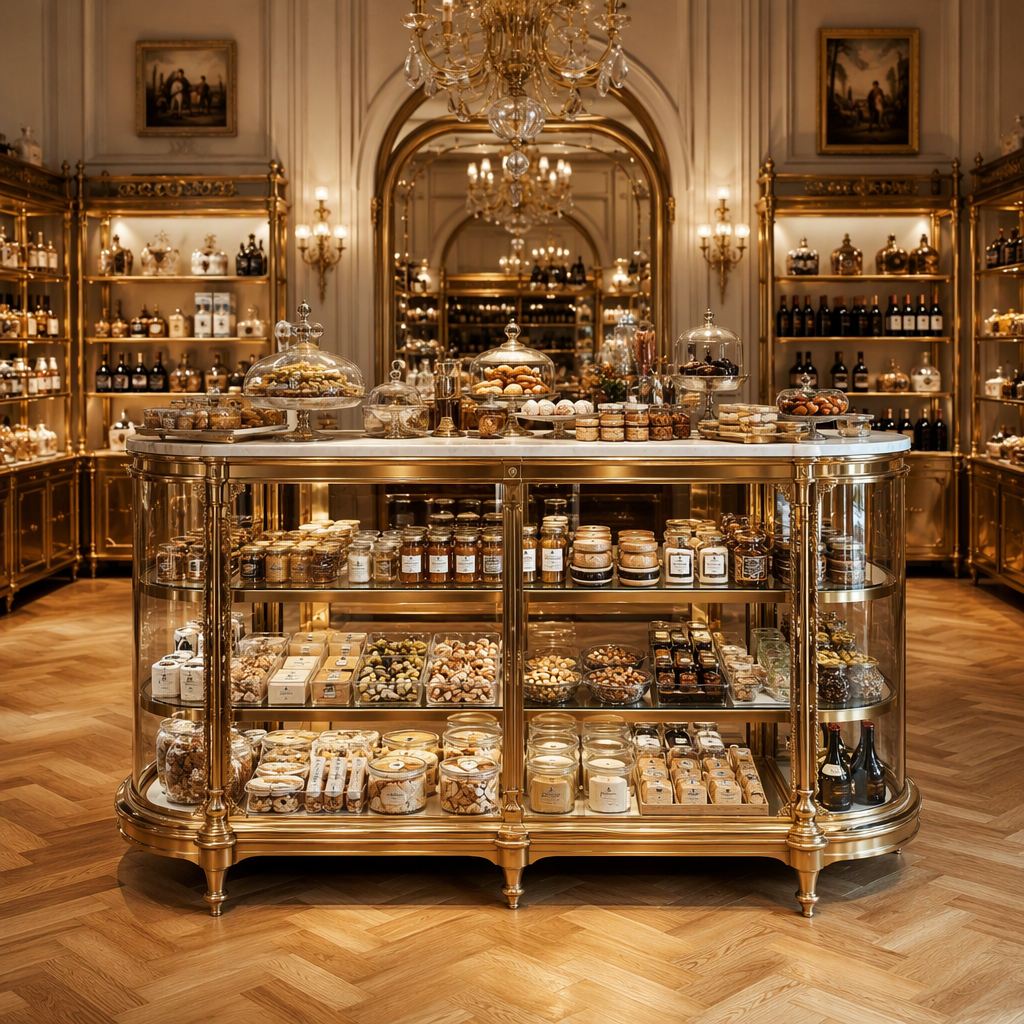
Where a steel frame earns its place: gauge, load, coating
A metal food store display is a workhorse. It carries cases of liquid, sacks of grain, stacked trays and the occasional customer who leans on a shelf to read a label, and it does so without being handled gently. The brief has to price that reality at the start, because no coating rescues a frame that was too thin.
Begin with gauge and section. Uprights, beams and shelf pans do different work, and a supplier should state the steel thickness and profile for each rather than one number for the whole unit. A shelf spanning two metres behaves nothing like one spanning a metre and a half.
Load limits belong on the fixture, per shelf and per bay, with the assumption attached. A figure that assumes evenly spread tins is not the same as one that survives a stockpile of drinks at a single end, and buyers learn that gap the hard way.
Welds and joints decide whether the frame stays square. Ask how the base, the upright and the beam bracket are joined, and whether the sample was checked for square after assembly rather than at the bench. A wobbling bay is a joint problem wearing a levelling foot as a disguise.
Coating is where appearance and endurance meet. Powder coat gives a thick, repairable film and a wide colour range; chrome and plated finishes offer hardness and a brighter look but show scratches. In food areas the practical questions are adhesion, cure and resistance to the chemicals named in the care sheet.
Assembly stability is the last structural test. Does the unit stand alone, or does it need a wall strap, a back panel or a bay-to-bay connector? A drawing that leaves out the fixing method has not finished the design.
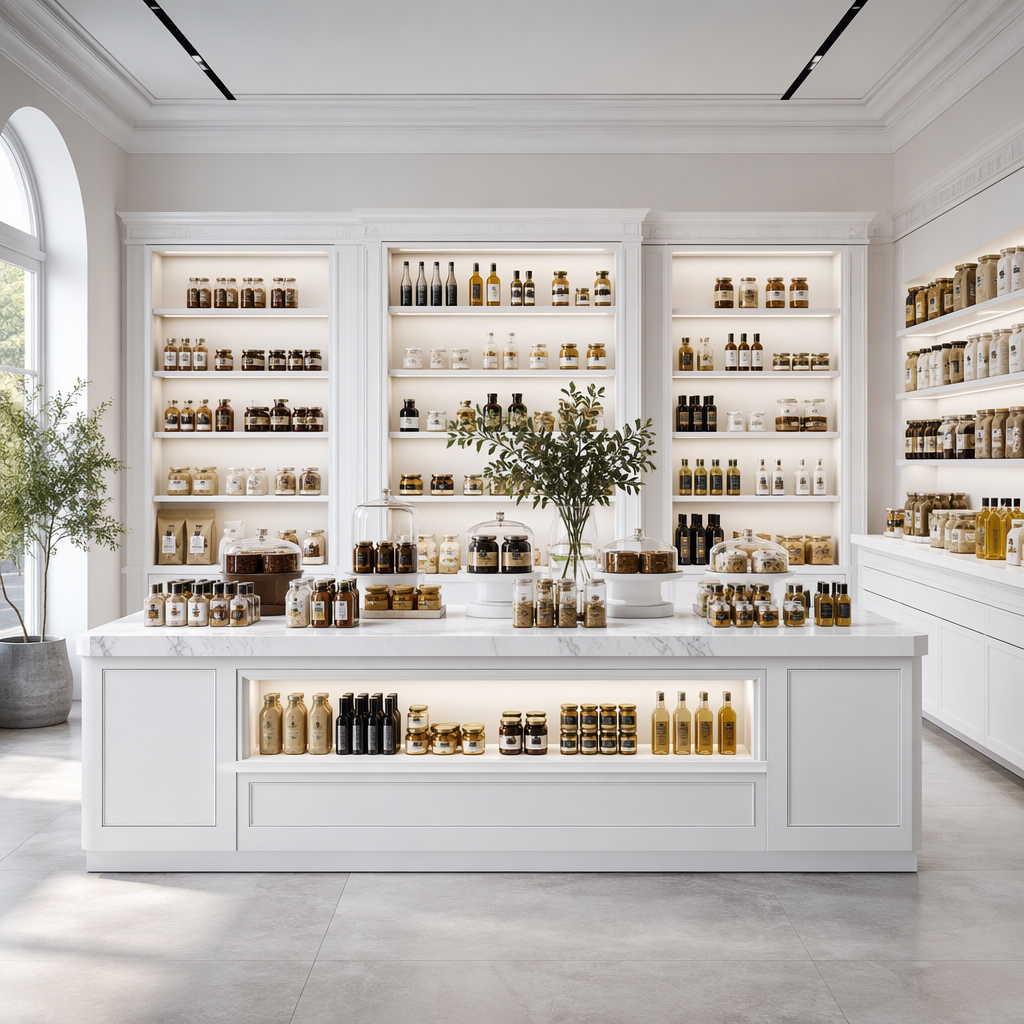
Configuring the package: layout, stock access, drawing control
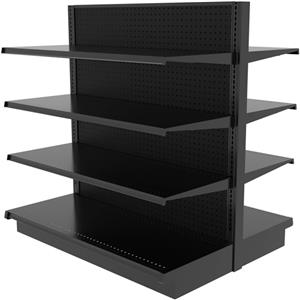
The third brief is quieter and causes most of the rework. Every food store display metal package has to fit a plan, not a photograph: run lengths, corner turns, end caps, till approach and the gap a trolley needs to pass. Layout integration decided after production is a cost, never a saving.
Stock keeping shapes the shelf more than a drawing title suggests. Count the facings a category needs at its busiest, then check that shelf depth and divider positions hold them without a second order. A food store display metal range that assumes one case depth will fail when a new pack size arrives.
Replenishment access belongs in the same calculation. Stock goes in from the back, the side or the top, and a bay that looks tidy on plan can be slow to fill when the shelf above blocks the load. Ask for the fill sequence, not only the elevation.
Aisle clearance and sightlines decide whether the fixture sells. End caps narrow a walkway, low gondolas open a view, and a tall run beside a doorway can hide the queue. The planner owns that call; the drawing carries the dimensions.
Delivery scope needs the same precision. What arrives assembled, what arrives flat, who supplies the fixings, how bays are labelled and which parts travel as spares. A packing list that matches the drawing set is worth more than a promise of careful handling.
Revision control keeps the package honest. Each drawing carries a number, an issue reference and a short note of what changed, and the approved sample carries the same reference. When a store receives a shelf that does not fit, that reference settles the question in minutes.
Spare parts close the loop: shelf clips, brackets, levelling feet and a touch-up kit, ordered with the first delivery. A fixture is a long purchase, and a store that cannot replace a clip will replace the bay.
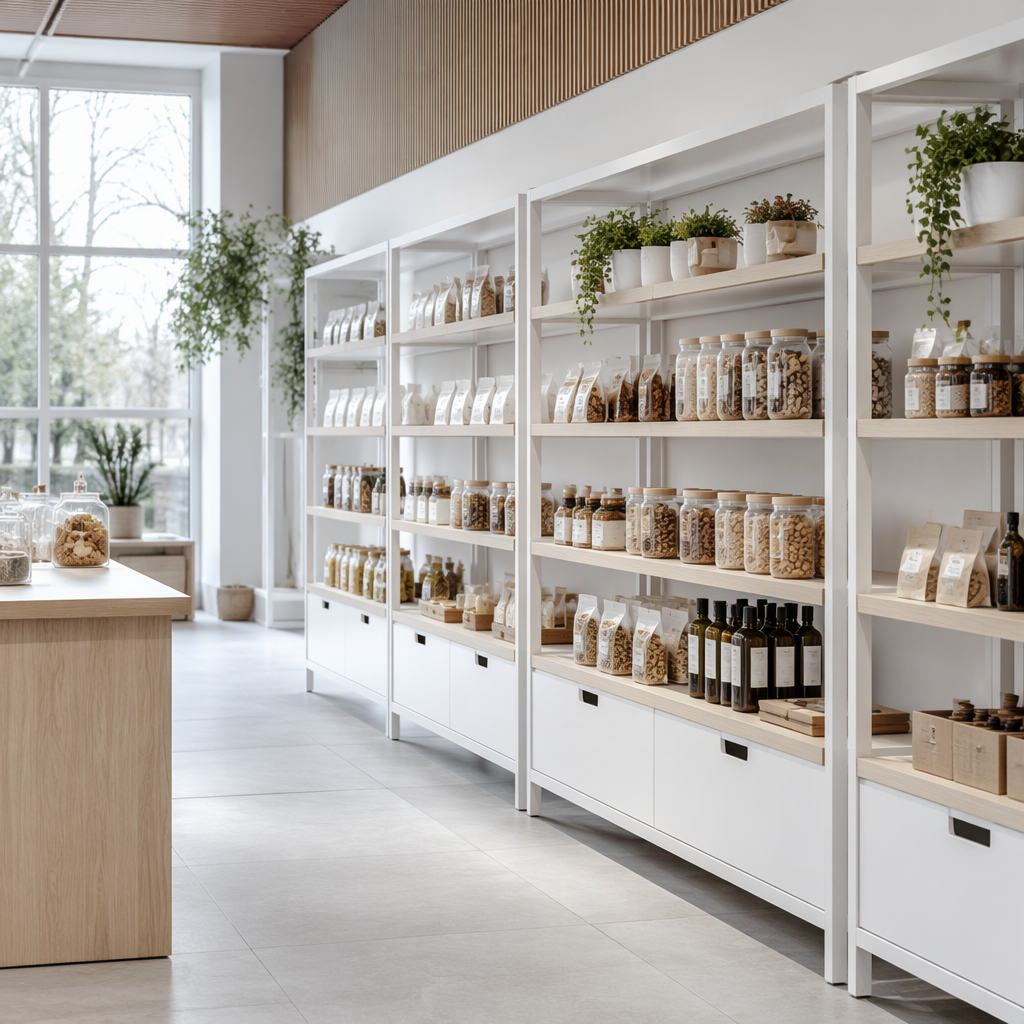
A comparison sheet for the tender file
The table below is written for a tender file, not for a brochure. It maps each brief to the evidence a buyer should expect, so a missing document is visible before the order rather than after delivery.
Use it as a checklist in the meeting. Where a supplier answers in adjectives, ask for the sample, the plate or the drawing, and record which one was produced.
| Brief | What to ask | Evidence that closes the point |
|---|---|---|
| Light and hygiene | food store display white sample under the store lamp, chemical list, yellowing check | Sealed panel, care sheet, cure record |
| Structure | metal food store display gauge, load per shelf, weld and joint method | Load plate, section drawing, square check |
| Coating | Powder coat or plated finish, adhesion, chemical resistance | Coating specification, test coupon, touch-up kit |
| Configuration | food store display metal plan and run, stock keeping count, fill sequence | Plan and elevation set, facing schedule |
| Delivery | Assembled or flat, fixings, labelling, spares | Packing list matched to the drawing set |
| Control | Drawing revision, approved sample reference, change log | Issue register, signed sample tag |
Questions buyers ask before they sign the sample
Does a white finish cost more to keep clean?
It costs more to specify well and less to keep. A cured, sealed topcoat resists the sanitiser that strips a cheap one, so the saving appears in labour and in panels that survive. The test is a coupon wiped with your own chemical, not a brochure claim.
How much load should one shelf carry?
Enough for the heaviest realistic pack, with margin, stated per shelf and per bay. Give the supplier your worst case: a full case of liquid at one end, or a stack of trays pushed rather than placed. A limit without its assumption is only a number.
Is powder coat or chrome the better choice?
For food areas, powder coat usually wins on repairability and colour control; chrome wins on hardness and shine but records every scratch. Decide which failure your store can live with, then ask for a coupon in that finish and clean it as your crew will.
Can the layout change after the sample is approved?
It can, and the drawing register should make the change visible. A new revision, a note of what moved and a fresh approval keep the sample and the production run in step. Changing a run length after tooling is where budgets go missing.
What should arrive with the first delivery?
A packing list that matches the drawing set, the fixings, the assembly notes, a touch-up kit and a small box of clips and feet. Ask for spares to be priced into the first order, not quoted later.
How do two quotations get compared fairly?
Put gauge, load, coating, run length, delivery scope and revision control on one page and answer each line. The cheaper quotation differs on one of those lines, and the page shows which.
Sintop Value
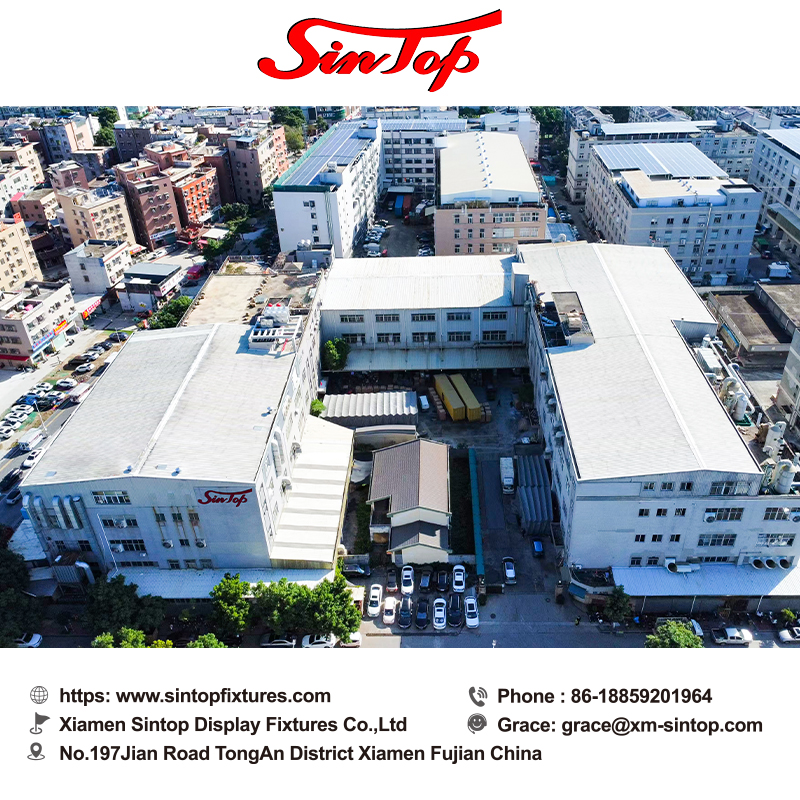
Sintop manufactures customized metal and wood food retail display fixtures, including shelving systems, gondola displays and product presentation units. With in-house metal fabrication, welding, automatic electroplating and powder coating capabilities, Sintop helps buyers specify materials, structural details, finishes and fixture configurations. From technical drawings and prototype approval to production and shipment, each project follows an agreed specification and revision-control process to support consistent quality and easier project acceptance.

Contact information
Website: www.sintopfixtures.com
Wechat/WhatsApp: +86 15980885084
Email: elly@xm-sintop.com
FAQ
1. What types of display racks can Sintop provide?
We offer a wide range of custom retail display racks, including metal display racks, wooden display stands, Gondola shelving, grid panels, and mixed-material solutions, tailored to your store layout and brand identity.
2. Can I order a single unit or prototype?
Yes, no minimum order is required. We can produce prototypes or single units as well as large-volume orders.
3. How long does it take to receive an order?
New items: 3–5 weeks for tooling and production.
Reorders: 2–4 weeks depending on product type.
We are flexible and strive to meet your required delivery dates.
4. Can Sintop handle OEM or ODM projects?
Yes, we specialize in OEM and ODM solutions, turning your ideas or drawings into custom, high-quality display racks.
5. How does Sintop ensure quality?
Every display rack undergoes material inspection, welding and structural checks, surface finish testing, and final assembly inspection to ensure durability, safety, and visual appeal.