

How to Choose Acrylic and Portable Clothing Store Displays for Retail
Three fixture questions share vocabulary but not method. This brief keeps sheet grade and edge finish apart from rolling structure and apart from the programme that moves both between sites, and it names the evidence a buyer should hold before signing.
Fixtures rarely fail in a meeting. They fail where a loaded rail meets a threshold, where a panel is drilled closer to an edge than the drawing allowed, or where two people try to move a unit through a service door. A clothing store display acrylic specification can look complete on a quote sheet and still leave the sheet grade, the edge and the cleaning routine unresolved. This brief separates three questions that share vocabulary but not method: the sheet and its finish, the structure that rolls, and the programme that keeps both consistent from site to site. It is written for procurement teams who would rather hold a drawing, a sample and an acceptance test than an adjective. Cited retail reports appear here as context only, not as evidence about any fixture, and outdoor heat readings say nothing about a panel under shop lighting.
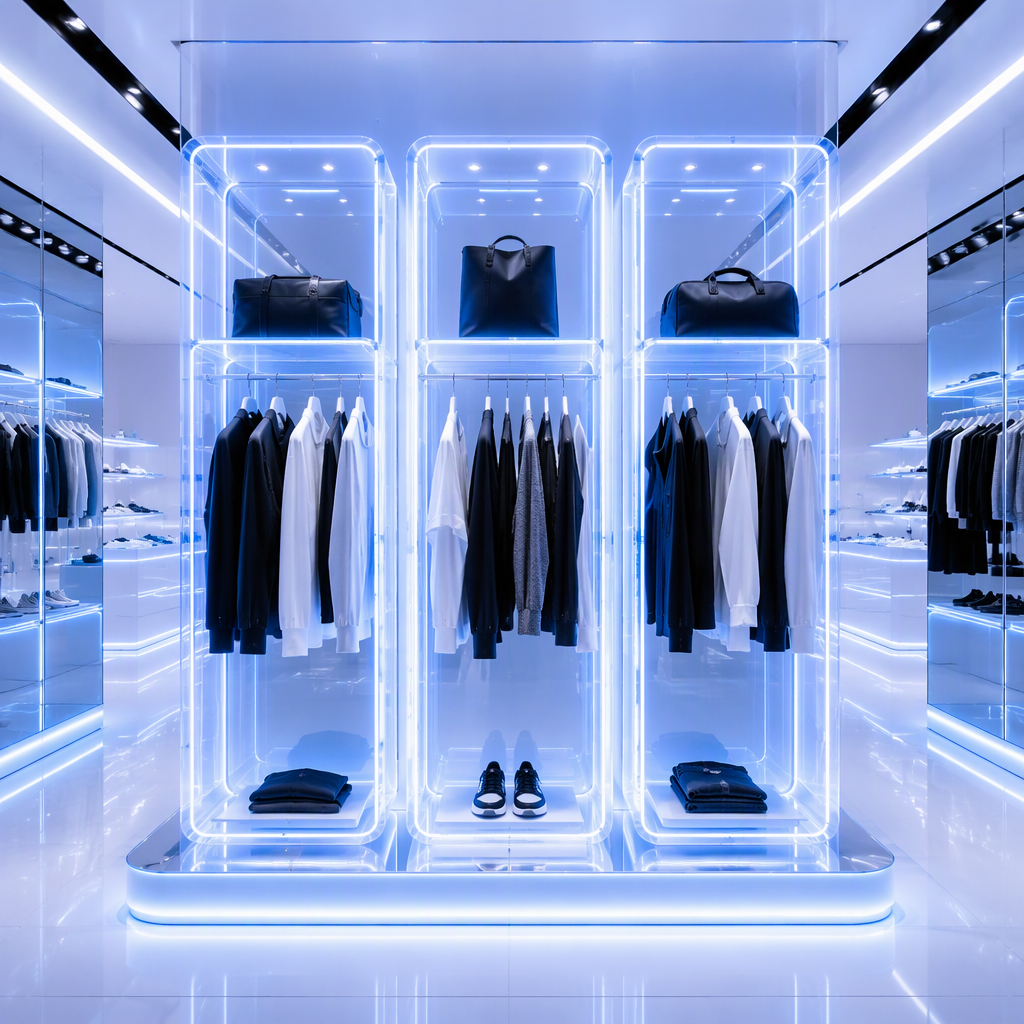
Sheet, Edge and Light
A material brief comes before a design brief, and for a clothing store display acrylic panel the first question is grade. Sheet gauge drives everything downstream, because a thin panel and a thick panel can share a silhouette and behave nothing alike at the bracket. Ask for nominal thickness, the tolerance band, and whether cast or extruded sheet is proposed; the two cut, drill and polish differently, and a fabricator's habit is usually tied to one of them. Edge polishing is the detail that separates a drawing from a finished unit in a lit room. A flamed edge reads glossy and slightly rounded, a diamond-polished edge reads clear and sharp, and an unfinished edge turns every downlight into a bright line along the panel. Ultraviolet stability should be a question about grade and the maker's own statement on yellowing, never an assurance offered aloud in a meeting.
Cleaning is where the shop floor enters the conversation. Alcohol sanitisers, ammonia glass cleaners and dry microfibre are all normal in retail, and repeated contact with the wrong one can craze or dull a surface that looked perfect in a sample room. Ask which agents have actually been tested, then clean a sample with the chemical your team already uses, on the schedule your team already follows. Scratch resistance depends as much on handling as on hardness: a rail dragged over a panel during a reset will leave a mark that no surface treatment prevents. Weight limits belong in writing, per shelf, per hook and per bracket, with the span and fixing pattern those limits assume. Colour is the most subjective judgement: a clear panel picks up the palette beside it, so check the sheet against the real apparel range, not a white wall. A clothing store display acrylic choice made this way stays defensible later, when someone asks why the unit cost what it did.
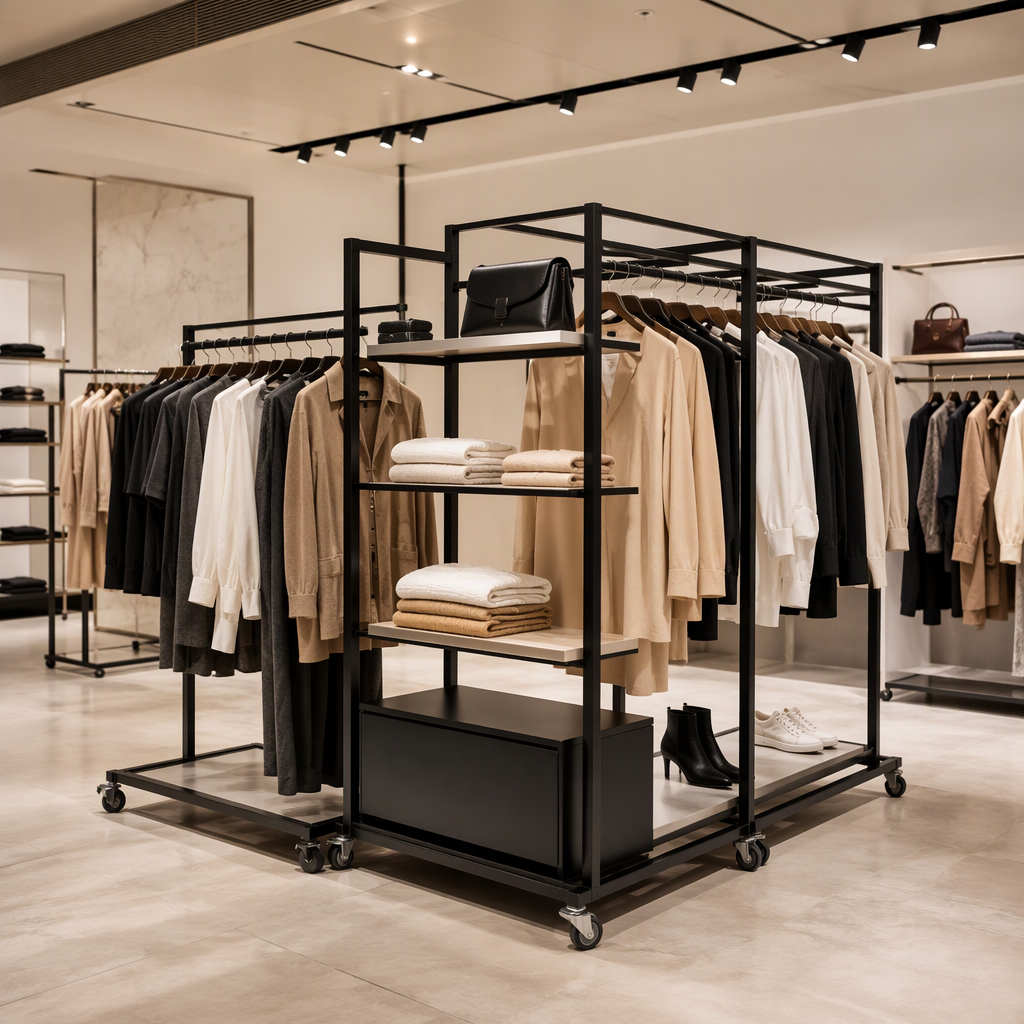
Rolling, Lifting, Storing
Mobility is a structural claim, and a portable clothing store display should be tested as one. Component weight sets the practical limit on who can move a unit and how often: a base that needs two people is a different asset from one a single merchandiser can reposition between departments. Ask for weights per component: the heaviest part usually decides whether a move happens at all. Quick-assembly joins deserve the same scrutiny. A no-tool clip, a single-tool cam and a bolt-through joint fail in different ways, and the failure mode matters more than the assembly time quoted. Ask for the joint in a sample, assemble it, take it apart, and repeat that with cold hands.
Stability under movement differs from stability at rest. A tall unit that is steady when loaded can still rock when pushed over a threshold, so ask how the base is braced and whether the load path runs through the frame or through the panel. Caster lock performance should be demonstrated on the floor you actually have, since a lock that holds on smooth tile can skate on polished concrete. Handle positions belong in the drawing, at heights that suit the people who will move the unit and clear of the garment face. Collapsed storage footprint is often the deciding number in a small stockroom, so ask for folded dimensions and the aisle needed to open the unit. Transport protection should be specified as parts rather than hoped for: corner blocks, edge channels, removable blankets and a marked sequence for repacking. A portable clothing store display that cannot be repacked by the staff who unpacked it will lose its fittings before it loses its finish.

The Programme Around the Asset
A clothing store display portable roll-out multiplies assets, so the work is a programme rather than a purchase order. Start with a written brief for the pop-up or the seasonal change: locations, dwell time, the number of moves expected and who is responsible at each site. Site logistics decide more than most drawings do, including door widths, lift dimensions, delivery windows, floor transitions and the route from the loading point to the selling floor. A material schedule should follow, listing sheet grade, edge finish, frame section, hardware, casters and packing, each with an owner and a revision reference so a change in one place can be traced to the parts it affects.
Build once before building many. A prototype and assembly trial, filmed and shared, exposes the join that needs three hands and the panel that will not fit its frame after the first move. Revision control for modular parts keeps a second batch compatible with the first: part numbers tied to drawings, a change log, and no substitution without an approved drawing. Packaging marking matters because a mobile kit is unpacked by people who did not pack it. Label by position and by assembly sequence, not only by part name, and put the packing list inside the lid. Acceptance criteria for mobile components should be measurable: assembly time with one tool, play at the joints, lock holding on the specified floor, folded footprint, and a repack that returns the kit to its case. A clothing store display portable project that skips this stage tends to spend its savings on replacements.
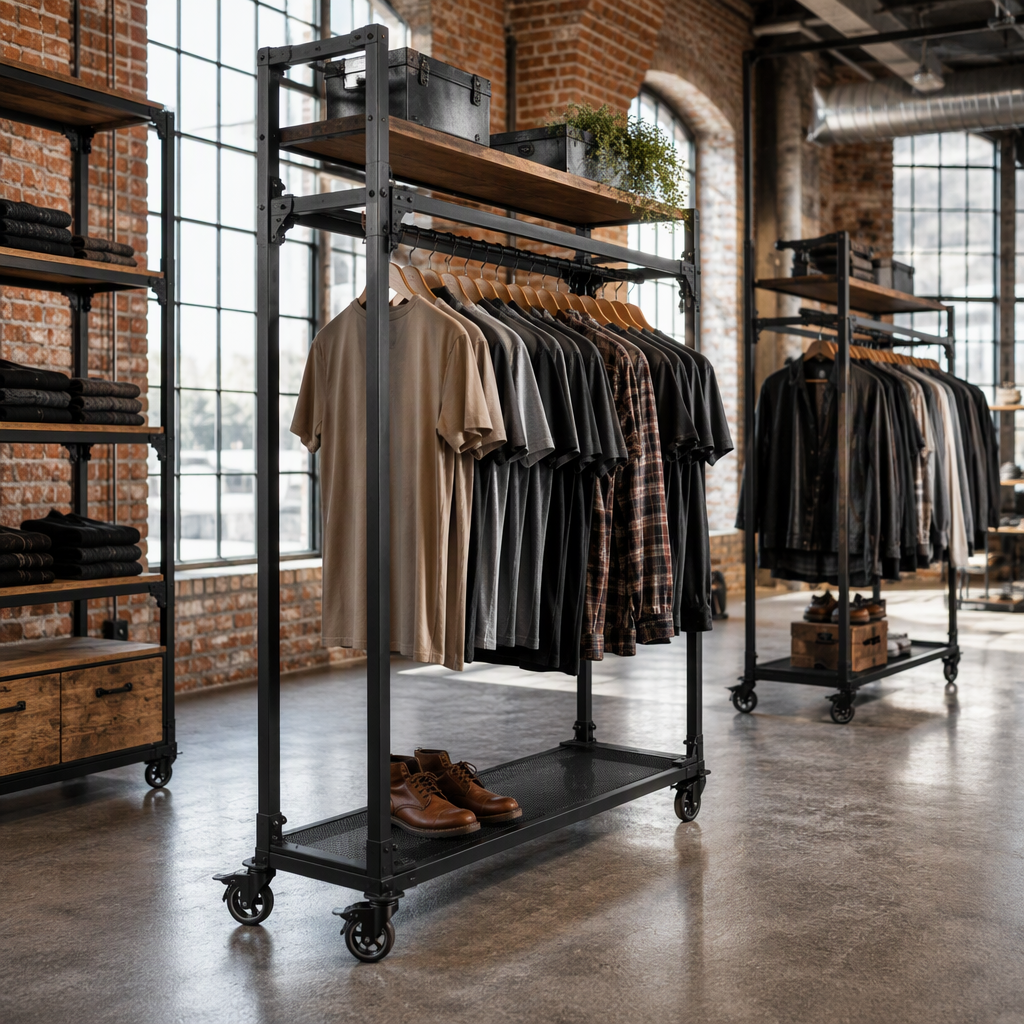
Comparison Before Commitment
The table keeps the three questions apart, because a single quote that blends them hides where cost and risk actually sit. Read each column against the drawings you hold, and mark what is missing rather than what is attractive.
| Decision | clothing store display acrylic | portable clothing store display | clothing store display portable |
|---|---|---|---|
| Opening question | Which sheet grade, which edge? | Which part is heaviest? | Which sites, how many moves? |
| Evidence to request | Thickness tolerance, grade statement, polished sample | Joint sample, caster test on your floor | Written brief, site survey, revision log |
| Usual omission | Cleaning agents never tested on the sheet | Collapsed size absent from the drawing | No marked repack sequence |
| Sign-off test | Clean, inspect and compare two samples | Move a loaded unit twice over a threshold | Assemble from the marked case, then repack it |
| Cost driver | Sheet gauge and edge polishing | Hardware, casters and base bracing | Prototype trial and packaging |

Questions Buyers Ask
Is thicker sheet always better?
No. Thickness buys stiffness at a span and adds weight the frame and casters must carry. A thin sheet with a sound fixing pattern can serve a light shelf better than a heavy panel drilled at the edge. Decide by load and span, then confirm the tolerance band held in production.
How do we judge yellowing risk without a lab?
Ask for the grade designation and the maker's written statement on ultraviolet performance, then compare two samples held in different light for one reset cycle. Treat verbal assurance as unverified. A panel near a window or under accent lighting belongs in the brief, since exposure is part of the specification.
Can one person move a loaded unit?
That depends on component weight, handle placement and the floor, not on the word portable. Ask for each part's weight, the handle height and a demonstration with your intended load. Watch the move over a threshold and around a corner; a straight run over an open floor says little about a tight department.
What belongs in an acceptance test?
Measurable items only: assembly time with the stated tool, play at each joint, lock holding on the named floor, folded footprint, panel flatness, edge finish against the approved sample, and a repack that returns every part to its marked position. Record results against the drawing revision supplied, so a later batch is judged on the same document.
How many spare parts should ship?
Enough to cover parts that wear or vanish in handling, which usually means casters, clips, cam fittings and fixings rather than panels. Agree the list against the packing schedule instead of a round number, and mark each spare with the drawing part number, or it becomes unidentifiable stock.
Sintop Value
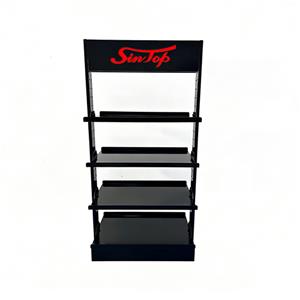
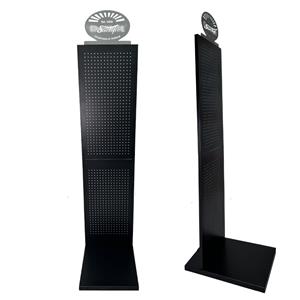
Sintop develops customized metal, wood and acrylic retail display fixtures for clothing stores, including display panels, garment racks and portable display structures. With in-house fabrication, welding, surface finishing and prototyping capabilities, Sintop helps buyers define material specifications, structural details, hardware and packaging requirements. From technical drawings and prototype approval to production and shipment, each project is managed against agreed specifications and acceptance criteria to support consistent quality across multiple store locations.

Contact information
Website: www.sintopfixtures.com
Wechat/WhatsApp: +86 15980885084
Email: elly@xm-sintop.com
FAQ
1. What types of display racks can Sintop provide?
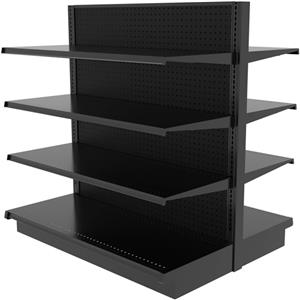
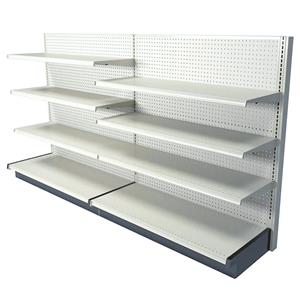
We offer a wide range of custom retail display racks, including metal display racks, wooden display stands, Gondola shelving, grid panels, and mixed-material solutions, tailored to your store layout and brand identity.
2. Can I order a single unit or prototype?
Yes, no minimum order is required. We can produce prototypes or single units as well as large-volume orders.
3. How long does it take to receive an order?
New items: 3–5 weeks for tooling and production.
Reorders: 2–4 weeks depending on product type.
We are flexible and strive to meet your required delivery dates.
4. Can Sintop handle OEM or ODM projects?
Yes, we specialize in OEM and ODM solutions, turning your ideas or drawings into custom, high-quality display racks.
5. How does Sintop ensure quality?
Every display rack undergoes material inspection, welding and structural checks, surface finish testing, and final assembly inspection to ensure durability, safety, and visual appeal.