

How Can a Modern Kitchen Island Reduce Buyer Friction?
What Does September Tell Store Buyers?
Reuters reported on September 16 that U.S. retail sales increased 1.2% in August after a revised 0.5% decline in July. Sales were 6.0% higher than a year earlier, but the retail series is not adjusted for inflation. The article also described consumers seeking lower-priced goods as costs rose. The figures are context, not a measurement of demand for a kitchen island, clothing rack or eyewear fixture. [1]
Reuters reported on September 11 that the University of Michigan Consumer Sentiment Index fell to 47.8 in early September from 51.7 in August. One-year inflation expectations rose to 4.6% from 4.0%. This survey describes attitudes and expectations, rather than site traffic or conversion. Still, it makes an obvious procurement point: a buyer should not need to guess the operating limits of a fixture. [2]
BRC offers a British comparison, not American proof. Its September 8 release said U.K. total retail sales rose 0.7% year on year in August, food sales rose 2.6%, and non-food sales fell 0.8%. National markets and measurement periods differ. The useful common theme is that discretionary decisions face scrutiny when household costs are prominent. [3]
That scrutiny should move upstream into the brief. Document the merchandise, expected load, floor plan, installation surface and staff routine. When a supplier quotation makes these assumptions visible, a buyer can compare a real operating system rather than three polished images.
Will the Kitchen Island Work After the First Week?
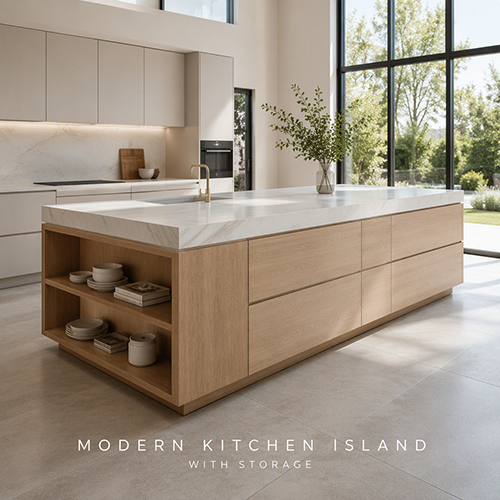
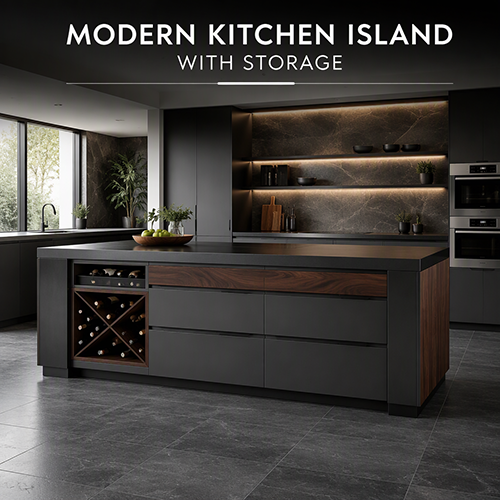
A modern kitchen island with storage should be measured as a work zone, not merely a central object. Start with the traffic around it: opening drawers, unloading groceries, preparing food, passing another person and accessing nearby appliances. Record the planned footprint, clear routes and the door or drawer travel needed in actual use. A large top can be useful; it can also make daily movement worse.
List what will be stored. Tableware, dry goods, cookware and small appliances call for different internal dimensions and access patterns. Request usable drawer and shelf measurements, not an exterior envelope alone. Ask which components are adjustable, which are fixed and how the user can clean corners, handles and interior surfaces. A cabinet labelled 'storage' is not proof that it accommodates the intended contents.
For a modern kitchen island with storage, separate the material specification from the service claim. Identify the worktop, cabinet body, door fronts, shelf structure, hardware and exposed edges. Ask for finish samples and care instructions suited to likely spills, heat sources and sunlight. If the project requires a claim about food contact, emissions or durability, request documentation that applies to the exact supplied components.
Stability and installation merit their own check. Confirm the floor condition, any anchoring assumption, utility routes and who will assemble the island. If seating is proposed, ask for the intended seating arrangement and usable clearance rather than assuming that an overhang creates a safe eating area. Trial the layout with marked floor dimensions before committing to fabrication.
Can a Rolling Rack Stay Useful Under Real Load?
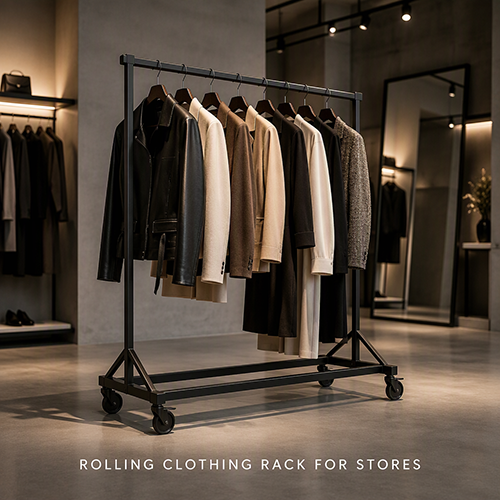
A rolling clothing rack for stores is not simply a fixed rack with wheels. Mobility changes the questions: what is loaded, how is the weight distributed, which route will be used, when are brakes applied and who moves the unit? Start with representative garments, hangers, rails and accessories. A light test load gives little evidence about a fully replenished fixture.
Ask for the exact rack configuration, stated load information, caster type, wheel diameter, braking arrangement and assembly instructions. Confirm whether the quoted rating applies to a uniformly distributed load and whether a second rail, sign holder or shelf changes the permissible setup. Do not move a load figure from a vendor's standard unit to a taller or altered arrangement without written support.
Test the rolling clothing rack for stores on the actual floor or a comparable surface. Move it through turns, thresholds and back-room routes; then apply the brakes and inspect stability while garments are selected or replenished. Record who can safely maneuver it and where it will be parked. A unit that rolls smoothly in a warehouse can behave differently near customers, uneven flooring or crowded stock.
The operating brief should also address presentation. Decide how categories, sizes and promotions will be identified, and confirm that signs do not create snag points or obscure merchandise. Ask how replacement casters, rails and fasteners will be identified. Mobility can shorten changeover time, but only when the equipment, route and staff practice have been designed together.
Does the Eyewear Display Help a Customer Decide?
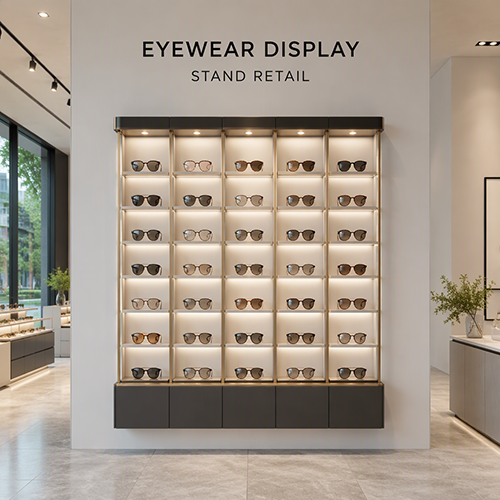
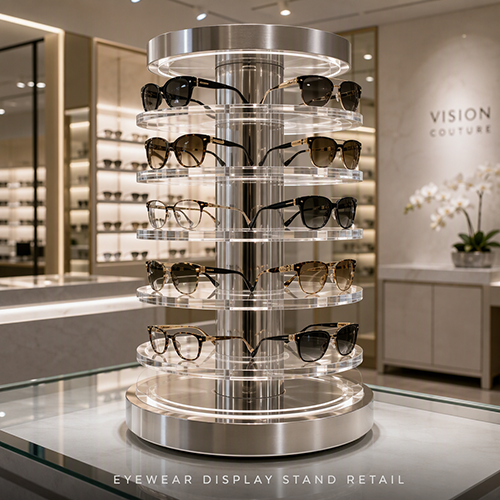
An eyewear display stand retail project starts with the frame assortment and the fitting conversation. Frames vary in width, temple shape, material and price. The support should keep each pair visible without putting pressure on vulnerable parts or forcing staff to untangle products after every interaction. Supply representative frames, not generic placeholders, for the sample review.
Define the number of frames, spacing, angle, security needs, mirror relation and access sequence. Ask whether the fixture presents frames for self-service, assisted fitting or both. Make the price and product information readable from the actual approach path. A clean-looking row is weak merchandising if a customer cannot connect a frame to the correct size, color or offer.
An eyewear display stand retail arrangement also needs ordinary handling tests. Ask staff to remove, return and clean frames using the planned routine. Inspect contact points, gaps between products and any parts that may catch on temples or cleaning cloths. If locks, tethers or drawers are proposed, test the customer-service sequence before design approval. Security hardware should not turn a simple try-on into a delay.
Do not use weather headlines as material proof. BBC reported on September 5 that El Granado in southwest Spain reached 45.7°C during renewed heat in parts of Europe. This is an outdoor observation, not evidence that an eyewear fixture, acrylic component or an American shop will perform in heat. Set care and installation requirements from the actual site and material evidence. [4]
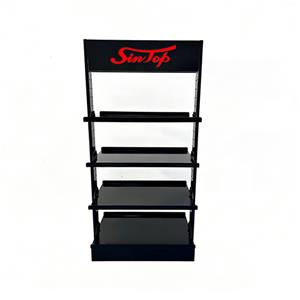
Sintop's public categories include kitchen cabinets, clothing hanging racks and eyewear fixtures. Its design service lists technical drawings, packing design and assembly instructions, while its prototype service describes work with metal, wood and acrylic. Those supplier-stated services offer a route to a sample-led brief; they are not an independent verification of a finished project. [5]
Which Evidence Should Release the Order?
The order should connect concept, sample and delivery. Name the drawing revision, materials, approved finish, component list, packing method, delivery destination, installation scope and process for nonconforming goods. Define who approves the sample and who has authority to change it. A loose email chain is a poor record when a project contains moving parts, mounted parts and customer-facing parts.
The comparison table is a procurement framework, not a safety certification or sales forecast. It pushes the right questions into the approval meeting before a visual preference becomes an expensive field correction.
| Check | Kitchen island | Rolling clothing rack | Eyewear fixture |
|---|---|---|---|
| Main user task | Prepare and access stored items | Move and replenish garments | Inspect and try frames |
| Specify first | Internal dimensions, floor plan, materials | Load, caster setup, route and brakes | Frame spacing, support, access and information |
| Approval test | Open, clean and test circulation | Move, brake and replenish under load | Remove, replace and identify frames |
| Claim to question | More storage without a contents plan | Flexibility without a loaded route test | Better conversion without customer testing |
For kitchen-storage, apparel-fixture and optical-display orders, one coordinated supplier can reduce handoffs between the product, fixture and packing plan. Sintop says it was founded in 2002 and offers design, prototypes, production and shipment. Request the actual drawings, sample and assembly records that your project needs; do not treat a broad company statement as a project guarantee.
After delivery, record the evidence that matters: obstructed kitchen movement, a caster that catches, a rack that is hard to brake, frames returned to the wrong position or signs that customers cannot read. Compare the issue with the approved record before deciding whether it is a product, installation or process problem. That practice improves the next order without inventing a sales result.
Buyer FAQ
How much space does a kitchen island need?
A modern kitchen island with storage needs a site-specific circulation plan, drawer and door opening space, appliance access and intended seating arrangement. Measure the actual room and check the planned use before choosing a size. A standard online dimension cannot replace that assessment.
How should a store test a rolling rack?
Test a rolling clothing rack for stores with representative garments and the expected load. Move it over the real route, brake it, replenish it and inspect its stability. Verify the supplier’s configuration-specific instructions and do not assume all caster arrangements behave the same.
What makes an eyewear display suitable?
An eyewear display stand retail design should support actual frames, allow safe handling and make product information clear. Test staff and customer routines, including security steps when needed. The best arrangement depends on the assortment and service model.
Do September reports prove demand for these products?
No. Reuters, BRC and BBC sources report consumer sentiment, retail sales and weather, not direct product demand. They provide current context for careful purchasing; drawings, samples and operating tests should decide the order.
Sintop Value
Sintop combines in-house metal, wood and acrylic manufacturing with engineering, prototyping, production and assembly support. We help global buyers develop customized fixtures based on actual product, site and merchandising requirements.

Contact information
Website: www.sintopfixtures.com
Wechat/WhatsApp: +86 15980885084
Email: elly@xm-sintop.com
FAQ
1. What types of display racks can Sintop provide?
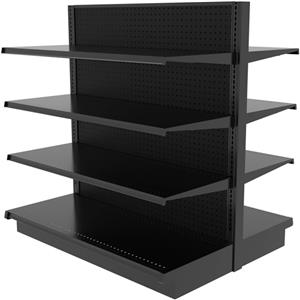
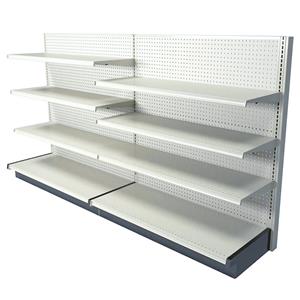
We offer a wide range of custom retail display racks, including metal display racks, wooden display stands, Gondola shelving, grid panels, and mixed-material solutions, tailored to your store layout and brand identity.
2. Can I order a single unit or prototype?
Yes, no minimum order is required. We can produce prototypes or single units as well as large-volume orders.
3. How long does it take to receive an order?
New items: 3–5 weeks for tooling and production.
Reorders: 2–4 weeks depending on product type.
We are flexible and strive to meet your required delivery dates.
4. Can Sintop handle OEM or ODM projects?
Yes, we specialize in OEM and ODM solutions, turning your ideas or drawings into custom, high-quality display racks.
5. How does Sintop ensure quality?
Every display rack undergoes material inspection, welding and structural checks, surface finish testing, and final assembly inspection to ensure durability, safety, and visual appeal.