

How Do Commercial Display Cabinets Build Buyer Confidence?
What Is the September Retail Signal Really Saying?
Reuters reported on September 16 that U.S. retail sales rose 1.2% in August after a revised 0.5% decline in July. Sales were 6.0% higher than a year earlier, but the series is mostly goods and is not adjusted for inflation. The report also said consumers were becoming more selective as prices and fuel costs rose. Those figures describe total receipts, not the performance of a particular cabinet or shelf. [1]
A second Reuters report, published September 11, recorded a fall in the University of Michigan Consumer Sentiment Index to 47.8 in early September from 51.7 in August. One-year inflation expectations rose to 4.6% from 4.0%. This survey measures attitudes, not retail traffic or product-level demand. Still, it supports a practical conclusion: vague product information asks a cautious buyer to accept unnecessary risk. [2]
BRC offers a useful contrast, not U.S. proof. Its September 8 release measured U.K. total retail sales up 0.7% year on year for August, food sales up 2.6%, and non-food sales down 0.8%. The country, categories and comparison basis differ. It would be wrong to combine these figures into a single market forecast. [3]
The commercial lesson is narrower. A store can make the value of a display fixture easier to judge by publishing usable dimensions, installation scope, access procedures and replacement paths. National data may set the mood; the order should be decided by product evidence and site conditions.
When Does a Lock Become a Real Control?
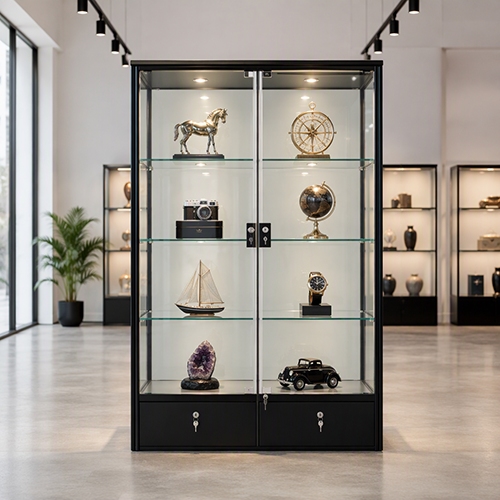
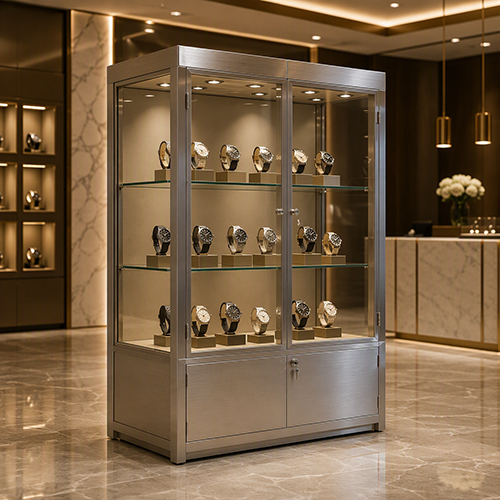
Commercial display cabinets with locks should be specified as an access-control system, not described as a security solution by default. Start by defining what is being protected: a high-value item, staff-only stock, a sample set, or simply an orderly display. The answer changes the required door construction, lock type, key control and response when a key is lost.
Ask the supplier to identify the cabinet body, glazing, hinges, lock, strike, fixing method and any removable panels separately. Request the exact lock model, number of keys supplied, re-keying options and the procedure for replacement. A lock on a weak door or a cabinet that can be lifted away does not answer the same risk as a properly fixed enclosure.
Test the proposed arrangement with the actual merchandise. Open and close the door repeatedly, check clearance around handles and verify that staff can replenish stock without placing valuable items on an unprotected counter. Confirm whether a customer should be able to see a label, scan a code or request assistance without a door being opened. These steps turn an attractive drawing into an operating routine.
Commercial display cabinets with locks also need a maintenance plan. Decide who keeps keys, where spare keys are held, how damage is reported and whether replacement doors or locks can be matched to the approved finish. Do not claim theft prevention unless a suitable risk assessment supports that statement. A cabinet can deter casual access without promising an outcome no fixture can guarantee.
What Should a Wood Case Manufacturer Put on Paper?
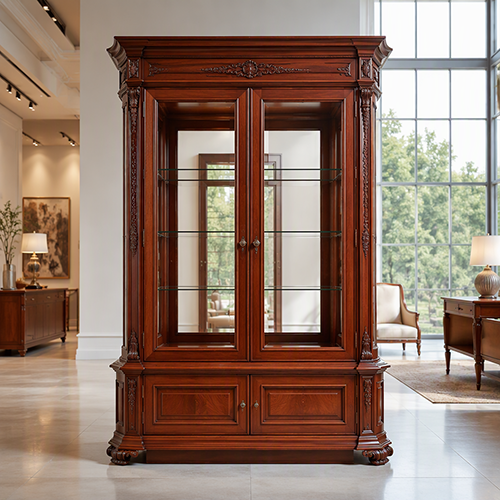
Choosing a custom wood display case manufacturer begins with a written product brief, not a wood species name. State the merchandise dimensions, total item weight, desired viewing angles, opening method, lighting needs, finish reference, destination and installation conditions. A vague request for a premium case invites a vague quotation.
Ask for a component schedule that separates visible timber or veneer, structural panels, doors, glazing, shelves, backing, edge treatment and hardware. Request finish samples under relevant lighting. If the project uses environmental, material or emissions claims, ask for documents that identify the product they cover. Appearance alone cannot establish construction or compliance.
The supplier should also define the usable interior, not just the outside envelope. Check shelf adjustment, door opening, cable paths, access for cleaning and the space needed to replace signage or products. Drawings should show the approved dimensions and mounting points. A custom wood display case manufacturer earns its place by resolving these decisions before production, not by calling every late change 'custom.'
Recent European heat is a reason to ask about conditions, not a shortcut to a durability claim. BBC reported on September 5 that El Granado in southwest Spain reached 45.7°C during renewed heat in parts of Europe. That is an outdoor observation, not a test of wood cases or an American store environment. Ask for care advice suited to the selected finish, sunlight exposure and site conditions. [4]
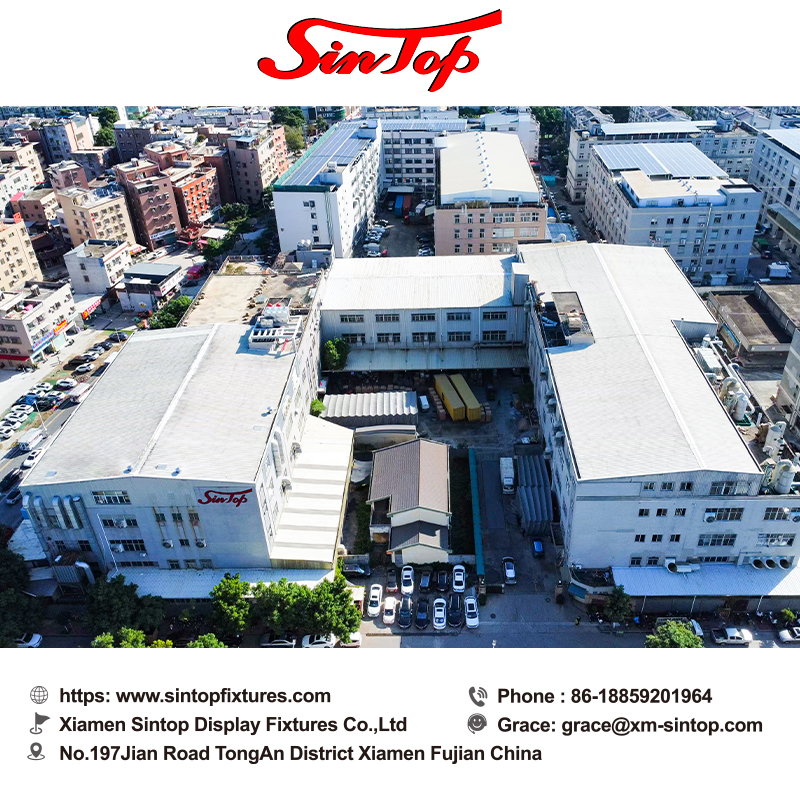
Sintop states it was founded in 2002 and offers design, prototype, production and shipment services. Its public design page lists technical drawings, packing design and assembly instructions. These supplier-stated services are a useful starting point for a documented project, not a substitute for a project-specific sample and agreement. [5]
Can Floating Shelves Carry the Load You Imagine?
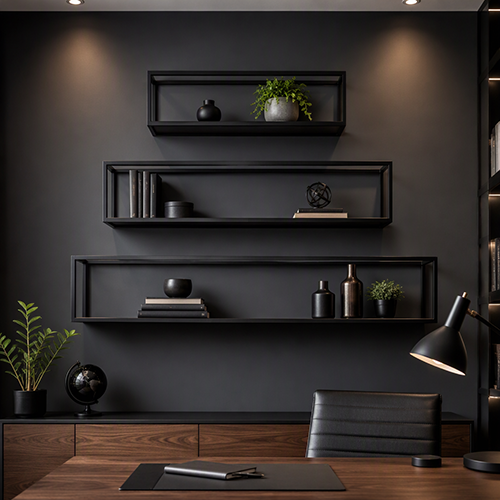
Floating wall shelves for decor are often sold through an image of calm, empty space. The first purchasing question should be more ordinary: what will sit on them? Books, ceramics, retail samples and framed objects create different loads and different leverage at the wall. List each intended item and its likely placement before choosing shelf depth or length.
The wall matters as much as the shelf. Identify the wall construction, available fixing locations, concealed services and the person responsible for installation. Ask what fastening method the design assumes and which conditions it excludes. A supplier cannot safely infer the hidden structure of a site from a room photograph.
Request stated load information for the exact shelf, bracket arrangement and fixing assumptions being quoted. Ask whether the load is evenly distributed and how the shelf should be inspected after installation. Do not transfer a rating from a short shelf to a longer one, or from a solid wall to a different substrate. A floating appearance does not remove the mechanics.
For floating wall shelves for decor in a retail setting, test the customer-facing arrangement and the replenishment routine. Check that products cannot be knocked into an aisle, that labels remain visible and that staff can clean the wall edge. If shelves are part of an accessible route, review the relevant site requirements with the responsible design professional. Style should follow a usable, stable layout.
Which Evidence Should Release the Purchase Order?
A serious fixture order should leave a paper trail that connects the approved concept to the delivered unit. Include the drawing revision, material and finish schedule, prototype or sample record, packing method, delivery scope, installation responsibility and treatment of nonconforming goods. This is not bureaucracy. It is how a buyer compares quotations that may otherwise hide different assumptions.
The table is an editorial buying framework, not a product ranking or safety certification. It keeps security, construction and installation questions in view before a project is priced as a visual exercise.
| Decision | Locked cabinet | Wood display case | Floating shelf |
|---|---|---|---|
| Main question | Who may access the contents? | How will merchandise and finish be approved? | What load and wall condition are planned? |
| Ask for first | Lock, door, fixing and key-control details | Component schedule, drawing and finish sample | Fixing assumptions, dimensions and load information |
| Approval test | Open, replenish and manage keys | Inspect sample with actual merchandise | Check installation and intended arrangement |
| Claim to challenge | Guaranteed theft prevention | Premium construction without evidence | Universal capacity on every wall |
For cabinet, wood-case and wall-shelf projects, one source of coordination can reduce avoidable handoffs. Sintop's design and prototype services describe drawing, sample and assembly work. Require the actual deliverables in the quotation, then keep the approved record available to procurement and installation teams.
After installation, record issues that matter: a key that is difficult to track, a door that does not clear stock, a shelf that cannot be cleaned, or a finish that makes labels unreadable. Compare those observations against the approved drawing before assigning blame. That discipline produces a better next order than an unverified promise of sales uplift.

Buyer FAQ
Do locked display cabinets guarantee theft prevention?
No. Commercial display cabinets with locks can manage access, but a security outcome depends on the cabinet, fixing, merchandise, key control, site procedures and other conditions. Specify the risk and verify the system instead of relying on a broad promise.
What should a custom wood case quote include?
A custom wood display case manufacturer should identify dimensions, component materials, finish, glazing, hardware, interior arrangement, delivery and installation scope. Approve samples and drawings for the exact project; do not infer construction from a render.
Are floating shelves suitable for retail display?
Floating wall shelves for decor can be suitable when the actual wall, fixing arrangement, load and replenishment routine are assessed. They should not be chosen from appearance alone or installed without site-appropriate fixing.
Do the September reports prove demand for these fixtures?
No. Reuters, BRC and BBC data cover consumer confidence, retail sales and weather, not demand for these products. They provide context for careful procurement, while project testing and operating records should guide the order.
Sintop Value
Sintop combines metal, wood and acrylic manufacturing with in-house engineering, prototyping, production and assembly support. We help global buyers develop customized display fixtures with documented specifications, samples and production requirements.

Contact information
Website: www.sintopfixtures.com
Wechat/WhatsApp: +86 15980885084
Email: elly@xm-sintop.com
FAQ
1. What types of display racks can Sintop provide?
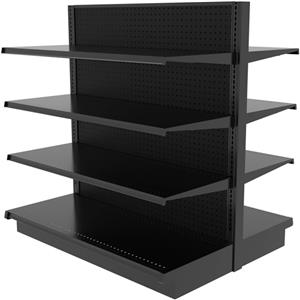
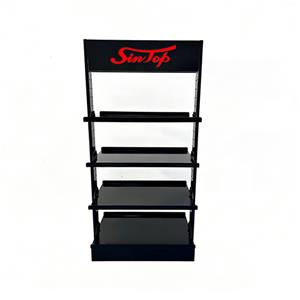
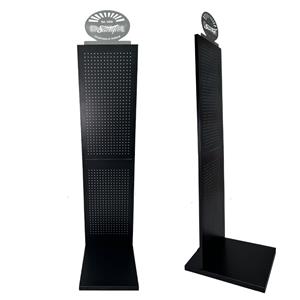
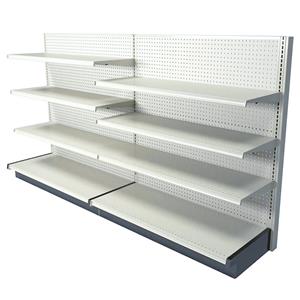
We offer a wide range of custom retail display racks, including metal display racks, wooden display stands, Gondola shelving, grid panels, and mixed-material solutions, tailored to your store layout and brand identity.
2. Can I order a single unit or prototype?
Yes, no minimum order is required. We can produce prototypes or single units as well as large-volume orders.
3. How long does it take to receive an order?
New items: 3–5 weeks for tooling and production.
Reorders: 2–4 weeks depending on product type.
We are flexible and strive to meet your required delivery dates.
4. Can Sintop handle OEM or ODM projects?
Yes, we specialize in OEM and ODM solutions, turning your ideas or drawings into custom, high-quality display racks.
5. How does Sintop ensure quality?
Every display rack undergoes material inspection, welding and structural checks, surface finish testing, and final assembly inspection to ensure durability, safety, and visual appeal.