

How Can a Vintage Wooden Display Cabinet Add Value?
What Did September 2026 Retail Data Actually Change?
September reporting gives store buyers a reason to specify fixtures more carefully, not a reason to freeze every purchase. Reuters reported on 16 September that U.S. retail sales rose 1.2% in August after a revised 0.5% decline in July. Sales were 6.0% higher than a year earlier, but the series is not adjusted for inflation. Reuters also reported on 11 September that the University of Michigan consumer sentiment index fell to 47.8 from 51.7, while one-year inflation expectations rose to 4.6% from 4.0%. Spending and confidence were moving in different directions. [1][2]
The BRC reading published on 8 September provides a useful British comparison, not a substitute for American evidence. U.K. total retail sales increased 0.7% year on year in August; food increased 2.6%, while non-food fell 0.8%. National markets and measurement periods differ, so those figures cannot be merged into one forecast. Their shared commercial lesson is simpler: when households and operators scrutinize value, a purchase must be explainable in practical terms. [3]
Google News was used to identify the live U.S. business context, not to claim a measured popularity ranking. The facts above concern retail receipts and sentiment, rather than demand for a cabinet, mannequin base or shelf. The editorial judgment in this article is separate: make the real use case visible before approving a fixture. That means usable dimensions, handling steps, fixing assumptions, cleanability and a replacement route. A keyword page that skips those facts does not help a professional buyer.
Can a Vintage Cabinet Work Like a Modern Fixture?
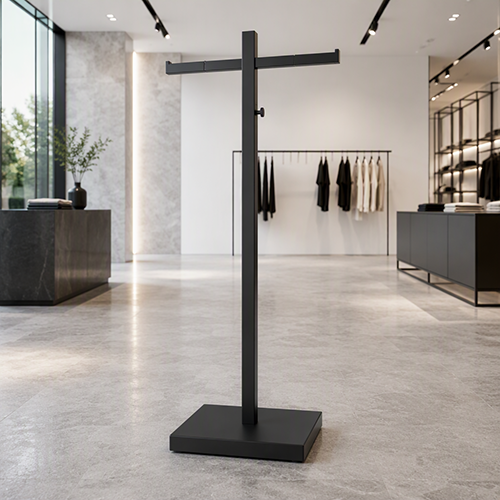
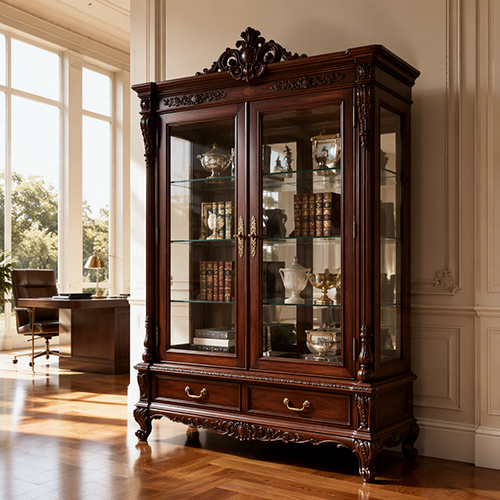
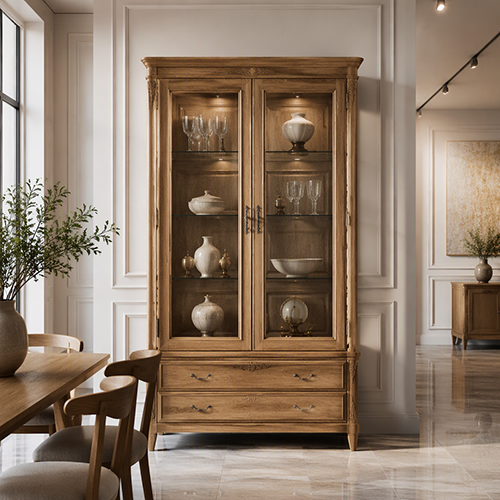
A vintage wooden display cabinet is often bought for atmosphere, but the purchase should start with the merchandise. Record the height, depth, weight and viewing requirements of the items that will sit inside. Then measure the usable interior, door opening path and the clearance needed for staff to reach the rear of the cabinet. A beautiful finish does not solve a blocked door or a shelf that cannot hold the intended product. Ask for a dimensioned drawing before treating a period style as a final specification.
Construction needs to be named rather than implied. Ask the supplier to identify visible timber or veneer, structural panels, shelf supports, glazing, hinges, locks and edge treatment. Review a finish sample under the lighting that will be used in the shop. Check whether staff can clean internal corners, replace a price label and remove an item without placing other stock on the floor. A vintage wooden display cabinet works best when the daily service routine is as considered as its face frame.
Fixing and maintenance deserve equal attention. Confirm whether the unit is free-standing, wall-fixed or anchored to the floor; tall cabinets need a site-specific stability plan. Identify which hardware can be replaced and how an approved finish will be matched if a door or handle is damaged. The buyer should not assume that age-inspired styling means reclaimed material, solid timber construction or a particular environmental attribute. Those are separate claims requiring documents that apply to the actual supplied unit.
What Must a Mannequin Base Prove on the Shop Floor?
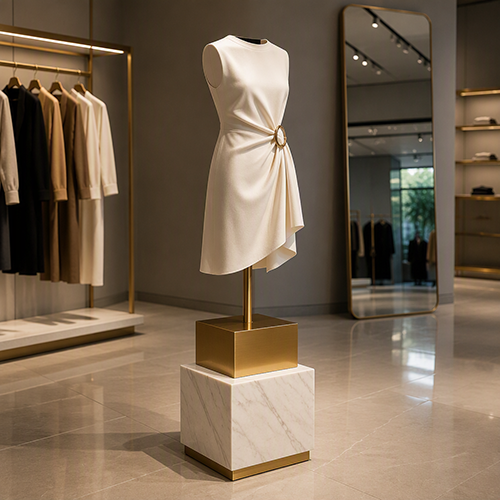
A custom retail mannequin stand has to suit the exact mannequin and the exact customer route. State the torso or leg form, the foot pin or calf fitting, total height, garment type, base diameter, floor finish and intended location. A base that appears stable in an empty studio can become awkward beside a queue, a changing room entrance or a densely packed rail. Use the real form and a representative outfit in the sample review; a generic body does not answer the same balance question.
Test the ordinary moves before approving a drawing. Dress and undress the form, rotate it, move it to the planned position, and check whether the base catches a hem, a cleaning tool or a customer foot. If the design includes wheels, brakes, cables or a sign holder, test them in the same sequence. Confirm how the stand will be lifted, packed and identified after a seasonal change. A custom retail mannequin stand is useful only if staff can work with it safely and quickly during a normal shift.
Do not turn weather reporting into a coating claim. BBC reported on 5 September that El Granado in southwest Spain reached 45.7 degrees Celsius during renewed European heat. That is an outdoor observation at one place and time. It does not test a powder coat, a wood base, a resin form or a store interior. For any material claim, ask for the selected finish, care instructions and evidence relevant to the planned service environment. [4]

Can a Corner Shelf Earn Its Small Footprint?
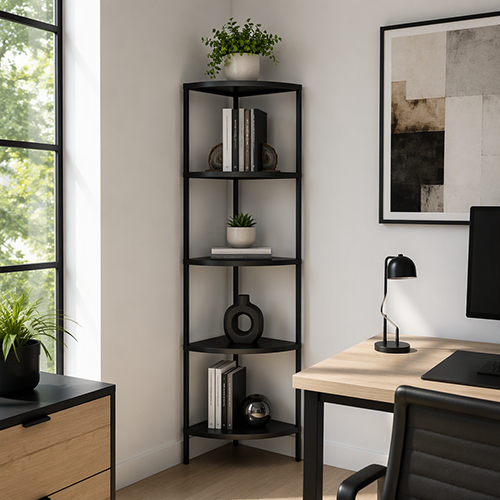
A space saving corner shelving unit should be planned from the wall outward, not from a room photograph inward. Measure both walls, the angle between them, baseboards, sockets, doors, radiators and the route a person uses while carrying stock or a bag. List the items intended for each shelf and their approximate weight. A triangular shelf may use an ignored corner, but it can still create a collision point or an unreachable back edge if its depth is chosen without a real movement plan.
The fixing method is part of the product. Identify the wall construction, available studs or backing, concealed services and the person responsible for installation. Ask for load information for the exact shelf length, bracket layout and fixing assumptions. Check whether the stated load is evenly distributed, and whether the same figure applies when a shelf is extended or a different substrate is used. A floating appearance does not remove the mechanics that hold a shelf to the wall.
Use a space saving corner shelving unit with the intended stock before committing to volume. Place goods at the back, read the label from the customer approach, remove one item and replace it. Then let a member of staff clean the wall edge and inspect what remains difficult to reach. The test often exposes the difference between a space-saving drawing and a usable display. For public-facing layouts, confirm the relevant site and accessibility requirements with the responsible design professional.
Which Evidence Should Release the Purchase Order?
The approval pack should connect the visual idea to the delivered object. Include the final drawing revision, material and finish schedule, actual dimensions, sample record, component list, packing method, delivery destination, installation responsibility and treatment of nonconforming goods. These records make competing quotations comparable. They also prevent a verbal preference from being mistaken for an approved production change after work has started.
The comparison below is a procurement framework, not a safety certification, product ranking or promise of sales growth. It keeps the questions that matter in the approval meeting: what is carried, how the fixture is serviced, who installs it and what will be checked after delivery. A supplier can support the process with drawings and samples, but the retailer or site owner still has to approve the real location and intended use.
Comparison: What to Verify Before You Commit Budget
| Check | Vintage cabinet | Mannequin base | Corner shelf |
|---|---|---|---|
| Main user task | View and access displayed items | Dress and position a form | Store or display items in a corner |
| Specify first | Interior, doors, supports and fixing | Form fitting, base, route and handling | Wall type, loads, brackets and access |
| Approval test | Open, clean and replenish | Dress, move and inspect stability | Load, reach, clean and read labels |
| Claim to question | Period look equals durable construction | Custom form equals stable operation | Small footprint equals usable storage |
Xiamen Sintop Display Fixtures Co.,Ltd states that it was founded in 2002 and offers design, prototype, production and shipment services. Its published design and prototype pages describe drawings, packing, assembly and work with metal, wood and acrylic. Those are supplier-stated service capabilities, not an independent audit or a guarantee for a particular project. Ask for the actual drawing, material schedule and sample that your order needs before production.
After installation, keep a short issue log: doors that fail to clear stock, bases that catch clothing, shelves that cannot be cleaned, and labels customers cannot read. Compare each issue with the approved document before assigning responsibility. That habit produces a better next order than an untested claim that a fixture will change conversion.
Buyer FAQ
How should buyers inspect a vintage display cabinet?
A vintage wooden display cabinet should be checked with the actual merchandise. Verify usable interior dimensions, doors, shelf supports, cleaning access, fixing method, material schedule and replaceable hardware. Do not infer construction or performance from a period appearance.
What makes a mannequin stand suitable for retail?
A custom retail mannequin stand should fit the actual form and garment, remain stable at the planned location and allow staff to dress, move and clean it. Test the base, fitting, handling sequence and any accessory before volume production.
Are corner shelves suitable for customer areas?
A space saving corner shelving unit can be suitable after the wall type, fixing method, intended load, access route and site requirements are assessed. It should not be selected from appearance alone or installed without a plan for the actual substrate.
Do the September reports prove demand for these fixtures?
No. Reuters, BRC and BBC sources report retail sales, consumer sentiment and weather. They do not measure direct demand for these products. They provide current context; the drawing, sample and operating test should decide the order.
Sintop Value
Sintop combines metal, wood and acrylic manufacturing with in-house engineering, prototyping, production and assembly. We help buyers verify drawings, materials, fixing methods and samples before mass production.

Contact information
Website: www.sintopfixtures.com
Wechat/WhatsApp: +86 15980885084
Email: elly@xm-sintop.com
FAQ
1. What types of display racks can Sintop provide?
We offer a wide range of custom retail display racks, including metal display racks, wooden display stands, Gondola shelving, grid panels, and mixed-material solutions, tailored to your store layout and brand identity.
2. Can I order a single unit or prototype?
Yes, no minimum order is required. We can produce prototypes or single units as well as large-volume orders.
3. How long does it take to receive an order?
New items: 3–5 weeks for tooling and production.
Reorders: 2–4 weeks depending on product type.
We are flexible and strive to meet your required delivery dates.
4. Can Sintop handle OEM or ODM projects?
Yes, we specialize in OEM and ODM solutions, turning your ideas or drawings into custom, high-quality display racks.
5. How does Sintop ensure quality?
Every display rack undergoes material inspection, welding and structural checks, surface finish testing, and final assembly inspection to ensure durability, safety, and visual appeal.