

How Can Buyers Verify Retail Display Fixtures?
What Did the September 2026 Retail Data Actually Change?
Retail and consumer data published in the United States during September 2026 give buyers a reason to slow down, not a reason to panic. Reuters reported on 16 September 2026 that US retail sales rebounded sharply in August, rising 1.2% month on month and 6.0% year on year, with an explicit note that the figures are not adjusted for inflation. Reuters reported on 11 September 2026 that the University of Michigan consumer sentiment index fell to 47.8 from 51.7, while one-year inflation expectations rose to 4.6% from 4.0%.
British data points the same way. The British Retail Consortium reported on 8 September 2026 that total UK retail sales grew 0.7% in August, with food up 2.6% and non-food down 0.8%. Read together, these releases describe spending that is still moving while confidence and price expectations pull in another direction. A separate BBC weather report on 5 September 2026 recorded 45.7 degrees Celsius at El Granado, Spain. That figure is an outdoor weather observation from one place on one day. It is not a kitchen, wardrobe or display performance test, and we do not use it as one.
These numbers describe spending and mood. They do not measure how a cabinet drawer behaves after two years, how a shelf bracket carries a 12 kg load, or whether a display rack survives a busy Saturday. Tying macro data to the behaviour of a specific fixture would be a leap the evidence does not support, and a careful supplier avoids it. What the data can support is a change of question. Instead of asking which product photographs best, a buyer can ask what has to be verified before money changes hands.
A rising sales figure beside falling confidence means budgets are reviewed more carefully, not loosened. That is the moment when a written verification list is worth more than a brochure, and it is the thread that runs through the three projects below.
The Sink Cabinet Is a Wet Zone: What to Verify First
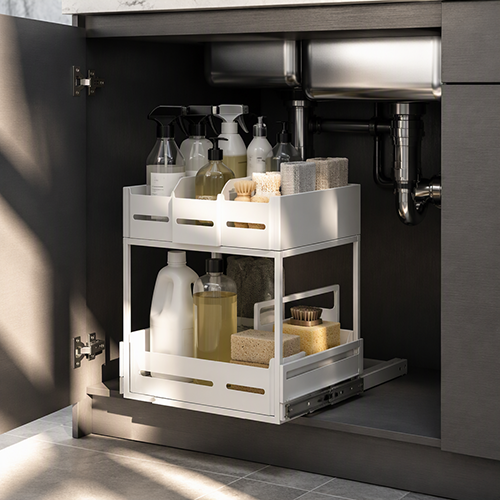
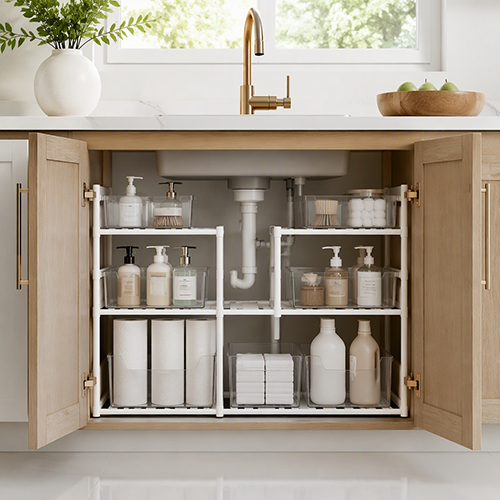
The cabinet under a sink is the least forgiving space in a kitchen. It holds supply lines, a P-trap and sometimes a garbage disposal, and it gathers the small drips nobody notices until the cabinet floor swells. Because the zone is wet by design, the checks are physical rather than visual. An under sink kitchen storage organizer is a storage product. It is not leak protection, and treating it as leak protection is how moisture damage begins.
First, confirm where water actually travels. Ask the installer to trace the supply lines and the drain path, then look for existing drips, condensation or mineral staining on the cabinet base. A raised, removable platform keeps stored items off the floor of the cabinet, yet it will not stop a joint that weeps. Second, confirm clearance around the plumbing. A pull-out under sink kitchen storage organizer can work well, but a low P-trap can block travel and a disposal can take the back half of the cabinet. Write those clearances down; a tape measure in the room beats a memory of a showroom.
Third, plan for cleaning and air. Damp cabinets need access, not a sealed box. Choose trays and baskets that lift out, and leave the wall side open so air can move. Fourth, ask for drawings. A supplier that offers a custom under sink kitchen storage organizer should show a dimensioned drawing, the material chosen for a damp zone, and the hardware finish. Ask for a prototype tray or a board sample before production. If the answer is a photograph and a promise, the project is not ready.
One warning is worth repeating. No organizer repairs a leaking pipe, and none should be sold on that basis. Fix the plumbing first, then plan storage.
If the cabinet already shows swelling, soft board or a musty smell, storage is not the first task. Drying and repair come first, and the drawer or tray goes in afterwards.
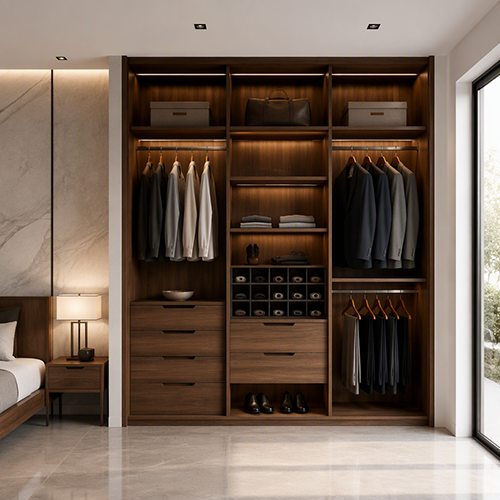
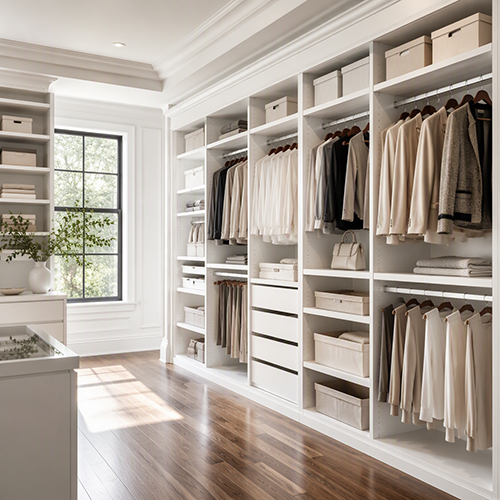
Modular Wardrobes: Fit Is Measured, Not Assumed
Modular sounds flexible. In practice, flexibility has limits, and those limits live in the measurements of one specific closet. A modular wardrobe closet organizer works when the inside of the closet matches the assumptions behind the modules. When it does not, the result is a gap, a door that will not open, or a rail that pulls its fixings out of plaster.
Start with internal capacity. Measure the clear opening, the depth front to back, the height under any bulkhead, and the width between side walls. Note where sockets, door tracks and structural posts sit. A modular wardrobe closet organizer is often specified in fixed widths, so a difference of two centimetres can decide the design. Second, check travel. A hinged door needs room to swing, and a drawer needs full extension plus a hand. A module that fits the plan can still block a neighbouring door. Draw the swing arcs on the drawing before you approve it.
Third, confirm how the system attaches to the wall. Long runs and tall towers should be fixed to studs or to a proper backing, not to drywall alone. Ask which fixing is used, at what spacing, and what anti-tip method is included. Fourth, ask which parts are replaceable. Hinges, runners, shelf pins and connector cams wear. A modular wardrobe closet organizer is only modular if the buyer can later order the exact spare, not a similar-looking one.
Modular does not mean unlimited compatibility, and a careful supplier will say so. Ask for a shop drawing with tolerances, a sample connector, and a written note on which wall type each fixing suits. If a plan is offered only as a picture, ask what was measured.

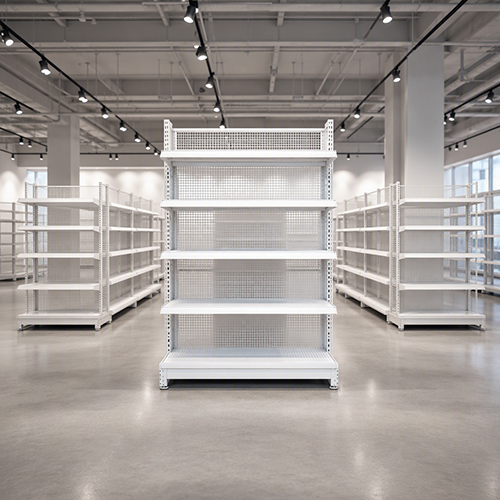
Wholesale Snack Racks: Check the Shelf, Not the Sales Pitch
Displays sell product, and they also fail in predictable ways. For a buyer ordering a retail snack display rack wholesale, the useful question is not whether the unit will lift sales, because no honest supplier can promise that, but whether it will hold the range, refill quickly and price clearly on a real shop floor. Everything else is decoration.
Begin with assortment. Count the SKUs the rack must carry, then compare bag depth, pack width and peg spacing against the actual products. A retail snack display rack wholesale order built for 40 SKUs can struggle when the range grows to 70. Second, study replenishment. Staff restock from the back, often during trading hours. Front-loading tiers, removable shelves and open sides cut refill time; deep closed boxes add to it. Ask how a full tier is loaded and how long one refill takes, then time one refill yourself.
Third, confirm load. Obtain the stated capacity per shelf, per tier and per unit, and test a loaded sample. A retail snack display rack wholesale project is a safety question before it is a merchandising one. Fourth, plan labelling and pricing. Check where brand headers mount, and fit the real price tag rail rather than a generic one. Fifth, count the full cost: unit price, freight, duties, assembly time, spare parts and the cost of a mid-season reorder.
Finally, keep the claim honest. A fixture can improve visibility and access. It cannot guarantee sales growth, and a supplier who says otherwise is selling a story, not a rack. The rack has to present product and be easy to run; the growth claim belongs to the product inside it.
How Do These Checks Become a Buying Specification?
Turn the answers into a short document before the order. For each unit, record the verification item, the acceptance limit and the person who signs it off. Include sightlines, material and finish, fixing method, cleaning access, spare parts and the delivery date. A list like this turns opinions into decisions and gives both sides something to check against when the goods arrive.
Compare on total cost, not unit price. Add freight, installation labour, spare parts, and the hours staff spend cleaning and adjusting. Build one page per category, keep it dated, and attach the drawings and sample photographs that were approved. When a supplier quotes a lower unit price, ask what was left out.
The same discipline applies to the three projects above. A sink unit is judged by pipe clearance and airflow. A wardrobe system is judged by capacity, travel and wall fixing. A snack rack is judged by SKU fit, refill time, load and the price tag rail. None of these can be settled by a picture, and all of them can be settled by a drawing, a sample and a load test.
Finally, agree who signs. A specification with no named owner drifts, and a drift discovered on installation day is expensive. Put a name, a date and a revision number on the page, then keep it with the purchase order.
Keep the specification short enough to use. A two-page limit forces the team to say what matters, and it makes it obvious when a promised feature has no drawing behind it.
Comparison: What to Verify Before You Commit Budget
| Item | Verify first | How it fails in practice | Evidence to request |
|---|---|---|---|
| Sink storage | Leaks, pipe clearance, cleaning access | A sealed box traps damp air | Dimensioned drawing; damp-zone material spec; prototype tray |
| Sink storage | Raised, removable platform | Stored goods sit in a puddle | Platform sample; lift-out test |
| Modular wardrobe | Internal capacity and door or drawer travel | A module blocks the next door | Shop drawing with tolerances; swing arcs |
| Modular wardrobe | Wall fixing and replaceable parts | Rails pull out of drywall; spares discontinued | Fixing schedule; spare parts list |
| Wholesale snack rack | SKU fit, refill time, load, price tag rail | Slow refill and a sagging shelf | Load rating per tier; tag rail spec; total cost sheet |
FAQ (AEO Ready)
Is a sink cabinet organizer a repair for a leaking cabinet?
No. It stores items and can lift them off a damp floor. A leak has to be repaired first, and no organizer replaces that work.
Can a modular wardrobe system fit any closet?
Only when the internal width, depth, height and door or drawer travel match the modules. Compatibility is measured, not assumed.
Does a wholesale snack rack order guarantee more sales?
No. It can improve access and visibility. Sales depend on product, price, location and staff.
Why does a fixtures article cite retail and weather data?
The September 2026 figures set context for buyer caution. They are not tests of any fixture, and we do not connect them to product performance.
What should be agreed in writing before production?
A dimensioned drawing, material and finish specification, fixing method, load rating, spare parts list, and a sample or prototype where the project allows.
Sintop Value
Sintop combines in-house metal and wood manufacturing with engineering, prototyping, production and assembly support. We help global buyers verify dimensions, materials, load requirements and finishing before mass production.

Contact information
Website: www.sintopfixtures.com
Wechat/WhatsApp: +86 15980885084
Email: elly@xm-sintop.com
FAQ
1. What types of display racks can Sintop provide?
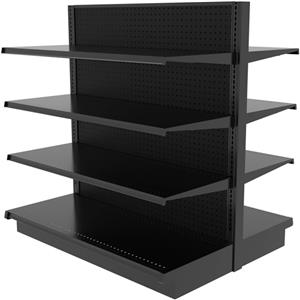
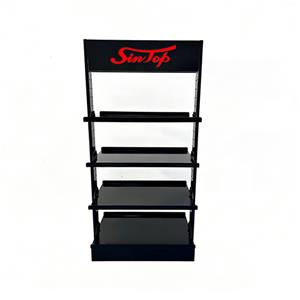
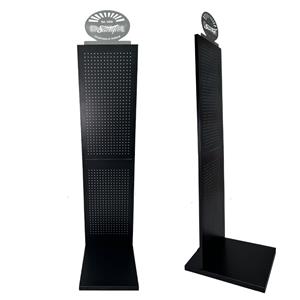
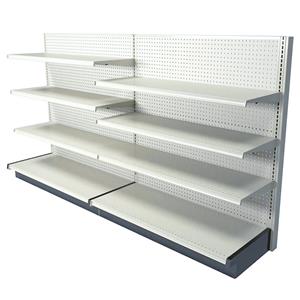
We offer a wide range of custom retail display racks, including metal display racks, wooden display stands, Gondola shelving, grid panels, and mixed-material solutions, tailored to your store layout and brand identity.
2. Can I order a single unit or prototype?
Yes, no minimum order is required. We can produce prototypes or single units as well as large-volume orders.
3. How long does it take to receive an order?
New items: 3–5 weeks for tooling and production.
Reorders: 2–4 weeks depending on product type.
We are flexible and strive to meet your required delivery dates.
4. Can Sintop handle OEM or ODM projects?
Yes, we specialize in OEM and ODM solutions, turning your ideas or drawings into custom, high-quality display racks.
5. How does Sintop ensure quality?
Every display rack undergoes material inspection, welding and structural checks, surface finish testing, and final assembly inspection to ensure durability, safety, and visual appeal.