

How Can an End Cap Display Improve Retail Readiness?
What Retail Sales Numbers Do and Do Not Prove
US retail sales rebounded sharply in August 2026. Reuters reported on 16 September 2026 that sales rose 1.2% month on month and 6.0% year on year, and that the figures were not adjusted for inflation. That is a demand headline, not evidence about any fixture.
Confidence moved the other way. Reuters reported on 11 September 2026 that the University of Michigan index slipped to 47.8 from 51.7 in August, while one-year inflation expectations climbed to 4.6% from 4.0%.
The UK picture was mixed. BRC reported on 8 September 2026 that total retail sales grew 0.7% year on year in August, with food up 2.6% and non-food down 0.8%. Grocery and general merchandise demand are not the same line.
One further item is often pasted into fixture decks without reason. BBC Weather reported on 5 September 2026 that El Granado in south-west Spain reached 45.7C. That is an outdoor weather observation, not proof about shelving, coatings, food safety or store conditions.
A news feed was also checked. The Google News US RSS feed listed below was opened on 23 September 2026 as a topic-discovery entry point only. The leading themes that day were not shelving-specific, and no claim about popularity, ranking or search volume is made here.
An end cap display order, a pegboard gondola order or a grocery store shelves order cannot be justified by any figure above. The data says demand exists. It says nothing about hole pitch or shelf load.
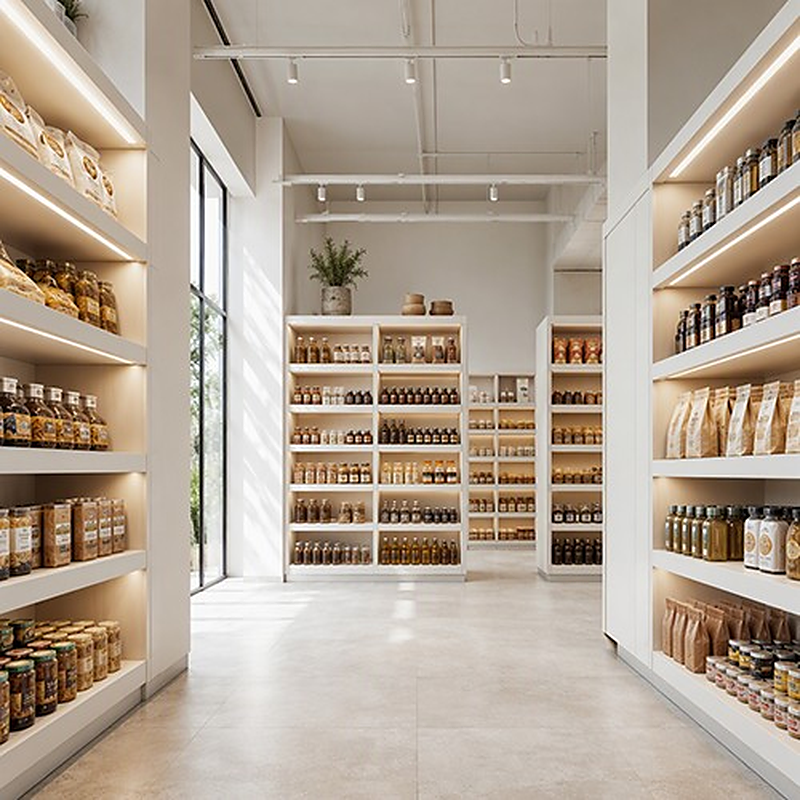
Promotion at the Aisle End: Turning Promo Plans into Buildable Detail
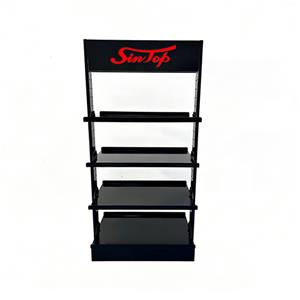
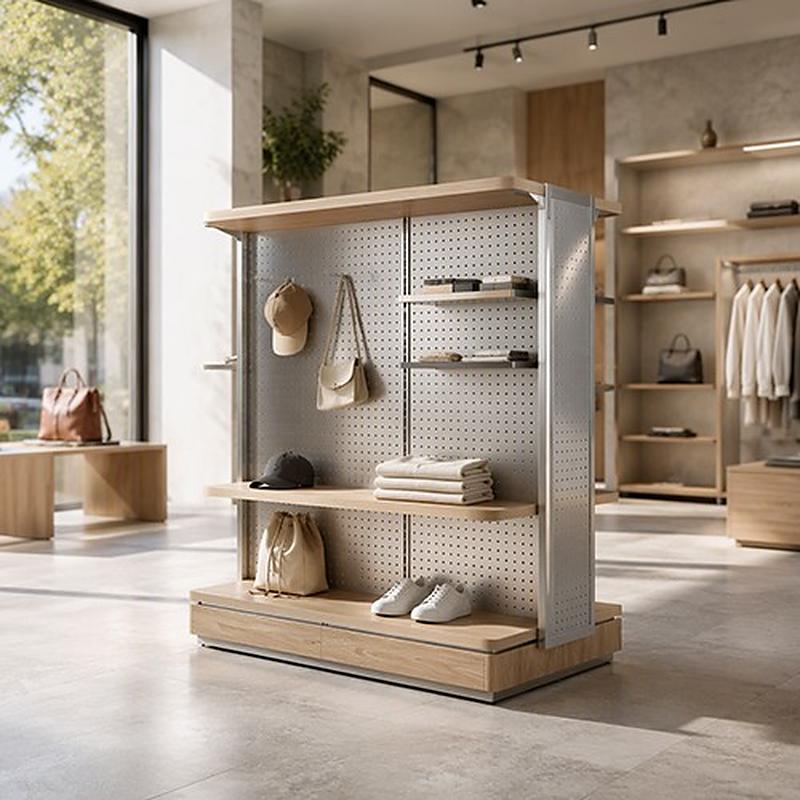
An end cap display is a promotion tool, so its specification should read like a promotion plan rather than a furniture description.
Product selection comes first. Which items will sit on the unit, in what pack sizes, and how deep is the deepest case? Promotional packs are often larger than the everyday facing, so a depth chosen for the base range can fail on day one.
Price and offer visibility comes second. Where does the price strip sit, how tall is the offer card, and is there a clear line of sight to it once the unit is loaded? If the offer cannot be read from the approach path, the unit is not finished.
Customer approach is the third check. Shoppers arrive with trolleys, so confirm the clearance that remains when the unit is fully stocked and that a trolley can pass and turn without contact. Two units at opposite ends of a narrow aisle can squeeze passage below a comfortable width.
Seasonal reset is the fourth. A display rebuilt four or five times a year needs changeable panels, replaceable graphic holders and reusable fixings. Ask how many resets the end cap display is designed for and which part wears out first.
A hook-based panel follows different logic, and mixing the two briefs is a common mistake. The peg unit is judged on hook geometry; the aisle-end unit on promotion geometry. A grocery store shelves plan, by contrast, is judged on range and replenishment. Keep the three briefs separate.
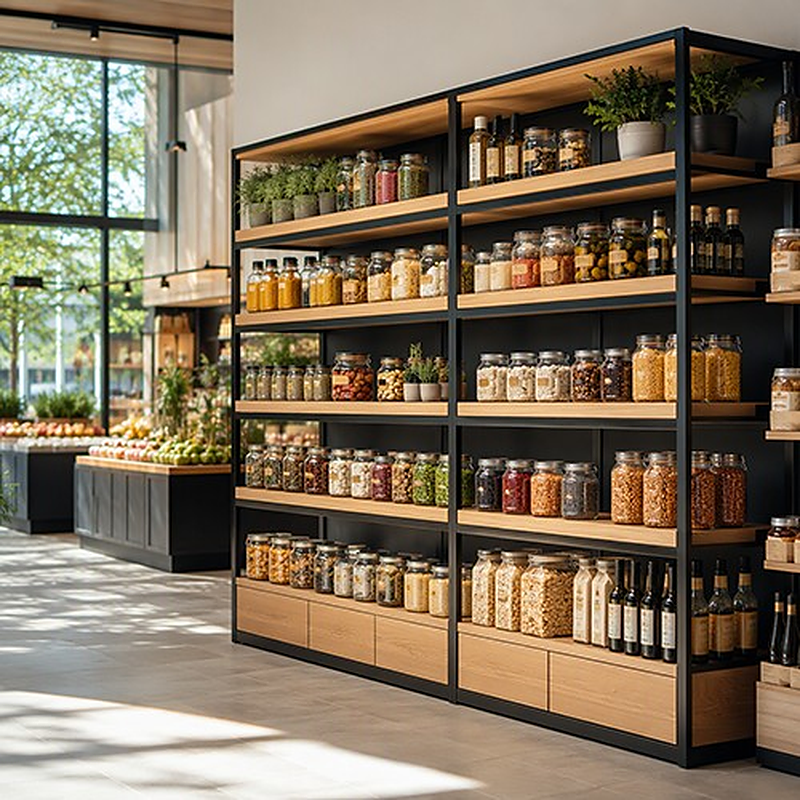
Hook and Peg Panelling: Compatibility Before Purchase
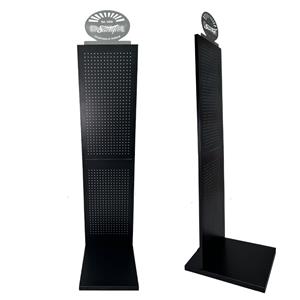
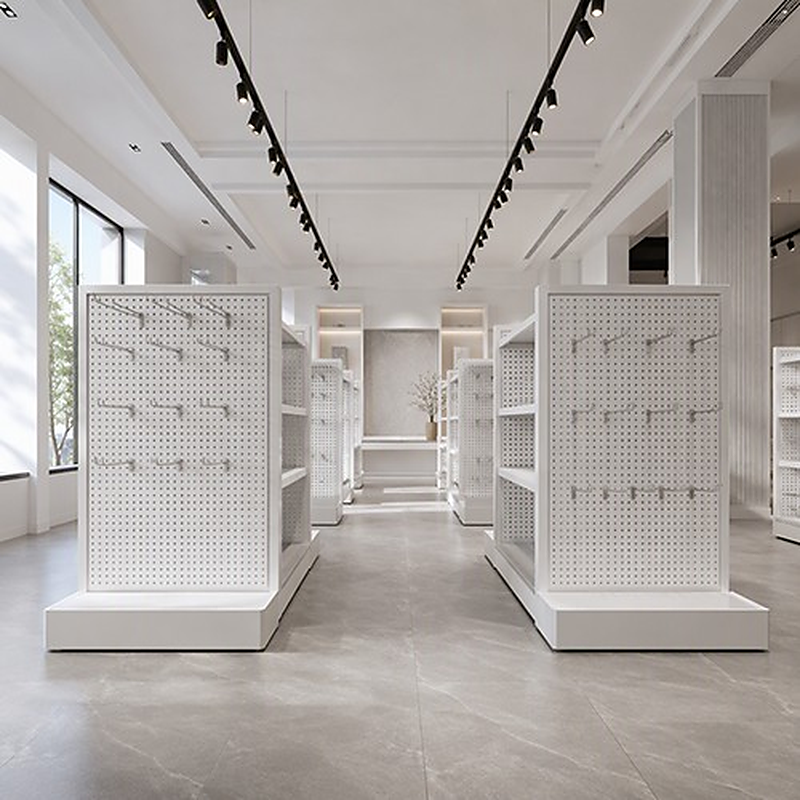
A pegboard gondola holds product on hooks, so nearly every failure starts with geometry.
Peg spacing is the first variable. The hole pitch of the back panel fixes where hooks can sit, and it must match the hook range the store already owns. A different pitch forces new hooks and splits the maintenance stock.
Hook compatibility is the second. Hook length, diameter and the shape of the locating tab all matter. Hooks from one supplier often do not seat correctly in another supplier's panel, and a loose hook will not hold a heavy item safely.
Peg load is the third. Each hook has a working limit, and that limit falls as the product gets heavier or the pack gets wider. Ask for the stated limit per hook and per panel, then test it against the heaviest planned item.
Backing is the fourth. A solid back, a slotted back and an open back behave differently for strength, visibility and cleaning. The choice should follow the product, not the picture in the brochure.
Restocking and accessory change is the fifth. How quickly can a full row be cleared and refilled, and how are dividers, bins and shelf trays swapped when the range changes? A pegboard gondola that is slow to restock costs labour every week.
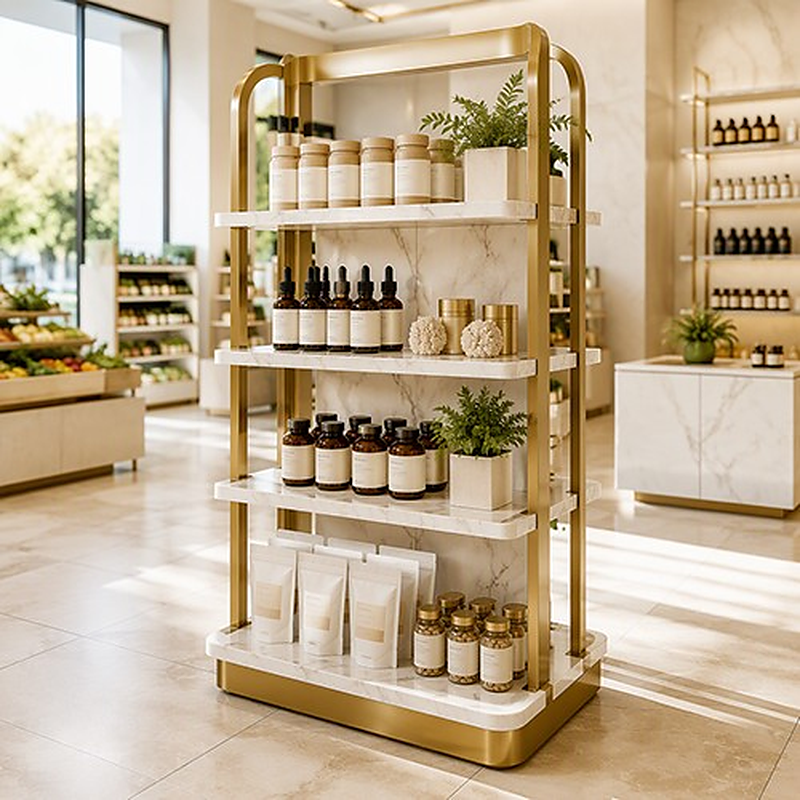
Flat Grocery Range: Category, Zone and Cleaning Fit
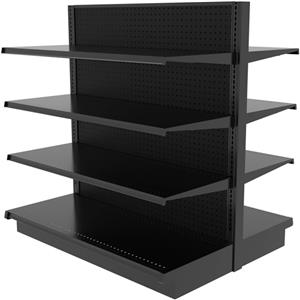
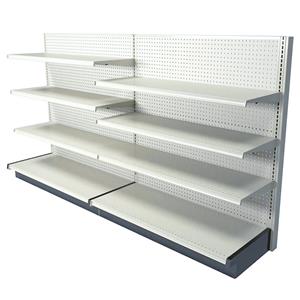
Grocery store shelves are planned around a range, and the range changes more often than the hardware.
Category and SKU plan comes first. How many categories, how many SKUs per category, and what is the widest and heaviest case in each? A plan built for averages will need adjustment the moment the range is finalised.
Format matters. Ambient and refrigerated areas impose different conditions, and a unit chosen for one is not automatically suitable for the other. Ask which zone the unit is intended for, and whether the finish is specified for it.
Shelf loading is the third check. Confirm the stated load per shelf and per bay, then compare it with the planned planogram rather than a nominal figure. Sagging appears first in the middle of a long shelf under a dense row.
Label and price-strip fit is the fourth. Which strip profile is used, what label size fits it, and can the strip be exchanged without dismantling the shelf? A mismatch here is small but constant.
Cleaning is the fifth. Open frames, wipeable surfaces and removable decking make routine cleaning faster. Sealed gaps and decorative recesses slow it down.
Food-area boundaries and aisle clearance belong in the same conversation. Where does the food zone end, and how much clear width remains for staff and customers when the bay is fully loaded? A grocery store shelves bay that blocks a working aisle creates a daily problem that no catalogue image reveals.
A pegboard gondola is rarely the right answer in a chilled zone, and an end cap display
in a fresh area must be assessed on cleaning and boundaries rather than on promotion alone.
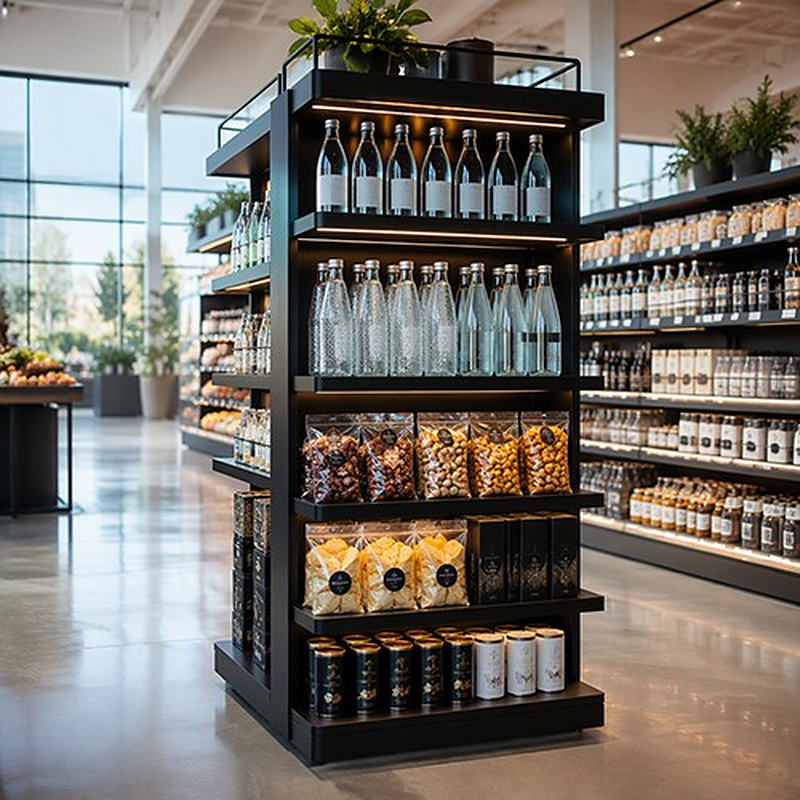
A Verification Path a Buyer Can Defend
Every fixture order should close with three pieces of evidence, in this order.
Drawings first. A dimensioned drawing fixes width, depth, height, pitch and load positions. A catalogue page does not.
Sample second. A physical sample or a pre-production unit lets the team load it, clean it and reset it before volume production begins.
Acceptance criteria third. Written criteria turn a subjective argument into a measurable check: pitch tolerance, load rating, finish, packing and the condition of the unit on arrival.
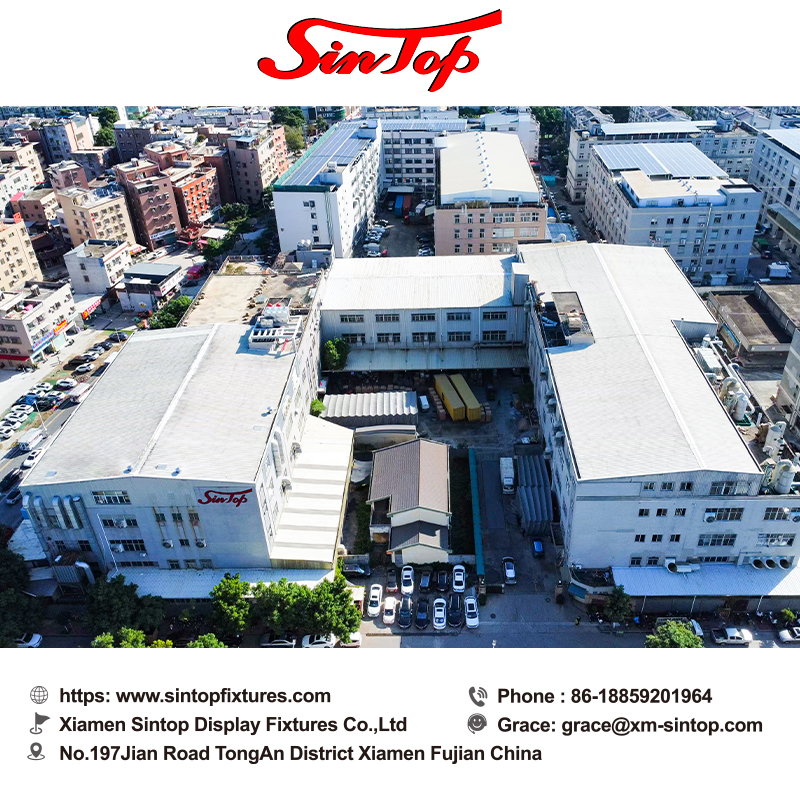
Supplier claims deserve the same discipline. The company website for Xiamen Sintop Display Fixtures Co.,Ltd states that the business was founded in 2002, and it describes a design, prototype, production and shipment workflow. That is a supplier description, not an audit. Every project should still be verified with drawings, a sample and agreed acceptance criteria.
No supplier can promise a sales result. A fixture can be measured and inspected. A sales number cannot be attributed to a fixture on the strength of a catalogue page.
Comparison Table
| Query group | What it settles | Operating checks | Evidence to request |
|---|---|---|---|
| Aisle-end promotion unit | Promotion readiness at the end of a run | Product selection; offer visibility; customer approach; trolley clearance; seasonal reset | Dimensioned drawing; reset plan; loaded sample |
| Hook and peg panel | Hook and peg compatibility | Peg spacing; hook fit; load per hook; backing; restocking and accessory change | Panel pitch data; hook list; load rating; sample |
| Flat grocery shelf run | Range and zone fit | Category plan; ambient or chilled zone; shelf load; price-strip fit; cleaning; aisle clearance | Load data; strip profile; zone finish; cleaning method |
FAQ
Does a strong retail sales month mean a fixture will perform?
No. A sales figure describes demand that has already been realised. It does not test load, clearance, fit or cleaning. Treat it as context, not as proof about hardware.
What should an aisle-end brief contain?
The product list and pack sizes, the offer layout, approach and trolley clearance, the reset count, and the drawing and sample checked at sign-off.
How is hook panelling specified?
By hole pitch, hook length and diameter, load per hook, backing type, and the time needed to restock and change accessories.
How do chilled areas change a shelving decision?
The zone changes the finish, the cleaning method, the shelf load in practice and the food boundary. Confirm the intended zone before the specification is fixed.
Can a supplier guarantee that new fixtures will raise sales?
No. A supplier can describe materials, dimensions and workflow, and can provide drawings and samples. There is no sales-uplift guarantee that a catalogue can support, and none should be accepted as one.
Sintop Value
Sintop combines in-house metal and wood manufacturing with engineering, prototyping, production and assembly support. We help retail buyers confirm fixture dimensions, load requirements, materials and acceptance criteria before mass production.

Contact information
Website: www.sintopfixtures.com
Wechat/WhatsApp: +86 15980885084
Email: elly@xm-sintop.com
FAQ
1. What types of display racks can Sintop provide?
We offer a wide range of custom retail display racks, including metal display racks, wooden display stands, Gondola shelving, grid panels, and mixed-material solutions, tailored to your store layout and brand identity.
2. Can I order a single unit or prototype?
Yes, no minimum order is required. We can produce prototypes or single units as well as large-volume orders.
3. How long does it take to receive an order?
New items: 3–5 weeks for tooling and production.
Reorders: 2–4 weeks depending on product type.
We are flexible and strive to meet your required delivery dates.
4. Can Sintop handle OEM or ODM projects?
Yes, we specialize in OEM and ODM solutions, turning your ideas or drawings into custom, high-quality display racks.
5. How does Sintop ensure quality?
Every display rack undergoes material inspection, welding and structural checks, surface finish testing, and final assembly inspection to ensure durability, safety, and visual appeal.