

How Do Double Sided Gondolas Improve Store Layout Planning?
What the Latest Retail Data Shows, and What It Cannot Prove
Three public data points frame the current mood, and each one has a different scope. Reuters reported on 16 September 2026 that US retail sales rebounded sharply in August 2026, rising 1.2% month to month and 6.0% year to year; those figures are not adjusted for inflation. Reuters also reported on 11 September 2026 that the University of Michigan consumer sentiment reading fell to 47.8 in September from 51.7 in August, while one-year inflation expectations rose to 4.6% from 4.0%. In the United Kingdom, the British Retail Consortium reported on 8 September 2026 that total retail sales grew 0.7% year to year in August, with food up 2.6% and non-food down 0.8%.
Those are facts about spending, confidence and category mix, not evidence about shelving. A month of higher sales does not confirm that a specific fixture will pay for itself, and a weaker non-food figure does not confirm the opposite. The narrower reading, and this part is editorial judgment rather than reported data, is that shoppers still spend in some categories while describing their outlook as cautious, and cautious buyers slow decisions that feel unclear.
Two boundaries keep this article honest. BBC Weather reported on 5 September 2026 that El Granado in southwest Spain reached 45.7C, an outdoor weather observation only, not a test of shelving, coatings or store conditions. The Google News US RSS feed was checked on 23 September 2026 as an entry point for topic discovery only; its leading themes were not shelving-specific, so no popularity or ranking is claimed.
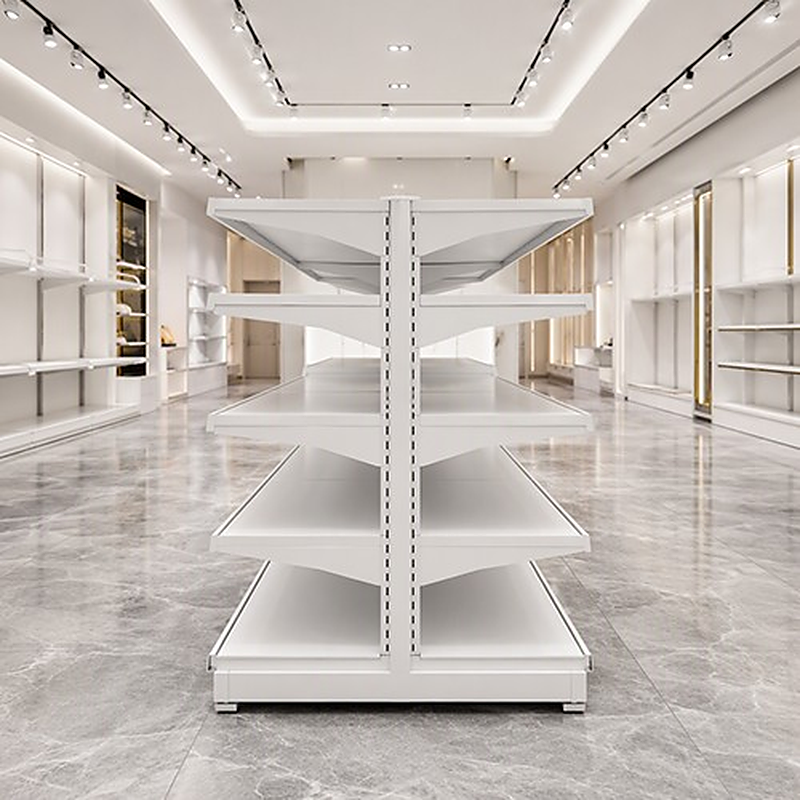
Bilateral Merchandising: Compatible Parts, Aisle Clearance and an Expansion Path
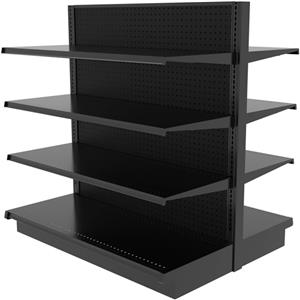
A double sided gondola is a central run that sells from both faces, so it changes the traffic pattern of a store rather than simply adding shelf space. A bilateral merchandising plan decides shelf depth on both faces, the position of dividers, and whether the two sides carry the same category or two categories that share a shopper.
Compatibility is the next test for a double sided gondola. Base, upright, back panel and end bay should be quoted as one system, because a base that suits one upright may not accept the back panel or the end bay you intended. Ask for the expansion path in writing: the next bay, the connector, and the tolerance that keeps a growing run straight.
Aisle clearance decides whether a double sided gondola works in practice. A run that fills the aisle to the millimetre is hard to replenish and hard for a customer with a trolley to pass, and access from both sides has to be checked against the real layout rather than a render. Clearance and expansion separate a working operating system from a fixture that only looks efficient on paper.
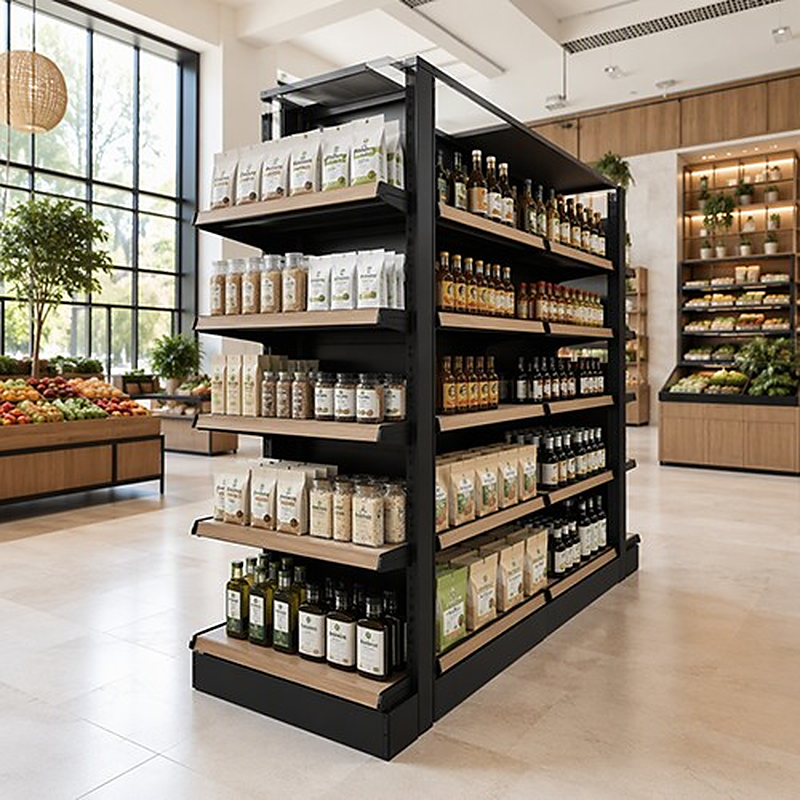
Wall Runs: Fixing Conditions, Shelf Positions, the Top Cap and Safe Replenishment
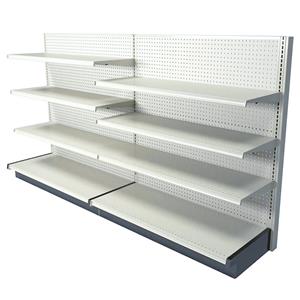
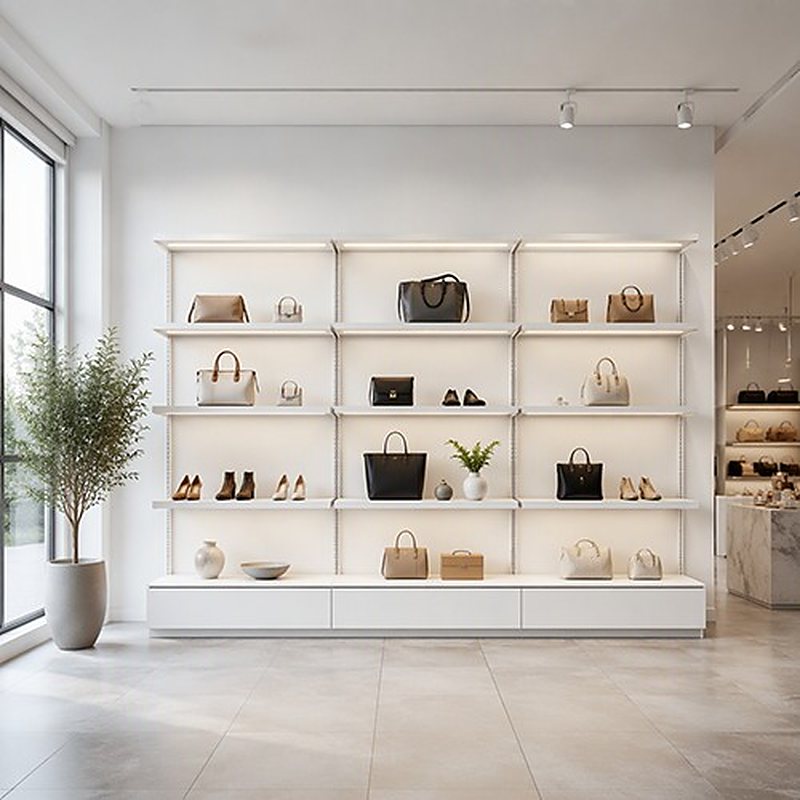
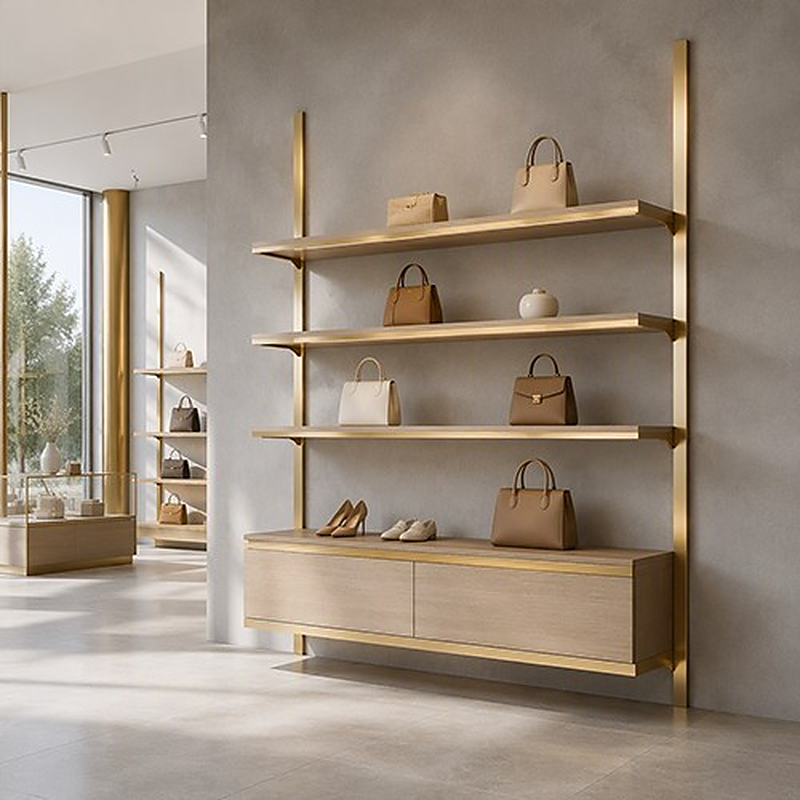
A wall gondola shelving run looks simpler than a central unit, but it depends on the building as much as on the steel. The run has to sit against a surface that can accept the intended fixing, so the backing condition, whether plasterboard, brick, concrete or a stud wall, has to be confirmed before the order is placed. A wall gondola shelving plan that assumes a fixing the wall cannot take will fail at installation.
Shelf positions then decide how the wall reads. Adjustable positions let a category grow or shrink, and a top cap closes the run visually so it does not look unfinished above the last shelf. Aisle reach matters as well, because a wall run that is too deep or too tall turns restocking into a stretch; what a person can lift, reach and place without a ladder belongs in the fixture brief.
The third test for wall gondola shelving is the interface between the wall and the aisle. Backing, shelf positions, top cap and reach should be reviewed together against a store drawing and a sample shelf, so the run is signed off on evidence rather than on a picture.
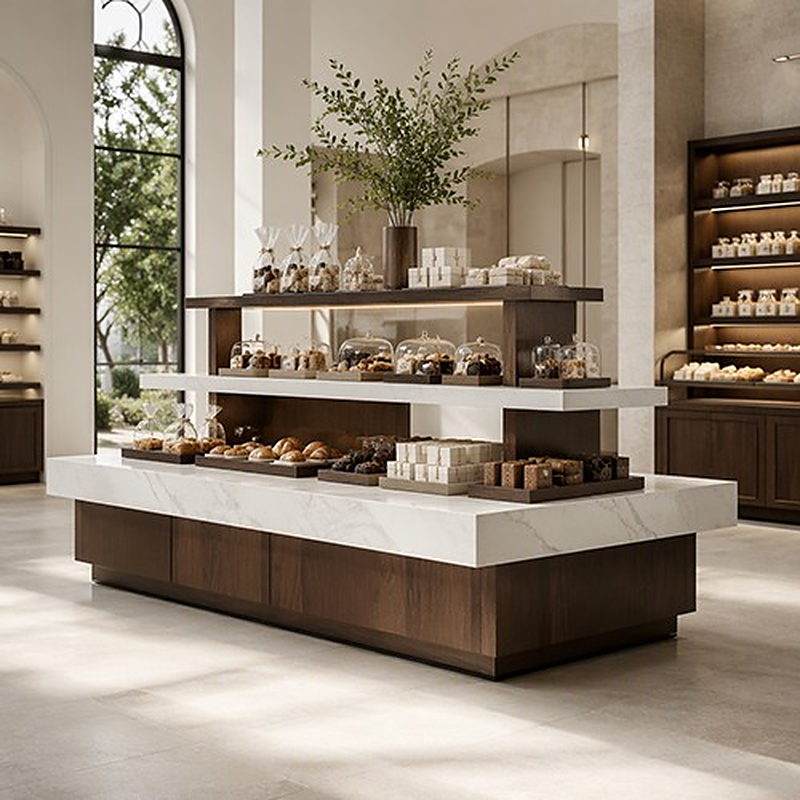
Promotional Zones: Product Selection, Price Information and Seasonal Reset
An island display shelving zone is a promotional tool, so its job is to interrupt a shopper and make one decision easy. Product selection comes first: a small, focused set of items reads better than a crowded mix, and the zone should be reserved for the products that carry a promotion.
Price information has to be part of the fixture plan. If a shopper cannot see the price, the promotion fails even when the goods are right. The basket-and-fixture interface matters too, because someone holding a basket or pushing a trolley needs a natural place to stop, and the island display shelving unit should not block the circulation path that keeps the rest of the store moving.
Because promotions change, a seasonal reset should be designed in from the start. An island display shelving unit that can be re-merchandised quickly, with shelf positions and signage points that move without tools, survives more than one campaign. Success here is not a promise of extra sales; it is whether the zone can be reset on time, priced clearly, and kept tidy through the season.
A Sourcing Checklist That Separates Facts From Judgment
Before a purchase order is issued, a buyer can reduce risk by asking for documents instead of adjectives. A short checklist covers most of the exposure: drawings that show base, upright, back panel and end bay as one compatible system; a fixing note that names the wall condition for a wall run; a clearance figure for each aisle; a shelf-position range and a top cap detail; and a written expansion path for a run that may grow.
A supplier description of a design, prototype, production and shipment process is a starting point, not a guarantee. Xiamen Sintop Display Fixtures Co.,Ltd states on its website that it was founded in 2002 and describes that process, but any specific project still has to be verified with drawings, a sample, and agreed acceptance criteria. That line between a supplier claim and a buyer's evidence is where procurement adds value.
Comparison Table
| Requirement | Bilateral central run | Wall-backed run | Promotional island |
|---|---|---|---|
| Primary role | Sells from both faces in the middle of the floor | Sells along a store wall | Interrupts a shopper inside a promotion zone |
| Compatibility checks | Base, upright, back panel and end bay as one system | Backing and fixing condition, shelf positions, top cap | Product selection, price information, basket interface |
| Clearance and access | Aisle width and access from both sides | Aisle reach and safe replenishment | Circulation path and a place to stop |
| Expansion | Written next-bay and connector plan | Wall length and fixing for added bays | Fast reset without tools |
| Risk if unclear | Run cannot grow or restocks poorly | Fixing fails or restocking becomes unsafe | Promotion mispriced or traffic blocked |
FAQ
Do the August 2026 US retail sales figures prove that shelving demand is rising?
No. Reuters reported that US retail sales rose 1.2% month to month and 6.0% year to year in August 2026, without adjusting for inflation. That is a spending figure, not evidence about fixtures, and this article does not treat it as proof of shelving demand.
How does a bilateral central run differ from a wall-backed run?
The central unit sells from both faces and is governed by aisle clearance and access from both sides. The wall-backed run is governed by the wall's backing and fixing condition, shelf positions, a top cap and safe reach. They solve different layout problems.
What should a promotional island zone include?
A focused product selection, clear price information, a comfortable basket-and-fixture interface, an open circulation path, and a seasonal reset that can be completed without tools.
Can a supplier guarantee that new shelving will increase sales?
No. This article offers no sales-uplift guarantee. A supplier can describe a design, prototype, production and shipment process, but a project must be verified with drawings, a sample, and agreed acceptance criteria.
What wall information is needed before ordering a wall-backed run?
The backing condition, whether plasterboard, brick, concrete or stud, plus the intended fixing, the shelf-position range, the top cap detail, and the aisle reach needed for safe replenishment.
Sintop Value
Sintop combines in-house metal and wood manufacturing with engineering, prototyping, production and assembly support. We help retail buyers verify fixture compatibility, dimensions, materials and installation requirements before mass production.

Contact information
Website: www.sintopfixtures.com
Wechat/WhatsApp: +86 15980885084
Email: elly@xm-sintop.com
FAQ
1. What types of display racks can Sintop provide?
We offer a wide range of custom retail display racks, including metal display racks, wooden display stands, Gondola shelving, grid panels, and mixed-material solutions, tailored to your store layout and brand identity.
2. Can I order a single unit or prototype?
Yes, no minimum order is required. We can produce prototypes or single units as well as large-volume orders.
3. How long does it take to receive an order?
New items: 3–5 weeks for tooling and production.
Reorders: 2–4 weeks depending on product type.
We are flexible and strive to meet your required delivery dates.
4. Can Sintop handle OEM or ODM projects?
Yes, we specialize in OEM and ODM solutions, turning your ideas or drawings into custom, high-quality display racks.
5. How does Sintop ensure quality?
Every display rack undergoes material inspection, welding and structural checks, surface finish testing, and final assembly inspection to ensure durability, safety, and visual appeal.