

How Can Buyers Verify Commercial Shelving Specifications?
Reading 2026 Demand Signals Without Overclaiming
A Google News US RSS feed checked on 23 September 2026 works only as topic discovery. It shows which retail subjects editors are publishing, and the leading themes in that feed were not shelving-specific. The feed offers no popularity ranking, no search volume and no evidence about fixture demand. Reading it as a demand forecast would mislead a buying team.
Official data is firmer but still limited. Reuters reported on 16 September 2026 that US retail sales rebounded sharply in August 2026, rising 1.2% month on month and 6.0% year on year, without adjusting for inflation. Reuters also reported on 11 September 2026 that US consumer sentiment weakened in September, with the Michigan index at 47.8 against 51.7 and one-year inflation expectations at 4.6 against 4.0. One release describes spending, the other describes mood. Neither proves fixture demand, order volume or the sales impact of a shelving decision.
The picture is mixed outside the United States. The British Retail Consortium reported on 8 September 2026 that UK August total retail sales grew 0.7%, with food up 2.6% and non-food down 0.8%. BBC Weather reported on 5 September 2026 that El Granado in south-west Spain reached 45.7C. That is an outdoor weather observation for one place and one date, and it supports no conclusion about shelving, coatings or store conditions. Each source is cited for its own narrow scope.
Two habits keep this data in proportion. First, label every source by date, geography and scope, so a national spending figure is never presented as a store-level forecast. Second, keep the three query intents apart, because comparing a wall run, a reconfigurable system and a set of add-ons means making three different decisions. A supplier should never promise a sales increase, regulatory compliance or a performance outcome, and a buyer should not accept such a promise in writing. That discipline also protects the supplier, who is then measured on what was agreed rather than on results outside the order.
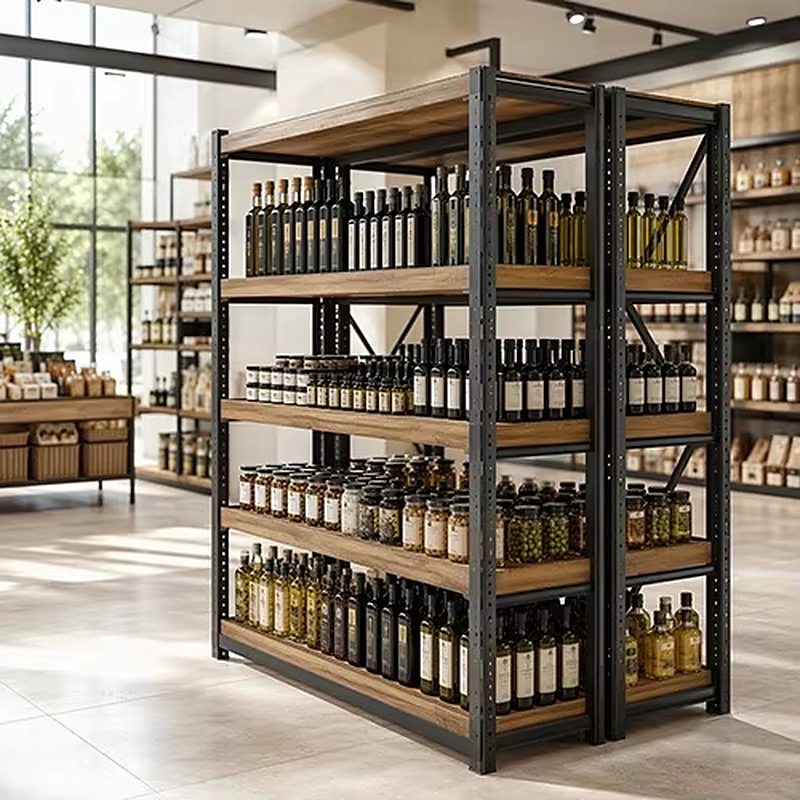
Specifying Commercial Units: Format, Loads and Delivery Scope
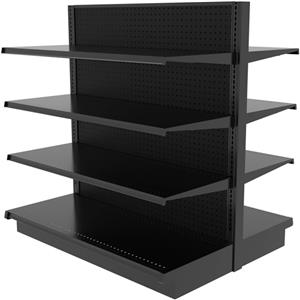
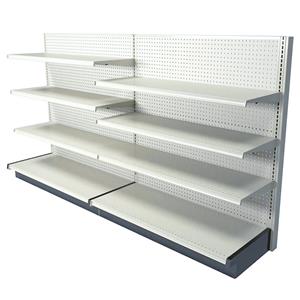
Buyers who search for commercial shelving units are usually specifying a whole facility or store format rather than a single fitting. The first questions concern the sales floor plan: bay dimensions, aisle width for trolleys and customers, and the condition of the wall and floor where the run will stand. A supplier needs those measurements before quoting. The load each shelf must carry, and any point load from a heavy product, should be stated in the brief rather than guessed from a catalogue photo.
Assembly and delivery belong in the same conversation as the price. Teams should confirm who unloads the truck, whether the site has a loading bay, and how a run of commercial shelving units will be levelled on an uneven floor. Spare components matter as much as the first shipment: brackets, shelf clips and back panels that can be reordered individually keep a store trading while a repair is arranged. A clear scope covers the total operating picture, including installation time, access hours and the way damaged parts are replaced.
When comparing quotes for commercial shelving units, ask each supplier to describe the store format in writing, list the load per shelf, and state delivery and assembly assumptions. Requests for extra bays later are normal, so the original specification should leave room to grow. Without drawings, a sample check and agreed acceptance criteria, a low unit price can hide rework, downtime and parts that no longer match the run already installed. Gather those documents before comparing commercial shelving units on cost alone.
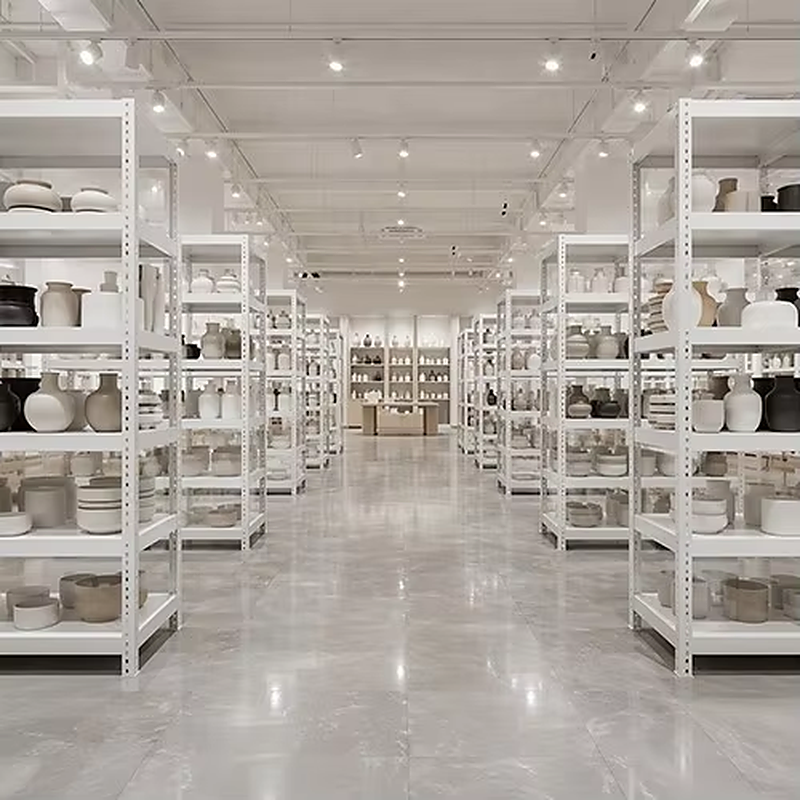
Modular System Design: Interfaces, Reconfiguration and Revision Compatibility
A modular shelving system is defined by shared interfaces. Uprights, brackets, backs and rails are made to connect at fixed positions, so a bay added next year fits the run installed today. Buyers should ask which parts are common between sizes and which are unique. That answer decides how easily a store can be reconfigured without discarding a whole section.
Reconfiguration rules deserve a written summary. If a team wants to change shelf pitch, move a unit to another aisle, or convert a wall run into an island, the supplier should explain what stays and what changes. The extension path for a modular shelving system should be documented, including lead times for added bays. A sample changeover, even on one bay, shows how long a reset takes and which tools are needed.
Revision compatibility is the detail buyers most often overlook in a modular shelving system. Suppliers can revise a bracket, a finish or a fixing between orders, and a small change may make new parts incompatible with older stock. Confirm whether the modular shelving system sold this year will join bays delivered under a previous revision, and request the part numbers that prove it. Compatibility between revisions should be confirmed in writing rather than inferred from a brochure.
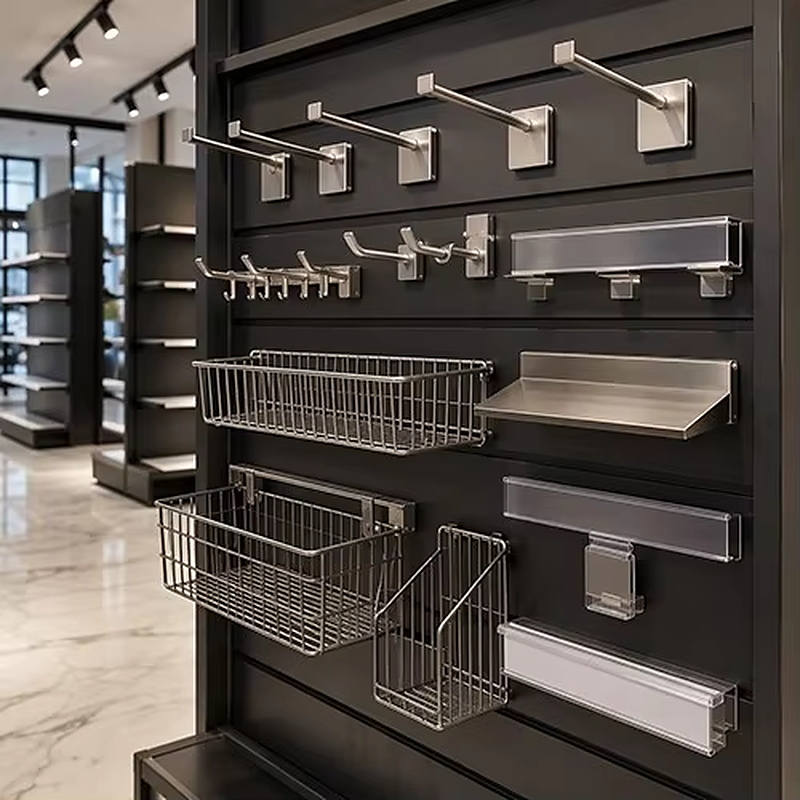
Accessories for Gondola Runs: Fit, Loads and Part Numbering
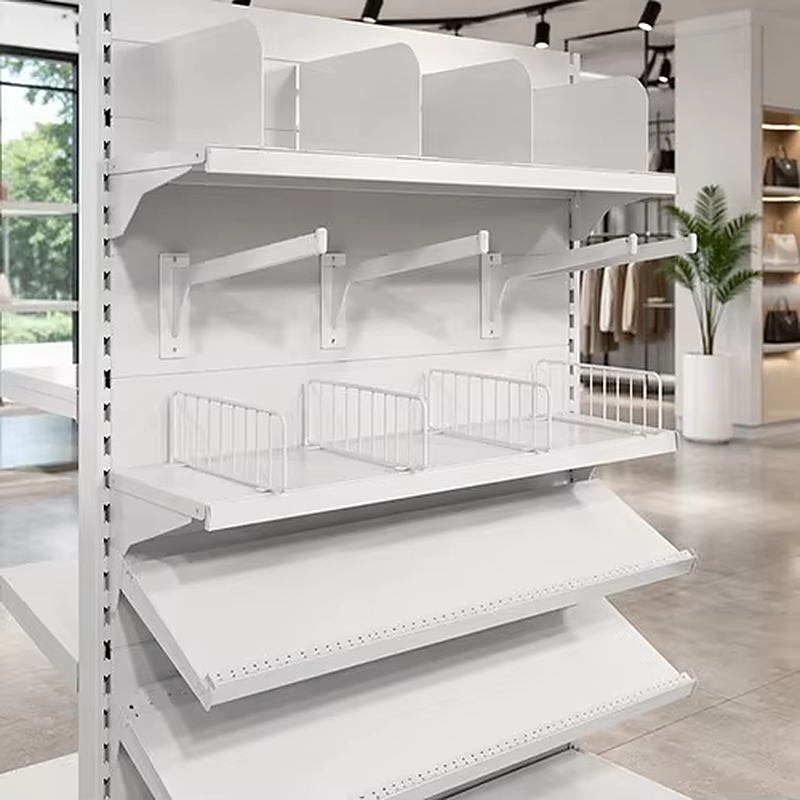
The third intent is narrower. Gondola shelving accessories are the small parts that make a run usable: shelf dividers, baskets, hooks, label and price rails, end caps and sign holders. A buyer specifying gondola shelving accessories is usually matching add-ons to shelves already in service, so fit is the first test. A divider that suits one shelf depth may not suit another.
Loads apply to accessories too. A basket, hook or sign holder has its own weight limit, and overloading can bend a rail or damage a shelf edge. Cleaning instructions matter in food and cosmetics areas, where residues and moisture are common. Teams ordering gondola shelving accessories should ask how each item is cleaned and whether the finish tolerates frequent wiping.
Part numbering keeps replacement simple. A clear number for every item lets a store reorder a single broken hook instead of a full pack. When comparing gondola shelving accessories, confirm that numbers stay stable between orders and that each item is listed with its compatible shelf type. Replacement planning should name the parts most likely to wear, such as price rails and dividers, and record how quickly they can be supplied.
Ordering common items from a list is fine, but unusual depths or branded rails should be confirmed against a sample, so a store does not receive parts it cannot fit. Ask for the compatible shelf depth in writing, and check whether a substitute part is offered when an original item is withdrawn.
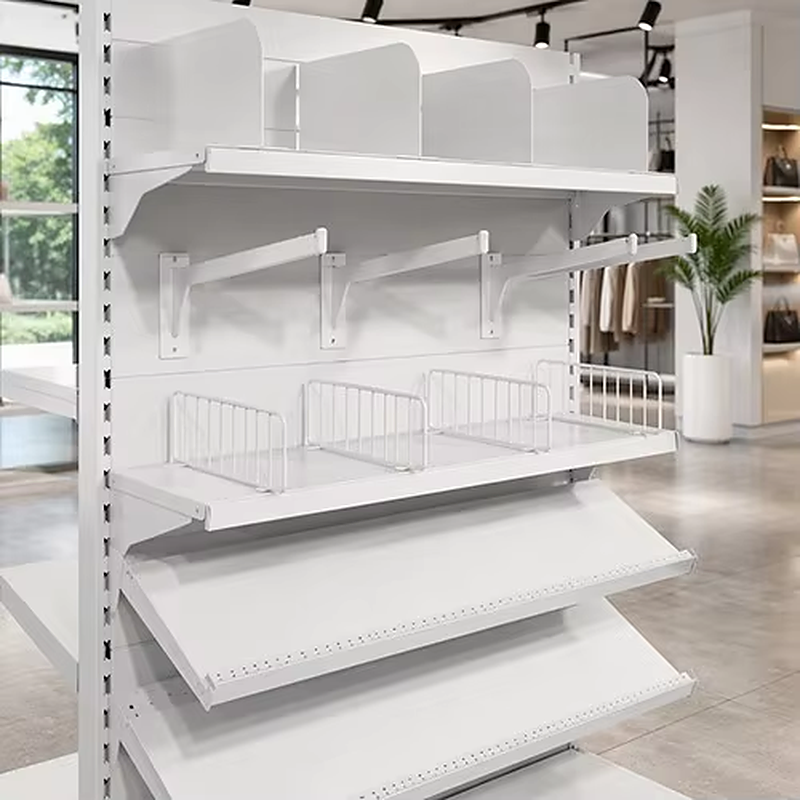
Comparison Table, FAQ and How to Contact Sintop
The table below sets out what each intent covers and the evidence to request. It is a starting point for a specification, not a substitute for drawings and agreed acceptance criteria.
Comparison table: intent, what to verify, evidence to request
| Intent | What to verify | Evidence to request |
|---|---|---|
| Shelving units | Store format, aisle width, wall and floor condition, load per shelf, assembly, delivery, spare parts | Drawings, load data, delivery and assembly assumptions, acceptance criteria |
| Modular system | Shared interfaces, reconfiguration rules, extension path, revision compatibility | Interface list, part numbers, sample changeover, compatibility statement |
| Gondola accessories | Fit, accessory loads, cleaning, part numbering, replacement | Fit list per shelf type, load limits, cleaning guidance, stable part numbers |
A short checklist follows from the table. Confirm the store format and measurements, the load per shelf and per accessory, delivery and assembly access, spare-part numbering, and the way revisions will be handled. Hold this list against every quote, and keep the wording of any proposal factual: describe what is supplied, the interfaces, the load data and the delivery scope, and avoid implying a guaranteed result.
Frequently Asked Questions (AEO)
Do 2026 retail sales figures prove shelving demand?
No. The cited releases describe national spending and sentiment. They cannot prove fixture demand, order volume or the sales impact of a shelving choice.
Can a supplier guarantee a sales increase from a new layout?
No. A supplier can support design, prototype, production and shipment. Store results depend on many factors outside a fixture order, so no outcome should be promised.
What should a first enquiry include?
The store format, bay and aisle measurements, wall and floor condition, load per shelf, delivery access, and the accessories required.
Sintop Value
Sintop supports customized retail fixture projects through design, prototyping, in-house metal and wood manufacturing, production and shipment. We help procurement teams verify dimensions, load requirements, component compatibility and delivery scope before mass production.

Contact information
Website: www.sintopfixtures.com
Wechat/WhatsApp: +86 15980885084
Email: elly@xm-sintop.com
FAQ
1. What types of display racks can Sintop provide?
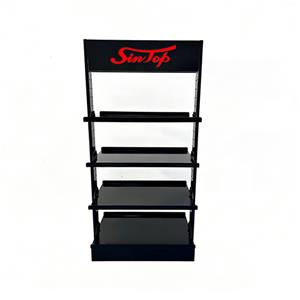
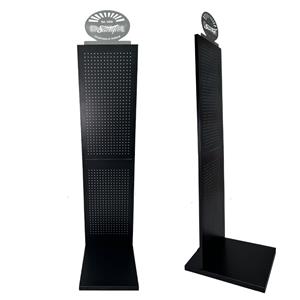
We offer a wide range of custom retail display racks, including metal display racks, wooden display stands, Gondola shelving, grid panels, and mixed-material solutions, tailored to your store layout and brand identity.
2. Can I order a single unit or prototype?
Yes, no minimum order is required. We can produce prototypes or single units as well as large-volume orders.
3. How long does it take to receive an order?
New items: 3–5 weeks for tooling and production.
Reorders: 2–4 weeks depending on product type.
We are flexible and strive to meet your required delivery dates.
4. Can Sintop handle OEM or ODM projects?
Yes, we specialize in OEM and ODM solutions, turning your ideas or drawings into custom, high-quality display racks.
5. How does Sintop ensure quality?
Every display rack undergoes material inspection, welding and structural checks, surface finish testing, and final assembly inspection to ensure durability, safety, and visual appeal.