

How Can Modular Electronic Shelf Labels Improve Retail Flexibility in 2026?
1. Why Are Modular Shelf Systems Becoming a Retail Priority in 2026?
Retail technology is changing the way stores manage products, prices and physical space. In 2026, electronic shelf labels are no longer simply replacements for printed price cards. They are becoming part of a wider retail infrastructure connecting product information, inventory management, promotional activity and store operations.
The United States provides a clear example of this change.
On March 4, 2026, Retail Dive reported that Walmart planned to expand digital shelf labels to all its U.S. locations by the end of the year. The company had already introduced the technology in approximately 2,300 stores. The system supports faster price changes, restocking and online order fulfillment.
Retail Dive
However, the expansion has also created a public debate.
On September 9, 2026, reporting by The Guardian covered an AFL-CIO Tech Institute report examining the possible employment consequences of electronic shelf labels. The report estimated that universal adoption in U.S. grocery stores could affect between 44,223 and 191,633 jobs and result in annual wage losses ranging from $1.6 billion to $6.9 billion. These are projections based on manufacturers' own marketing estimates, not measured job losses. Nevertheless, they have become an important part of the industry's public discussion.
New Jersey added another complication. Its 2026 Fair Price Protection Act introduced a one-year pause on new electronic shelf label deployments in retail food stores while the state examines the technology. Existing installations are not simply required to disappear.
For retailers, the message is straightforward: technology adoption must be supported by sound operating procedures, clear pricing policies and adaptable physical infrastructure.
This is where a modular electronic shelf label solution becomes commercially relevant.
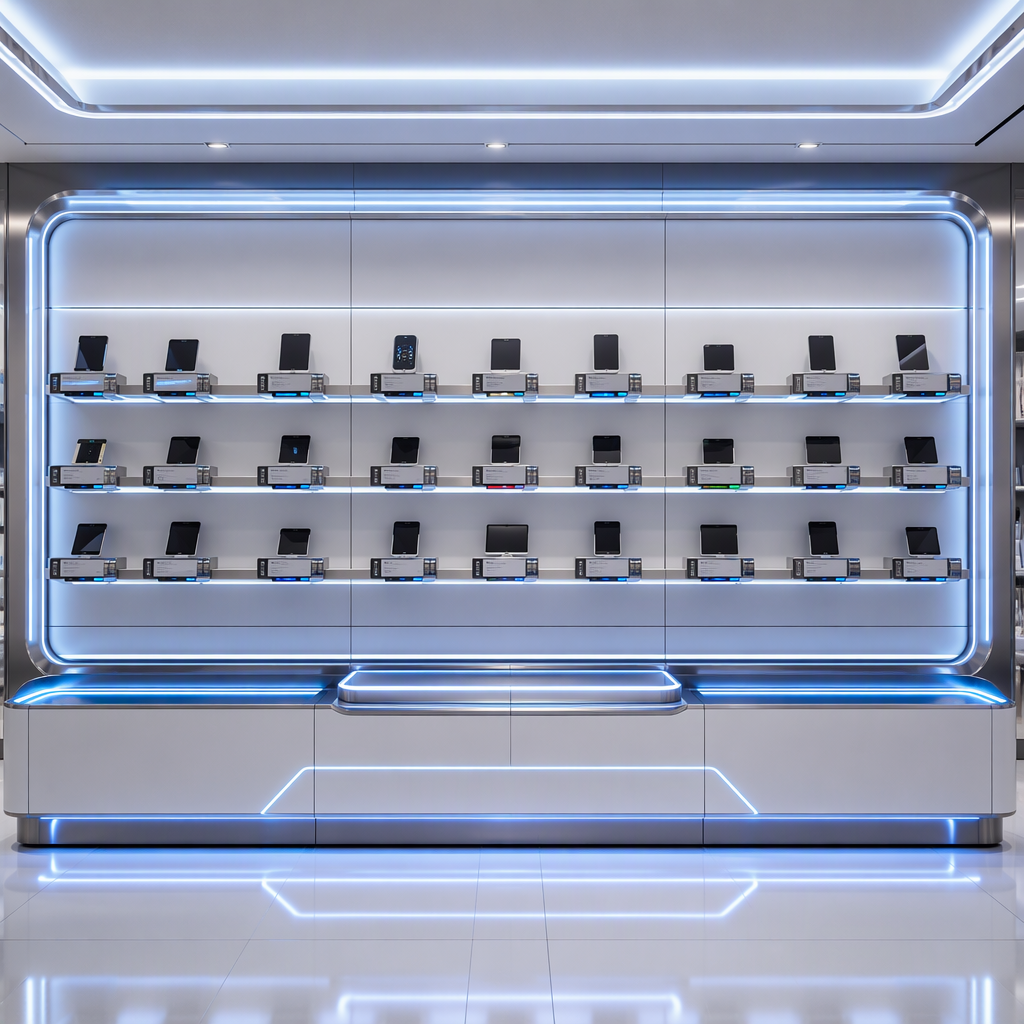
Rather than treating every digital tag as an independent product, retailers can plan a coordinated system of screens, mounting rails, clips, brackets and shelf components. When product categories change, the mechanical structure can be adjusted without rebuilding an entire aisle.
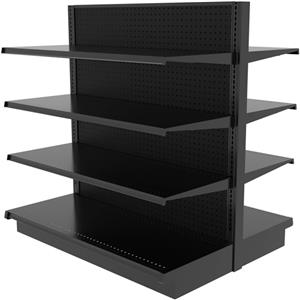
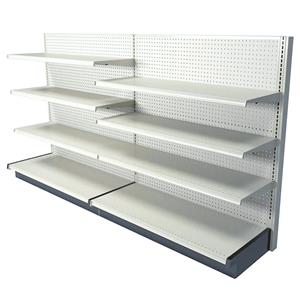
A grocery department may need frequent changes in product width and shelf spacing. A pharmacy may prioritize visibility and compact mounting. A hardware store may require stronger brackets and more durable materials.
One fixed mounting design rarely serves all three environments equally well.
Retail buyers should therefore evaluate the shelf structure and electronic component as one coordinated installation, even when separate manufacturers supply them.

2. What Makes Modular Electronic Shelf Labels Different?
The word modular is frequently used in product descriptions, but buyers should ask what it actually means.
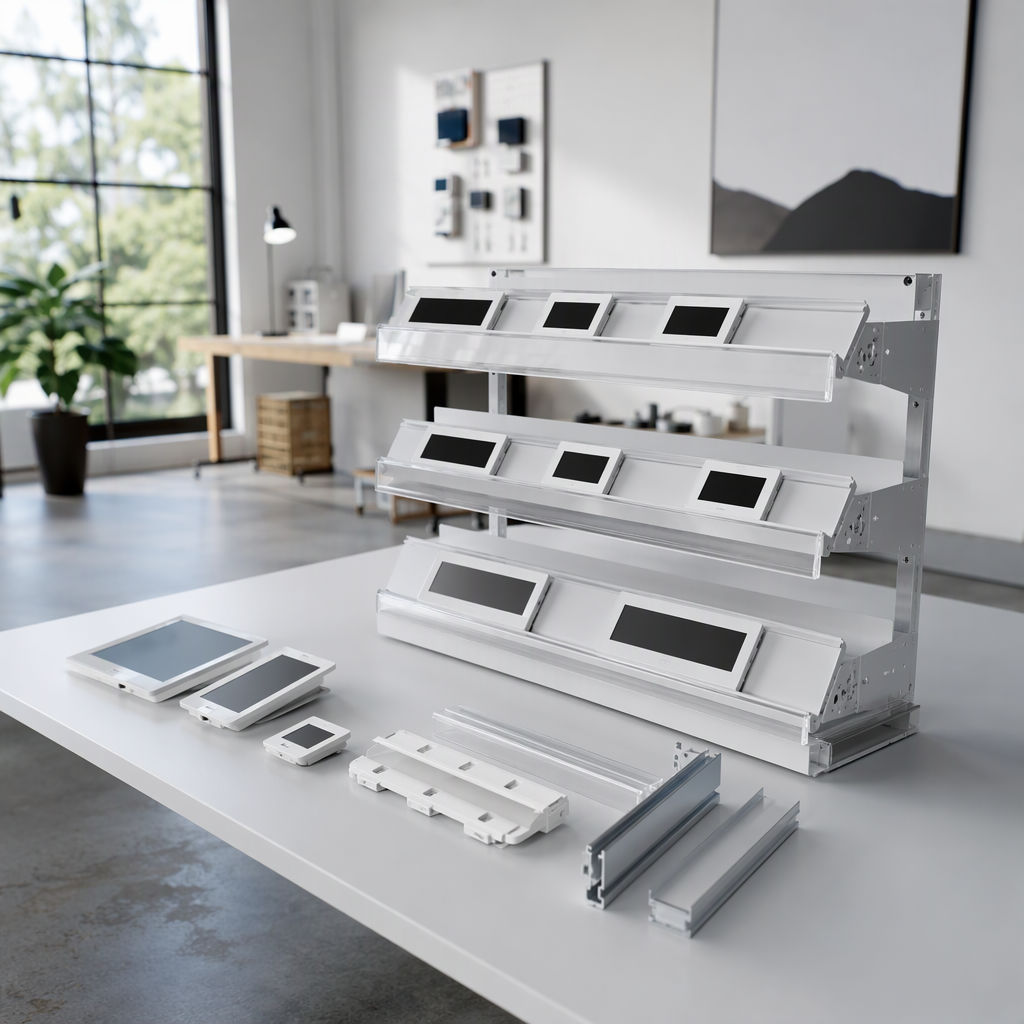
A genuinely modular system separates its main components into replaceable or interchangeable parts. These may include:
Electronic display modules in different screen sizes.
Standard or customized mounting rails.
Removable clips and brackets.
Protective covers and edge guards.
Adjustable positioning accessories.
Wireless gateways and communication equipment.
Software connections and product-data interfaces.
The benefit is not simply that the parts can be separated. The benefit is that one component can be replaced, repositioned or upgraded without requiring a complete system replacement.
Consider a supermarket renovating its beverage department. The retailer may change shelf heights, introduce wider promotional packs or increase the number of product facings.
With a fixed installation, every change may require new brackets or additional labor. A modular mounting arrangement can make these adjustments easier, provided that the replacement components remain compatible with the original system.
This is the practical value of an Electronic Shelf Label Modular architecture: the installation can respond to changes in store merchandising rather than forcing the retailer to preserve an outdated shelf layout.
But modularity must be specified carefully.
A buyer should request dimensional drawings, rail profiles, attachment methods, material specifications and compatibility information. The supplier should explain whether different label sizes share the same mounting interface.
A modular product that requires a different proprietary bracket for every screen size may create more inventory problems than it solves.
There is also an important distinction between electronic and mechanical modularity.
The display module handles information and communication. The mechanical structure handles physical attachment, positioning, protection and replacement.
These functions should be coordinated, but they do not necessarily need to come from the same manufacturer. An ESL technology provider may supply the screen and wireless system, while a retail fixture manufacturer produces the metal rails, brackets and display structures.
Clear responsibility prevents technical misunderstandings during installation.

3. How Can Adjustable Shelf Labels Reduce Store Maintenance Costs?
Retail shelves are rarely static.
Promotional campaigns change product positions. Seasonal merchandise requires different shelf spacing. New packaging dimensions create unexpected fitting problems. Store employees must make these adjustments without disrupting normal operations.
An Adjustable Electronic Shelf Label system should therefore be evaluated according to how easily staff can reposition, remove and reinstall its components.
Three mechanical considerations deserve attention.
First, mounting flexibility.
A label should remain visible without interfering with product access. Adjustable clips, sliding rails and angle-changing brackets can help accommodate different shelf profiles and viewing positions.
However, adjustment must not compromise stability. A loose label can become a maintenance issue, while an excessively tight mounting mechanism can make routine replacement difficult.
Second, compatibility with different shelf materials.
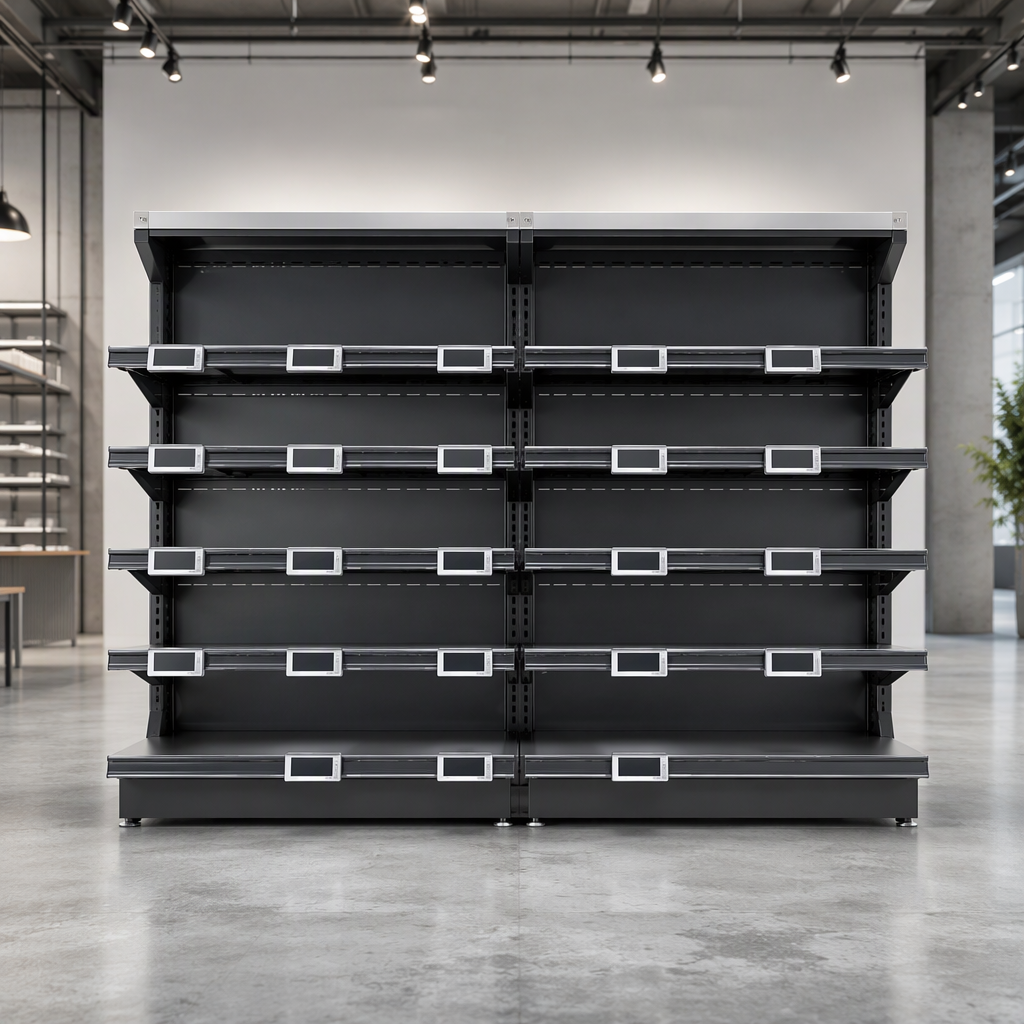
Metal gondolas, wooden retail displays, acrylic structures and warehouse shelving have different attachment requirements.
Retailers should test whether the proposed mounting system can work with their existing fixtures. Where direct compatibility is not possible, a custom adapter may be more economical than replacing the entire shelf.
Third, maintenance and replacement time.
A good system should allow trained employees to replace a damaged label or mounting accessory without dismantling a complete shelf section.
The supplier should demonstrate the removal process using a production-quality sample, not simply describe it in a catalogue.
The economics are worth calculating.
Suppose a retailer operates 100 stores and changes its promotional shelf layouts several times a year. Even a small reduction in installation time per shelf can create meaningful labor savings.
But buyers should not accept a supplier's savings estimate without testing it. Record the time needed to install, reposition and replace components during a pilot program.
A modular system should also support spare-part planning. Standardized clips, rails and brackets can reduce the number of unique components that distributors need to keep in stock.
For importers and wholesalers, this can make a modular electronic shelf label program easier to manage over multiple purchase cycles.
The real performance measure is not the number of adjustable features. It is the reduction in total installation, maintenance and replacement costs.
4. What Do European Heatwaves and Retail Footfall Tell Us About Fixture Design?
Physical retail continues to face environmental and commercial pressure.
BBC Weather reported on September 5, 2026, that temperatures in parts of France and Spain had exceeded 40°C. El Granado in southwestern Spain recorded 45.7°C on September 3, the highest temperature recorded in Spain that year at the time of the report.
BBC Weather
For retailers, extreme temperatures create practical questions about store operations, product presentation and equipment durability.
Electronic shelf labels installed near refrigerated products face different conditions from labels used in ordinary dry-goods aisles. Temperature changes, condensation, cleaning procedures and repeated handling should all be considered during product selection.
A supplier should provide documented operating-temperature specifications and relevant environmental test results. Buyers should not assume that every electronic display is suitable for refrigerated or high-humidity environments.
The physical mounting structure also matters.
Metal brackets need suitable corrosion protection. Plastic components should be selected according to their intended temperature and impact conditions. Protective covers should not obstruct screen visibility or make replacement unnecessarily difficult.
Retail performance data offer another perspective.
The British Retail Consortium reported that UK retail footfall declined by 2.9% year over year in September 2026. High Street footfall fell 3.0%, retail parks declined 1.7%, and shopping centres declined 3.5%. BRC commentary pointed to economic pressures and cautious consumer spending rather than attributing the weak performance mainly to warm weather.
These are UK figures, not U.S. measurements. Their relevance lies in the broader commercial challenge: retailers need physical stores to convert visits into purchases while controlling operating costs.
That makes fixture adaptability more than an aesthetic preference.
A store that can change promotional displays, adjust shelf configurations and update product information without major reconstruction has more flexibility when consumer demand changes.
Progressive Grocer reported on August 13, 2026, that U.S. grocery retailers were showing greater interest in flexible, modular fixture systems as product assortments changed and remodeling budgets faced pressure. Its coverage specifically connected flexible fixturing with the growing use of electronic shelf labels.
Progressive Grocer
For display manufacturers, this creates a clear product opportunity.
The mechanical system surrounding a digital label should be designed for repeated adjustment, straightforward replacement and compatibility with different merchandising formats.
A screen may attract attention, but the fixture determines whether the installation remains practical after the first store reset.
5. How Should Retail Buyers Select a Reliable Modular ESL Supplier?
The supplier decision should begin with the complete installation rather than the unit price of the electronic screen.
A buyer comparing quotations should examine hardware compatibility, mechanical durability, technical support, sample quality, replacement parts and long-term availability.
The following comparison provides a practical starting point.
Comparison Table: Retail ESL Installation Models
| Evaluation | Fixed installation | Modular installation | Adjustable installation |
|---|---|---|---|
| Shelf compatibility | Limited | Multiple configurations | Flexible positioning |
| Initial setup | Usually simple | Requires interface planning | Requires adjustment testing |
| Replacement | May need special parts | Interchangeable components | Replaceable fittings |
| Store remodeling | Less flexible | Good adaptability | Good adaptability |
| Spare-parts management | Model-specific | Standardized parts possible | Depends on design |
| Best application | Standard shelves | Multi-format stores | Changing shelf layouts |
The table is a procurement framework, not a claim that every product in a category performs identically.
Buyers should also investigate the wider technology environment.
Reuters reported on November 3, 2026, that U.S. lawmakers had questioned McDonald's leadership about algorithmic pricing recommendations following earlier Reuters reporting on the company's machine-learning pricing tools. This is not an ESL product report, but it illustrates the wider scrutiny surrounding automated pricing decisions.
Reuters
For electronic shelf label projects, that means retailers should establish clear approval permissions, price-update records and a reliable link between shelf prices and checkout systems.
A supplier's responsibility should also be defined precisely. A fixture manufacturer should not be expected to guarantee proprietary wireless communication or pricing software unless those functions are explicitly included in its contract.
Xiamen Sintop Display Fixtures Co., Ltd. offers a relevant manufacturing perspective.
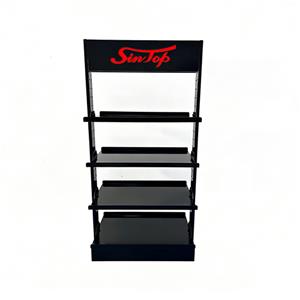
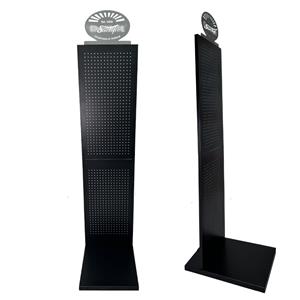
Sintop describes itself as one of China's earliest display-rack suppliers. Its product range includes metal display racks, warehouse shelving, retail end caps, tool racks and custom display stands.
Its manufacturing experience in metal and wood fabrication, OEM/ODM development, custom design and rapid prototyping can support the physical infrastructure required for retail technology installations.
For an ESL project, this may include:
Custom metal mounting brackets and rails.
Shelf-edge support structures.
Protective display components.
Customized retail display fixtures.
Prototype development and sample testing.
Export packaging for international distribution.
Sintop's role should be distinguished from that of a specialist ESL electronics manufacturer. Screens, wireless communication and management software require the appropriate technology partner.
This division of work allows retailers to source the electronic and mechanical elements from suppliers with the relevant expertise.
Before placing a production order, buyers should request engineering drawings, sample approval, material specifications, load testing where applicable, packaging details and a written quality-control plan.
The best supplier is not necessarily the one offering the lowest component price. It is the one that can deliver compatible parts consistently, communicate clearly and support future store changes.
The commercial conclusion: Retailers should stop thinking of digital shelf labels as isolated screens. The stronger long-term investment is a coordinated shelf system that can accommodate new products, changing layouts and future technology upgrades without repeated reconstruction.
FAQ – Frequently Asked Questions
1. What is a modular electronic shelf label system?
It is a digital shelf-label installation made from interchangeable components, such as electronic displays, mounting rails, clips and brackets. The design allows selected parts to be replaced or repositioned without rebuilding the entire shelf system.
2. Can electronic shelf labels fit existing retail shelving?
Yes, provided the mounting interface is compatible. Buyers should measure shelf-edge profiles and test clips, rails and adapters against actual production fixtures before ordering.
3. What is the difference between modular and adjustable shelf labels?
Modular design focuses on interchangeable components. Adjustable design focuses on changing the position, angle or mounting location of a label. A product can offer both features, but they should be tested separately.
4. Are modular shelf labels suitable for supermarkets?
Yes. They can support changing product assortments, promotional displays and different shelf configurations. Refrigerated departments require additional checks for temperature, humidity and condensation resistance.
5. What should distributors check before purchasing?
Check screen compatibility, mounting dimensions, spare-part availability, product warranties, packaging, production lead times and the division of responsibility between the electronic supplier and fixture manufacturer.
6. Can Sintop manufacture custom ESL mounting brackets?
Sintop's display-fixture manufacturing capabilities can support custom metal brackets, rails and related display structures. Electronic modules, wireless communication and software should be confirmed with a specialist ESL technology supplier.
Sintop Value
Sintop supports retail technology installations with customized metal mounting brackets, shelf-edge rails, protective components and retail display structures. With in-house metal and wood fabrication, OEM/ODM development and prototype capabilities, Sintop helps retailers and ESL technology providers develop practical, compatible fixture solutions.

Contact information
Website: www.sintopfixtures.com
Wechat/WhatsApp: +86 15980885084
Email: elly@xm-sintop.com
FAQ
1. What types of display racks can Sintop provide?
We offer a wide range of custom retail display racks, including metal display racks, wooden display stands, Gondola shelving, grid panels, and mixed-material solutions, tailored to your store layout and brand identity.
2. Can I order a single unit or prototype?
Yes, no minimum order is required. We can produce prototypes or single units as well as large-volume orders.
3. How long does it take to receive an order?
New items: 3–5 weeks for tooling and production.
Reorders: 2–4 weeks depending on product type.
We are flexible and strive to meet your required delivery dates.
4. Can Sintop handle OEM or ODM projects?
Yes, we specialize in OEM and ODM solutions, turning your ideas or drawings into custom, high-quality display racks.
5. How does Sintop ensure quality?
Every display rack undergoes material inspection, welding and structural checks, surface finish testing, and final assembly inspection to ensure durability, safety, and visual appeal.