

How Do Custom Shoe Display Stands Support Retail?
What Is Driving U.S. Retail Display Demand in September 2026?
U.S. retail is not entering September 2026 with a simple boom-or-bust story. August retail sales rose 1.2% month on month, according to Reuters, the strongest monthly increase since March. Core retail sales rose 1.4%. Yet import prices climbed 0.7% in August and were 7.0% higher than a year earlier, while inflation-adjusted earnings had fallen for a fifth straight month. The result is a retail environment where customers are still buying, but operators have stronger reasons to watch every square foot and every capital dollar.
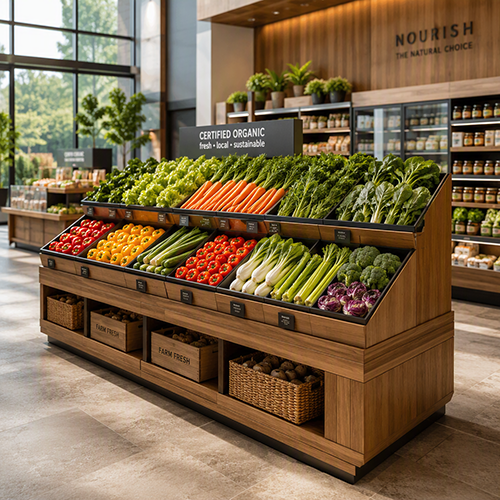
Kroger provides a useful category-level signal. Reuters reported on September 11 that its comparable sales rose only 0.2%, down from 3.4% a year earlier, and the company reduced its full-year identical-sales forecast excluding fuel to 0.2%–0.8%. That does not mean grocery demand has disappeared. It means value, convenience and execution matter more when shoppers become selective. A produce area that communicates freshness quickly, for example, has a different job from a passive shelving bay.
The same logic applies to footwear. Reuters reported that U.S. work-boot demand has benefited from construction linked to data-center investment, with Boot Barn and Brunt Workwear seeing stronger bulk demand from infrastructure projects. This is a useful reminder that retail fixtures must follow actual product missions rather than generic store aesthetics. A shoe department may need flexible platforms, size communication, strong product angles and quick reconfiguration rather than a permanent one-style installation.
BBC World Service also highlighted U.S. cost-of-living pressure in its August 12 World Business Report episode, reporting July U.S. inflation at 3.4% year over year and noting continued consumer price awareness. The episode included an Indiana retailer discussing pressure from tariffs, freight and energy costs. The BBC report is not a fixture study, but it reinforces the commercial context: retailers are being asked to do more with capital that is under pressure.
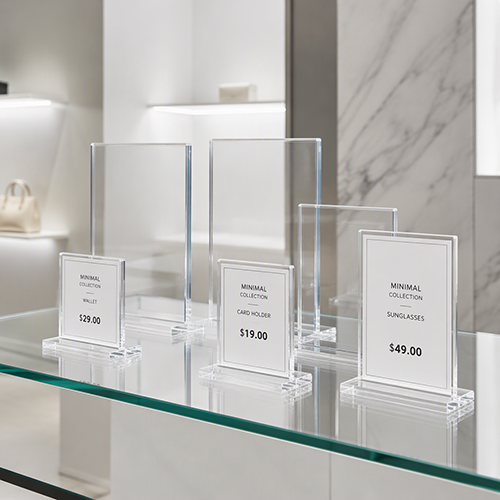
Why Grocery Fixtures Need to Work Harder in Hotter Conditions
The European heatwave is relevant even for U.S. retail buyers because it exposes an operational issue that can travel through global sourcing, energy and logistics: extreme weather changes how people shop and how stores operate. Reuters reported in September that Europe had experienced severe droughts, heatwaves and wildfires during summer 2026, with the EU preparing a climate insurance alliance because only about 25% of climate-related economic losses are insured. Reuters also reported that France recorded at least 817 excess deaths during the July 27–August 20 heatwave period.
The BRC data shows the retail behavior side. Its June monitor reported total UK retail sales up 1.9% year over year, while food sales rose 2.8%. At the same time, BRC-Sensormatic data showed UK footfall down 3.4% in June. The July footfall report showed total footfall down 2.1%, with high-street footfall down 3.8%. August retail sales then grew only 0.7%, while food sales increased 2.6%. These are UK figures, not U.S. measurements, but they offer a useful retail-design lesson: hot weather can reduce physical traffic while shoppers still need food and essential goods.
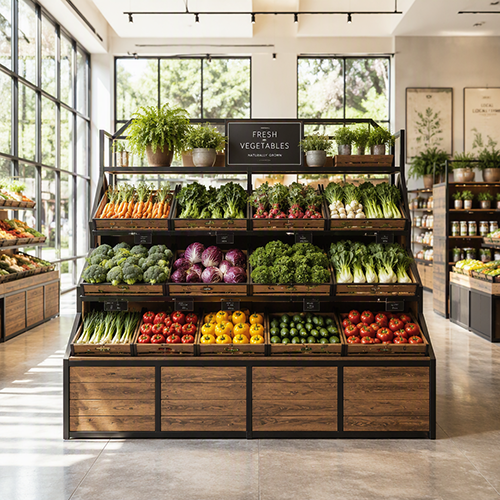
That is why a grocery store vegetable display stand should be designed around access, replenishment, visibility and cleaning rather than decoration alone. Produce fixtures face moisture, frequent handling, heavy replenishment and changing seasonal assortments. A good design can support open sightlines, usable shelf depth, stable product presentation and fast maintenance. For U.S. supermarket chains, the real question is not whether a fixture looks attractive in a rendering; it is whether store staff can reset it quickly at 7 a.m. on a busy delivery day.
For export buyers, material selection also matters. Powder-coated steel can provide a durable structural frame, while wood, acrylic or other materials can be added where the merchandising brief calls for a warmer or more premium appearance. The right specification depends on load, cleaning routines, corrosion exposure, packaging, store format and target landed cost.
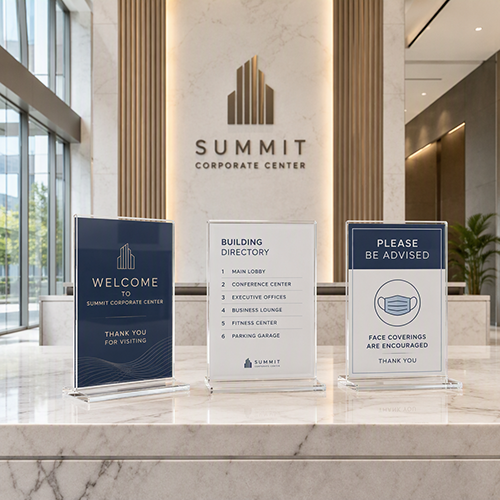
Why Shoe Merchandising Is Moving Toward Flexible Fixtures
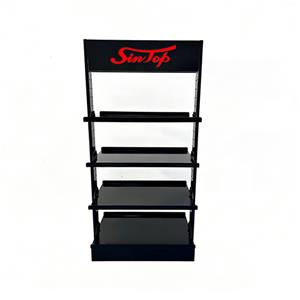
Footwear is a high-information category. Customers need to see the product, understand the size range, compare colors and often connect the physical product with digital information. A custom shoe display stand for retail therefore needs more than a platform. It needs a merchandising system that can accommodate different shoe silhouettes, seasonal collections and promotional messages without requiring a complete rebuild.
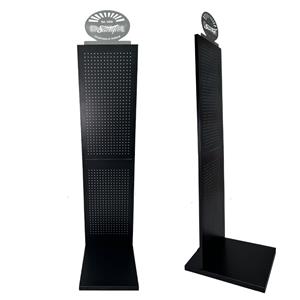
This is where modular construction becomes commercially useful. Adjustable shelves, removable hooks, interchangeable graphic panels and repeatable connection points allow retailers to refresh a department while keeping the core structure. The same fixture family can support running shoes, casual footwear, work boots or seasonal products with controlled changes in accessories.
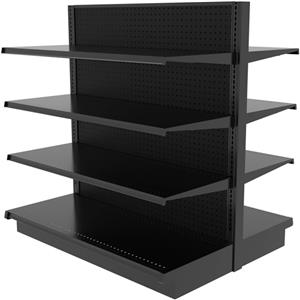
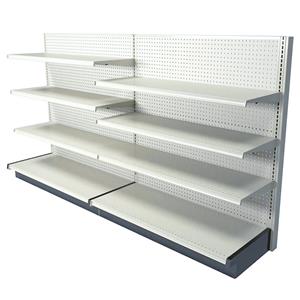
The business case is stronger when store networks are involved. A retailer or fixture distributor may need hundreds of units, several store sizes and multiple packaging configurations. Standardized components can reduce engineering repetition and simplify replacement parts. At the same time, custom dimensions can solve problems created by existing wall bays, aisle widths or brand guidelines.
A custom shoe display stand for retail should also be tested from the shopper's eye level. Toe shape, heel height, color contrast and pair orientation affect what is noticed first. Lighting, signage and product spacing can then support the fixture rather than fight it. The objective is a clear buying path, not a crowded wall of products.
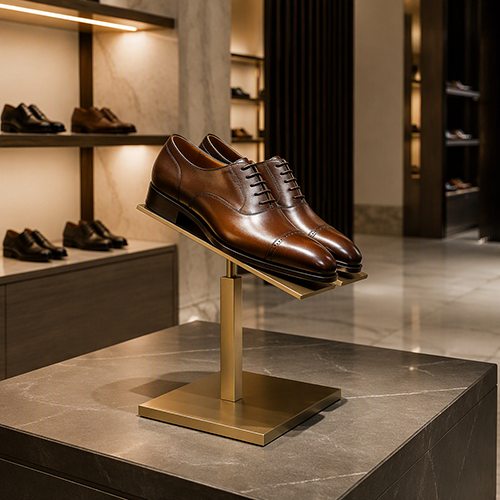
Why Acrylic Signage Still Matters in a Digital Retail World
Digital screens have become common in modern stores, but printed communication has not disappeared. In many categories, a simple price, size, promotion, product benefit or directional message is faster to read than a screen. Acrylic remains useful because it can create a clean holder for paper inserts, cards and small promotional graphics without adding much visual weight.
For distributors and multi-store buyers, acrylic sign holders wholesale programs can be attractive when the same holder format is used across several fixture families. Standard sizes can simplify purchasing and replacement, while custom cuts or mounting methods can support specific merchandising plans. The practical question is not whether acrylic is fashionable. It is whether the sign holder can survive repeated handling, cleaning and graphic changes at a reasonable unit cost.
This also connects to store labor. If employees can replace a printed insert in seconds without tools, a retailer can update price or promotional information more frequently. For seasonal programs, that can be more efficient than sending a new complete fixture. The best signage system is often the one that disappears into the merchandising structure while making the information obvious.
For buyers comparing acrylic sign holders wholesalesuppliers, specifications should include thickness, edge finish, insert size, mounting method, packaging protection, tolerance and replacement availability. These details matter when a distributor is managing thousands of pieces rather than a small pilot order.
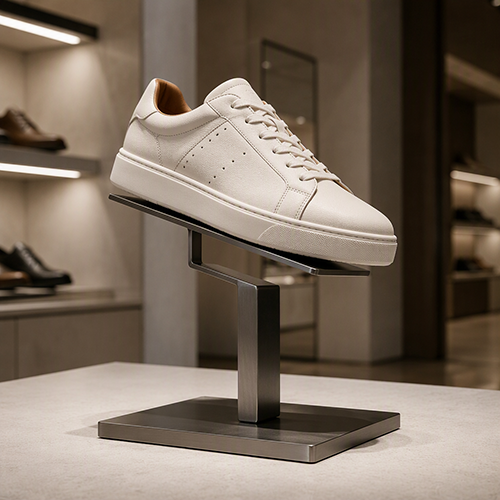
What Should Buyers Ask a Display Manufacturer in 2026?
A serious RFQ should begin with the store problem, not only a product name. Ask for load requirements, dimensions, finish, expected annual volume, store count, packaging method, target delivery schedule and whether the design must be flat-packed. Then ask how the supplier handles engineering revisions, sample approval, quality inspection and replacement components.
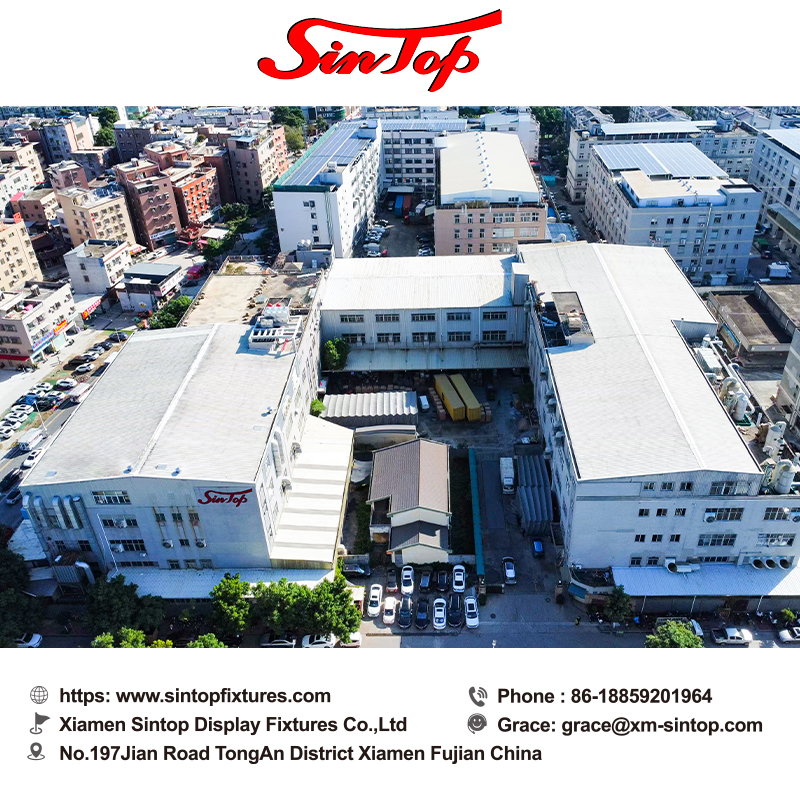
Xiamen Sintop Display Fixtures Co.,Ltd positions itself as one of China's earliest display-rack suppliers, serving retail display, shelving and custom fixture projects from Xiamen, Fujian. Its stated capabilities include OEM/ODM development, custom design, rapid prototyping, metal and wood production, powder coating, welding, packing and shipment coordination. The company reports 300 workers, 20,000 square meters, six production lines and capacity of about 80 containers per month in its current sales profile.
For buyers, the useful point is not the size of the factory by itself. It is the ability to connect engineering, sampling, production and packaging under one project process. Sintop states that samples can be developed in 5–7 days, standard orders can run on roughly 25–30 day schedules, and its team can provide structural improvement suggestions. Those claims should still be checked against the specific RFQ, but they are the type of operational detail that belongs in a serious supplier comparison.
Suggested internal links for the Sintop website include a Retail Display Racks page, a Custom Display Fixtures page, a Metal & Wood Display Solutions page, a Store Fixtures page and a Contact/Request a Quote page. Internal links should be placed where the reader naturally needs more specification detail, rather than repeated mechanically.
Comparison Table: Fixture Priorities by Retail Need
| Retail Need | Primary Fixture | Buyer Priority | Typical Update |
|---|---|---|---|
| Fresh produce | Grocery produce fixture | Cleanability, access,   replenishment | Seasonal assortment |
| Footwear | Modular shoe fixture | Flexibility, visibility, product   spacing | Collection / promotion |
| POS communication | Acrylic sign system | Fast graphic replacement,   durability | Price / promotion |
FAQ
What should a grocery store vegetable display stand prioritize?
It should prioritize easy replenishment, cleaning, stable product placement, shopper access and visibility. Material and finish should match the store's moisture, load and maintenance conditions.
Why use a custom shoe display stand for retail?
A custom fixture can match the store bay, product dimensions, brand rules and merchandising plan. Modular accessories can also make seasonal resets easier.
When does acrylic signage make sense?
Acrylic works well when retailers need lightweight, replaceable printed communication for prices, promotions, product information or wayfinding.
What should buyers request from a display fixture supplier?
Request drawings, material specifications, load data, finish samples, packaging details, prototype timing, production timing, inspection standards and replacement-part support.
Can Sintop handle OEM and ODM display projects?
Sintop states that it supports OEM/ODM development, custom design, rapid prototyping, metal and wood production, finishing and shipment coordination. Buyers should confirm project-specific scope during the RFQ process.
Sintop Value
Sintop combines metal, wood and acrylic manufacturing with engineering, prototyping and mass production. We develop customized retail fixtures that support flexible merchandising, consistent production and practical packaging for multi-store projects.

Contact information
Website: www.sintopfixtures.com
Wechat/WhatsApp: +86 15980885084
Email: elly@xm-sintop.com
FAQ
1. What types of display racks can Sintop provide?
We offer a wide range of custom retail display racks, including metal display racks, wooden display stands, Gondola shelving, grid panels, and mixed-material solutions, tailored to your store layout and brand identity.
2. Can I order a single unit or prototype?
Yes, no minimum order is required. We can produce prototypes or single units as well as large-volume orders.
3. How long does it take to receive an order?
New items: 3–5 weeks for tooling and production.
Reorders: 2–4 weeks depending on product type.
We are flexible and strive to meet your required delivery dates.
4. Can Sintop handle OEM or ODM projects?
Yes, we specialize in OEM and ODM solutions, turning your ideas or drawings into custom, high-quality display racks.
5. How does Sintop ensure quality?
Every display rack undergoes material inspection, welding and structural checks, surface finish testing, and final assembly inspection to ensure durability, safety, and visual appeal.