

How Do Buyers Verify Gondola Shelving Specifications?
What September 2026 Retail Signals Mean for Fixture Buyers
Reuters reported on 16 September that US retail sales rebounded sharply in August, rising 1.2 percent month on month and 6.0 percent year on year. Those figures are not adjusted for inflation, so part of the increase reflects price rather than extra volume.
Sentiment moved the other way. Reuters reported on 11 September that the University of Michigan index fell to 47.8 from 51.7, with one-year inflation expectations climbing to 4.6 percent from 4.0 percent. The British Retail Consortium said on 8 September that UK total sales grew 0.7 percent, food 2.6 percent and non-food slipped 0.8 percent.
Read together, the three signals describe a market where shoppers keep spending while worrying about price. Store groups approve fewer new programmes and question each one harder. Google News brought these retail procurement themes together in the same window; it is a discovery route for editors' coverage, not a measure of how often buyers search, so no popularity or ranking claim is attached to it.
The retail frame here is anchored by the Reuters reporting of September 2026 rather than by a search trend. The buyer's question is narrower: which shelving system can be verified, and how is that verification written into a purchase order?
Three buying intents sit behind that question, and they should stay separate. A gondola shelving project turns on layout and part compatibility. A supermarket shelving brief turns on range, replenishment and shelf-edge information. A programme built from store shelving units turns on format, fixing, load and the cost of later change. Answering all three with one piece of marketing copy is how poor orders get placed.
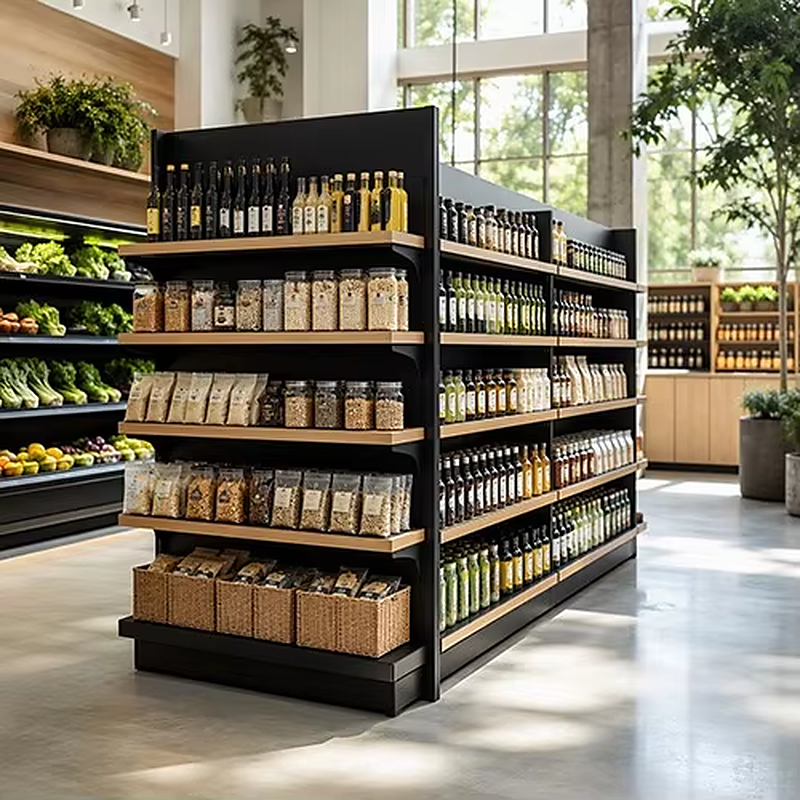
Gondola Runs: Single-Sided, Double-Sided and Shared Parts
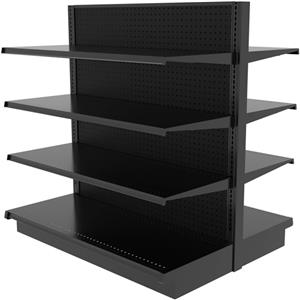
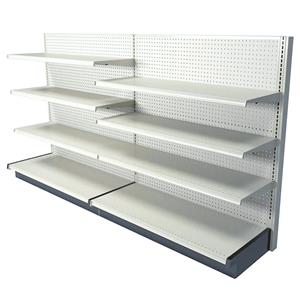
A gondola run starts with the configuration, not the price list. Double-sided runs face two aisles and hold central stock in grocery, convenience and discount formats; single-sided runs stand against a wall and release floor space in smaller rooms. Settle that mix first, because bases, back panels, end panels and top rails differ between the two.
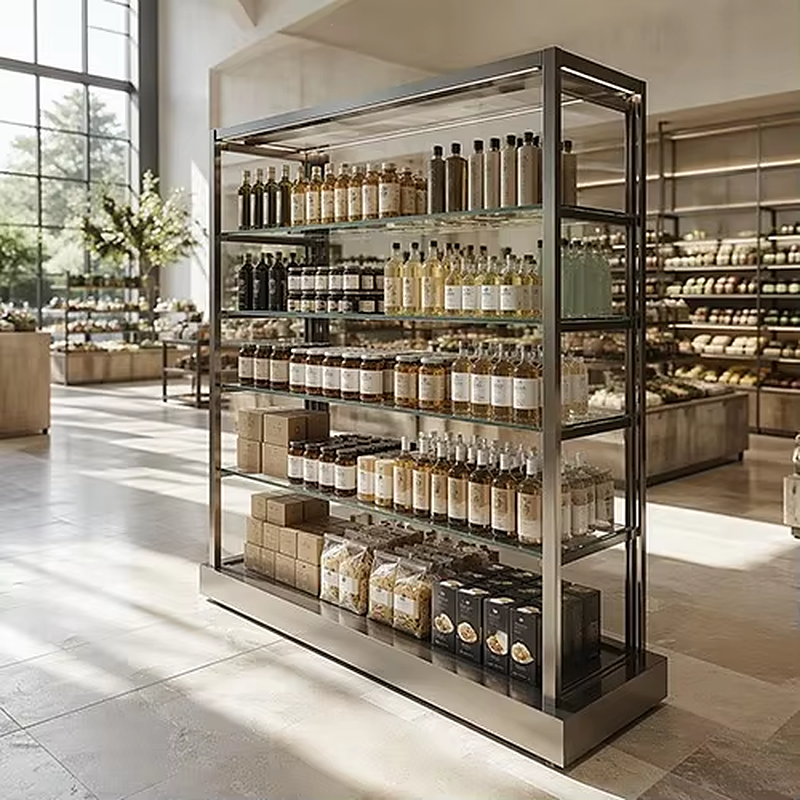
Component fit is where competing quotations separate. In a gondola shelving quotation, ask whether uprights, brackets, base plinths, dividers and price rails are shared through the range, and whether a second order placed a year later will still accept the first order's brackets. Changing supplier mid-programme normally means new brackets and new shelf-edge mouldings, and that cost belongs in the comparison.
Numbers on the drawing should match numbers on the floor: shelf width and depth in millimetres, usable depth once the price rail is fitted, upright pitch, shelf levels, back-panel thickness and the fixing detail for each end bay. Load should be stated for a fully merchandised shelf rather than an empty one, with the accepted margin written down.
End bay treatment shapes cost as well. An end bay carrying a promotional display needs its own load figure, its own fixing and a top rail that tolerates weight, so it is worth pricing apart from the linear run.
For gondola shelving, service life is decided by small parts. A bracket that works loose, a plinth that cannot be re-levelled on a sloping floor, or a top rail that cracks under a heavy end display reaches store staff as a complaint long before the frames look worn. Accessories deserve the same written list: dividers, pusher systems, sign holders, hooks and shelf-edge strips, each rated for the shelf it sits on, with spare brackets shipped in the first container. Confirm that the shelf-edge profile is identical on every level, because a mixed profile lets printed labels drop out.
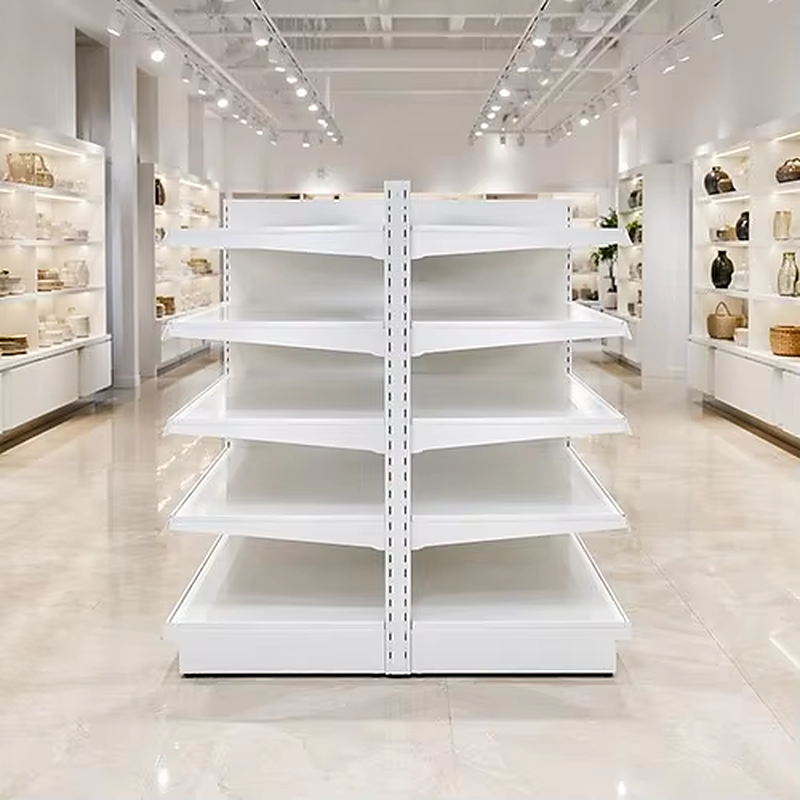
Supermarket Bays: Range, Replenishment and Price Information
A supermarket bay carries a category rather than a single product line, so the range plan comes before the frame. How many SKUs sit in a bay, which pack is tallest and heaviest, whether the run is frozen, chilled or ambient, and how much depth each facing needs: those four answers set bay width, shelf pitch and shelf depth.
Boundaries matter as well. A supermarket bay often stands beside refrigeration, so the brief should state the temperature the fixture meets at the aisle edge and confirm that the finish and shelf surface are specified for that band. Anything beyond it needs a different specification from the supplier.
Most stores replenish during trading hours, so the route should be tested on paper. Can one person wheel a cage to the bay and refill it without blocking the aisle? Is the top shelf easy to reach with a standard step? Does the shelf above let a pack be lifted clear of the price rail without catching it?
For supermarket shelving, price information belongs to the fixture rather than to a separate project. Decide whether labels sit in a moulding, on a rail or on electronic shelf labels, then check that a label stays legible after a full refill and that a printed strip can be replaced after a category reset.
Cleaning and aisle width are recurring costs. Ask whether the surface finish tolerates the sanitiser the store already uses, whether the base can be swept under without moving the unit, and whether bay depth plus the customer path leaves room for a trolley and a wheelchair to pass together. For a supermarket shelving programme, a change of cleaning chemical is a specification question rather than a housekeeping detail.
Also fix the commercial line: SKUs per shelf, the shelf load figure, the facings the planogram needs, and who replaces printed strips after a reset.
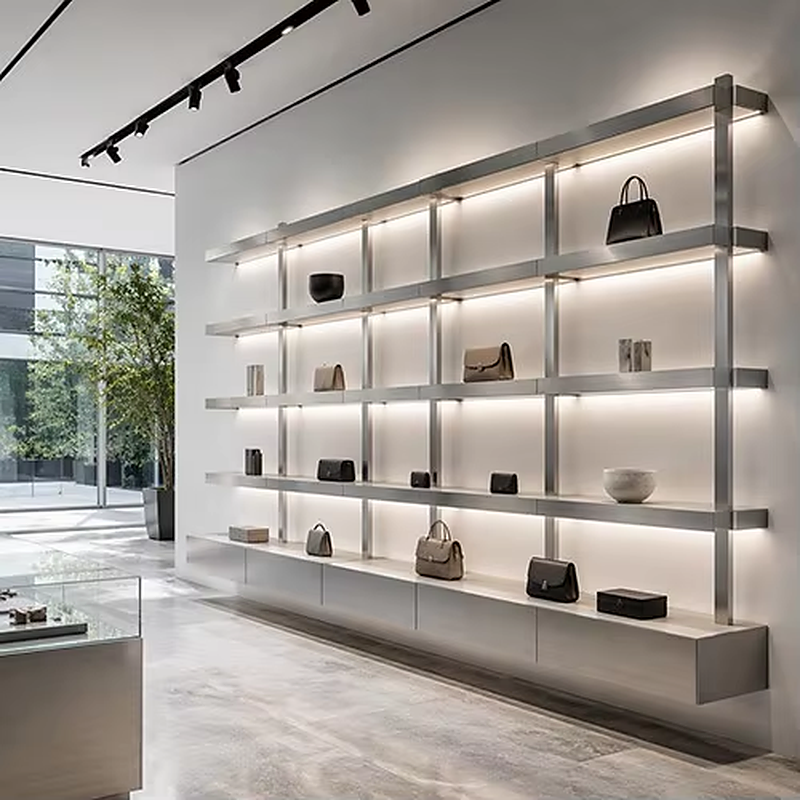
Store Formats Decide Fixing, Load and Delivery
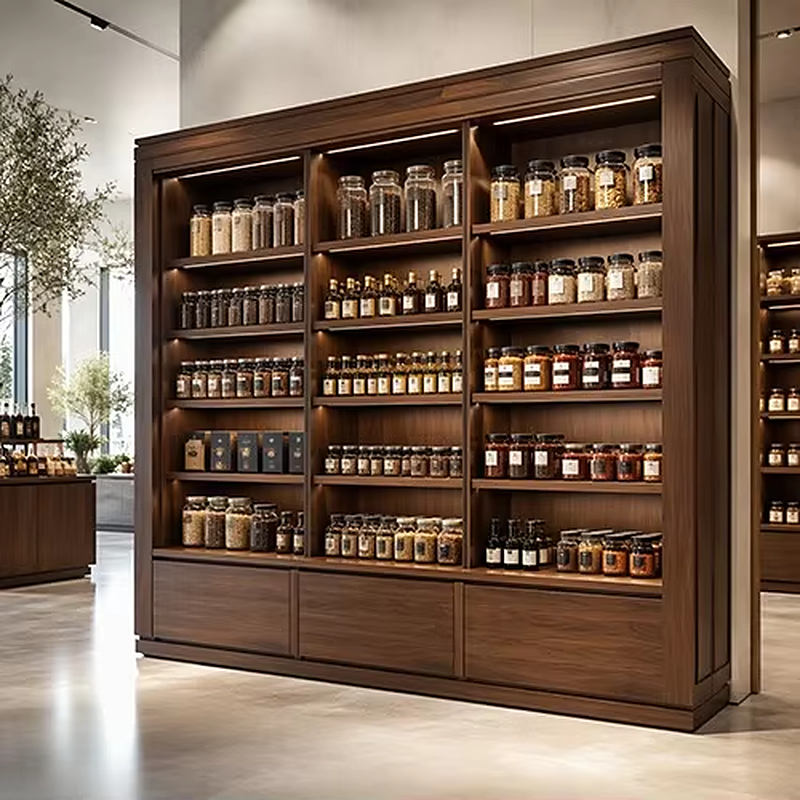
Store shelving units are chosen format by format. A convenience store, a pharmacy, a discount food store and a large supermarket each load their fixtures differently, and a unit that suits one format can be wrong in the next, so list the formats before comparing suppliers.
Fixing comes next. Wall runs need a wall-fixing detail; free-standing runs need a base or levelling foot; tall back-to-back runs need an anti-tip device or a top tie. Request the detail for each format, and confirm the supplier's assumptions about wall type, floor flatness and local safety rules; a detail that presumes a flat wall on a bowed one becomes a site problem.
Load follows the format and the pack. A discount food store may place heavier packaging on a short shelf, while a pharmacy may need shallower shelves holding many small lines. For store shelving units, ask for one load figure per configuration, covering shelf, bracket and complete unit, and carry those figures into the purchase order.
Change should be designed in. Ask how a unit is extended, shortened, re-pitched or re-signed, and which connector and end-of-run detail is used, so a second store can be fitted from the same parts. Replacement components matter for the same reason: brackets, mouldings and levelling feet wear out, and a programme that can reorder them years later costs less to run. Delivery and installation belong in the same conversation, covering carton or crate plan, pallet pattern, assembly time per unit, the tools the store needs and the spare parts shipped with the first order.
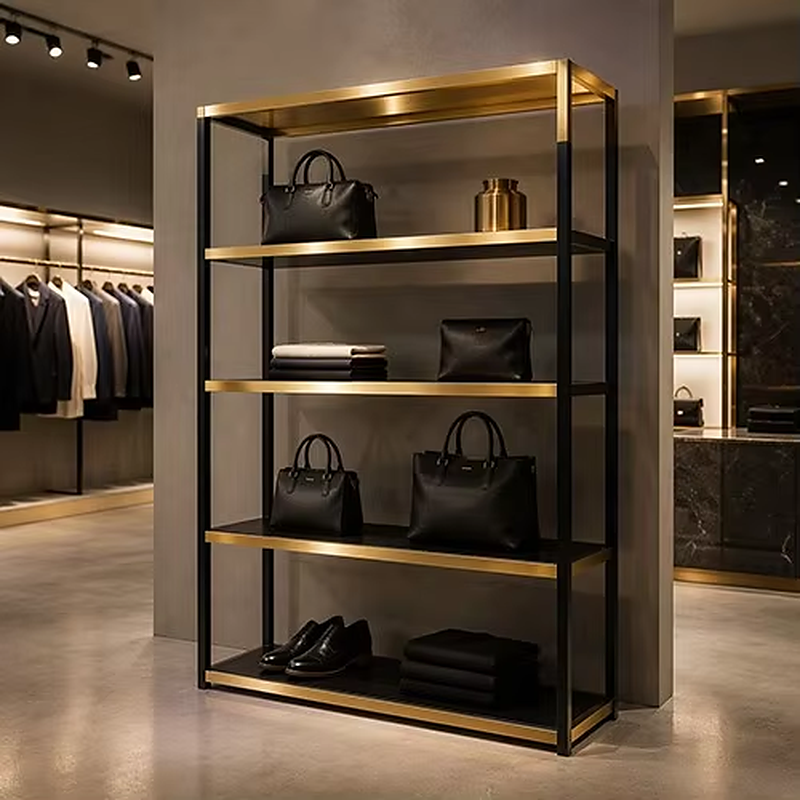
Cost, Acceptance and a Practical Next Step
Compare quotations on total cost rather than unit price: tooling, sample rounds, freight and volume, assembly in store, packaging, spare parts, and the cost of a change order signed after drawings are approved. Ask for each item as a number.
For gondola shelving, the hidden line is usually the accessory list and the second-order parts fit, so request a written parts list plus a statement that the same brackets will be supplied later.
Acceptance should be agreed before production begins: drawing approval, dimensional check points, a finish reference and a retained golden sample held by both sides. Tie that sample to the order so the approved piece, the drawing revision and the finish code appear in the purchase order. For a supermarket shelving order, add the shelf-edge profile and the label holder to that checklist, since staff notice a mismatch there first.
For store shelving units, agree a written inspection plan before shipment: what is measured, at which stage, by whom, and what happens when a batch misses the agreed tolerance. A short plan prevents the argument that starts when a container reaches the dock.
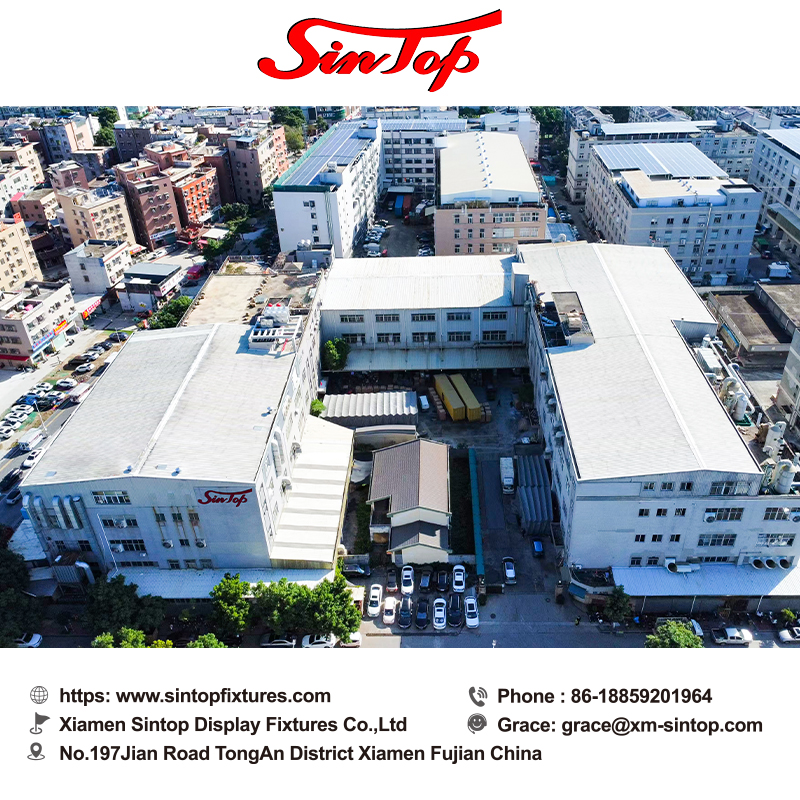
Xiamen Sintop Display Fixtures Co.,Ltd states on its own website that it was founded in 2002 and describes its work as design, prototype, production and shipment. Those are supplier statements about its own operation. Treat them as claims to confirm through drawings, physical samples and acceptance inspection rather than as independent certification, and note that every project is verified at drawing, sample and acceptance stage.
Comparison Table
| Check point | Gondola programme | Supermarket programme | Store unit programme |
|---|---|---|---|
| Configuration mix | Double sided and single sided ratio, end bay, top rail | Bay width, depth and height from the range plan | Format by format layout before supplier choice |
| Parts and compatibility | Uprights, brackets, plinths, dividers, shelf-edge mouldings | Price rail profile, label holders, printed strips | Connector and end-of-run detail for later extension |
| Load figure | Shelf, bracket and total run written into the order | Filled shelf plus margin, not an empty frame | One figure per configuration, shelf and full unit |
| Fixing detail | Levelling foot, floor slope, wall fixing for single sided runs | Base fixing, aisle width, cleaning access | Wall run, free-standing run, anti-tip or top tie |
| Documents to request | Drawings, parts list, accessory rating | Range plan, planogram facings, cleaning agents | Fixing detail, load calculation, delivery plan |
FAQ (AEO)
Does a national sales figure tell a store how many fixtures to order?
No. August sales rose 1.2 percent month on month with no inflation adjustment, and sentiment fell to 47.8. Use the data as context for a buying question, not as a forecast for one category.
Can the three fixture topics be treated as synonyms?
No. A run configuration question, a grocery category question and a multi format delivery question need different answers, different documents and different acceptance points.
Will a new fixture programme raise sales?
No supplier can promise that. Fixtures change capacity, visibility and replenishment speed; sales respond to assortment, price and staffing.
What load should be written into the order?
Start from the heaviest pack you plan to display, multiply by the positions in a bay, then add a margin both sides accept in writing.
How many prototype rounds are needed before mass production?
Usually one or two: a structural prototype that proves the geometry, then a pre-production sample matching the approved drawings and finish.
Sintop Value
Sintop combines in-house metal and wood manufacturing with design, prototyping and production support. We help retail buyers verify fixture dimensions, shelf loads, component compatibility, finish requirements and acceptance criteria before mass production.

Contact information
Website: www.sintopfixtures.com
Wechat/WhatsApp: +86 15980885084
Email: elly@xm-sintop.com
FAQ
1. What types of display racks can Sintop provide?
We offer a wide range of custom retail display racks, including metal display racks, wooden display stands, Gondola shelving, grid panels, and mixed-material solutions, tailored to your store layout and brand identity.
2. Can I order a single unit or prototype?
Yes, no minimum order is required. We can produce prototypes or single units as well as large-volume orders.
3. How long does it take to receive an order?
New items: 3–5 weeks for tooling and production.
Reorders: 2–4 weeks depending on product type.
We are flexible and strive to meet your required delivery dates.
4. Can Sintop handle OEM or ODM projects?
Yes, we specialize in OEM and ODM solutions, turning your ideas or drawings into custom, high-quality display racks.
5. How does Sintop ensure quality?
Every display rack undergoes material inspection, welding and structural checks, surface finish testing, and final assembly inspection to ensure durability, safety, and visual appeal.