

How to Choose a Retail Display Table: A Buyer's Checklist
Reading public retail indicators without over-reading them
A public news feed is useful here only as a topic-discovery entry point. Its leading themes were not specific to store fixtures or tables, so it establishes nothing about popularity, demand or ranking. It is a topic-discovery tool only, never a demand forecast.
Two cited releases matter more as background. The cited retail-sales report describes national spending that rebounded over its own reporting period, higher than the prior reading and higher than a year earlier, not adjusted for inflation. The cited sentiment report describes a survey that weakened over its period, with a lower index reading and a rising one-year inflation expectation. Each is a national picture, and neither is about one store, one aisle or one fixture order.
Overseas numbers add contrast, not proof. The cited retail-consortium report describes total retail sales growing in one market, with food positive and non-food negative. The cited weather observation records an extreme outdoor temperature at one place, and it supports no conclusion about tables, coatings or store conditions. Each source is cited for its own narrow scope.
The facts and the judgement point in different directions. Measured spending improved at the same time as a sentiment survey fell, so the two do not describe one simple story. The judgement here, and not the sources', is that a cautious shopper makes a retailer more careful about what it signs off. No release cited here proves fixture demand, order volume or a sales effect from any table choice.


Planning the central promotional presentation
A retail display table usually anchors a promotional zone, so its position matters as much as its size. Start with the floor plan: the walk-around path should let shoppers circle the table, reach goods from more than one side, and still leave room for a cart or a wheelchair to pass. Measure the narrowest point of the aisle, because the plan will fail there first.
Visibility and replenishment come next. Price cards, SKU labels and campaign signage must stay readable at standing eye level, and the tabletop should not hide the product behind a raised edge. Stock has to travel from a back area to the table without blocking an aisle.
Plan the seasonal reset before the order. A retail display table that is easy to clear, move and re-dress will serve more campaigns than one that must be partly dismantled each time. Decide who resets the zone and how long the changeover takes, then write those answers into the brief.

Separating structure from the decorative face
A wood display table is often chosen for warmth and a premium look, but the specification should separate the structure from the decorative face. The frame or sub-structure carries the load; the visible surface presents the product. Ask for the substrate, the visible face and the edge treatment as separate line items on a drawing.
Edges and light decide how the surface reads. Check how the tabletop edges are finished, because a sharp or fragile edge affects both safety and how long the surface looks presentable. Ask to see a finish sample under the same lighting as the store, at the height the tabletop will sit, since colour and sheen read differently between a showroom and a sales floor.
Cleaning and weight belong in the brief. Confirm which cleaners are compatible with the finish and how spills should be handled, because an unsuitable product can dull the surface. If the table must carry heavy items, review item weight limits and how a damaged area can be refinished so a replacement finish still matches the original.
A wood display table is a material choice, not a performance guarantee, and wood should not be described as heatproof or weatherproof. Record the finish code, the panel build and the edge profile so a unit added in a later phase matches the first delivery, and keep a spare face sample on file.

Joins, load path and transport protection
A metal frame display table depends on its joints and its load path. Ask how the frame members connect, whether fasteners are hidden or serviceable, and how the load travels from the tabletop to the feet. A clean interface is a drawing detail, not a slogan.
Stability and leveling deserve attention. Leveling feet matter on uneven floors, because a table that rocks will be treated as unstable by staff and shoppers alike. Stability should be reviewed with the intended product in place, not in the abstract, and the move-and-rebuild routine should be stated.
Think about transport protection too. A frame that arrives scratched or bent will delay a launch, so agree on packing, corner guards and carton protection before shipment. Clarify the finish boundary, that is, which parts are visible and coated and which are hidden and simply protected. A revision-controlled drawing should carry a number, so the approved and produced versions can be compared.
Keep one file for the project: the approved metal frame display table drawing, the sample sign-off, the packing note and the spare-part list. When a supplier proposes a change, ask for a new drawing number rather than a description, and hold the original as the baseline.

Validating footprint, movement and changeover before you approve
Before approving any retail display table, run a short validation exercise with the store team. Measure the footprint against the real aisle, including clearance for customers and staff, and confirm the merchandising height keeps labels and products inside comfortable sight lines.
Walk the customer movement path at a busy moment and note where people slow down or turn, because a plan that reads well on paper can still fail at the busiest hour. Load the display with the heaviest expected product, then check table stability, edges and leveling feet against the drawing.
Confirm the sample finish under store lighting, agree cleaning instructions and set a replacement finish reference. Test the changeover: how long does it take to clear, move and re-dress the unit between campaigns? Document every answer in an acceptance checklist, because a written standard makes future orders repeatable.
The table below keeps the three query intents apart and lists the evidence to request before an order. It is a briefing aid, not a specification, and it does not replace a drawing, a sample or agreed acceptance criteria.
Comparison table: query intent, what to check, evidence to request
| Query intent | What to check | Evidence to request |
|---|---|---|
| Central promotional presentation | Floor plan and walk-around reach, aisle clearance at the narrowest point, SKU and price visibility, replenishment route, seasonal reset and changeover time | Layout drawing, aisle width, label and price schedule, changeover method, spare-part list |
| Structure and decorative face | Substrate against visible face, tabletop edge treatment, finish sample under store lighting, cleaning products, item weight limits, replacement finish match | Panel build drawing, finish sample, cleaning guidance, weight statement, spare face sample |
| Joins and load path | Frame connections, serviceable fasteners, load path to the feet, leveling feet, stability with the intended product, finish boundary, carton and transport protection, numbered revisions | Interface drawing, join schedule, load per support point, packing note, numbered revision |
A checklist follows from the table: the material build behind any visible face, the load and support, assembly and levelling, delivery and packing, the label system, the changeover method and the spare parts.
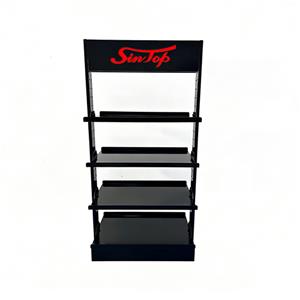
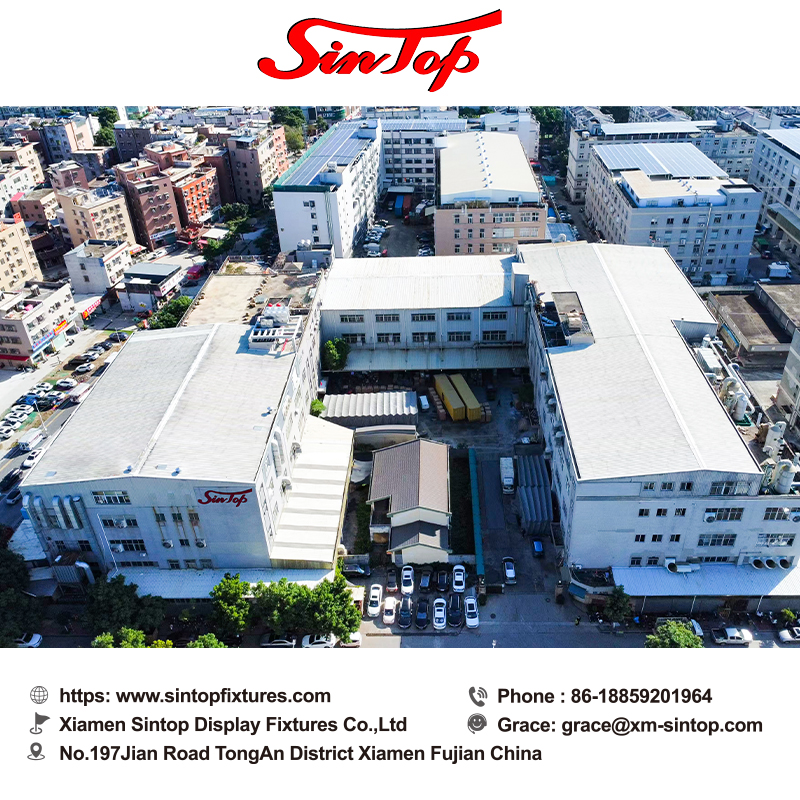
Xiamen Sintop Display Fixtures Co.,Ltd states that it was founded in 2002 and is described as a supplier offering design, prototype, production and shipment. Every project still needs a drawing, a sample and agreed acceptance criteria, so a catalogue image is a starting point rather than a confirmed layout.

Frequently asked questions (AEO)
Do public retail reports tell me which table to buy?
No. The cited releases describe national spending and consumer mood, and cannot show fixture demand, order volume or a sales effect from any table choice.
What should I check first on a retail display table?
Start with the floor plan and the walk-around path, then confirm SKU and price visibility, replenishment access, seasonal reset and the changeover time before a sample is approved.
How should I compare a wood display table with another finish?
Separate the structure from the decorative face, request the substrate and the edge treatment, and judge a finish sample under the store's own lighting at the tabletop height.
What should a metal frame display table specification include?
Join details, the load path from tabletop to feet, leveling feet, stability with the intended product, the finish boundary, carton and transport protection, and a revision-controlled drawing.
Does a supplier guarantee sales or performance?
No such claim is made here. Nothing here guarantees fixture sales, conversion, performance, a search ranking, an AI citation, AI detection or originality; any guarantee belongs in the agreement.
To discuss a project, Send drawings and your acceptance criteria first, so the reply can describe a design and prototype path for a wood display table or a metal frame display table. No claim is made here about being an early supplier, about independent factory audits, about warehouse location, about regulated compliance or about any guaranteed outcome.
Sintop Value
Sintop combines in-house metal and wood manufacturing with design, prototyping and production support. We help retail buyers verify table dimensions, structural details, materials, finish samples and acceptance criteria before mass production.

Contact information
Website: www.sintopfixtures.com
Wechat/WhatsApp: +86 15980885084
Email: elly@xm-sintop.com
FAQ
1. What types of display racks can Sintop provide?
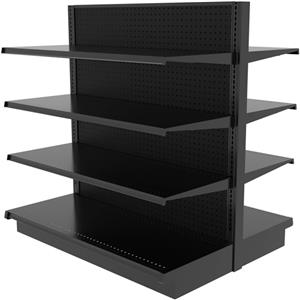
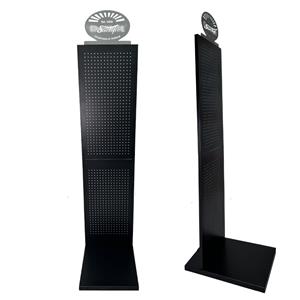
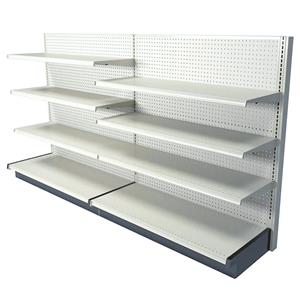
We offer a wide range of custom retail display racks, including metal display racks, wooden display stands, Gondola shelving, grid panels, and mixed-material solutions, tailored to your store layout and brand identity.
2. Can I order a single unit or prototype?
Yes, no minimum order is required. We can produce prototypes or single units as well as large-volume orders.
3. How long does it take to receive an order?
New items: 3–5 weeks for tooling and production.
Reorders: 2–4 weeks depending on product type.
We are flexible and strive to meet your required delivery dates.
4. Can Sintop handle OEM or ODM projects?
Yes, we specialize in OEM and ODM solutions, turning your ideas or drawings into custom, high-quality display racks.
5. How does Sintop ensure quality?
Every display rack undergoes material inspection, welding and structural checks, surface finish testing, and final assembly inspection to ensure durability, safety, and visual appeal.